1957 to JWST: Unpacking Space Mission Design Complexity
Space missions are more than rockets. Learn the complex team effort behind the over 15,000 objects launched into space since 1957.
Beyond the rocket equation: the real work of space mission design
Space missions involve more than powerful rockets and precise orbital mechanics. Since 1957, humanity has launched over 15,000 objects into space. Missions like Sputnik and the James Webb Space Telescope highlight major scientific and engineering achievements. However, these successes often obscure the complex team effort behind them.
Mission design is a complex field. It defines a mission’s goals. Then it builds the complete system to achieve them. Space agencies such as NASA, ESA, and JAXA handle this work. Private companies like SpaceX and Blue Origin also perform extensive design.
This process considers every detail. It includes scientific instruments, power systems, communications, thermal control, and propulsion. This detailed approach ensures a spacecraft can survive and operate in space’s demanding vacuum. It also helps achieve its scientific or commercial goal.
What mission design really means
NASA’s Mars Pathfinder landed on the Martian surface on July 4, 1997. While successes like this might suggest design is simple, the popular idea that engineers just pick a science goal and build a craft for it is incomplete.
Mission design is more detailed than just trajectory math or engine power. It is a complex undertaking. It combines advanced engineering, strict risk management, political discussions, and international diplomacy.
Consider the Curiosity rover, which landed on Mars in 2012. Its “seven minutes of terror” during entry, descent, and landing required hundreds of thousands of lines of code. This sequence represented years of detailed design and testing. It involved more than just rocket science. Jet Propulsion Laboratory (JPL) engineers planned every second with care.
This team effort starts long before any hardware exists. It begins with initial ideas and feasibility checks. Engineers must balance ambitious scientific goals with tight budgets. They also consider available technology.
Progress isn’t linear: real-world challenges
The James Webb Space Telescope (JWST), first conceived in the late 1980s, faced decades of design changes. Its development shows missions rarely progress easily from idea to launch. A predictable timeline, often assumed once science goals are set, frequently proves incorrect.
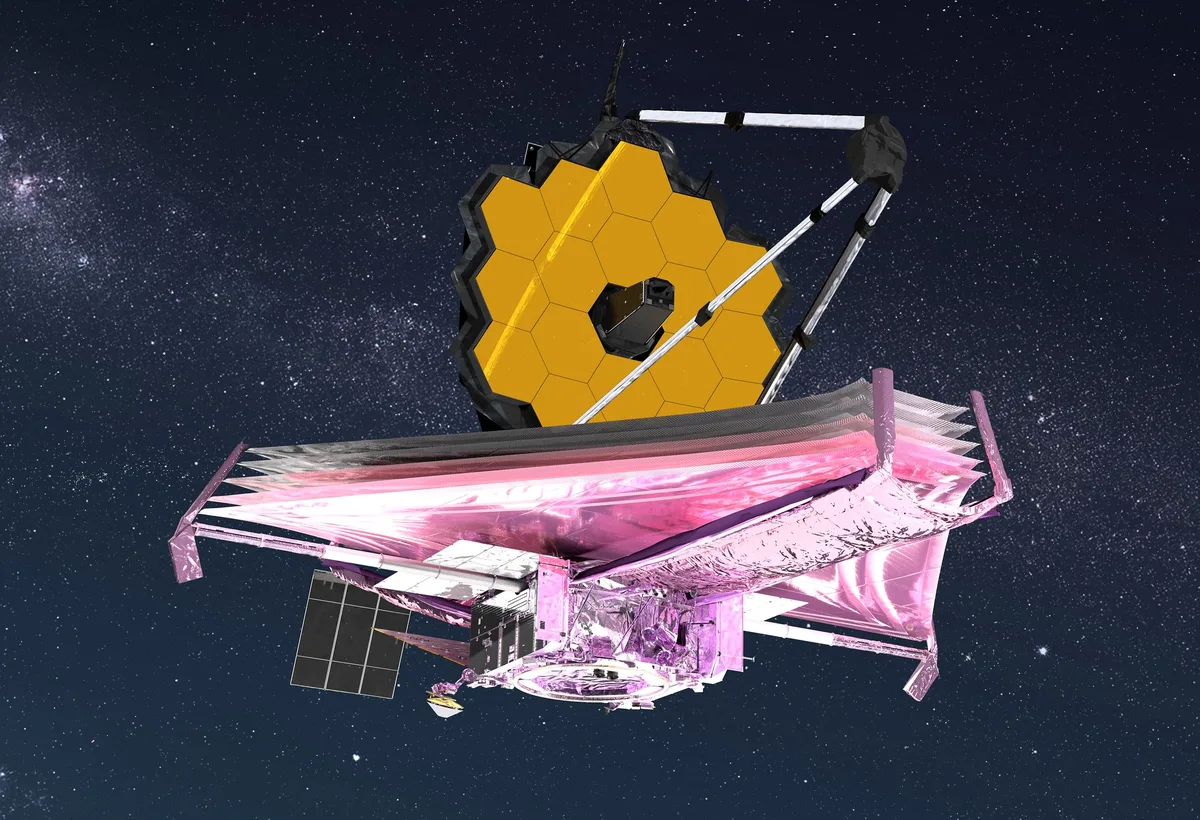
The James Webb Space Telescope, first conceived in the late 1980s, faced decades of design changes and engineering challenges before its successful launch and deployment, exemplifying the non-linear progress of complex space mission design. (Source: space.com)
Real space missions are iterative. They involve constant renegotiation and unexpected challenges. For example, the JWST’s budget grew from an initial $1.6 billion estimate in 1997. It reached nearly $10 billion by its 2021 launch, according to the Government Accountability Office (GAO). This increase reflected unexpected technical problems and design shifts, not just inflation.
A single design flaw can end a mission. The Mars Climate Orbiter failed in 1999 due to a simple unit conversion error. Engineers at Lockheed Martin Astronautics used imperial units. JPL navigation teams used metric. NASA’s Mishap Investigation Board documented this oversight. It sent the spacecraft into Mars’ atmosphere too low, causing it to break apart.
Designing for extreme environments adds significant challenges. NASA’s Europa Clipper mission aims for Jupiter’s icy moon. It must operate in an extremely harsh radiation environment. JPL engineers designed a protective vault for sensitive electronics. This vault shields components from radiation levels 100 times higher than Earth’s surface. This added considerable weight and complex design requirements.
Political and budget shifts also significantly affect mission design. NASA’s Constellation program aimed to return humans to the Moon. It was canceled in 2010 after spending over $9 billion. Then-President Obama cited shifting national priorities and budget limits as reasons for the cancellation. This showed how external factors, not technical impossibility, can change even advanced mission plans.
Beyond launch: a mission’s full life
The International Space Station (ISS) involved over 30 years of international teamwork. Its journey spanned from initial ideas to its first module launch in 1998. This long timeline demonstrates that mission design extends far beyond just getting off Earth. The idea that main design work finishes once a mission is in orbit is an oversimplification.
Mission design covers a mission’s full lifespan. This includes active operations, maintenance, and eventual decommissioning. Orbital debris management is a major concern for designers. The European Space Agency (ESA) tracks over 36,500 pieces of debris larger than 10 centimeters. Designers must plan to avoid collisions. They also need to include end-of-life disposal strategies, such as deorbiting or moving to graveyard orbits.
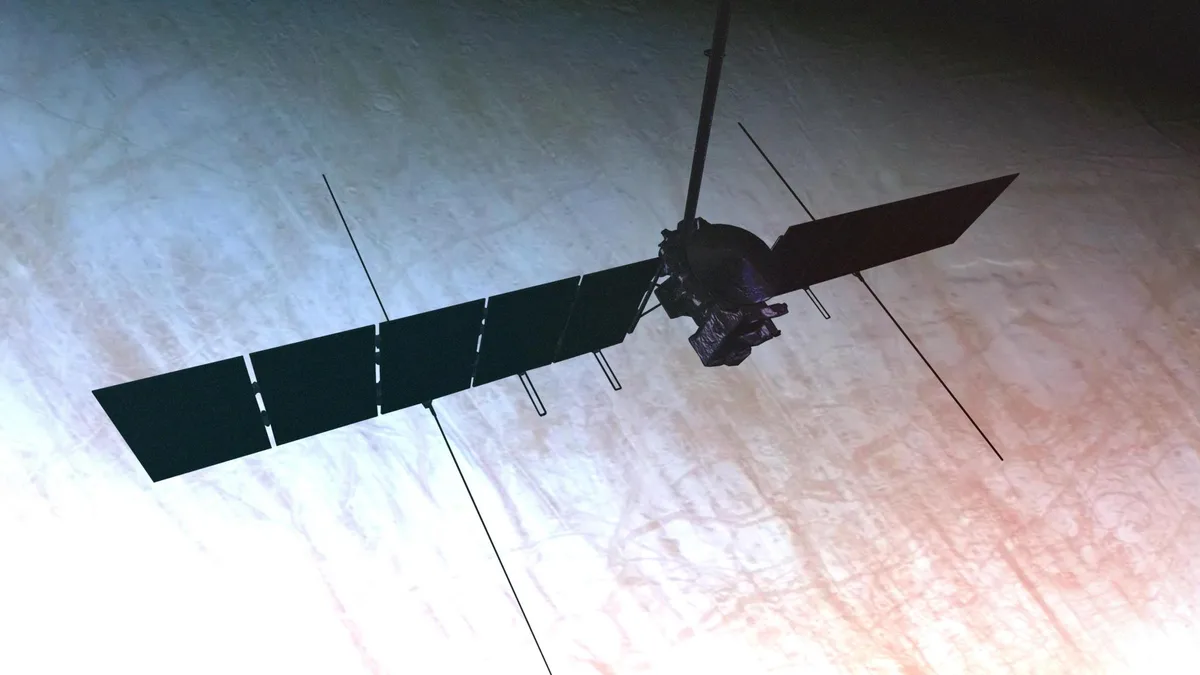
NASA's Europa Clipper spacecraft is engineered to withstand the intense radiation environment around Jupiter's icy moon Europa. JPL engineers designed a protective vault for its sensitive electronics, shielding components from radiation levels 100 times higher than Earth's surface. (Source: nasa.gov)
Maintaining communication with deep space missions presents ongoing design challenges. Voyager 1 is now 24 billion kilometers from Earth. Its connection relies on NASA’s Deep Space Network (DSN). JPL engineers constantly maintain and upgrade this global antenna array. They also develop new ways to extract faint signals across vast distances. This represents continuous design work.
Software complexity is a persistent design and operational challenge. The Mars Curiosity rover runs on millions of lines of custom code. It requires continuous updates and patches throughout its life. Lead software engineers at JPL frequently release new software versions. These updates adapt to changing environments or add new science features. This is an ongoing design task.
Power systems also need long-term design considerations. The Hubble Space Telescope, launched in 1990, underwent many servicing missions. Astronauts upgraded its solar arrays and instruments. This extended its lifespan and capabilities. Such in-orbit servicing, though costly, demonstrates design flexibility.
The future: resilient and adaptable designs
SpaceX’s Starship program aims for fully reusable space travel. This represents a major change from old, throwaway rockets. The future of space mission design requires a fundamental shift. We must move towards modular, reusable, and autonomous systems. One-off, custom designs are proving impractical.
The push for lower costs and more frequent launches, led by companies like SpaceX, is reshaping design approaches. It promotes standard connections and adaptable platforms. This approach significantly reduces unique design phases for each new mission. It makes development smoother and cuts expenses.
In-space manufacturing and assembly are expanding design possibilities. Projects like NASA’s Archinaut program study creating large structures in orbit. This technology could reduce launch mass. It allows spacecraft to be customized on demand. This significantly changes what we can build and how we design it.
Artificial intelligence (AI) will also be important in mission operations. MIT’s Space Systems Laboratory, for example, studies AI for spotting problems. AI could automate responses to unexpected events. This moves design focus from pre-programmed backup plans to smart, adaptive systems. It allows spacecraft to react on their own, making missions more robust.
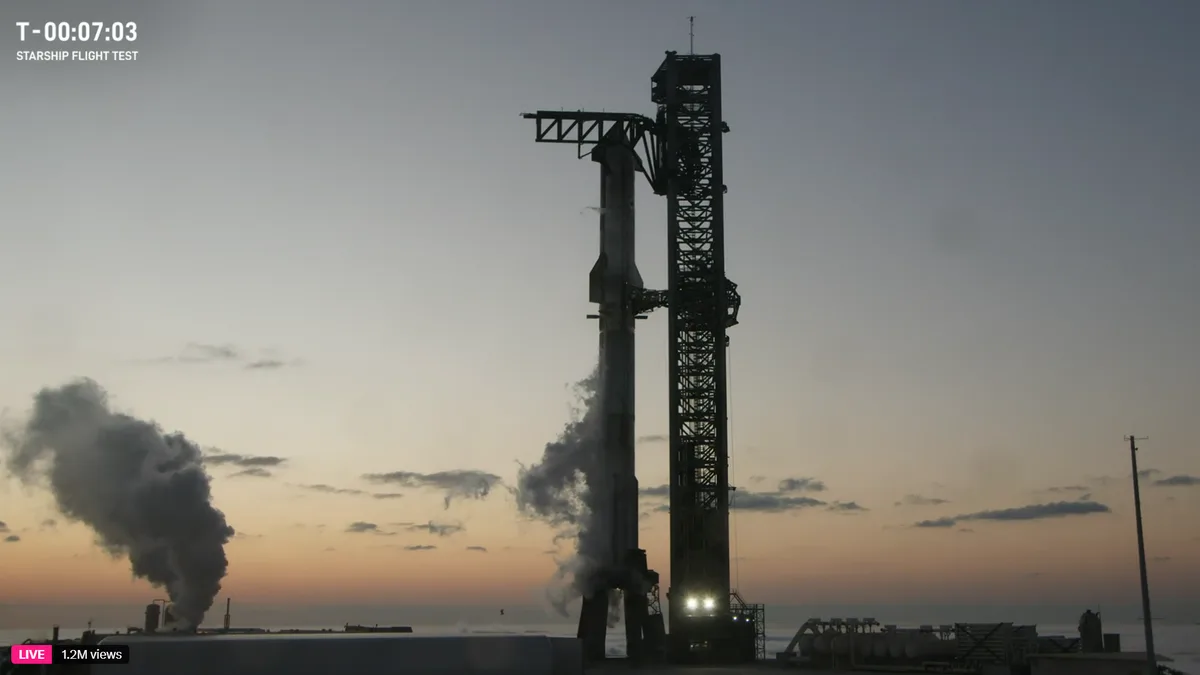
The SpaceX Starship program aims for fully reusable space travel, representing a major shift in mission design towards modular and adaptable systems. Its ambitious goal is to make human spaceflight to Mars and beyond more frequent and affordable. (Source: space.com)
Looking ahead, missions will likely feature more networked systems. Swarms of small satellites might replace single, large spacecraft. This offers backup and flexibility. It requires new approaches to coordination and communication. These improvements add adaptability and resilience to unexpected challenges, rather than simplifying design.
FAQ
What’s the biggest challenge in space mission design? The main challenge is balancing ambitious science goals with tight budgets, limited mass, and space’s harsh environment. Unexpected technical problems and political shifts also create significant challenges throughout a mission’s life.
How do budgets impact mission design? Budgets influence nearly every design choice. They limit instrument complexity, propulsion options, and even testing rigor. Cost overruns, like those for the JWST, often force design compromises or schedule delays.
What is “systems engineering” here? Systems engineering integrates all technical fields to design, build, and manage complex systems. For space missions, it ensures all parts—from software to structure—function effectively together to reach mission goals.
Are private companies changing mission design? Yes. Companies like SpaceX promote reusability and off-the-shelf parts. This lowers launch costs and encourages standard, modular designs. Their approach emphasizes quick changes and cost savings.
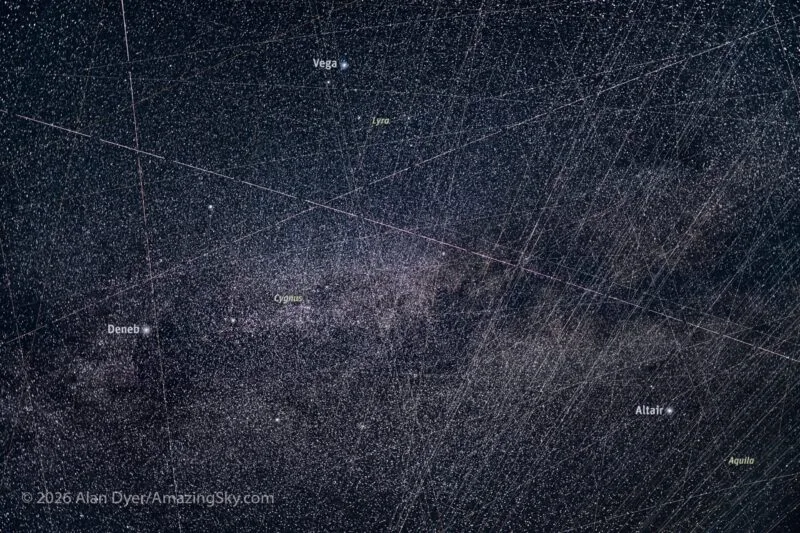
A satellite constellation, like the Starlink network, exemplifies the future of space mission design. These swarms of small, interconnected satellites offer redundancy and flexibility, allowing for more resilient and adaptable missions compared to single, large spacecraft. (Source: earthsky.org)
You might also like:
👉 The $546 Billion Space Race: Private Money, Global Rivalries
👉 Venus: Why 475°C Hell Holds Earth’s Climate Future
👉 Unexplained Mysteries of Science: Cosmos, Quantum & Beyond