
Howard Bowen's 1953 Vision: CSR Meets AI's New Demands
Modern corporate social responsibility began in 1953 with Howard R. Bowen's book. Now, AI demands companies rethink their societal impact.
AI’s social contract: Corporate responsibility in a new age
In 1953, economist Howard R. Bowen asked a big question. His book, “Social Responsibilities of the Businessman,” wondered: What did businesses owe society beyond making money? This idea launched modern corporate social responsibility (CSR).
CSR means companies must manage their impact on society and the environment. It started as charity, then became part of how businesses operate. Early on, CSR focused on labor and protecting the environment. Companies began to think about more than just shareholders.
Where responsibility began
On September 14, 1970, economist Milton Friedman made a bold claim in The New York Times Magazine. He said a company’s only social job was to make more money. Most businesses agreed with this view for a long time. They believed profit was their only goal.
But a different idea slowly gained ground. Shoppers wanted more ethical products. Environmental groups demanded companies take responsibility. Then, in the 1980s, huge environmental disasters hit. The 1984 Bhopal gas tragedy, for example, exposed corporate carelessness. These events showed a terrible human cost.
By the 1990s, CSR became more structured. Companies wrote codes of conduct. They published environmental reports. In 2000, the United Nations started the Global Compact. This program asked companies to follow ten universal principles. These covered human rights, labor, environment, and anti-corruption.
This change meant companies couldn’t act alone anymore. They had to think about their wider impact on society. CSR became an essential strategy. It wasn’t just a charitable extra.
Machines begin to think
In the summer of 1956, a few scientists met at Dartmouth College. They talked about “artificial intelligence.” John McCarthy coined the term. It described machines that could think like humans. This was an ambitious, theoretical start.
For decades, AI stayed mostly in universities. Researchers tried different ways to build it. They made expert systems and early neural networks. But computers lacked processing power. Data was hard to find. Few practical uses emerged.
Everything changed in the 2000s. Computing power boomed. The internet created huge amounts of data. In 2012, Alex Krizhevsky, Ilya Sutskever, and Geoffrey Hinton developed AlexNet. This deep learning model hugely improved image recognition. It won the ImageNet Large Scale Visual Recognition Challenge.
This breakthrough kicked off a new era for AI. Companies like Google, Facebook, and Microsoft poured money into it. AI began to run search engines, social media feeds, and recommendation systems. It moved from labs into everyday life. But this quick spread brought new, unexpected problems.
AI’s ethical problems emerge
In 2016, a ProPublica investigation found racial bias in a judicial AI tool. The COMPAS system predicted who would commit future crimes. It wrongly flagged Black defendants as higher risk more often than white defendants. This was a clear warning. AI could repeat and worsen human biases.
This wasn’t just one example. Algorithms also showed gender bias in hiring tools. Facial recognition technology misidentified people of color more often. These systems, built by humans, showed the biases in their training data. That data often came from old, unequal patterns.
Companies faced instant ethical problems. Their AI systems, meant to be efficient, caused social harm. They had built these powerful tools. Now, they had a job to fix their unintended problems. This new reality made them rethink CSR rules.
The AI Now Institute at New York University became a key voice. Its annual reports laid out AI’s growing risks. They pointed out problems like surveillance, algorithmic discrimination, and labor exploitation. The institute pushed for accountability.
Companies and governments respond
In 2018, Google felt pressure from inside and outside its walls about AI ethics. Employees protested the company’s work on Project Maven. This was a Pentagon project that used AI to analyze drone footage. Google later published its own AI Principles. These guidelines banned creating AI for harmful uses. CEO Sundar Pichai said the company was committed to them.
Microsoft also spoke out early. Its President, Brad Smith, asked for government regulation of facial recognition. He said companies alone couldn’t guarantee responsible use. Microsoft created an Office of Responsible AI (ORA). This team made internal ethics guidelines. They also checked AI products for possible harm.

The AI Now Institute at New York University emerged as a pivotal voice in AI ethics, publishing annual reports that meticulously detailed the growing risks of AI and advocated for greater accountability. Founded in 2017, it quickly became a leading research center dedicated to understanding and addressing the social implications of artificial intelligence. (AI-generated illustration)
These company actions revealed a new kind of CSR. It went beyond environmental impact or fair labor. Now, it included the ethical creation and use of technology itself. Companies had to think about data privacy, algorithmic fairness, and transparency. They had to build these ideas into how they designed products.
Governments also started to act. In 2021, the European Union proposed the AI Act. This broad regulation aimed to classify AI systems by risk level. It set strict rules for high-risk AI. These included rules for data quality, human oversight, and checks. The EU became a global leader in AI governance.
AI’s social contract: What’s next?
Today, AI and CSR challenges keep growing. Generative AI models, like ChatGPT, bring new complex issues. They raise questions about misinformation, intellectual property, and job displacement. Companies building these tools hold huge power. They change how we get information and how people work.
The demand for responsible AI is growing stronger. Investors now look closely at how companies manage AI. Consumers expect ethical products. Activists push for stronger protections. Dr. Timnit Gebru co-founded the Distributed AI Research Institute (DAIR). She advocates for AI systems that help marginalized communities. Her work shows we need diverse perspectives when building AI.
The future needs an active approach. Companies must build ethics in from the start. They need diverse teams when developing AI. Transparency about data sources and algorithmic decisions is vital. Working together — industry, government, and civil society — will shape the next phase.
CSR in the age of AI isn’t just about avoiding harm. It’s about actively building a future where AI helps humanity. This means designing systems that are fair, accountable, and good for everyone. Our commitment here will define the digital world for generations to come.
FAQ
What is Corporate Social Responsibility (CSR)? CSR means a company manages its business to make a positive impact on society. It goes beyond just following laws. It includes ethical practices, protecting the environment, and helping people.
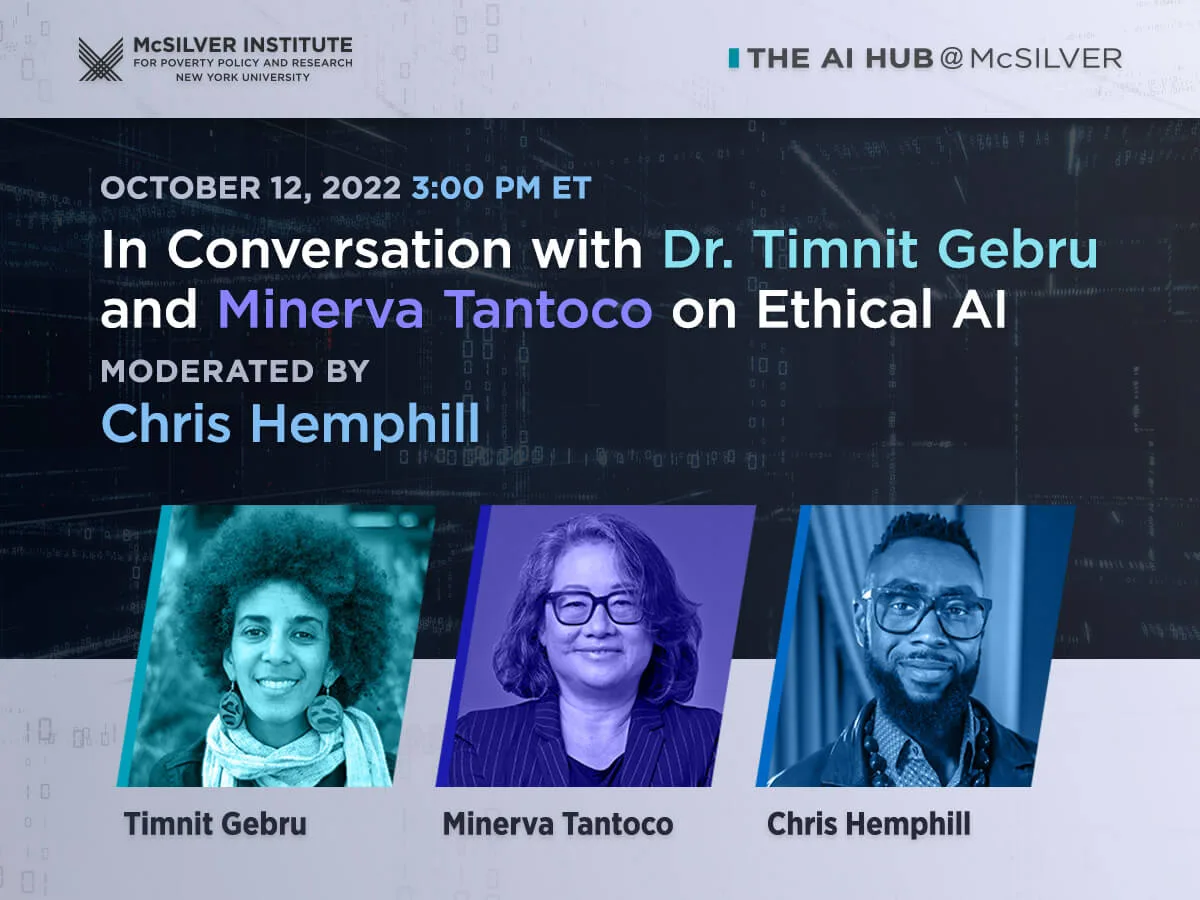
Dr. Timnit Gebru, co-founder of the Distributed AI Research Institute (DAIR), is a leading voice advocating for ethical AI systems that benefit marginalized communities and emphasize the need for diverse perspectives in AI development. (Source: mcsilver.nyu.edu)
How does AI bring new CSR challenges? AI brings challenges like algorithmic bias, privacy violations, and job losses. Companies must deal with these issues. They need to make sure their AI systems are fair, open, and accountable.
What are some examples of companies dealing with AI ethics? Google published AI Principles. Microsoft created an Office of Responsible AI. These companies are making internal guidelines and checking AI products. They also push for government regulation.
What is the government’s role in regulating AI for CSR? Governments are writing laws, like the EU AI Act. These laws aim to classify AI risks and set rules. They want to ensure public safety, basic rights, and ethical AI development.

The EU AI Act, provisionally agreed upon in December 2023 and formally adopted by the European Parliament in March 2024, is the world's first comprehensive law on artificial intelligence. It aims to classify AI systems by risk level and set strict rules for high-risk applications to protect fundamental rights and public safety. (AI-generated illustration)
You might also like:
👉 Sustainable Futures: Investment, Cybersecurity & Future of Work