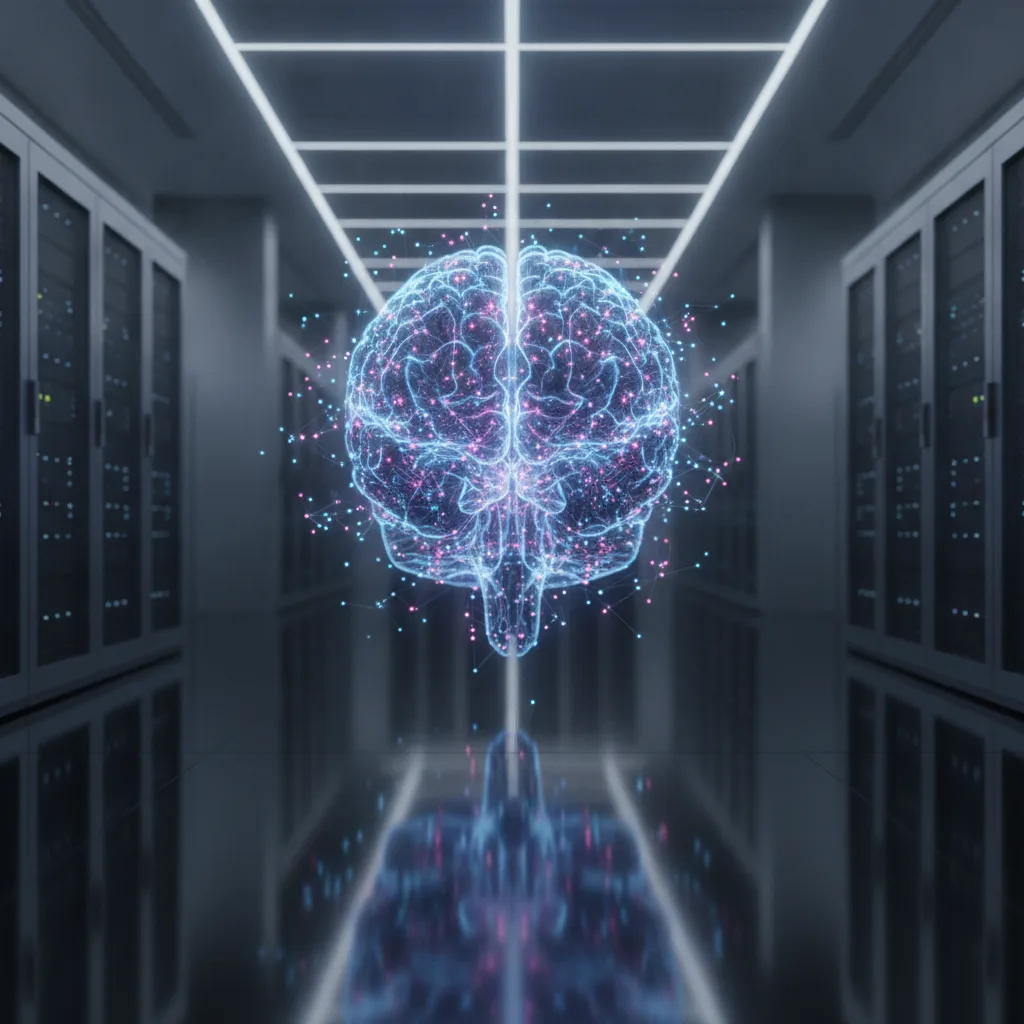
AlphaGo's 2016 Victory: The Start of AI's Massive Energy Drain
The stunning 2016 AlphaGo victory over Lee Sedol came at a hidden environmental cost. Its training required thousands of powerful processors.
AI’s unseen thirst: A growing environmental cost
A machine beat a human. On March 9, 2016, Google DeepMind’s AlphaGo program defeated legendary Go player Lee Sedol. It was a stunning victory for artificial intelligence. It showed AI’s power was growing.
But this power came at a price. AlphaGo’s training required thousands of powerful processors. These specialized chips gobbled up electricity. Most people cheered the win. Few thought about the environmental cost. We should have.
Early AI: A hidden cost emerges
In 2012, AlexNet, an influential neural network, won the ImageNet competition. This changed deep learning. Researchers began to see the potential for larger, more complex models. These models needed more data and more processing power.
Training AlexNet on a single GPU took about a week. Its energy use was small. But bigger models were coming. Each new breakthrough meant more computation. More computation meant greater energy use.
By 2017, OpenAI saw a troubling pattern. The computational power needed for the largest AI models doubled every 3.4 months. This far outpaced Moore’s Law, which saw transistor density double every two years. This rapid growth pointed to a huge energy problem ahead.
In 2019, Dr. Emma Strubell at the University of Massachusetts Amherst published a key study. Her team calculated the energy cost of training large natural language processing (NLP) models. They found training a single large model like BERT consumed as much energy as five cars over their lifetime. This included manufacturing and use.
Strubell’s study exposed a hidden cost. Training these models produced huge carbon emissions. Her work revealed AI’s environmental toll. AI’s fast progress came with a real energy bill.
LLMs and the data center boom
In 2020, OpenAI unveiled GPT-3. It was a massive leap in size and power. It contained 175 billion parameters. Training GPT-3 required thousands of GPUs running for weeks. One training run used a shocking amount of energy.
Estimates placed GPT-3’s training energy at over 1,287 MWh. This equates to burning 550 tons of CO2. Alex de Vries, a data scientist at Digiconomist, pointed this out. He noted this was a one-time training cost. The true energy drain would come from constant use.
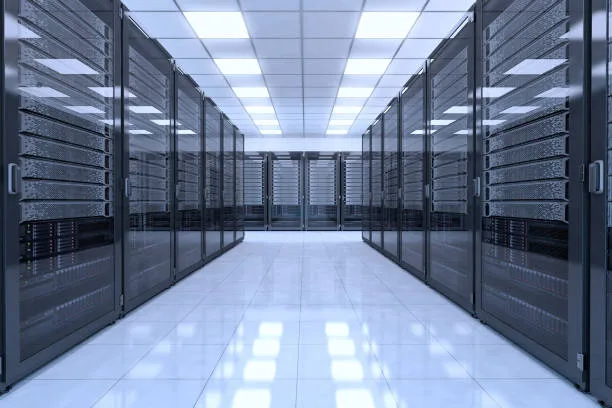
The 'data center boom' is a direct consequence of the massive computational power required by modern AI models like GPT-3. These hyperscale facilities house thousands of GPUs running for weeks, consuming vast amounts of electricity and contributing significantly to AI's growing environmental footprint. (Source: istockphoto.com)
Then came November 2022. OpenAI launched ChatGPT. The public quickly adopted this conversational AI. Millions of users started querying the model daily. Each query, each interaction, required computational power. This meant more energy.
ChatGPT’s rapid adoption pushed data centers to their limits. Microsoft, a major investor in OpenAI, rapidly expanded its infrastructure. Demand for specialized AI chips, like Nvidia’s H100 GPU, skyrocketed. These chips are incredibly powerful. They also draw immense electricity.
The global data center industry was already growing. AI’s rise accelerated this expansion. The International Energy Agency (IEA) reported that data centers accounted for 1% of global electricity demand in 2022. The IEA projects this figure could double by 2026. AI largely drives this growth.
AI’s thirst: Water, power, and the grid
Data centers consume significant electricity. They’re also incredibly thirsty. Massive computer racks generate intense heat. This heat must be dissipated to prevent overheating. Water is the most common and efficient cooling agent.
Microsoft revealed its data centers consumed 6.4 billion liters of water in 2022. This amount could fill thousands of Olympic-sized swimming pools. Much of this water evaporates during the cooling process. This stresses local water supplies, especially in drought-prone regions.
Google’s data centers used 15.3 billion liters of water in 2022. This figure was up 20% from the previous year. Shaolei Ren, a researcher at UC Riverside, studied this. He estimated that training GPT-3 in a US data center could consume 700,000 liters of freshwater. This is enough water to produce 370 BMW cars.
AI’s energy demands strain power grids. AI clusters need consistent, high-power input. Many data centers still rely on fossil fuels for electricity. This directly contributes to greenhouse gas emissions. The IEA warns of potential grid instability. New power generation capacity is needed to meet this escalating demand.
In the US, data centers in Virginia’s “Data Center Alley” already consume gigawatts of power. This equals several large nuclear power plants. Local communities face increased energy costs. They also experience environmental impacts from new power plant construction. AI’s insatiable demand for compute infrastructure impacts both resources.
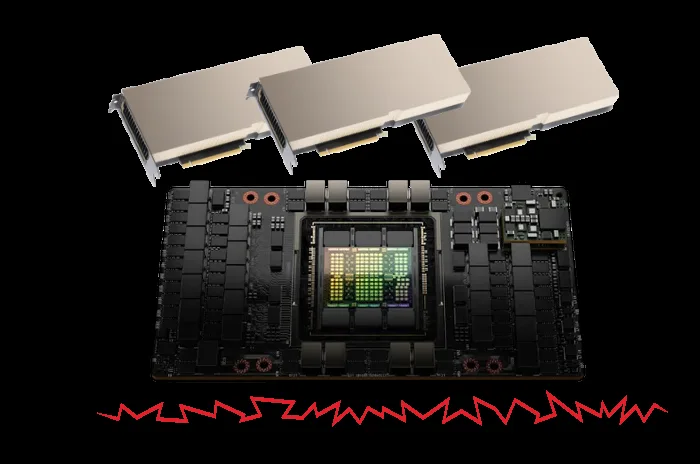
The Nvidia H100 GPU is a specialized AI chip designed for high-performance computing, known for its immense power and significant electricity consumption, making it a key component in the escalating energy demands of AI. Each H100 GPU contains 80 billion transistors and can draw up to 700 watts of power. (Source: altatechnologies.com)
The push for efficiency
The tech industry recognizes these environmental challenges. Chip manufacturers are innovating. Nvidia designs more power-efficient GPUs. These new chips deliver more processing power per watt. This helps slow the growth of energy consumption.
Google developed its own Tensor Processing Units (TPUs). These custom chips handle AI workloads efficiently. They aim for greater efficiency than general-purpose GPUs. Other tech giants like Amazon and Microsoft are doing the same. They develop their own specialized AI hardware.
Renewable energy is a priority. Companies like Google, Microsoft, and Amazon aim for 100% renewable energy for their operations. They buy renewable energy credits. They also invest directly in solar and wind farms. This offsets carbon emissions.
Matching fluctuating renewable energy with constant data center demand is still hard. Battery storage solutions are vital. Improved grid management systems also help. Researchers like Sasha Luccioni from Hugging Face push for transparent energy reporting. This lets us better track AI’s real environmental footprint.
Governments are also stepping in. The European Union has regulations like the AI Act. It encourages energy efficiency standards for AI systems. Policy makers explore incentives for sustainable AI development. The choices we make now will define AI’s true legacy. This includes how we build and power these systems. We can’t afford to ignore its unseen thirst any longer. This isn’t just about technology; it’s about our planet.
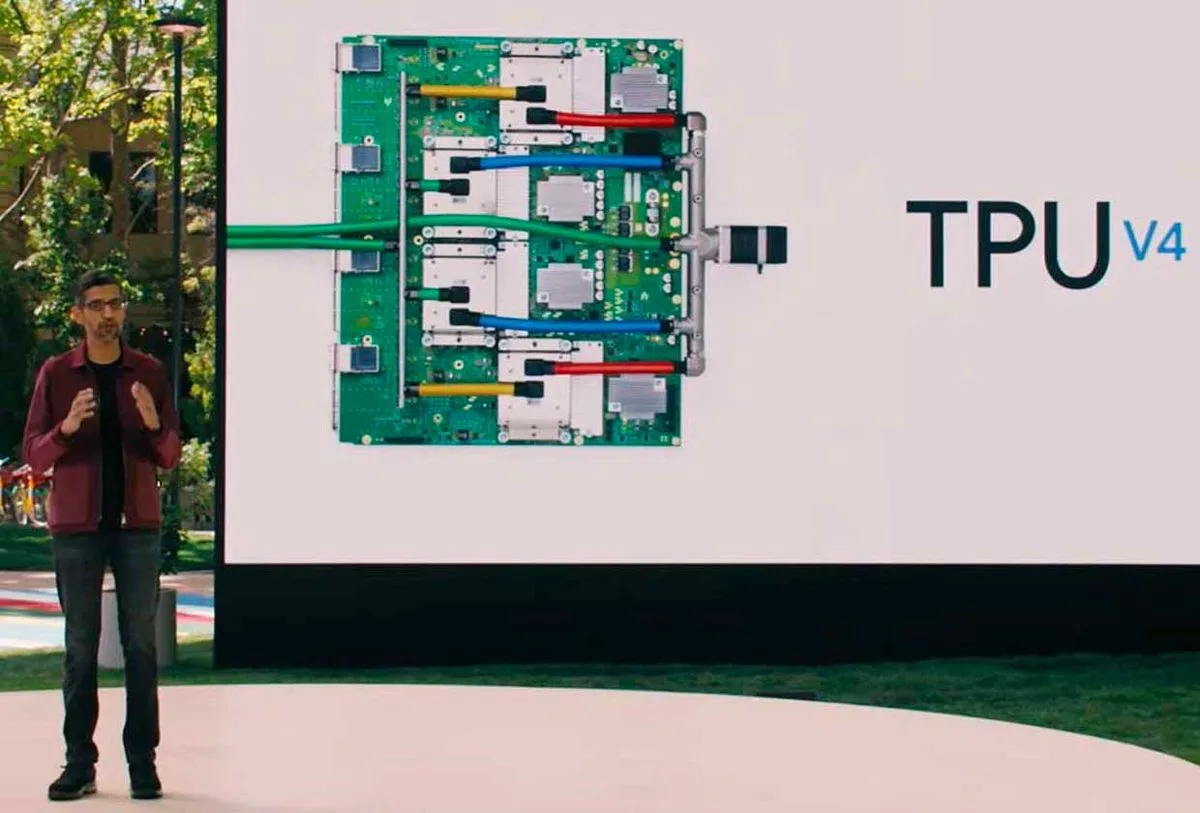
Google's custom-designed Tensor Processing Units (TPUs), first unveiled in 2016, are specialized AI accelerators engineered to handle machine learning workloads with greater energy efficiency than general-purpose GPUs. These chips are deployed in Google's data centers, powering services like Google Search and Google Translate, and represent a key effort to reduce AI's environmental footprint. (Source: spectrum.ieee.org)
You might also like:
👉 The 2016 Shift: How Phones Became AI Companions
👉 Unmasking Online Bots: The X & Facebook Mimicry Challenge
👉 Understanding Energy Independence: Security, Economy, Future