
AI's SDG Promise: The Non-Technical Walls Holding It Back
AI promises to fix global issues like the UN's Sustainable Development Goals (SDGs), but often misses the deep, non-technical walls that stop it.
AI promises to fix the world. We hear this idea often. It’s supposed to speed up drug discovery, manage resources better, and predict global disasters. Tech companies and international groups often promote this popular story. It paints a picture of endless tech possibilities. That vision inspires many. Yet it often misses the deep, non-technical walls that stop AI from effectively helping with big global issues.
The UN’s Sustainable Development Goals (SDGs) are a global plan. They aim to end poverty, hunger, and improve health, education, and climate action by 2030. Groups like UNICEF and the World Bank invest in AI to help meet these goals. AI can, for example, analyze satellite pictures to identify poverty or estimate crop harvests. This technology is powerful for processing data and spotting patterns.
AI solutions often fail far from Silicon Valley. Developing nations, where big problems hit hardest, usually lack basic infrastructure. A 2023 report by the International Telecommunication Union (ITU) showed 2.6 billion people still lack internet. Most live in low-income countries. AI models need steady power, strong internet, and secure data storage. These resources are rare where AI is needed most.
These digital access issues are not small problems. They are huge barriers. Picture an AI tool meant to diagnose tuberculosis in a far-off village. Its accuracy won’t matter if the local clinic has no steady power for the device. Dr. Maja Mataric, a computer science professor at USC and an AI expert, says it plainly: “the most advanced AI is useless if it cannot be integrated into existing, often fragile, systems.”
Data and Infrastructure: The Real Price
Good, useful data for AI to learn from is often scarce, especially for complex societal problems. AI models learn from data. How well they work depends directly on how much good data they get. If data is rare, biased, or out of reach, AI simply doesn’t work.
Consider healthcare in sub-Saharan Africa. Medical records are often paper, incomplete, or not standardized. Dr. Alaa Abd-El-Aziz, a University of Cape Town researcher, points out a key issue. He notes that AI models trained on data from Western populations often perform poorly. This happens when applied to African contexts due to differing demographics, disease prevalence, and environmental factors. This data gap harms accuracy and fairness. Joy Buolamwini, who started the Algorithmic Justice League, showed how US-made facial recognition systems struggled. They often couldn’t accurately identify darker-skinned women. Her 2018 research, with Timnit Gebru, found bias rates hit 34.7% for darker-skinned women. For lighter-skinned men, it was just 0.8%. This highlighted a huge problem in how data represents people.

Joy Buolamwini, founder of the Algorithmic Justice League, exposed how US-made facial recognition systems struggled to identify darker-skinned women, with bias rates hitting 34.7% compared to 0.8% for lighter-skinned men. Her pioneering research highlights critical data gaps that undermine AI's fairness and accuracy in diverse contexts. (Source: pbs.org)
Building and maintaining digital infrastructure is another massive task. The World Economic Forum’s 2021 “Global Risks Report” named infrastructure collapse a major global danger. AI applications, especially those with large language models or complex machine learning, need serious computing power. Data centers use huge amounts of energy, often from fossil fuels. This contributes to the very climate problems AI claims to solve.
Even when infrastructure exists, it often breaks down. Natural disasters can wreck communication networks, like after Haiti’s 2021 earthquake. A 2022 UN Development Programme (UNDP) study showed how a lack of digital access worsens inequality. This prevents fragile communities from getting vital services, including those run by AI. Investing in AI before basic infrastructure is like buying a supercomputer for a village with no power.
Beyond the Code: People and Politics
Skilled people are essential for AI systems to work and last. AI isn’t a simple plug-and-play fix. It needs skilled people to set it up, monitor it, and adapt it. This includes data scientists, engineers, and local experts. These experts must understand the specific cultural and social details of the problem. Such skills are often rare in the places that need them most.
A 2023 African Union report stated the continent has too few AI researchers and workers. Universities cannot train enough graduates with advanced AI skills. This means even if AI tools are built, local communities cannot own, fix, or improve them. It makes them rely on outsiders, often from richer countries. This hurts local control and long-term success.
Ethical rules pose another significant problem. Implementing strong AI systems into sensitive fields like health, education, or justice needs firm ethical guidelines. These rules must cover data privacy, algorithm bias, accountability, and transparency. The EU’s AI Act, for instance, is a robust attempt to regulate AI. But making such complex rules work across many different global places is very difficult.
For example, an AI tool meant to distribute rare resources, like food aid, might accidentally harm certain groups. This happens if it’s not designed and monitored carefully. Dr. Kate Crawford, a leading AI and justice expert, writes in her 2021 book Atlas of AI: “AI systems are not neutral; they reflect and amplify the biases embedded in the data they are trained on and the societies that build them.” Without strong local control and checks, AI can worsen existing inequalities, rather than fix them.

Massive data centers, the physical backbone of AI applications, require immense computing power and consume vast amounts of energy, often from fossil fuels. This energy demand contributes to the very climate problems AI aims to solve, highlighting a critical challenge in building sustainable digital infrastructure. (Source: dreamstime.com)
Beyond the Algorithm: Real Change
The focus on AI’s capabilities often distracts from deeper problems that hinder real social change. People often say AI can “leapfrog” development, skipping old infrastructure with new technology. This sounds good, but it often misses what is truly happening. Real change needs more than just smart code.
A better approach sees AI as a tool, not a cure-all. It prioritizes people, basic infrastructure, and strong regulations. Instead of simply introducing pre-made AI solutions, we should build technology with local communities. This ensures it fits local needs, develops local skills, and solves actual problems.
Consider preparing for disasters. AI can predict weather patterns. But human networks and strong communities matter most. Early warnings need good communication and trained local helpers. A 2023 study by the Environmental Defense Fund showed that mixing AI climate models with community-based monitoring leads to better plans. This helps communities adjust more effectively.
To make AI effectively help society, we need to change how we think. This means moving past the idea that technology alone can fix everything. AI’s real power emerges only when it fits into strong social systems. It needs fair access to resources and clear ethical rules. This approach – putting people and infrastructure first, alongside the code – is the only way to make real, lasting change. Anything less is just a dream.
FAQ
Q1: What is “AI for impact”? A1: “AI for impact” means using artificial intelligence to tackle big societal problems. These often match the UN’s Sustainable Development Goals, like better health, less poverty, or fighting climate change. The idea is to use AI’s smarts to do good.
Q2: Why is data quality a problem for AI in developing countries? A2: Data quality is a problem because many developing regions don’t have standard, digital, or complete data. AI models trained on data from other places often don’t work well when used there. This can cause wrong predictions, unfair results, and poor service.
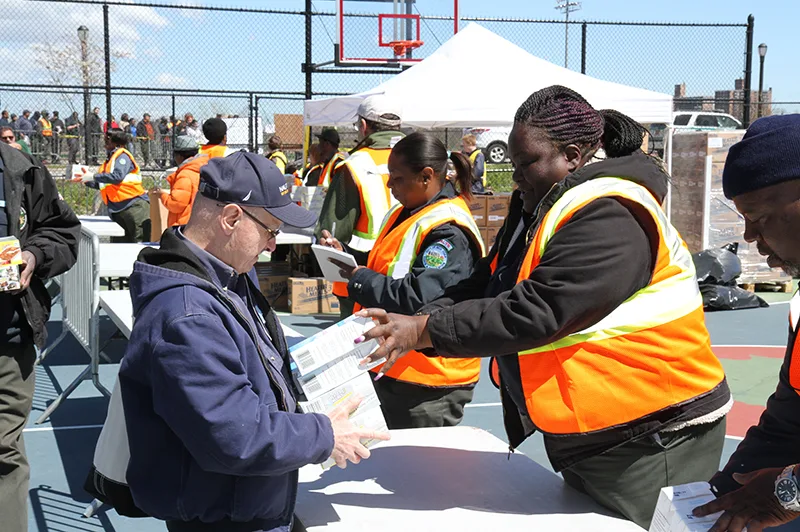
In many communities, trained local helpers are the backbone of disaster preparedness, translating early AI-driven weather warnings into actionable steps and ensuring effective communication within their networks, embodying the 'people first' approach to societal change. (Source: nyc.gov)
Q3: Does AI create new problems while solving others? A3: Yes, AI can accidentally make problems worse if not used carefully. For example, biased algorithms can make existing social unfairness bigger. Also, AI systems use a lot of energy. This can add to climate worries, working against efforts to fight climate change.
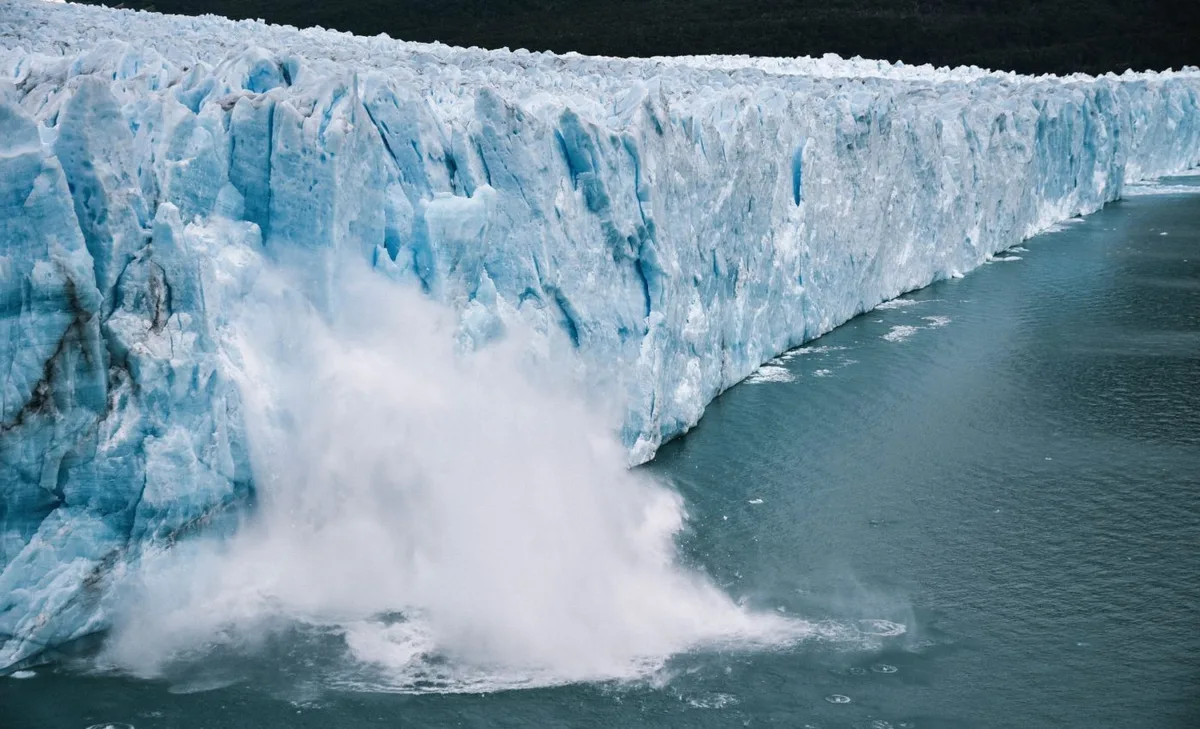
The rapid retreat of glaciers worldwide, such as the Okjökull glacier in Iceland which was declared dead in 2019, is a stark visual indicator of global climate change, a problem exacerbated by the significant energy consumption of AI systems. (Source: earth.com)
You might also like:
👉 Space Colonization: The Grand Illusion & Earth’s Real Solutions
👉 Sustainable Futures: Investment, Cybersecurity & Future of Work