Feb 21, 2023: US Copyright Denies AI Image Ownership
On February 21, 2023, the US Copyright Office ruled Kristina Kashtanova's individual AI-generated images get no copyright protection.
AI Art: Who Really Owns It?
Kristina Kashtanova made a graphic novel, Zarya of the Dawn, using an AI tool. She applied for copyright. On February 21, 2023, the US Copyright Office gave a key decision. Kashtanova got protection for her text and how she arranged the images. But the individual images, made by AI, got no copyright. This ruling sparked a huge fight between AI and old copyright laws.
For decades, copyright law protected human creativity. It gave authors exclusive rights to reproduce, distribute, and display their original works. This legal framework came from the pre-digital age. It assumed only humans could be authors. An artist poured their vision, skill, and effort into a painting. A writer created a story from imagination. The law protected this human work.
Then AI image generation arrived. These powerful new tools made amazing images from simple text prompts. They learned from huge datasets of existing images. These images were often taken from the internet without permission. Now, anyone could create complex art. This technology challenged old ideas of creation and ownership. The world watched as legal systems faced the consequences.
The Copyright Office Draws a Line
AI and copyright issues started long before 2023. Early AI art experiments, like Google’s in 2015, showed computers made surreal images. These were just curiosities, not for sale. But by the early 2020s, advanced AI models were available to everyone. These tools included OpenAI’s DALL-E 2, Midjourney, and Stability AI’s Stable Diffusion.
In 2022, these services became hugely popular. Millions of users started creating images. They used text prompts like “a futuristic city at sunset” or “a cat wearing a spacesuit.” The AI models processed these prompts. They then made new images based on styles and elements from their training data. This data often contained billions of copyrighted images.
This rapid advancement caused immediate arguments. Artists worried about their jobs. Many saw AI as a threat, not a tool. They asked if it was right to train AI on their work without permission or pay. They wondered if their art was being used to create their replacements. Soon, this concern moved to the courts.
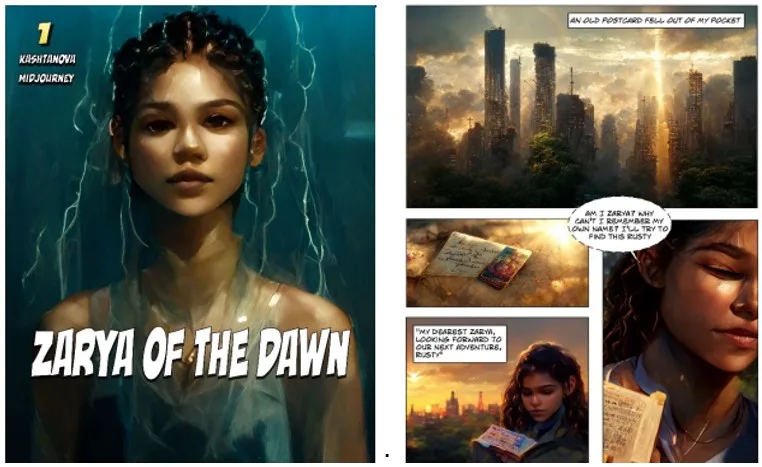
Kristina Kashtanova's graphic novel, *Zarya of the Dawn*, became a landmark case in AI copyright when the US Copyright Office granted protection for her text and arrangement, but denied copyright for the individual AI-generated images. (Source: nixonpeabody.com)
The US Copyright Office was one of the first major groups to react. Its decisions often guide global copyright talks. In September 2022, Kristina Kashtanova submitted her graphic novel, Zarya of the Dawn, to copyright it. She wrote the text and arranged the images. She also used Midjourney to make the pictures.
The Office first gave Kashtanova a copyright. But it later reviewed the registration. It questioned how much human work was in the Midjourney-generated images. On February 21, 2023, the Office gave its revised decision. It said copyright only covered creative parts Kashtanova supplied. This included the book’s text, its selection of images, and their arrangement. The AI-made images lacked human authorship. This set a precedent. It made clear that AI alone can’t be an “author” under US copyright law.
Lawsuits Begin, Artists Push Back
The US Copyright Office’s position on human authorship quickly led to more lawsuits. Artists and companies alike started lawsuits. They wanted to define the limits of AI-generated content. These cases showed the main legal questions about AI training data and output.
On January 13, 2023, a group of artists filed a class-action lawsuit. Sarah Andersen, Kelly McKernan, and Karla Ortiz sued Stability AI, Midjourney, and DeviantArt. They claimed direct copyright infringement. The artists said AI models copied their work without permission. The copying happened during training. The lawsuit argued that the AI models are just “collages” of copyrighted images.
Getty Images, a major stock photography agency, sued too. On February 6, 2023, Getty sued Stability AI in the District Court for Delaware. Getty claimed Stability AI broke its copyrights. It said the AI model copied millions of Getty’s images. The lawsuit also noted Stability AI used Getty’s watermarks. These watermarks sometimes showed up distorted in AI-made images. This proved a direct link to the training data.
These lawsuits brought up the idea of “transformative use.” AI companies often said their models “transform” existing data into something new. They claimed this process was fair use. But the artists and Getty Images argued the AI output wasn’t transformative enough. They said it just made new versions without proper licenses.
Kristina Kashtanova is the author whose graphic novel, *Zarya of the Dawn*, prompted the US Copyright Office to issue a landmark decision on AI-generated images, ruling that AI alone cannot be an "author" under US copyright law. Her case set a crucial precedent in the evolving landscape of AI and intellectual property. (Source: reddit.com)
Another important case involved Stephen Thaler. For years, Thaler tried to copyright works made only by AI. He named his “Creativity Machine” as the author. On August 18, 2023, a federal judge agreed with the Copyright Office’s rejection of Thaler’s claim. The ruling again said human authorship is a requirement for copyright protection in the United States. This made the legal need for human creative input stronger.
The legal battles grew quickly. They pressured AI developers. The outcome of these cases will change how AI develops. It will also decide how artists’ rights get protected.
How much human input counts?
The idea of human authorship became central to later copyright decisions. The US Copyright Office kept improving its guidance. It stressed that human work was still key for copyright. This guidance wanted to make things clear in a fast-changing area.
On March 16, 2023, the Office published new guidance. It said AI-made works can be copyrighted if a human changes them a lot. The human must add original and creative parts. This includes selecting prompts, arranging outputs, or editing the AI’s creations. But just typing a prompt may not be enough. The human input must be significant and creative.
For example, a person using Midjourney could make hundreds of images. They then pick a few specific ones. They might arrange them in a sequence. They might also add text and design elements. This selection, arrangement, and added content could get copyright protection. The individual AI-made images themselves would likely not get protection. This difference became vital for creators.
Internationally, other countries started similar talks. The European Union thought about new AI rules. These included rules for clear training data. But Japan took a different approach. Its copyright law generally allows AI training without permission. This is based on the idea that analyzing data for non-entertainment is allowed. These varied approaches showed how complex the issue is worldwide.
The “human authorship” requirement is still being tested. It makes creators think about their own creative work. They must know if their input is enough for copyright. This gives their work legal protection.
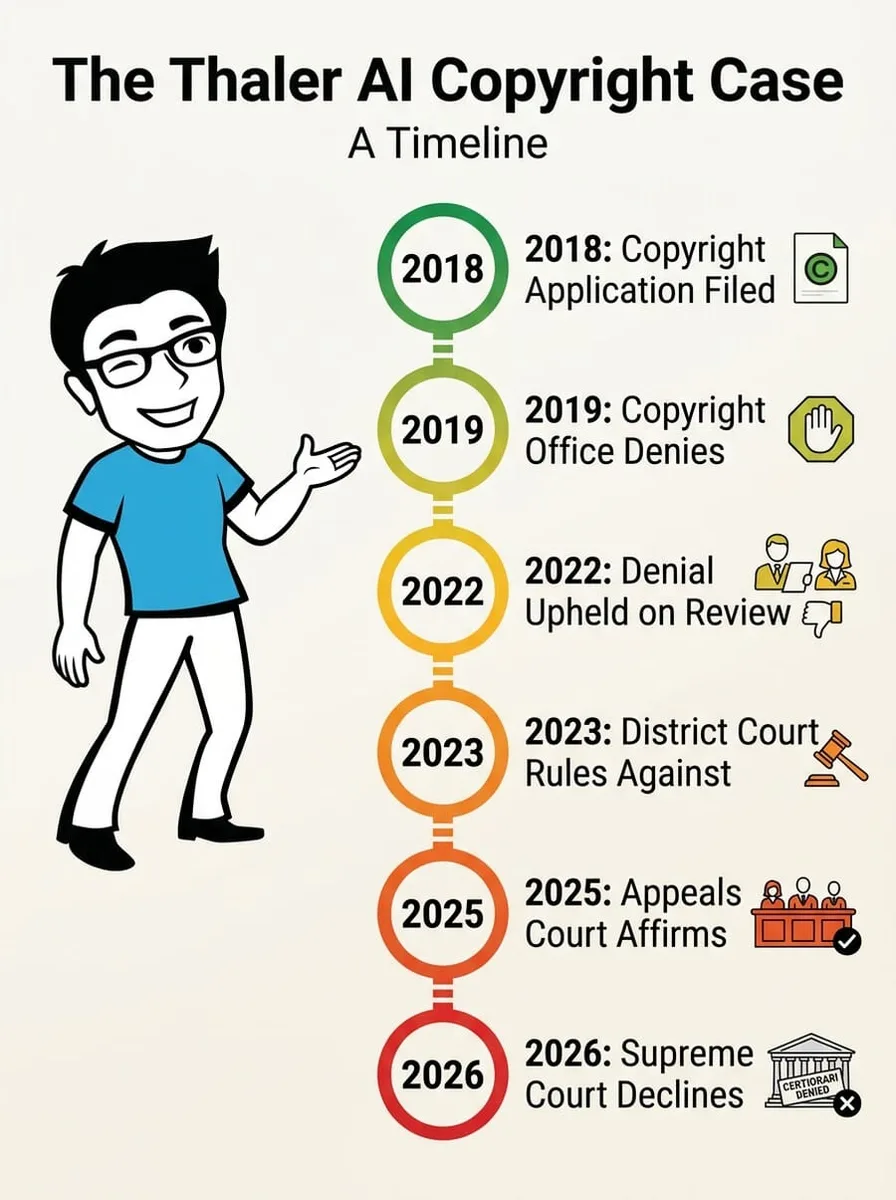
Stephen Thaler, an AI researcher, famously attempted to copyright works created solely by his 'Creativity Machine,' leading to a federal judge's ruling in August 2023 that human authorship is required for copyright protection in the U.S. (Source: photoworkout.com)
The Future of Creativity and Compensation
The fight over AI image generation and copyright is far from over. Lawsuits and policy talks keep shaping the future. The main questions remain: How should artists get paid? How can their original works be protected? How can AI innovation continue responsibly?
One idea is licensing models. Some want “opt-in” systems. AI companies would need clear permission to use copyrighted works for training. Others suggest “opt-out” options. Creators could then remove their work from training datasets. Getty Images, for instance, launched its own AI image generator trained only on licensed content. This shows a possible way for ethical AI.
Technology also plays a role. Researchers are making watermarking and origin-tracking tools. These tools could spot AI-made content. They might also trace where training data came from. This could help find copyright breaches. It could also make sure people get credit.
The economic effect on human artists worries many. A 2023 survey by the Artists’ Rights Society found lots of worry. Many artists reported fewer commissions because of AI tools. New business models could appear. These might involve artists selling their “styles” for AI training. Or they might focus on valuable, human-chosen art.
Governments worldwide are seeing the need for new laws. The US Copyright Office keeps studying AI issues. It asks the public for ideas on these complex questions. Lawmakers want to find a balance. They want to protect creators. They also want to help tech innovation. The outcome will change how art, technology, and ownership connect. It will shape creative industries for decades.
FAQ
Q: Can I copyright an image I create using an AI tool like Midjourney or DALL-E? A: You can copyright the image if you add enough creative work. This means you must change the AI-made image a lot or arrange it with other creative parts. Simply typing a text prompt into the AI is usually not enough for copyright.
Q: Why do copyright offices require ‘human authorship’ for AI-generated works? A: Copyright law has always protected human thought and creativity. The law is built on the idea that one author makes an original work. Many copyright offices believe AI tools, by themselves, don’t have the awareness or intent needed for authorship.
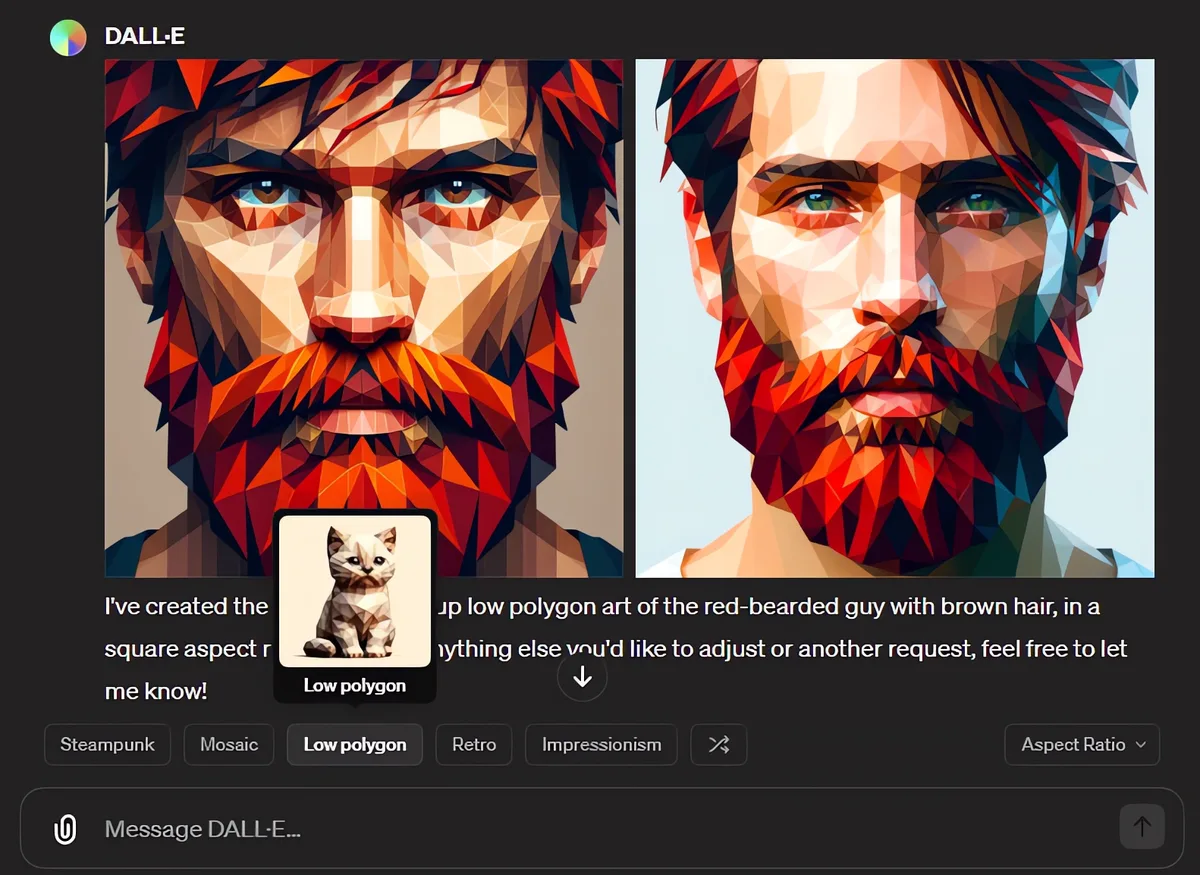
DALL-E, developed by OpenAI, is a prominent AI image generator that creates images from text prompts. The question of copyright for images created using tools like DALL-E is a central debate in the future of creativity and compensation. (Source: the-decoder.com)
Q: Are AI companies allowed to train their models on copyrighted images without permission? A: This is a big legal argument. Artists and companies have filed lawsuits claiming this practice is copyright infringement. AI companies often argue it is ‘fair use,’ but courts are still deciding these cases.
Q: How can artists protect their work from being used in AI training data? A: This is challenging. Some platforms are making ‘opt-out’ options. Artists can also use things like watermarking. But a full solution might need new laws or industry agreements.
Courtrooms worldwide are becoming the battleground for complex lawsuits, as artists and companies challenge AI developers over the unauthorized use of copyrighted material for model training, with judges tasked to interpret 'fair use' in the digital age. (Source: easy-peasy.ai)
You might also like:
👉 The 2016 Shift: How Phones Became AI Companions