
Your Phone, AI, & 60% of 2023 Trades: Is it Hype or Help?
Mobile trading apps promise advanced AI, but many investors find basic tools. In 2023, these apps drove over 60% of all retail trading activity. Is AI misunderstood?
AI mobile trading: It’s not what you think
Mobile trading apps often promise advanced AI features. Yet, many everyday investors find surprisingly basic tools. This raises a key question: Is AI in mobile trading merely marketing hype, or is its role simply misunderstood? This article explores the truth.
Mobile trading isn’t niche anymore. In 2023, these apps drove over 60% of all retail trading activity, according to J.D. Power. Millions now make investment decisions from their phones. These users — busy professionals, new investors, and seasoned traders — all want convenience and efficiency.
AI promises smarter, faster, and more informed decisions. Companies like eToro and Robinhood popularized mobile trading. Many expected complex AI systems to make real-time trades for individuals. The actual applications are simpler, yet more interesting.
The promise and the puzzle
Mobile trading platforms often promote “AI-powered insights” or “smart recommendations.” These marketing claims raise questions for the average person. Do these systems truly make trades? Or do they merely offer suggestions?
Understanding the basic setup is key. Mobile trading platforms like TD Ameritrade (now Schwab) and Fidelity offer market access via smartphones. They allow users to buy and sell stocks, ETFs, and cryptocurrencies. These platforms prioritize user-friendly interfaces.
Before AI, these apps offered charting tools, news feeds, and execution features. Users made decisions based on personal research or outside advice. The “AI” component emerged as data analysis capabilities grew more powerful. This represented a significant shift.
Many initially assume AI in mobile trading performs automatic trades. This aligns with a common futuristic vision. For most retail investors, however, the reality is different. The technology offers assistance, not full automation.
What AI actually does
DeepMind’s 2018 research on AI agents showed early promise for pattern recognition in financial markets. This demonstrated AI’s potential. Today, AI performs several specific jobs within mobile trading apps.
One common application is predictive analytics. AI models analyze historical price data and market indicators. They identify potential trends or reversals. JPMorgan Chase uses AI to process vast data for its institutional clients, including market sentiment.
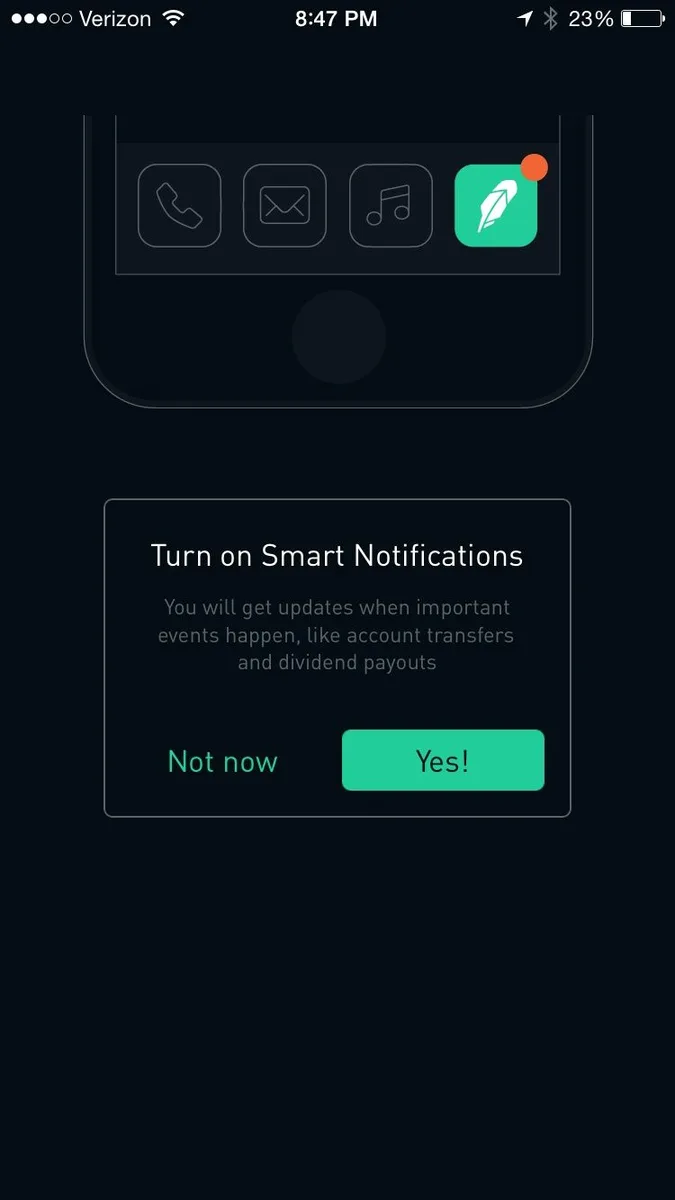
The Robinhood app, a pioneer in commission-free mobile trading, is one of many platforms that now integrate AI-powered insights to assist millions of retail investors in making investment decisions directly from their smartphones. (Source: pinterest.com)
Another important area is natural language processing (NLP). Many apps scan news articles, social media, and earnings reports. They gauge market sentiment about specific stocks or sectors. For instance, platforms might flag a stock if many negative headlines appear. This helps users quickly assess information.
AI also powers personalized recommendations. Algorithms suggest relevant investments based on a user’s past trades, risk tolerance, and stated goals. A 2021 Accenture study showed how personalized financial advice, often AI-driven, improves customer engagement. It’s smart guidance, not autonomous trading.
AI also assists with portfolio optimization. It analyzes a user’s holdings and suggests rebalancing. This might mean reducing exposure to over-represented sectors. It helps maintain a desired risk profile. These tools provide data-driven suggestions for portfolio health.
The focus on data processing and recommendations is notable. AI is not the robot-trader many imagine. Instead, it acts as a highly intelligent, tireless research assistant. This changes one’s perspective. AI isn’t replacing traders; it’s giving them better information.
The retail investor’s reality check
Only 15% of retail investors believe their mobile trading app’s AI suggestions significantly improved their returns. This is according to a recent Statista survey. This statistic highlights a clear difference between the promise and user experience. Why does this disconnect exist?
Part of the issue lies in expectations versus reality. Many users expect AI to guarantee profits or make perfect trades. AI in mobile trading is a tool, not a magic bullet. It provides insights; however, human judgment remains essential.
Another factor is the complexity of market dynamics. Countless variables influence financial markets. Geopolitical events, economic reports, and unforeseen crises all play a role. Even advanced AI struggles with truly new situations. The human element of understanding broader context still counts.
Still, benefits are real for those who understand AI’s role. For example, AI-powered chart pattern recognition alerts users to technical indicators. This saves hours of manual analysis. Users then decide how to act on these alerts.
Consider risk management. Some AI features can identify if a user’s portfolio is too concentrated in a volatile asset. It might then suggest diversification. This proactive advice can prevent big losses. It protects capital.
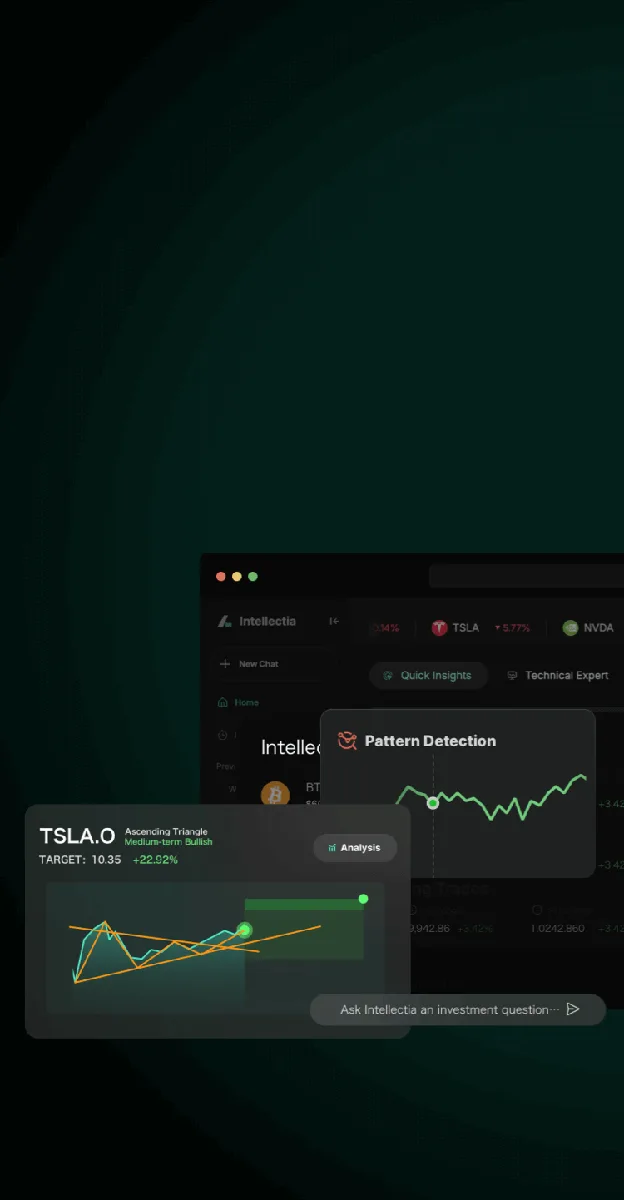
AI-powered chart pattern recognition tools in mobile trading apps can automatically identify complex technical indicators like 'head and shoulders' or 'flag' patterns. This technology saves users hours of manual analysis, providing real-time alerts that help inform their trading decisions. (Source: intellectia.ai)
These features prove most valuable when combined with personal strategy. The AI provides the data. The user still makes the final decision. This creates a powerful partnership, not a takeover. This collaborative approach is less flashy, but far more practical.
Security, ethics, and unseen risks
In 2022, the UK’s Financial Conduct Authority (FCA) issued new guidance on AI in financial services. They cited concerns about “explainability.” This means understanding how AI reaches its conclusions. It’s an important point for mobile trading.
Lack of transparency is a major concern. If an AI recommends a trade, users need to know why. A “black box” approach can lead to distrust. It also makes assessing liability hard if things go wrong. Regulators are pressing for clearer explanations.
Another major risk is data privacy. Mobile trading apps collect vast amounts of personal financial data. AI systems process this data to personalize recommendations. Protecting this sensitive information from breaches is essential. A 2023 IBM report found financial services firms faced high data breach costs.
There are also ethical considerations. Could AI algorithms accidentally perpetuate biases from historical data? If certain demographics historically underperformed in specific investments, could the AI avoid recommending those investments to similar users? This raises questions about fairness.
Algorithmic manipulation is another potential pitfall. A sophisticated AI could theoretically exploit market inefficiencies. It could even influence prices through coordinated actions if deployed broadly. Regulators actively monitor this scenario. The Securities and Exchange Commission (SEC) continues to update its stance on AI in capital markets.
These risks are not merely theoretical. They are active areas of debate and regulatory development. Technology moves fast. Regulation often struggles to keep pace. This presents an ongoing challenge for all involved.
The next wave: where AI mobile trading is headed
Google’s Project Astra, unveiled in 2024, shows a future for AI assistants with advanced reasoning across multiple types of data. This general-purpose AI could greatly change mobile trading. Imagine an AI assistant that understands complex financial queries, not just keywords.

Unveiled in 2024, Google's Project Astra showcases a new generation of AI assistants with advanced reasoning across multiple data types, hinting at the future of sophisticated AI integration in mobile trading. (Source: tomsguide.com)
The future points towards more conversational AI interfaces. You might soon speak naturally to your trading app. You could ask, “Should I invest in clean energy stocks right now, considering my current portfolio and the latest inflation data?” The AI would process multiple data streams to give an informed answer. This moves beyond simple recommendations.
Hyper-personalization will also advance. AI will build even deeper user profiles. It will learn individual psychological biases and risk tolerances. This could lead to tailored nudges or warnings, preventing emotional trading decisions. It’s about understanding the human behind the screen better.
We can also expect greater integration of decentralized finance (DeFi) with AI. AI could help users understand complex DeFi protocols and yield farming strategies. It would simplify access to these newer financial instruments. This opens new avenues for mobile investors.
Finally, explainable AI (XAI) will become standard. Users will receive clear, concise reasons for every AI suggestion or action. This will build trust and meet regulatory demands. It ensures transparency. The black box is slowly being opened.
AI in mobile trading is far from finished. It represents a growing partnership between powerful technology and human decision-making. The goal is not to replace the investor. Instead, it is to provide incredible insights and efficiency. This intelligent journey is just beginning.
Frequently asked questions
Q: Does AI in mobile trading make trades automatically? A: For most retail investors using popular apps, AI typically provides recommendations and insights. It doesn’t automatically execute trades without your approval. Some advanced platforms or premium services might offer limited automated strategies.
Q: How does AI personalize my trading experience? A: AI analyzes your past trading behavior, risk tolerance, portfolio composition, and stated financial goals. It then uses this data to suggest relevant investments, optimize your portfolio, or provide tailored market alerts.
Q: Is AI mobile trading safe? A: AI itself doesn’t inherently make trading safer or riskier. Security depends on the platform’s cybersecurity measures and data protection protocols. But concerns exist about data privacy, algorithmic bias, and the explainability of AI’s recommendations.
Decentralized finance (DeFi) leverages blockchain technology to create an open, permissionless financial system, allowing users to engage in lending, borrowing, and trading without traditional intermediaries like banks. The total value locked in DeFi protocols has grown significantly, demonstrating its rapid adoption and potential to reshape global finance. (Source: unsplash.com)
Q: What’s the biggest benefit of AI in mobile trading for an average user? A: The biggest benefit is access to powerful data analysis and personalized insights. AI can process huge amounts of information quickly, identify potential trends, and help manage risk. This lets users make more informed decisions, saving much time.
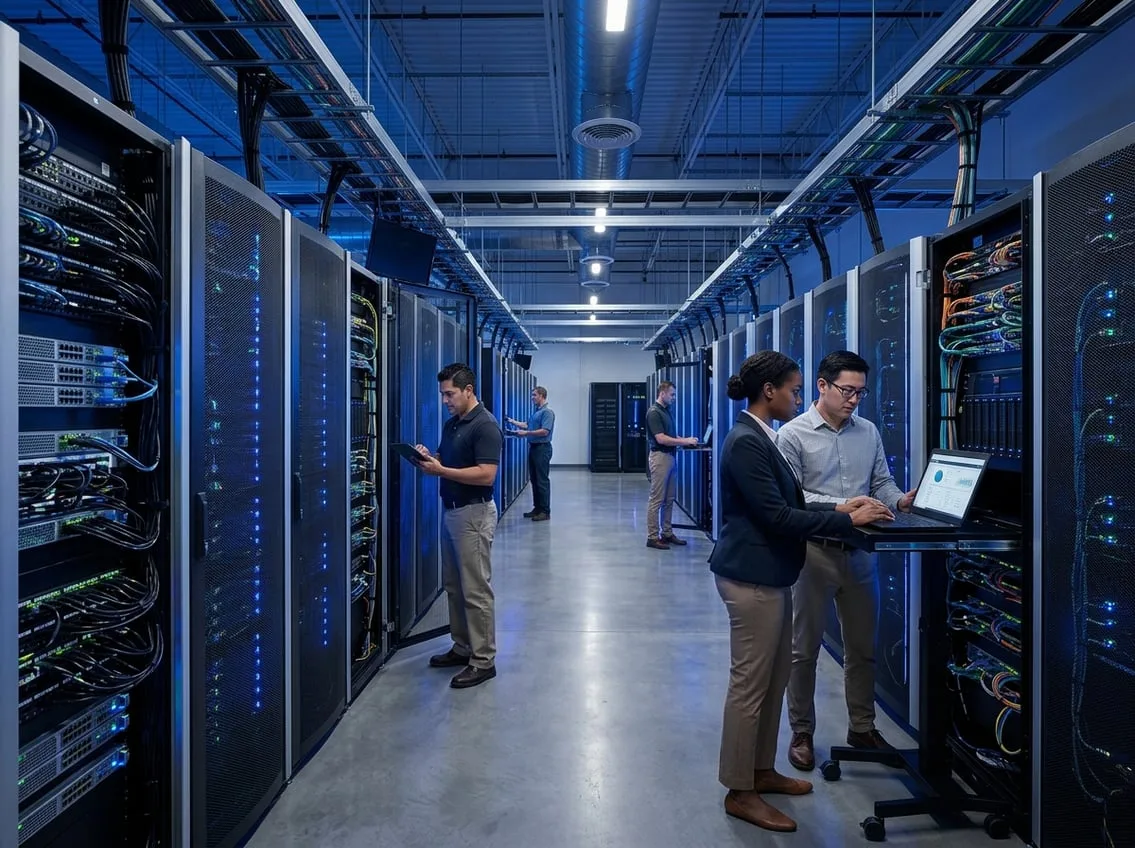
A hyperscale data center represents the immense computing infrastructure necessary for AI mobile trading platforms to process vast amounts of financial data, identify complex trends, and deliver personalized insights to users at lightning speed. These facilities are the silent engines powering modern data-intensive financial technologies. (Source: cc-techgroup.com)
You might also like:
👉 The 2016 Shift: How Phones Became AI Companions
👉 VIX: Wall Street’s 30-Day S&P 500 Fear Forecast
👉 The Future of DeFi Protocols: Navigating Web3’s Financial Revolution