AI Music Generators: Crafting Melodies, Harmonies, & More
Beyond simple tunes, AI music generators are software applications using algorithms to produce melodies, harmonies, and full instrumental pieces.
The AI Orchestra: Machine-Made Music
The concept of AI music has generated significant discussion. Initially, many envisioned simple, robotic tunes, suitable only as background noise. This perception often led to assumptions that the technology was largely overhyped. However, a closer examination reveals a far more complex reality.
AI music generators are software applications. They use algorithms to create new music, producing melodies, harmonies, and full instrumental pieces. Some platforms also add lyrics or synthesize vocals. These systems learn from extensive music datasets. They identify patterns and structures, then apply these to generate new sounds. The depth of their impact is significant.
The First Surprise: Beyond Expectations
In November 2016, Google DeepMind unveiled WaveNet. While not a music generator, it produced raw audio. This demonstrated AI’s capability to understand and mimic sound patterns. Many anticipated AI music would sound artificial, like a computer playing notes. Early experiences with actual AI tracks challenged this expectation.
Amper Music, an early platform from 2014, allowed users to create original music for videos or podcasts. Users selected a mood, genre, and length. The AI generated a unique track in seconds. The output sounded coherent, often comprising full, structured pieces rather than mere snippets. This demonstrated emotive music creation, not just noise.
OpenAI’s Jukebox, released in April 2020, advanced the technology significantly. It could generate entire songs, including singing in various genres and artist styles. While vocals were often imperfect, the musicality was compelling. This suggested AI’s role extended beyond mere notes, encompassing feeling and narrative. Thus, it broadened the definition of “creation.”
The Numbers Speak: A Market in Motion
In 2023, the global market for AI music exceeded $200 million. This figure is projected to grow substantially. While hobbyist and independent artist adoption was anticipated, the extent of corporate investment is noteworthy. Venture capital firms are significantly funding these tools.
A 2023 Goldman Sachs report projected AI could add $150 billion to music industry revenue by 2030. This represents a significant financial impact. AI offers potential to streamline production, personalize content, and open new revenue streams. Major record labels, such as Universal Music Group, are exploring AI music partnerships. They perceive AI as a valuable tool rather than solely a threat.
OpenAI's Jukebox, released in April 2020, marked a significant advancement in AI music, capable of generating entire songs, including singing, across various genres and artist styles. Despite often imperfect vocals, its compelling musicality broadened the definition of AI creation beyond simple note generation. (AI-generated illustration)
Independent artists are also embracing these tools. Platforms like Soundraw and AIVA offer affordable, royalty-free music. This assists creators operating without large budgets. It makes high-quality music assets accessible to a wider audience. The speed and scale of AI music are compelling. The technology is evolving beyond a niche, becoming a significant economic force.
The Creative Conundrum: Art or Algorithm?
In 2019, artist Holly Herndon released “Proto,” an album created with her AI, Spawn. This project was not a gimmick but a personal, artistic statement. It prompted questions about whether AI music could be considered “art.” Herndon’s work challenged that assumption by using Spawn as a creative partner, training it on her voice and music.
Herndon’s process involves significant human curation and direction. She views AI as an instrument, an extension of her creative process. Other artists hold a similar perspective. For example, Grimes invited fans to use her AI voice for their own songs in 2023, offering a 50% royalty split. This demonstrates a shift where AI becomes a tool for collective creation.
The question of art ownership remains a subject of ongoing debate. Can an algorithm truly be an artist? Most experts agree that human intent and curation are still key. The AI generates, but the human directs, selects, and refines. This framing suggests the discussion is not “AI versus human” but rather “AI with human.”
The Copyright Maze: Who Owns the Sound?
In February 2023, the U.S. Copyright Office issued guidance on AI works. It stated that human authorship is required for copyright. If an AI creates a work without human input, it cannot be copyrighted. This clarification was significant, highlighting an area with more questions than immediate answers.
The challenge arises with human-AI collaborations. The Copyright Office specifies that human contributions can be copyrighted. However, the AI-generated parts are not. For example, a human selecting prompts, arranging AI outputs, or adding their own melodies could copyright their specific additions. The AI-made components themselves remain unprotected, which complicates licensing and ownership.
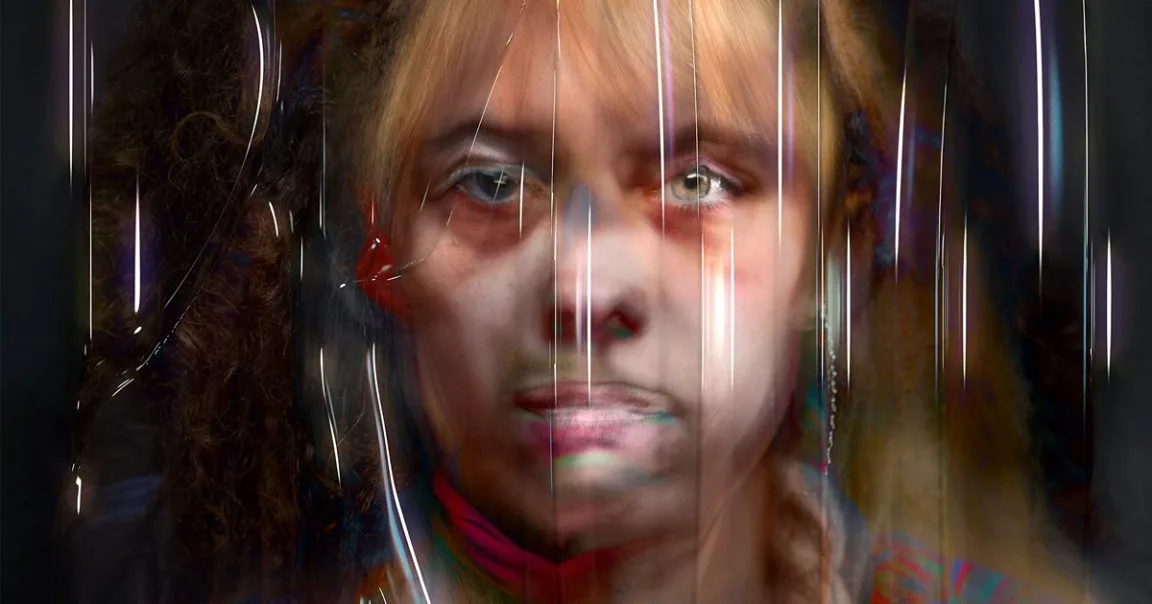
Artist Holly Herndon, known for her experimental work, released the album "Proto" in 2019, created with her AI, Spawn. Herndon views AI as an instrument and creative partner, training it on her voice and music to challenge traditional notions of art. (Source: futurism.com)
Groups like the UK’s Musicians’ Union express concerns. They advocate for stronger protections for human creators. Their worry centers on AI systems training on copyrighted material without consent or compensation. Legal frameworks are still evolving to address these issues. Significant legal battles are anticipated in the coming years.
Beyond the Headlines: The Unseen Impact
AI music’s influence extends significantly beyond mainstream songs. A 2022 University of Southern California study found that AI music boosts productivity in creative tasks. Filmmakers use AI to generate custom scores for scenes. Advertising agencies create custom jingles on demand. Video game developers can dynamically alter soundtracks based on gameplay.
AI music also enhances accessibility for creation. Individuals without formal music training can now compose original pieces. Disabled musicians can utilize AI interfaces to express themselves in novel ways. This broadens music creation to a wider audience. It removes barriers that previously limited music-making to a select few.
Furthermore, AI aids in the preservation of and interaction with older music. Researchers use AI to reconstruct lost compositions or analyze vast folk music archives. This generates new educational and cultural opportunities. The diverse, practical applications demonstrate its significant usefulness.
Frequently Asked Questions
Can AI truly create original music? AI can generate new music that sounds original. However, it learns from existing data. Human input and curation often guide its output.
Will AI replace human musicians? Most experts do not believe AI will entirely replace human musicians. Instead, it will likely change how musicians work, serving as a tool for creation and production.
Is AI music legal to use? The legality depends on the specific platform and its licensing terms. Many AI music platforms offer royalty-free music. However, copyright for purely AI-made works remains complex.
How does AI generate music? AI systems use algorithms trained on extensive music datasets. They identify patterns in melody, harmony, and rhythm, then generate new sequences based on these patterns.
The Road Ahead: Sounding the Future
AI music technology is opening new avenues for creative expression, enabling disabled musicians to compose original pieces and interact with music in novel ways, breaking down traditional barriers to artistic creation. (AI-generated illustration)
By 2025, AI music could become ubiquitous. It may adapt soundtracks to individual moods and personalize listening experiences. The technology is evolving rapidly, making its final form difficult to predict.
The future will likely feature more advanced human-AI partnerships. Artists will discover new ways to collaborate with algorithms, leading to the emergence of new genres and sounds. Ensuring fair compensation for creators and establishing clear ethical rules are crucial. This approach will ensure the technology develops responsibly. Tomorrow’s music will blend human skill with machine power.
You might also like:
👉 The 2016 Shift: How Phones Became AI Companions
👉 Unmasking Online Bots: The X & Facebook Mimicry Challenge
👉 Virtual Reality Applications: Exploring VR’s Impact Across Industries