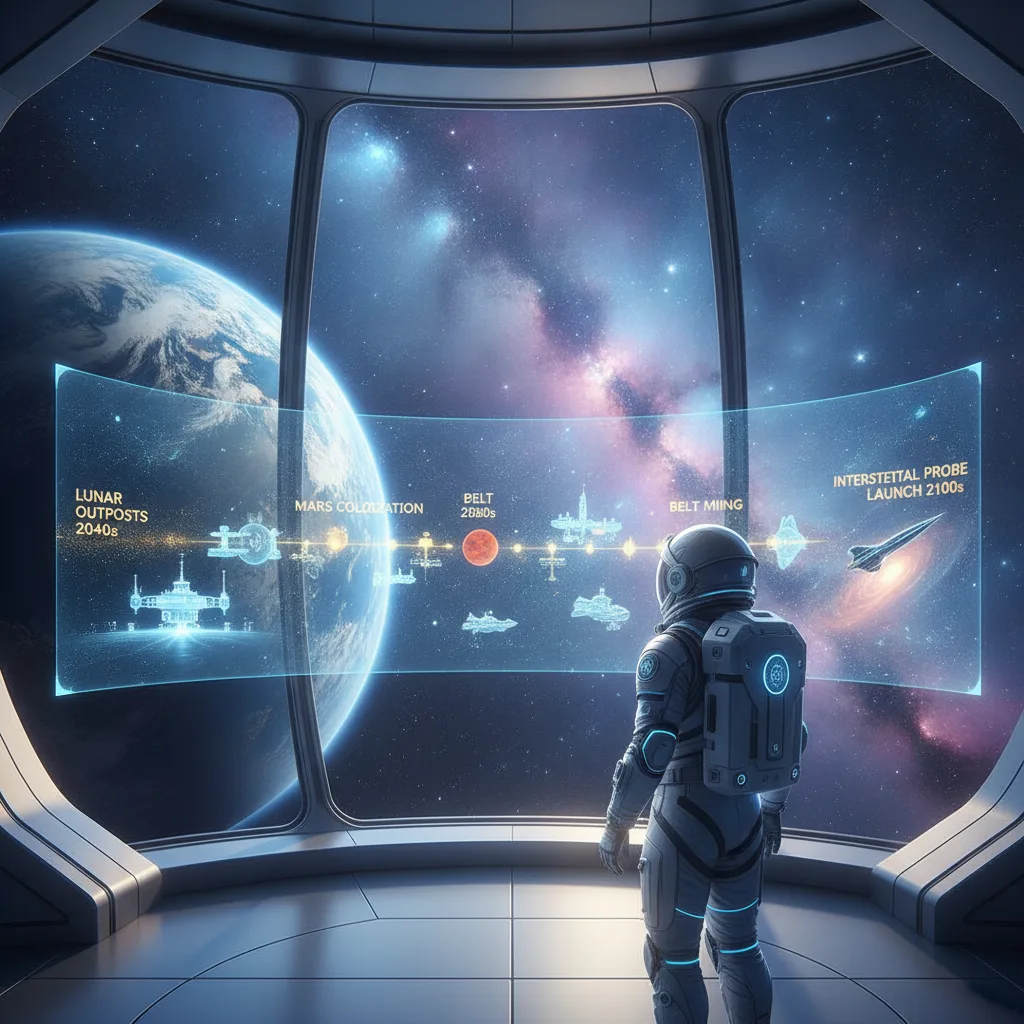
Moon in 2026: Living Off Earth Starts with Artemis III
NASA's Artemis III mission in 2026 marks humanity's return to the Moon, a critical step towards permanent off-Earth living. Discover future Moon outposts and Mars missions.
Our next 50 years in space: Humanity’s journey beyond Earth
Humanity is heading back to the Moon. In 2026, NASA’s Artemis III mission will send astronauts to the lunar surface. This marks our first return since Apollo 17 in 1972. It is a major step towards living off Earth permanently.
Many nations and private companies have significant space plans. NASA aims for Moon outposts and Mars missions. The European Space Agency (ESA) works with NASA and also builds its own scientific probes. China’s National Space Administration (CNSA) runs its own Moon and Mars programs. Japan Aerospace Exploration Agency (JAXA) and the Canadian Space Agency (CSA) are important global partners. Private groups like SpaceX, Blue Origin, and Sierra Space drive new ideas in rockets and orbital systems. They seek new discoveries, want to use space resources, and aim to send humans further.
Near term: Moon return and orbiting outposts
NASA’s Artemis III mission, set for 2026, will land two astronauts near the Moon’s South Pole. This area holds much water ice, a key resource for future Moon bases. The mission uses NASA’s Space Launch System (SLS) rocket and Orion spacecraft. SpaceX’s Starship will serve as the Human Landing System (HLS) for this mission, based on NASA contracts.
The Lunar Gateway, a small space station, will orbit the Moon by the late 2020s. NASA, ESA, JAXA, and CSA are building it together. It will act as a stopping point for Moon missions and deep space trips. The Gateway’s first two modules are the Power and Propulsion Element (PPE) and the Habitation and Logistics Outpost (HALO). These modules are currently being built. Maxar Technologies builds PPE, and Northrop Grumman builds HALO.
SpaceX is quickly developing its Starship launch and landing system. Elon Musk, SpaceX CEO, states Starship aims for full reusability and frequent launches. This capability is central to his company’s long-term goal for Mars colonization. Starship has already performed several test flights from Starbase in Boca Chica, Texas.
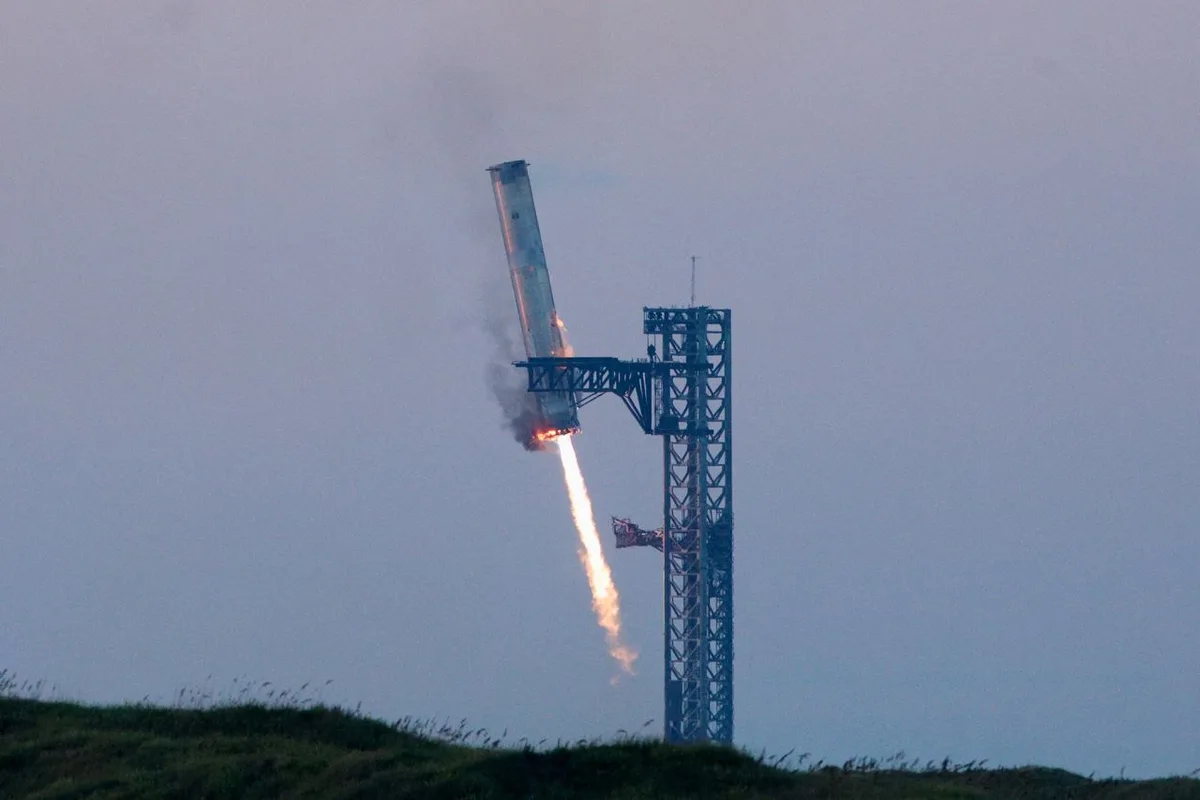
SpaceX's Starship is a fully reusable launch and landing system central to humanity's future in space. It is contracted to serve as the Human Landing System for NASA's Artemis III mission to the Moon and is envisioned by SpaceX for Mars colonization. (Source: cnn.com)
China’s CNSA plans its own Moon missions, separate from the Artemis program. The Chang’e-6 mission will return a lunar sample from the far side of the Moon in 2024. China plans to build an International Lunar Research Station (ILRS) by the early 2030s. The ILRS is a joint project with Russia’s Roscosmos.
Commercial space stations will replace the International Space Station (ISS) in Earth orbit. The ISS will be deorbited by 2031, as per NASA’s transition plan. Companies like Axiom Space, Blue Origin, and Sierra Space are constructing private orbital platforms. Axiom Station will begin attaching modules to the ISS in 2026.
Blue Origin, founded by Jeff Bezos, develops the New Glenn heavy-lift rocket. This rocket will carry its own lunar lander, Blue Moon. NASA has also awarded a contract to Blue Moon for future Artemis missions. Blue Origin also helps with the Orbital Reef commercial space station project.
Mars dreams and deep space probes (2030-2040)
The Mars Sample Return mission, a joint effort by NASA and ESA, will launch in the early 2030s. This mission will bring Martian rock and soil samples back to Earth. NASA’s Perseverance rover has already collected these samples. The samples will provide new scientific information about Mars’s potential for past life.
NASA plans crewed Mars transit missions by the late 2030s. These missions will send astronauts to Mars orbit. They will not land on the surface. Such missions will test human health and operational skills in deep space. This preparation is important for eventual surface landings. A recent report by the National Academies of Sciences, Engineering, and Medicine outlines the difficulties.
China plans its own crewed Mars missions in the 2040s. The CNSA successfully landed its Zhurong rover on Mars in 2021. This showed China’s expanding capabilities in interplanetary exploration. They aim to build a Martian research outpost.
NASA’s Europa Clipper mission will arrive at Jupiter’s moon Europa in the early 2030s. It will study Europa closely. Scientists believe Europa likely has an ocean under its ice. This ocean could potentially hold life. The mission will use instruments to map the ocean and search for plumes.
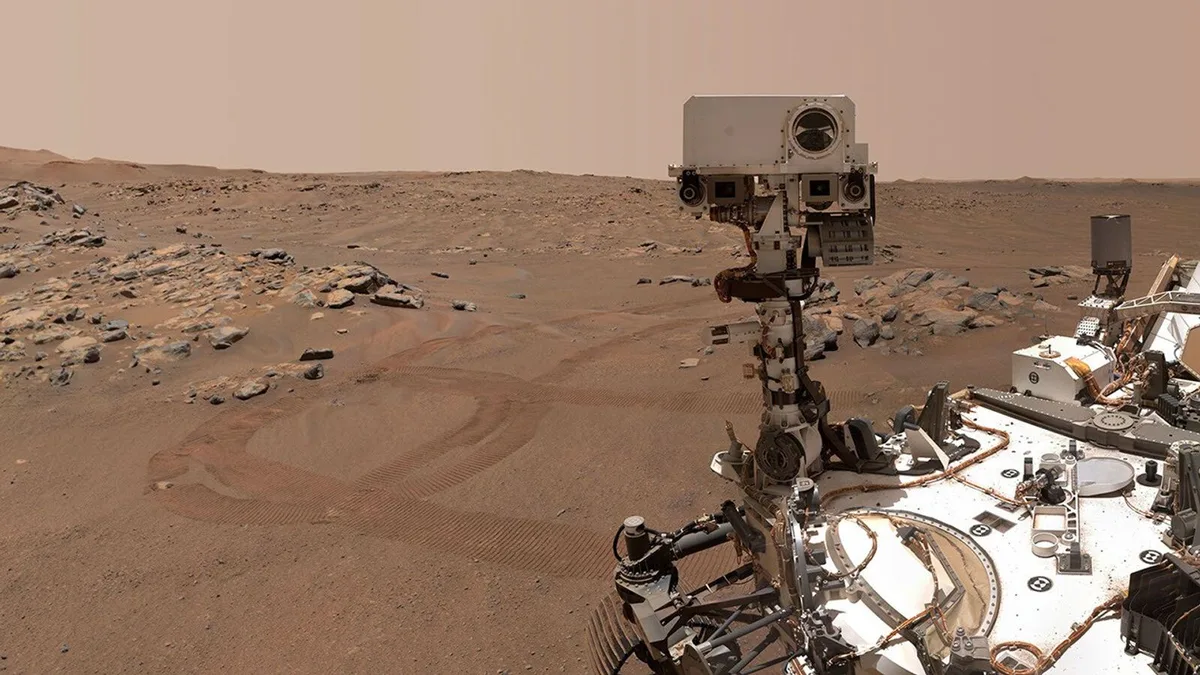
NASA's Perseverance rover, actively exploring the Jezero Crater on Mars, has already collected crucial rock and soil samples. These samples are slated for return to Earth by the early 2030s, offering scientists unprecedented opportunities to search for signs of ancient microbial life. (Source: science.nasa.gov)
ESA’s Jupiter Icy Moons Explorer (JUICE) launched in April 2023. It will arrive in the Jovian system by 2031. JUICE will study Europa, Callisto, and Ganymede. It will focus on Ganymede, the solar system’s largest moon, which has its own magnetic field.
Advanced propulsion systems are still under development. Nuclear electric propulsion (NEP) and nuclear thermal propulsion (NTP) are being researched. NASA and DARPA are collaborating on the Demonstration Rocket for Agile Cislunar Operations (DRACO) program. DRACO aims to fly a test of NTP technology by 2027. NTP offers much faster travel for deep space missions.
Space resources and better engines (2040-2050)
Lunar resource mining will become common by the 2040s. Water ice at the Moon’s poles can be converted into rocket fuel and breathable air. This “in-situ resource utilization” (ISRU) reduces mission costs. It also makes long-term Moon bases possible. The Artemis program targets these polar regions for its landings.
Asteroid prospecting missions will increase during this period. The Psyche mission, launched by NASA in October 2023, is already heading to a metal-rich asteroid. This mission will arrive at asteroid Psyche in 2029. Future missions could find asteroids suitable for mining valuable metals. These metals include nickel, iron, and platinum group elements.
Nuclear thermal propulsion (NTP) technology might be ready for use by the mid-2040s. This propulsion method heats hydrogen propellant with a nuclear reactor. It creates a high-velocity exhaust, providing strong thrust and efficiency. Faster travel times mean astronauts receive less radiation. They also shorten travel significantly.
Space solar power concepts are receiving more attention. Projects aim to collect solar energy in orbit and beam it to Earth. The U.S. Department of Defense is looking into small tests. JAXA has also studied space-based solar power systems. Such systems can provide clean, continuous energy.
Long-term Moon bases will become permanent settlements. They will be more than just temporary outposts. These bases will support science and resource processing. They could also serve as launch pads for missions to Mars and beyond. The International Space Exploration Coordination Group (ISECG) has a plan for sustained Moon exploration.

Ganymede, the largest moon in our solar system, is unique for possessing its own magnetic field and a complex icy surface. The ESA's JUICE mission, launched in 2023, will arrive in 2031 to study this intriguing Jovian moon and its potential subsurface ocean. (Source: amazon.com)
Private industry will play a larger role in developing space infrastructure. Companies will offer services like orbital refueling and debris removal. This commercial growth makes the space economy more accessible and active. It eases the burden on government agencies.
The far future: beyond our solar system (2050 and beyond)
We might have permanent Mars colonies by the 2050s. SpaceX wants to build a self-sustaining city on Mars. NASA also envisions human outposts on Mars for scientific study. These colonies would use local resources for water, fuel, and building materials. Achieving this long-term goal requires major technology breakthroughs.
Interstellar probes will become more feasible. Concepts like Breakthrough Starshot suggest sending tiny, light-sail propelled probes to Alpha Centauri. These probes could reach nearby star systems within decades. They would travel at a good fraction of light speed. This vision relies on advanced lasers and tiny technology.
Orbital habitats will be much larger than today’s space stations. Companies might build big, self-contained communities in Earth orbit. These habitats could house thousands of people. They would offer new places for people to live and work. Bigelow Aerospace previously developed expandable habitat modules.
Future generation telescopes will show us exoplanets more clearly than ever. The Habitable Worlds Observatory, a possible successor to the James Webb Space Telescope, is being studied. It could directly image Earth-like planets around other stars. This would allow us to search for signs of life in exoplanet atmospheres.
Human missions to the asteroid belt might also begin. Asteroids contain vast amounts of raw materials. They represent a significant economic and scientific frontier. Such missions would require powerful deep-space transport and life support.
Developing closed-loop life support systems is crucial for long missions. These systems recycle air, water, and waste. They reduce the need for resupply from Earth. NASA’s advanced life support research is a key part of its deep space exploration plans.
FAQ
What is the main goal of current space exploration? The immediate goal is to establish a lasting human presence on the Moon. This involves building Moon infrastructure and using Moon resources. These efforts are a stepping stone for future human missions to Mars.
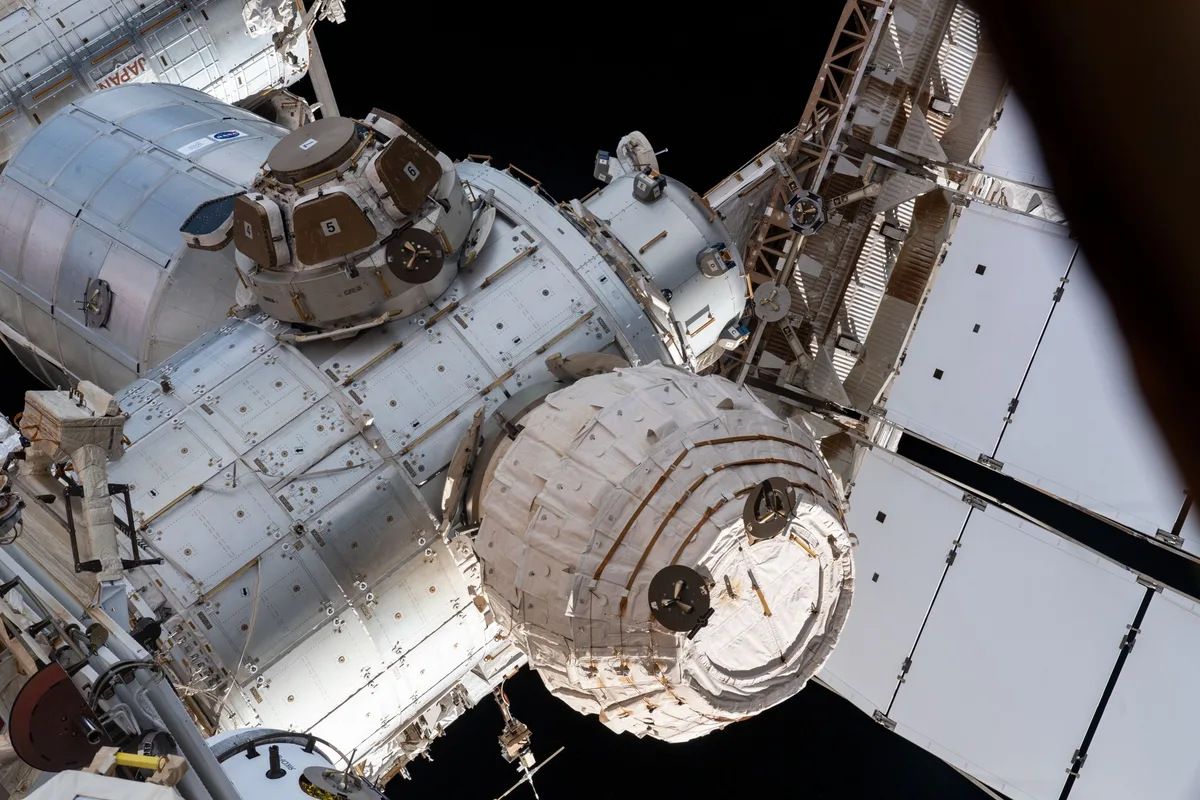
The Bigelow Expandable Activity Module (BEAM), developed by Bigelow Aerospace, was deployed on the International Space Station in 2016. It demonstrated the viability of expandable habitats, which could offer more volume with less launch mass for future orbital communities. (Source: nasa.gov)
Which nations lead human spaceflight efforts? The United States, through NASA, leads current human spaceflight. China’s CNSA is rapidly advancing its own human spaceflight program. The European Space Agency and other global partners also contribute significantly.
Will private companies replace government agencies? No, private companies are increasingly working with government agencies. They provide essential services like launches, habitat building, and lunar landers. This teamwork aims to speed up exploration and reduce costs, not replace agencies.
What are the biggest technology challenges? Major hurdles include developing advanced engines for faster travel. Creating closed-loop life support systems for long missions is also important. Protecting astronauts from deep-space radiation remains a significant challenge.
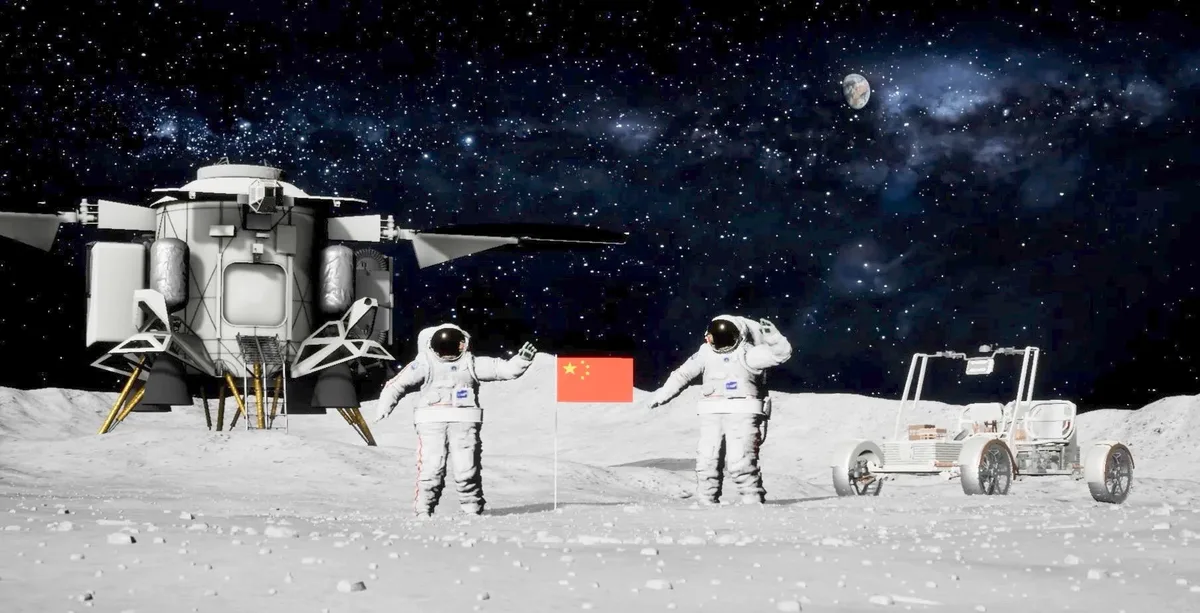
China's National Space Administration (CNSA) is rapidly advancing its human spaceflight program, with taikonauts (Chinese astronauts) regularly conducting missions to their Tiangong space station. The first Chinese taikonaut, Yang Liwei, orbited Earth in 2003, making China the third nation to independently send a human into space. (Source: china-in-space.com)
You might also like:
👉 The $546 Billion Space Race: Private Money, Global Rivalries
👉 Venus: Why 475°C Hell Holds Earth’s Climate Future
👉 Unexplained Mysteries of Science: Cosmos, Quantum & Beyond