
S&P 500 Down 20%: Does a Bear Market Mean Recession?
Many confuse bear markets with recessions. A bear market means the S&P 500 has fallen 20% or more. Learn the key differences.
Beyond the headlines: What bear markets and recessions really mean
Imagine the stock market crashing. Does that mean the economy is also collapsing? Not necessarily. Many people confuse a “bear market” with a “recession.” They think a big drop in stock prices automatically means a wider economic slump. But these two events are distinct. While often linked, they are not the same.
A bear market means a broad market index, like the S&P 500, has fallen 20% or more from its recent high. This is purely a stock market event. A recession is different. It describes a big drop in overall economic activity. This slowdown spreads across the economy and lasts more than a few months.
Market drops vs. economic slumps
The S&P 500 index fell over 20% in 2022. This signaled a bear market. Many headlines then speculated about an impending recession. But a drop in stock prices does not guarantee a broad economic contraction. The two events are distinct.
A bear market reflects investor feelings and expected corporate earnings. It measures fear and uncertainty in the stock market. Think of it like a patient’s temperature. A high fever is a symptom, but it doesn’t tell you the exact illness.
A recession is a much wider economic event. It involves declines in real gross domestic product (GDP), employment, industrial production, and real income. In the US, the National Bureau of Economic Research (NBER) officially declares recessions. The NBER considers many data points, not just stock market performance.
Why markets often lead the economy (but not always)
Stock markets often predict economic shifts. Investors buy and sell based on future corporate profits and economic conditions. Markets can react to problems before official data confirms a recession.
Since 1950, 10 out of 12 US recessions followed a bear market, according to Charles Schwab data. This strong correlation makes the market a reliable forward signal. Investors expect lower earnings. This prompts them to sell stocks.

The National Bureau of Economic Research (NBER) is a private, non-profit organization based in Cambridge, Massachusetts, famously responsible for officially dating the beginning and end of U.S. recessions based on a comprehensive analysis of economic data. (Photo: Brett Wharton / Unsplash)
Think of it like a weather vane. It shows wind direction before storm clouds gather. This forward-looking nature means the market can drop sharply. It prices in bad news quickly.
The market’s predictive power is not perfect. Not every bear market leads to a recession. The stock market can have big downturns. The wider economy might not follow.
What defines a recession? The official verdict
The National Bureau of Economic Research (NBER) is the official source for dating US business cycles. Its Business Cycle Dating Committee consists of economists. They identify when recessions start and end. Their criteria are far more complex than just two consecutive quarters of negative GDP.
The NBER defines a recession as “a significant decline in economic activity spread across the economy, lasting more than a few months.” They consider three main criteria: depth, diffusion, and duration. For example, the NBER looks at real personal income minus transfers, non-farm payroll employment, and the unemployment rate. They also examine industrial production and manufacturing and trade sales.
The NBER officially declared the start of the COVID-19 recession in February 2020. This announcement came in June 2020. That was months after the economic decline had already begun. This lag means the stock market has often already seen its steepest declines by the time a recession is officially recognized.
This official definition shows the difference between market sentiment and actual economic output. Market swings happen fast. Economic shifts are slower and broader.
History lessons: When bear markets met recessions (and when they didn’t)
Bear markets and recessions have a varied relationship. Since World War II, the S&P 500 index has seen 12 bear markets. Most downturns happened with or before a recession.
For instance, a bear market led to a recession between 2000 and 2002. The dot-com bubble burst. This caused the S&P 500 to drop 49.1%. A mild recession followed, lasting from March to November 2001. The Great Financial Crisis of 2007-2009 saw the S&P 500 fall 56.8%. This severe bear market happened alongside a deep, long recession.
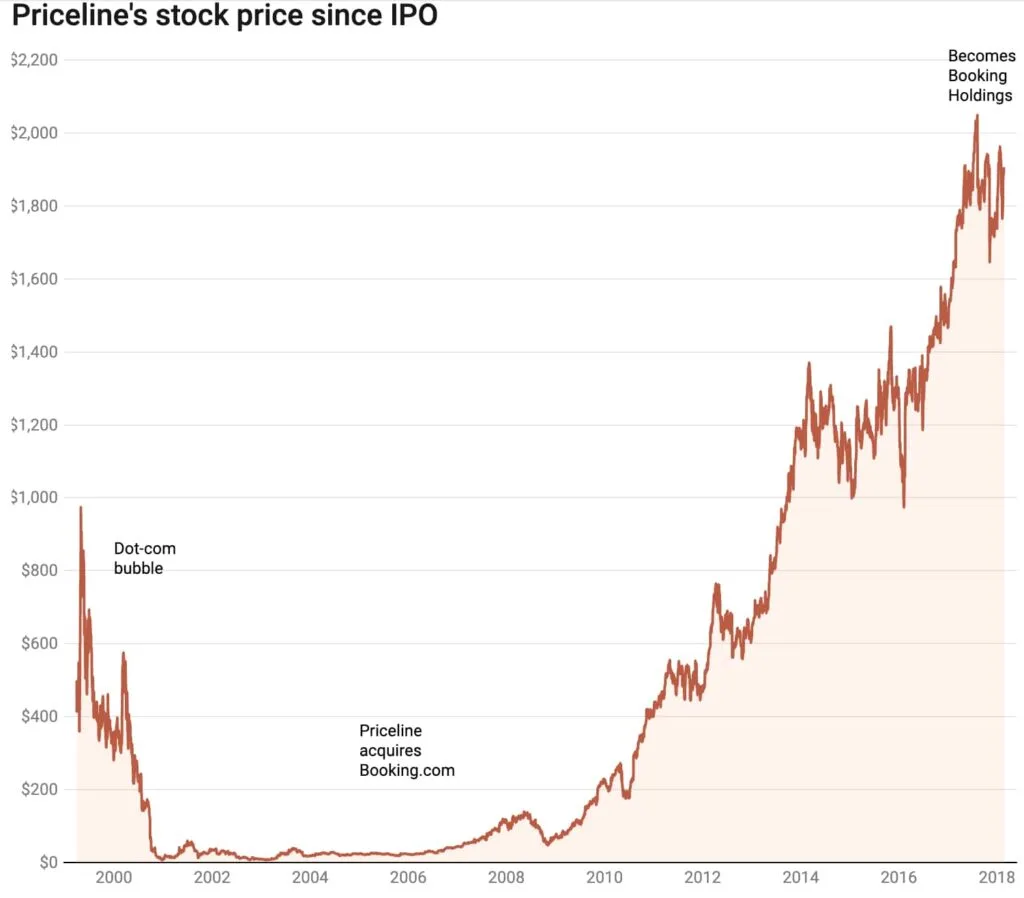
The dot-com bubble burst, occurring between 2000 and 2002, saw the S&P 500 index plummet by 49.1% as overvalued internet companies collapsed. This period of intense speculation and subsequent market correction led to a mild recession. (Source: finbold.com)
But not every bear market signals an economic contraction. In 1966, the S&P 500 dropped a significant 22.2%. The US economy avoided a recession, according to Ned Davis Research. Another clear example was the Black Monday crash in October 1987. The S&P 500 plunged more than 33% in a single month. Yet, the US economy kept growing, avoiding a recession, as documented by the Federal Reserve Archives.
These historical examples show a bear market is a strong sign of economic stress. But it doesn’t always predict a recession. The underlying causes and wider economic context matter a lot.
What drives them: Inflation, interest rates, and economic shocks
Inflation, interest rates, and economic shocks can trigger bear markets and recessions. Inflation is a major problem. When prices rise too quickly, central banks cool the economy. For example, the Federal Reserve adjusts interest rates to manage inflation.
In 2022, the Federal Reserve aggressively hiked its benchmark interest rate seven times. The rate moved from near zero to 4.5% by year-end, Federal Reserve data shows. Higher interest rates make borrowing more expensive for businesses and consumers. This slows spending and investment. It can reduce corporate profits.
Lower profits often lead to lower stock valuations. This contributes to a bear market. If the slowdown gets severe, it can also lead to job losses. This causes a broader economic contraction and a recession. Think of it like a car accelerating too fast. The driver (the Fed) applies the brakes (higher interest rates) to slow it down. Sometimes the braking is smooth. Other times, it’s a bit jarring.
Unexpected economic shocks can also cause market and economic downturns. The COVID-19 pandemic in 2020 is a recent example. It caused a swift, deep bear market and a sudden, sharp recession. Geopolitical conflicts or sudden spikes in oil prices can also act as big shocks. These events disrupt supply chains, reduce consumer confidence, and harm business profits.
What this means for you: Look beyond the headlines
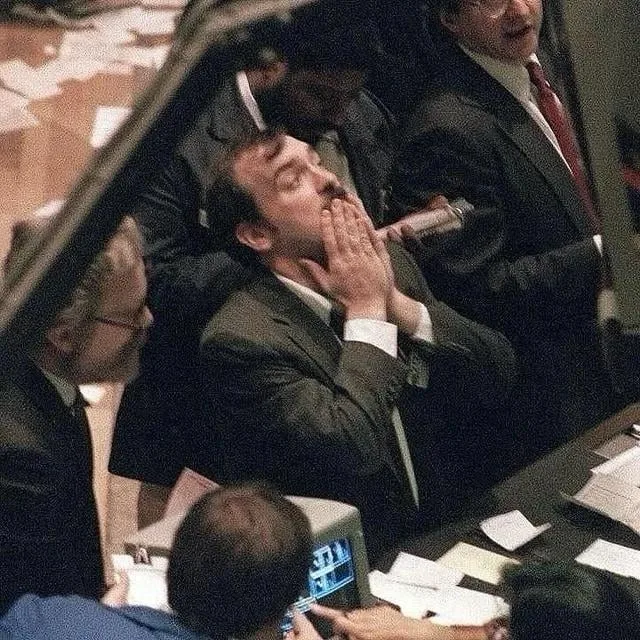
The Black Monday crash on October 19, 1987, saw the Dow Jones Industrial Average plunge 22.6% in a single day, the largest one-day percentage drop in stock market history. Despite the dramatic market downturn, the US economy remarkably avoided a recession, serving as a key historical example that not all bear markets lead to economic contraction. (Source: reddit.com)
Don’t panic when you see market headlines. Knowing the difference between a bear market and a recession helps you avoid rash decisions. A market downturn doesn’t automatically mean your job is at risk or the economy is collapsing.
Historically, the average bear market lasts about 9.6 months. Recessions typically last around 10 months, according to LPL Financial Research. This shows that downturns hurt, but they are usually temporary. The market has always recovered. The economy has always bounced back.
For individual investors, stick to your long-term goals. Diversify investments and keep a financial plan. This helps you ride out market volatility. Economic indicators, like employment data and consumer spending, give a more direct view of the economy’s health. These numbers often matter more for your personal financial stability than daily stock prices.
The economy and the market are complex. They influence each other. But it’s not always direct causation. When you grasp these differences, you can make better choices. You can also read financial news with a sharper eye.
FAQ
Q1: Is a stock market crash the same as a bear market? A stock market crash is a sudden, sharp, and often unexpected drop in stock prices. This usually happens in a single day or week. A bear market is a sustained decline of 20% or more from a market peak. It can happen gradually over weeks or months. A crash can certainly start a bear market.
Q2: Can we have a recession without a bear market? It’s rare, but possible. The stock market usually reacts to economic weakness before an official recession. It acts as a leading indicator. If a recession is very mild, or caused by factors that don’t significantly impact corporate profits, the market might only see a correction. It might not enter a full bear market.
Q3: What’s the best way to prepare for a bear market or recession? Diversify your investments across different asset classes. Maintain an emergency fund. Review your financial plan. Avoid taking on too much debt. Focus on long-term investment goals. These actions help you build resilience against economic ups and downs.
LPL Financial Research is a division of LPL Financial, one of the largest independent broker-dealers in the United States. They provide critical market analysis and economic data, such as the average duration of recessions. (Source: trifectawm.com)
Q4: How long do bear markets and recessions typically last? Historically, both bear markets and recessions in the US typically last less than a year. The average bear market lasts about 9.6 months. The average recession lasts around 10 months. While the duration can vary, they are usually temporary parts of the economic cycle.
You might also like:
👉 Predicting Stock Market Trends: ML & Sentiment Analysis Guide