
New York, 2000: The $164 Billion Merger That Shook Tech
On January 10, 2000, two corporate giants announced a merger in NYC, aiming for market control and future tech. Explore the biggest deals.
The year 2000 started with a bang. On January 10, New York City’s Time Warner Center hummed with excitement. Two giants were about to announce a merger, a deal meant to define the new millennium. It showed what corporate mergers are all about: a fierce push for size, market control, and a glimpse into the future.
Companies merge their assets, debts, and operations. They form one bigger entity. Why? To grow market share, cut costs, or get new tech. They also want new markets or more diverse products. Investors usually love these deals, hoping for bigger returns. But regulators watch closely for unfair practices. The late 90s and early 2000s saw a massive rise in these huge deals. The dot-com bubble made company values sky-high, feeding dreams of ruling multiple industries.
the dot-com dream and its fall: aol time warner
On January 10, 2000, Steve Case, AOL’s CEO, and Gerald Levin, Time Warner’s CEO, stood together. They announced a merger worth about $164 billion. AOL, an internet giant, planned to buy Time Warner, a classic media company. It was a stock-for-stock deal. This combined AOL’s huge internet subscriber base with Time Warner’s films, magazines, and cable.
Many analysts called AOL Time Warner a brilliant idea. They thought it would shape the future of combined media. Steve Case spoke of “truly transforming the consumer experience” by mixing content and internet access, The Wall Street Journal reported. Gerald Levin called it a “once-in-a-lifetime opportunity” for growth. The new company seemed to have endless potential.
But the dot-com bubble burst soon after the deal closed. AOL’s stock value crashed. The promised benefits between internet-focused AOL and the old media giant never happened. The two companies had huge cultural clashes. Time Warner’s traditional executives struggled with AOL’s fast, internet-driven ways.
AOL Time Warner lost $99 billion in early 2002. This was the biggest quarterly loss in corporate history then. Gerald Levin retired early. Steve Case left as chairman in 2003. This merger showed the huge risks of overvalued deals and companies that just don’t fit.
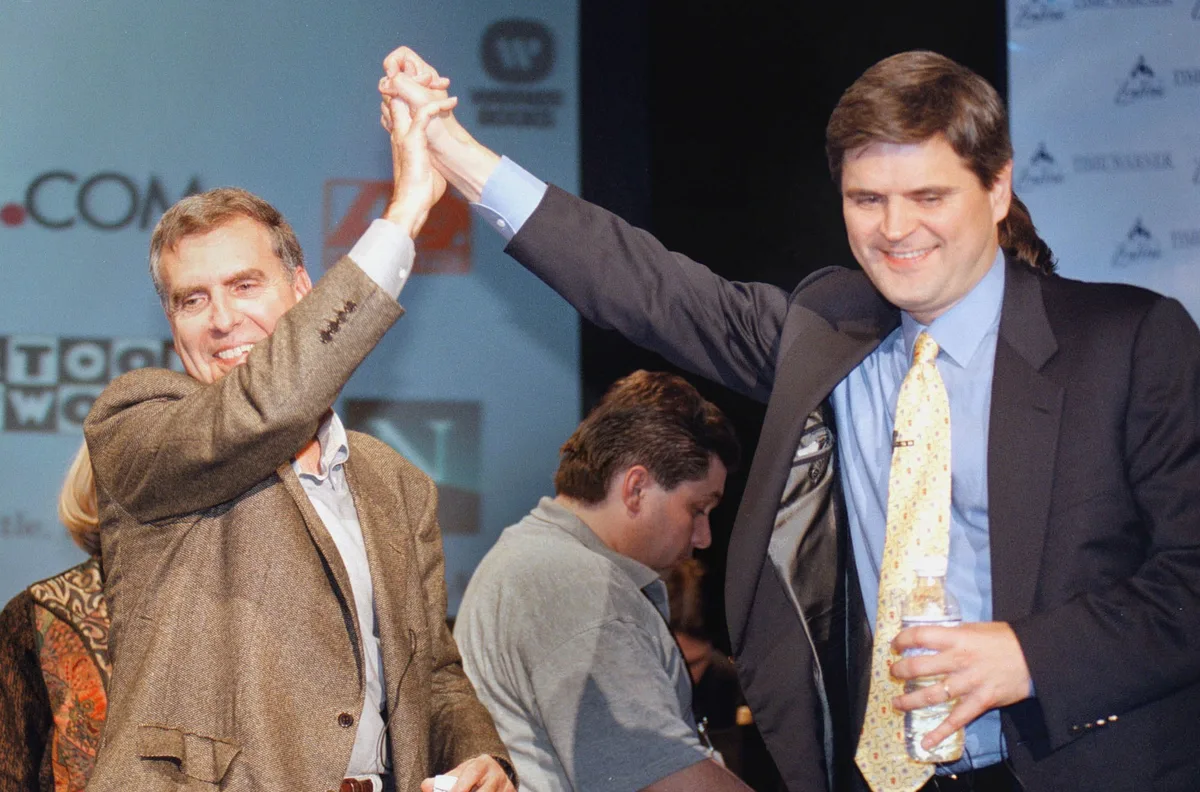
AOL CEO Steve Case and Time Warner CEO Gerald Levin announce their historic $164 billion merger on January 10, 2000, a deal initially hailed as a visionary move but later became a symbol of the dot-com bust. (Source: vox.com)
europe’s hostile takeover: vodafone vs. mannesmann
In November 1999, a different corporate fight began in Europe. Chris Gent, CEO of British telecom giant Vodafone AirTouch, targeted Mannesmann AG. Mannesmann, a German industrial company, had grown into the mobile phone market. Gent thought buying Mannesmann was key for Vodafone to grow in Europe.
Vodafone launched a hostile takeover. The offer valued Mannesmann at about $183 billion. This shocked Germany’s business world. Mannesmann’s CEO, Klaus Esser, fought hard against the bid. He saw it as an attack on German corporate culture and its shareholders. Esser worked to keep Mannesmann independent.
The fight grabbed Europe’s financial markets for months. Vodafone’s aggressive chase and Mannesmann’s strong defense made headlines. The Financial Times reported daily on the struggle. Vodafone won in February 2000. The deal created the world’s biggest mobile phone company by subscribers.
This huge cross-border buy remains the largest hostile takeover ever. It changed European telecommunications for good. It also sparked a big debate in Germany. This debate concerned how companies are run and whether foreign hostile takeovers are acceptable.
oil giants merge: exxon mobil
On December 1, 1998, Exxon’s chairman, Lee Raymond, and Mobil’s chairman, Lucio Noto, announced a merger. Their companies would combine. This $80 billion stock-for-stock deal created Exxon Mobil Corporation. Both companies descended from John D. Rockefeller’s Standard Oil trust.
The merger came after a time of very low oil prices. Both companies wanted to cut costs and work better. They aimed to build a stronger company. The new company became the world’s biggest oil and gas firm. It operated in over 200 countries and regions. “This combination will provide greater financial strength,” Lee Raymond told Bloomberg News.
The US Federal Trade Commission and the European Commission approved the deal in 1999. Regulators made them sell some refineries and stores. These were small sales compared to the deal’s size. The combined company quickly showed it could save money.
Exxon Mobil’s creation worked. It became a powerful force in global energy. The merger led to more consolidation in oil and gas. Other big energy companies soon did the same, looking for similar savings from size.
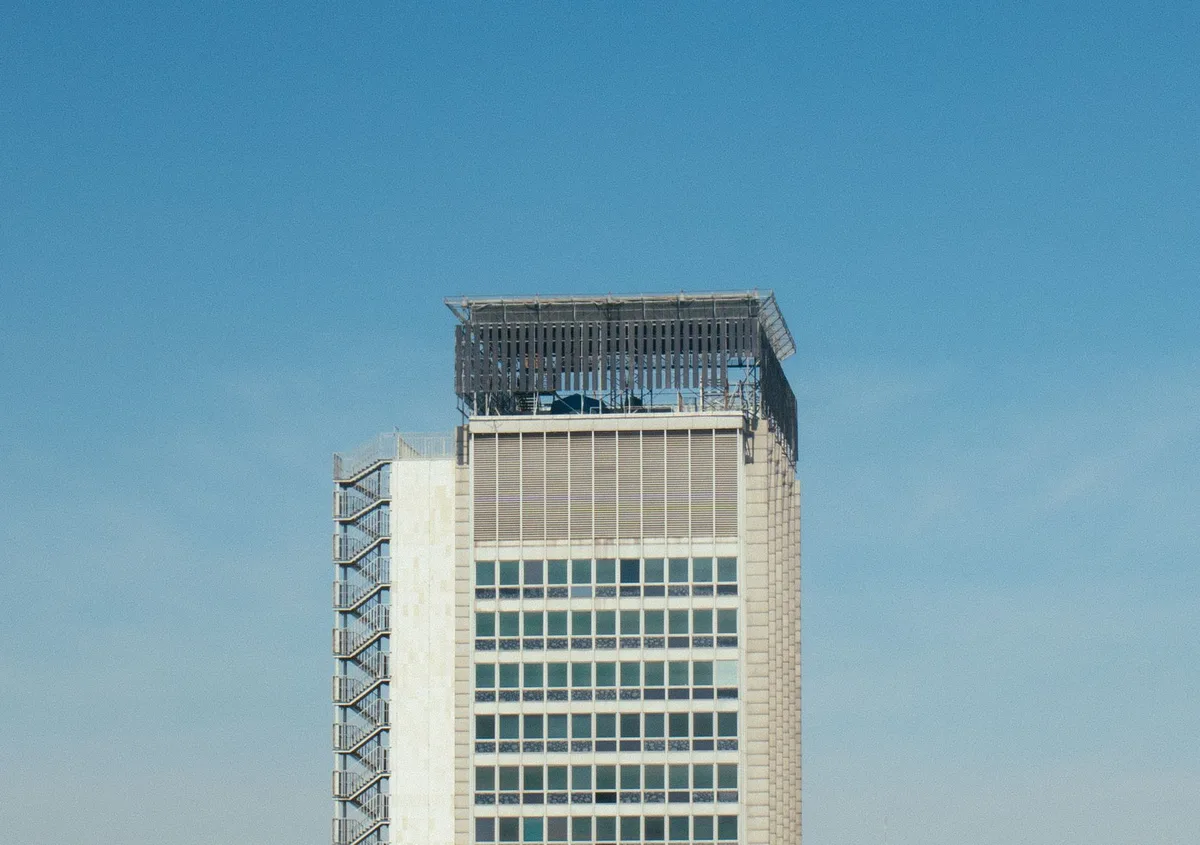
Mannesmann AG, a German industrial conglomerate, was the target of Vodafone's record-breaking $183 billion hostile takeover in 1999. The battle for Mannesmann sparked a major debate about German corporate culture and foreign acquisitions. (Photo: Athena Sandrini, Pexels)
brewing a giant: ab inbev and sabmiller
In September 2015, news broke about another big industry deal. Carlos Brito, CEO of Anheuser-Busch InBev (AB InBev), wanted to take over SABMiller. AB InBev, a Belgian-Brazilian brewer, aimed to grow its already huge global presence. SABMiller, a British company, had strong markets in Africa and Latin America.
The deal was worth about $107 billion. It aimed to create a truly global beer giant. This would give the new company extensive market access. Brito pointed to the strategic fit and growth chances, Reuters reported. The merger would combine AB InBev’s top brands like Budweiser with SABMiller’s Peroni and Grolsch.
Regulators worldwide looked closely at the deal. They worried about less competition in many markets. To get approval, AB InBev agreed to sell off many parts. This included SABMiller’s share in MillerCoors to Molson Coors. They also sold other brands in Europe.
The merger finished in October 2016. It created a company that controlled nearly 30% of the world’s beer supply. This deal’s size showed the constant chase for global market control. It also showed how powerful multinational companies are becoming in consumer goods.
the constant push for scale
Companies keep pushing for size. This drives huge mergers across industries. They still want growth, market share, and new abilities. The idea of “synergy”—where the combined company is worth more than its parts—often fuels these big deals. Executives think bigger companies compete better globally. They also invest more in research and development.
Regulators, though, stay watchful. They look more closely at these consolidations. Worries about less competition, fewer consumer choices, and market power remain. Take Microsoft’s $69 billion acquisition of Activision Blizzard in 2023. It faced long regulatory fights. The deal closed after big compromises. Bayer’s $63 billion buy of Monsanto in 2018 also sparked major public debate. It faced regulatory checks, especially for its farming impact.
Lessons from past wins and losses are still relevant in today’s boardrooms. Fitting cultures together is a key challenge, often underestimated. Overpaying for a company can destroy its value. Still, the pull of creating an industry giant stays strong. Future mega-mergers will probably face even harder challenges from regulators and the public. We might see new players in tech, pharma, and renewable energy fighting for massive scale. These huge deals will keep changing global business.
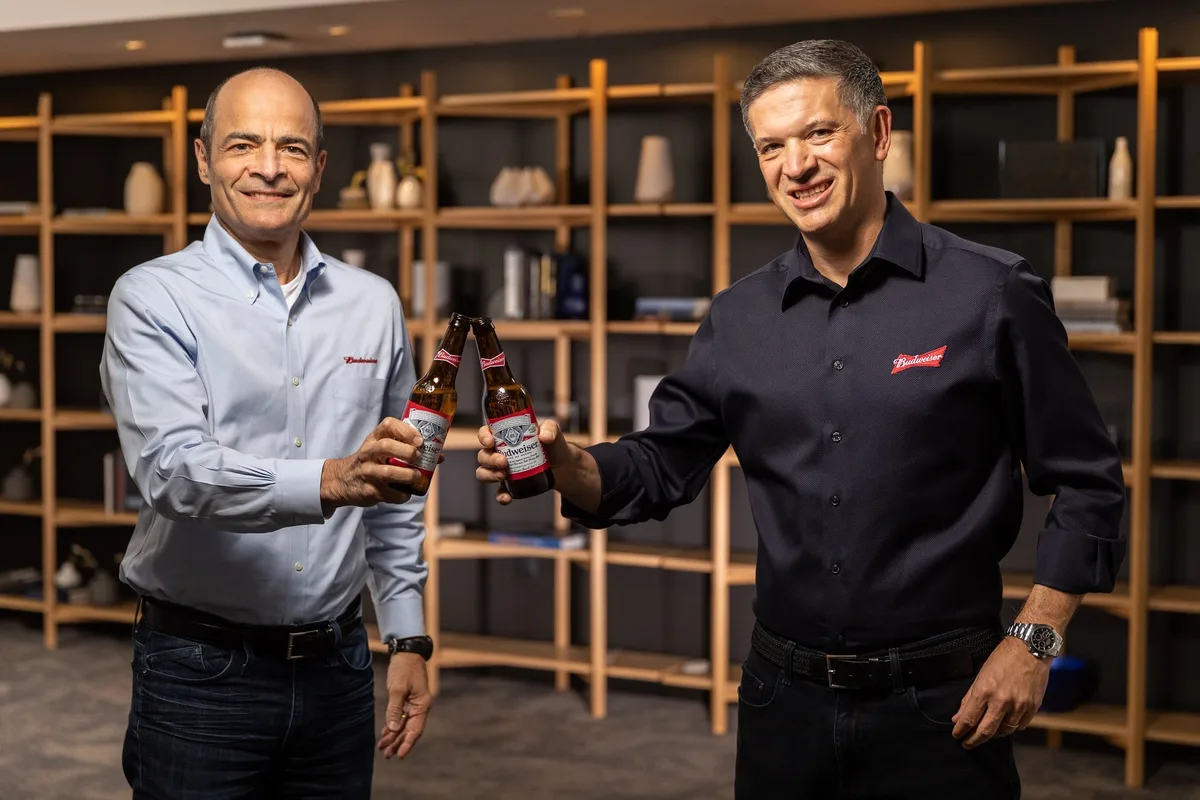
Carlos Brito, then CEO of Anheuser-Busch InBev, was the architect behind the monumental $107 billion acquisition of SABMiller in 2016. This deal created a global beer giant controlling nearly 30% of the world's beer supply. (Source: beveragedaily.com)
frequently asked questions
What is the largest corporate merger by value? Vodafone AirTouch’s buy of Mannesmann AG in 2000 remains the largest merger by value. It was worth about $183 billion then.
Why do companies pursue such large mergers? Companies chase big mergers to save money by getting bigger, grow their market share, or offer more different things. They also want new tech and talent. Their goal is to make shareholders richer and gain an edge over rivals.
Do most mega-mergers succeed in their stated goals? Many studies show that a lot of mergers, especially huge ones, don’t hit their financial and strategic targets. Common problems include cultural clashes, tough integration, and paying too much for the target company.
What role do government regulators play in large mergers? Government regulators, like antitrust agencies, check big mergers. They make sure the deals don’t create monopolies or cut down competition too much. They can set rules, demand sales of parts, or even stop deals to protect consumers.
Vodafone AirTouch, formed from the merger of Vodafone Group and AirTouch Communications, became the world's largest mobile telecommunications company after its record-breaking $183 billion acquisition of Mannesmann AG in 2000. This landmark deal remains the largest corporate merger by value in history. (Source: logos-world.net)
You might also like:
👉 Predicting Stock Market Trends: ML & Sentiment Analysis Guide
👉 The $546 Billion Space Race: Private Money, Global Rivalries
👉 Sustainable Futures: Investment, Cybersecurity & Future of Work