
Climate Change: FICO Scores of Millions at Risk
Climate shifts introduce new financial instability for millions of Americans, directly threatening their personal credit scores and impacting their ability to borrow.
Climate Shifts Could Undermine Your Credit Score
Homeowners in climate-vulnerable regions already face significant financial risks. These increasing risks directly threaten their personal credit scores. A changing climate introduces new financial instability for millions of Americans.
Your credit score is a numerical summary of your creditworthiness. FICO and VantageScore are the most common models used today. Lenders use these scores to evaluate your risk as a borrower. A strong score secures better loan rates and favorable terms. It helps with mortgages, car loans, and even insurance premiums. A low score increases borrowing costs dramatically. It can also restrict access to essential financial products.
Climate change brings more frequent extreme weather events. These include floods, wildfires, and severe storms. These events cause billions in damage annually across the United States. Such physical climate risks directly impact personal finances. The financial disruptions from climate disasters can lower credit scores. This creates a challenging cycle for affected individuals and communities.
Rising Waters, Dwindling Scores: The Financial Threat
A 2021 report from the Consumer Financial Protection Bureau (CFPB) highlighted climate change as a growing financial threat to consumers. The report, titled “CFPB Highlights Financial Risks from Climate Change,” detailed various impacts. It warned of increased risks of default and reduced access to credit. These problems affect households in areas hit by extreme weather.
The primary mechanism is property damage. For example, Hurricane Ian caused an estimated $112 billion in damages in Florida in 2022. Many homeowners face uninsured losses. They also bear high deductibles. People often use credit cards for emergency repairs. This increases their outstanding debt.
Disasters also disrupt income streams. Businesses close temporarily or permanently. This causes job losses or reduced working hours. Missed mortgage or loan payments often follow. Credit scoring models, like those from FICO, heavily weigh payment history. Even one late payment can cause a significant score drop.
Individuals accumulate new debt to rebuild their lives. They might take out personal loans or home equity lines of credit. This increases their overall debt-to-income ratio. A higher debt burden signals higher risk to lenders. This can further negatively impact credit scores. In extreme cases, people face foreclosure or bankruptcy. These events cause major, long-lasting damage to credit reports.
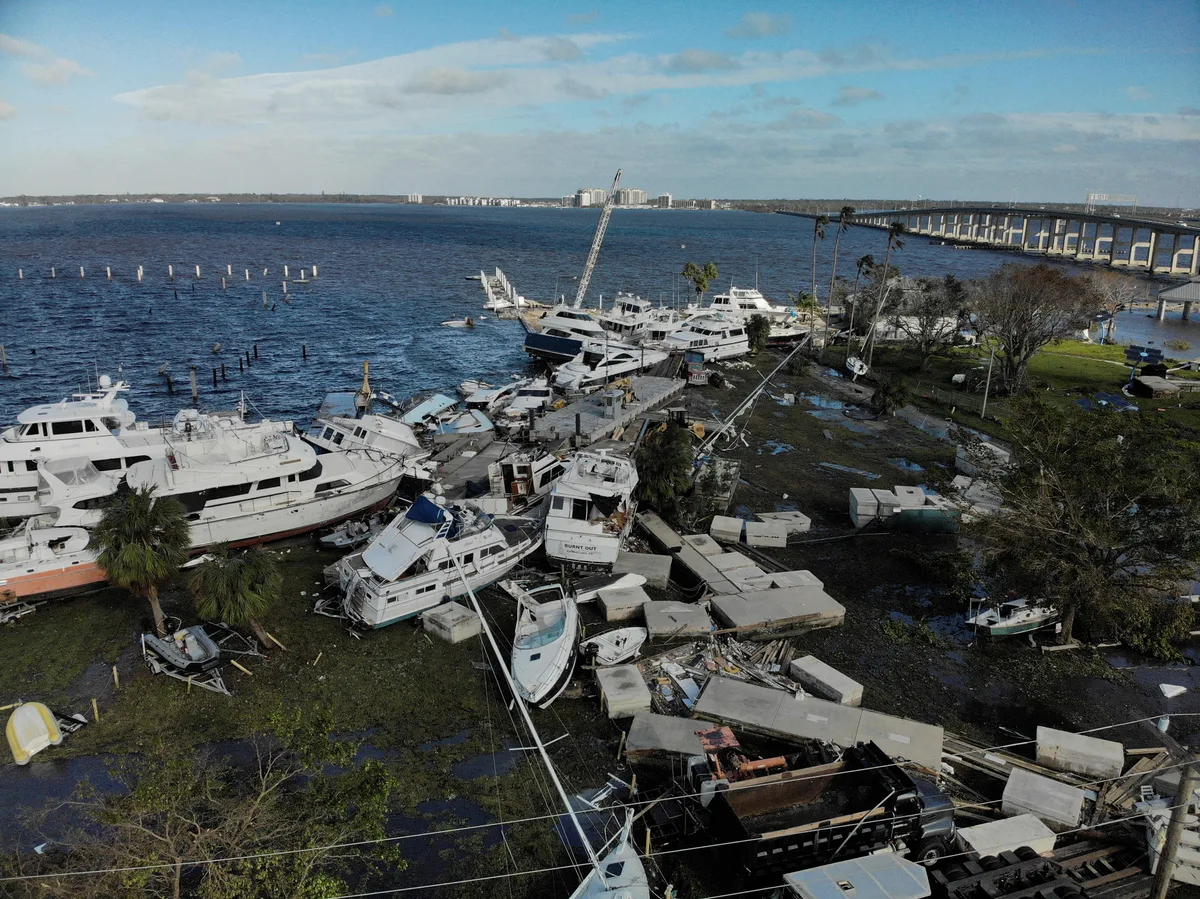
Hurricane Ian, which made landfall in Florida in September 2022, caused an estimated $112 billion in damages, making it one of the costliest hurricanes in U.S. history and a stark example of climate-related financial risk. (Source: cbsnews.com)
Dr. Jesse M. Keenan, a professor at Tulane University and a climate adaptation expert, explained the cascading effects. “Climate events often trigger a debt spiral,” Keenan stated in a 2023 interview. “People use credit to cover immediate needs. This adds stress to their financial health.” This financial stress then reflects directly on their credit profile.
The Cost of Catastrophe: How Disasters Hit Your Wallet
The financial toll of climate disasters is immense and growing. The National Oceanic and Atmospheric Administration (NOAA) reported 28 distinct billion-dollar weather and climate disasters in 2023. These events cost the U.S. a record $145 billion. Each disaster creates a ripple effect through local economies and personal finances.
Consider the impact of wildfires in California. The 2018 Camp Fire destroyed over 18,000 structures in Paradise, California. Many residents were underinsured or uninsured entirely. They faced immense costs for rebuilding. This burden often led to increased borrowing. It also caused delayed payments on existing obligations.
A 2022 study by the Federal Reserve Bank of Philadelphia examined disaster impacts on credit. Researchers found that homeowners in disaster-prone areas experience credit score declines. These declines were more pronounced for lower-income households. The study specifically looked at hurricane and flood events.
The study revealed that credit scores fell by an average of 15 to 20 points after a major disaster. These drops persisted for up to two years. Delinquency rates on mortgages and other loans also increased. This effect was strongest in counties with significant physical damage. It highlights the direct link between physical climate risk and personal financial health.
Small businesses also suffer significantly. Their closures reduce local employment opportunities. This impacts the income stability of their employees. Reduced income makes it harder to meet financial obligations. This also contributes to declining credit scores for many individuals. The economic disruptions extend far beyond the immediate disaster zone.
Even without direct property damage, residents face increased costs. Higher insurance premiums reduce disposable income. This leaves less money for other bills. The financial strain can lead to missed payments. This ultimately damages credit scores.
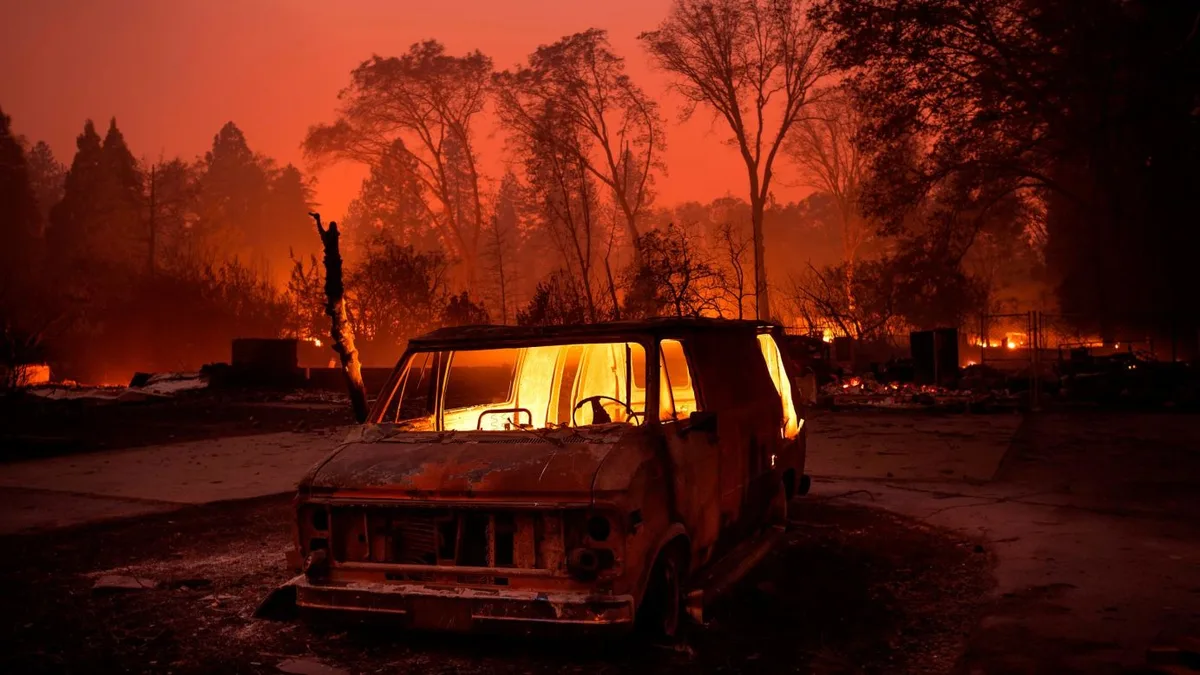
The 2018 Camp Fire obliterated Paradise, California, destroying over 18,000 structures and displacing thousands. The immense financial burden of rebuilding, often with inadequate insurance, forced many residents into debt, directly impacting their credit scores. (Source: cnn.com)
Insurers and Lenders React: New Rules for a Warmer World
The insurance industry is rapidly adapting to heightened climate risks. Major insurers like State Farm and Allstate have stopped writing new policies in California. These decisions came in 2023 and 2024 respectively. They cited increased wildfire risks and rising reinsurance costs. This leaves many homeowners with fewer options.
In Florida, multiple insurers have withdrawn from the market. Homeowners there face skyrocketing premiums. The Insurance Information Institute (Triple-I) reports significant premium increases. Florida property insurance premiums rose over 40% in 2023 alone. This trend forces homeowners to pay much more for coverage.
Higher insurance costs strain household budgets. They reduce the ability to pay other debts. This increases the risk of missed payments. Some homeowners opt for less comprehensive coverage. Others go without insurance entirely. This leaves them fully exposed to future climate events. Such choices represent a significant gamble with personal financial stability.
Mortgage lenders also view properties in high-risk areas as riskier investments. The Federal Housing Finance Agency (FHFA), which oversees Fannie Mae and Freddie Mac, has been studying these risks. A 2021 FHFA report emphasized the need to assess climate risk in mortgage portfolios. Lenders must protect their investments.
This assessment can lead to stricter lending criteria. Lenders may demand higher down payments for homes in flood zones. They might charge higher interest rates. This makes homeownership more expensive in vulnerable areas. It can also reduce property values. Lower property values impact home equity.
The concept of “climate redlining” is emerging. This describes lenders potentially avoiding certain climate-vulnerable geographies. Dr. Parag Pathak, an economics professor at MIT, co-authored a 2023 study on this topic. The study found evidence of lenders charging higher mortgage rates in flood-prone areas. This disproportionately affects lower-income and minority communities. These communities often lack the resources to adapt.
The Future of Finance: Climate Data and Your Creditworthiness
The U.S. Treasury Department’s 2021 report, “A Financial System That Works for All Americans,” warned of climate change’s systemic financial risks. It called for better data and risk assessment tools. Regulators are increasingly pushing financial institutions to evaluate climate risks. This applies to both physical and transition risks.

Dr. Parag Pathak, an economics professor at MIT, co-authored a 2023 study that found evidence of "climate redlining," where lenders charge higher mortgage rates in flood-prone areas, disproportionately affecting lower-income and minority communities. (Source: news.mit.edu)
Credit bureaus like Experian and TransUnion currently do not use climate data directly in their scoring models. Their models focus on traditional financial behaviors. These include payment history, credit utilization, and length of credit history. However, climate events impact these traditional data points.
Discussions are ongoing about integrating climate risk into broader financial assessments. Companies like S&P Global Ratings and Moody’s already include climate risk in corporate credit ratings. They analyze how climate change affects a company’s assets and operations. This influences the cost of borrowing for businesses.
While direct individual credit scoring remains unchanged, indirect impacts are clear. The financial distress caused by climate events directly feeds into existing credit models. A homeowner struggling with flood damage and rising insurance premiums is more likely to miss payments. This translates to a lower credit score.
Some researchers propose new models. These models would explicitly incorporate geographic climate risk into lending decisions. This could further differentiate borrowing costs. It would make credit more expensive for residents in vulnerable areas. Regulators are proceeding cautiously. They aim to avoid exacerbating inequalities.
The goal for regulators is system stability. They want to prevent widespread financial failures due to climate events. However, actions taken at a systemic level have individual consequences. Consumers must prepare for a financial landscape where climate risk plays an ever-larger role. This means understanding local vulnerabilities. It means planning for potential financial shocks.
FAQ
Q1: Does my FICO score directly include climate risk? No, FICO and VantageScore models do not directly factor in climate risk. They assess traditional financial data. However, climate events can indirectly lower your score by causing missed payments or increased debt.
Q2: What can I do to protect my credit score from climate impacts? Build an emergency fund to cover unexpected costs. Review your insurance policies to ensure adequate coverage. Consider flood or earthquake insurance if you live in a vulnerable area.
Q3: Are all climate impacts negative for credit? Not directly, but most financial impacts related to extreme weather are negative. They often lead to increased costs, debt, or income disruption. This can strain your ability to manage existing credit obligations.
S&P Global Ratings, one of the world's leading credit rating agencies, has been integrating climate risk into its corporate credit assessments for years. This influences the cost of borrowing for businesses worldwide, highlighting the growing importance of environmental factors in financial stability. (Source: gettyimages.com)
Beyond the Score: Preparing for a Changing Financial Climate
The connection between climate change and personal credit scores will only strengthen. Financial institutions, regulators, and individuals must adapt. Proactive measures are essential for future financial stability. This includes improved community resilience planning. It also means developing accessible financial products for vulnerable populations.
Governments must invest in infrastructure to mitigate climate risks. This protects both lives and financial assets. Individuals need to understand their specific climate vulnerabilities. They must then plan accordingly. This includes saving, investing in home hardening, and securing proper insurance. The financial system is undergoing a fundamental transformation. Personal financial planning must reflect this reality.
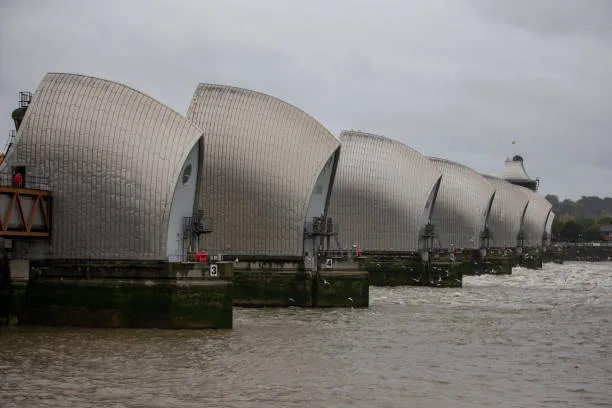
The Thames Barrier, a movable flood control structure, protects London from tidal surges. Since its completion in 1982, it has been closed over 200 times, safeguarding billions in assets and countless lives from the increasing threat of climate-related flooding. (Source: gettyimages.fi)
You might also like:
👉 Super El Niño 2026 Predictions: Global Impact & What to Expect
👉 Venus: Why 475°C Hell Holds Earth’s Climate Future
👉 Sustainable Futures: Investment, Cybersecurity & Future of Work