Beyond Mars: Probes Pushing Past Our Solar System's Edge
Robotic probes are already pushing past our solar system's edge. Discover how these uncrewed explorers pave the way for human deep space journeys.
Beyond our solar system: The real deep space frontier
Deep space extends far beyond Mars. While many associate it with human spaceflight, its scope is much broader. Robotic probes already travel past the edge of our solar system. These uncrewed explorers gather important data and test new technology, making future human journeys safer and more effective. Future missions will explore distant ocean worlds, search for signs of life, and eventually carry humans farther than ever before.
What deep space means (and why we go there)
On August 25, 2012, NASA’s Voyager 1 spacecraft crossed the heliopause. This boundary marks where the sun’s influence ends and the interstellar medium begins. This event changed our understanding of “deep space.” It revealed a vast region beyond our planets, stars, and even our solar system’s magnetic bubble.
Deep space starts beyond the Earth-Moon system. It reaches out to the outer planets, distant asteroids, and the space between stars. Missions like New Horizons, which visited Pluto in 2015, travel deep into space. They explore targets far from Earth’s comfortable orbit.
We explore deep space to answer humanity’s biggest questions. Scientists want to know about our solar system’s origins and life itself. We also look for life elsewhere, perhaps in an ocean under an icy crust. This search fuels huge technological advances.
Exploring these distant realms also prepares us for future challenges. Understanding other planets, for example, helps protect Earth from asteroid hazards. It offers insights into planetary habitability and climate science too.
Next-gen robotic explorers
The Europa Clipper mission launches in October 2024. This NASA spacecraft will travel to Jupiter’s moon Europa. Scientists believe Europa holds a vast saltwater ocean beneath its icy shell. This ocean could support life.
Europa Clipper will perform nearly 50 close flybys. Its instruments will measure the moon’s magnetic field, gravitational pull, and ice thickness. It will also search for water vapor plumes erupting from the surface. This data will show if Europa has conditions for life.
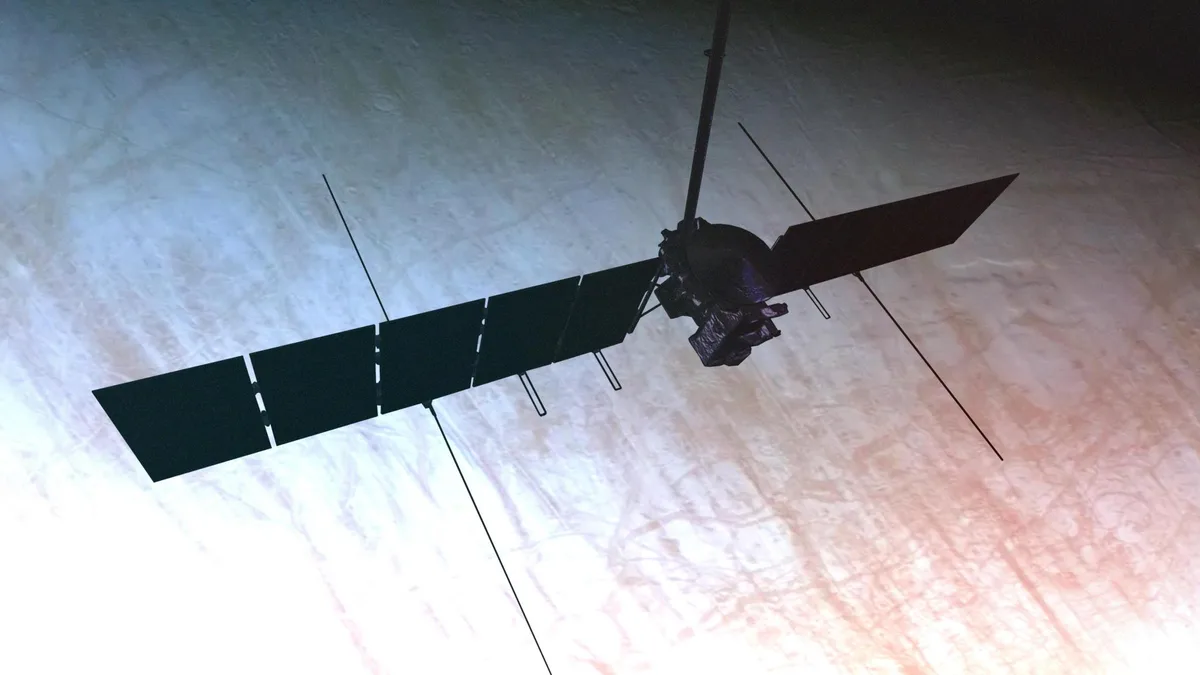
NASA's Europa Clipper spacecraft, set to launch in October 2024, is designed to investigate Jupiter's moon Europa, which scientists believe harbors a vast saltwater ocean beneath its icy shell. This mission will perform nearly 50 close flybys to determine if Europa possesses the conditions necessary for life. (Source: nasa.gov)
A new mission, Dragonfly, launches in 2027. This NASA mission will send a rotorcraft lander to Saturn’s moon Titan. Titan has a dense atmosphere and stable liquid methane lakes and rivers. Its chemistry differs from Earth’s.
Dragonfly will fly between multiple sites on Titan’s surface. It will study the moon’s complex organic chemistry and search for signs of prebiotic chemistry. This means looking for chemical building blocks that could lead to life. The mission explores a world with active weather and surface processes.
Scientists are also planning missions to the ice giants, Uranus and Neptune. A Uranus Orbiter and Probe mission is a top priority for NASA’s next flagship. This mission could launch in the early 2030s. It would investigate these mysterious planets, their rings, and their unique magnetic fields.
Humans to Mars, then beyond
NASA’s Artemis program aims to return humans to the Moon by the mid-2020s. This program is an important stepping stone for future deep space human missions. We’ll learn to live and work sustainably on another celestial body. The Moon will test technologies needed for Mars.
An important component is the Lunar Gateway, a small space station orbiting the Moon. Astronauts will use the Gateway as a staging point for lunar surface missions. It will also test deep space habitats and life support systems. The Gateway serves as a prototype for future deep space human outposts.
Robotic missions pave the way before humans land on Mars. The Mars Sample Return campaign, a joint effort by NASA and ESA, is underway. NASA’s Perseverance rover collects rock and soil samples on Mars. These samples will be sealed in tubes.
Later missions will retrieve these samples and return them to Earth by the early 2030s. Scientists can study them in advanced labs. This will help determine if life ever existed on Mars without contaminating the samples. It is also a crucial step to understand risks for human explorers.
Human missions to Mars face huge challenges. Radiation exposure during the long trip is a big problem. The journey could take six to nine months one way. NASA’s top priority is developing effective radiation shielding. Dr. Stephen Johnson, a radiation specialist at NASA’s Johnson Space Center, emphasizes this priority.
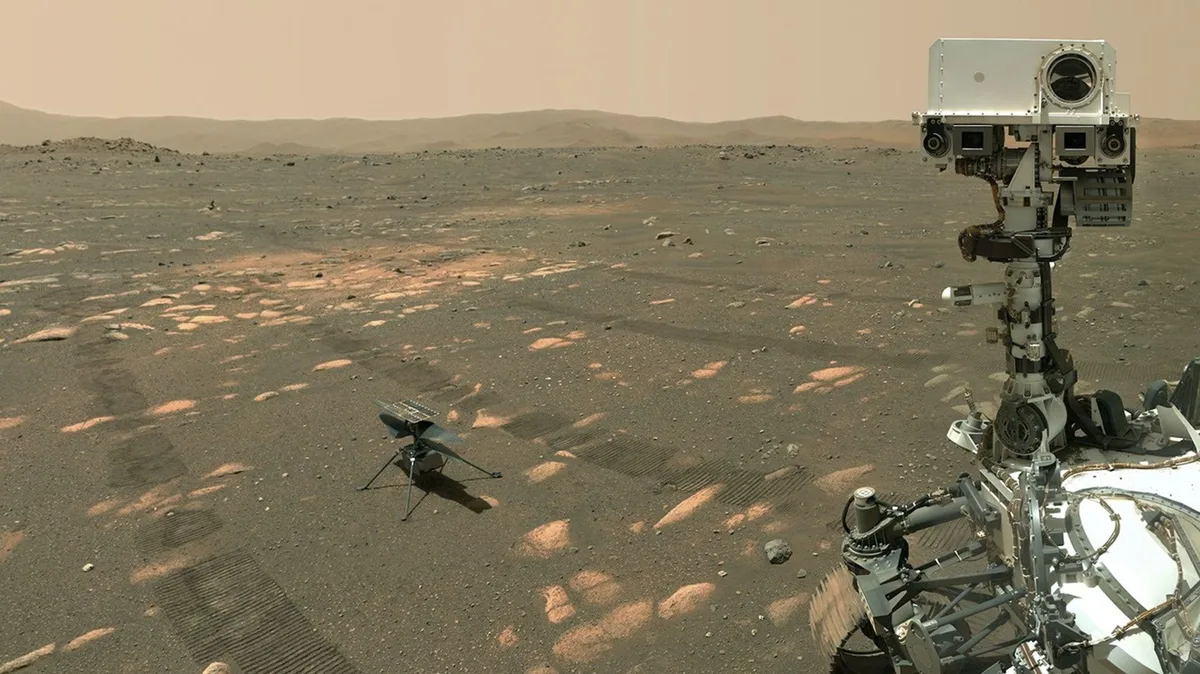
NASA's Perseverance rover is currently exploring Jezero Crater on Mars, collecting rock and soil samples for the Mars Sample Return campaign. These samples, sealed in tubes, will be the first ever returned from Mars to Earth for in-depth scientific analysis. (Source: science.nasa.gov)
Better propulsion systems are also important to shorten travel times. Nuclear thermal propulsion (NTP) engines use nuclear fission to heat hydrogen propellant. This creates much higher thrust and efficiency than current chemical rockets. Northrop Grumman and other companies are developing these concepts. An NTP engine could cut travel time to Mars by half, greatly reducing radiation exposure for astronauts.
New technology for new frontiers
In December 2023, NASA tested Deep Space Optical Communications (DSOC). This technology uses lasers to transmit data. It can be thought of as sending information with light, rather than radio waves. It offers much higher bandwidth than traditional radio communication.
DSOC flew aboard the Psyche mission, targeting an asteroid. It hit a data rate of 267 megabits per second from 19 million miles away. This huge jump in communication speed will be important for future deep space missions. It allows for higher-resolution images and more science data.
SmallSats and CubeSats are changing deep space exploration. These miniature satellites, often shoebox-sized, cut mission costs and development time. NASA’s MarCO CubeSats relayed data during the InSight Mars landing in 2018. They proved small spacecraft can travel between planets.
These small, specialized spacecraft perform focused science missions. They can also ride along as secondary payloads with larger missions. This allows for more frequent and diverse deep space investigations.
Autonomous systems and artificial intelligence (AI) are becoming essential. Missions far from Earth experience significant communication delays. Waiting for commands from Earth is often impractical. AI allows spacecraft to make decisions independently, such as identifying science targets or adjusting trajectories.
This autonomy is crucial for missions to distant outer planets or interstellar space. Such missions might operate for years or decades without direct human input. The European Space Agency (ESA) also invests in AI for mission planning and spacecraft operations.
In-situ resource utilization (ISRU) is another important technology. ISRU means using local resources found on other celestial bodies. For example, water ice on the Moon or Mars could become rocket fuel or breathable oxygen. This reduces the amount of supplies launched from Earth.
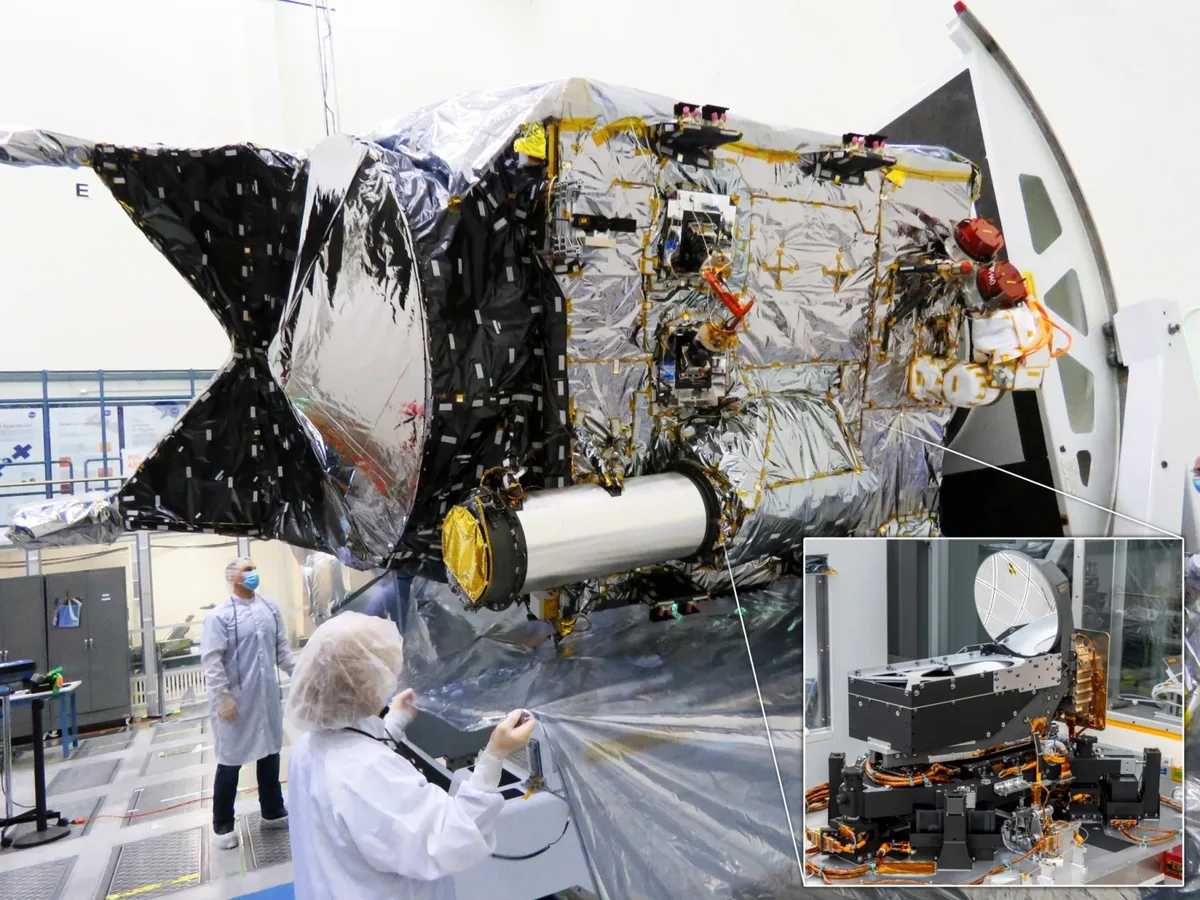
In December 2023, NASA's Deep Space Optical Communications (DSOC) system achieved a record data rate of 267 megabits per second from 19 million miles away. This groundbreaking technology uses lasers to transmit data, offering significantly higher bandwidth for future deep space missions. (Source: ll.mit.edu)
The Perseverance rover’s MOXIE experiment on Mars produced oxygen from the Martian atmosphere. This demonstration is an important step towards sustainable human outposts. ISRU will greatly lower costs and increase the feasibility of long human missions.
Why deep space matters to everyone
Future deep space missions offer more than just science. They inspire new generations of scientists, engineers, and innovators. Space challenges push technology’s boundaries. These advances often find uses right here on Earth.
International cooperation in space builds global relationships. Missions like the Mars Sample Return involve agencies from multiple countries. This shared effort builds trust and promotes peaceful collaboration. It shows humanity can work together on grand projects.
Deep space exploration also gives us a unique view of our own planet. Images of Earth from distant probes, such as the “Pale Blue Dot” from Voyager 1, remind us how fragile our world is. They also show how isolated it is. This perspective strengthens our commitment to environmental care.
Studying exoplanets, planets outside our solar system, helps us understand Earth’s place in the cosmos. We learn about how planets form, how atmospheres change, and what conditions support life. This research, backed by telescopes like the James Webb Space Telescope, indirectly informs our climate science.
The quest to understand the universe is a human drive. Deep space missions extend this curiosity. They prove our relentless pursuit of knowledge. They define our future as explorers.
FAQ
Q: How far is deep space? Deep space generally means regions beyond the Earth-Moon system. It includes the outer planets, distant asteroids, and especially the interstellar medium beyond our sun’s direct influence.
Q: What’s the biggest challenge for future deep space missions? The biggest challenges include developing faster, more efficient propulsion systems. We also need to protect astronauts from deep space radiation and ensure long-term life support for human missions. Communication delays also create big operational hurdles.
Q: Are we looking for aliens on these missions? Many missions aim to find evidence of past or present microbial life, not necessarily intelligent aliens. They search for “biosignatures.” These are chemical or geological signs that point to biological processes. This search focuses especially on ocean worlds like Europa and Enceladus.

Captured by NASA's Voyager 1 spacecraft in 1990 from a record distance of 6 billion kilometers (3.7 billion miles), the 'Pale Blue Dot' image shows Earth as a tiny, solitary speck in the vastness of space, famously inspiring Carl Sagan's reflections on humanity's place in the cosmos. (Source: forbes.com)
Q: When will humans go to Mars? NASA aims to send humans to Mars in the late 2030s or early 2040s. This timeline depends on successful lunar missions and significant technological advances in propulsion and life support. It also requires continued funding and political will.
The journey into deep space has just begun. Every new mission builds on decades of effort, pushing us further into the unknown. We stand on the edge of discoveries that could change life and our place in the universe.
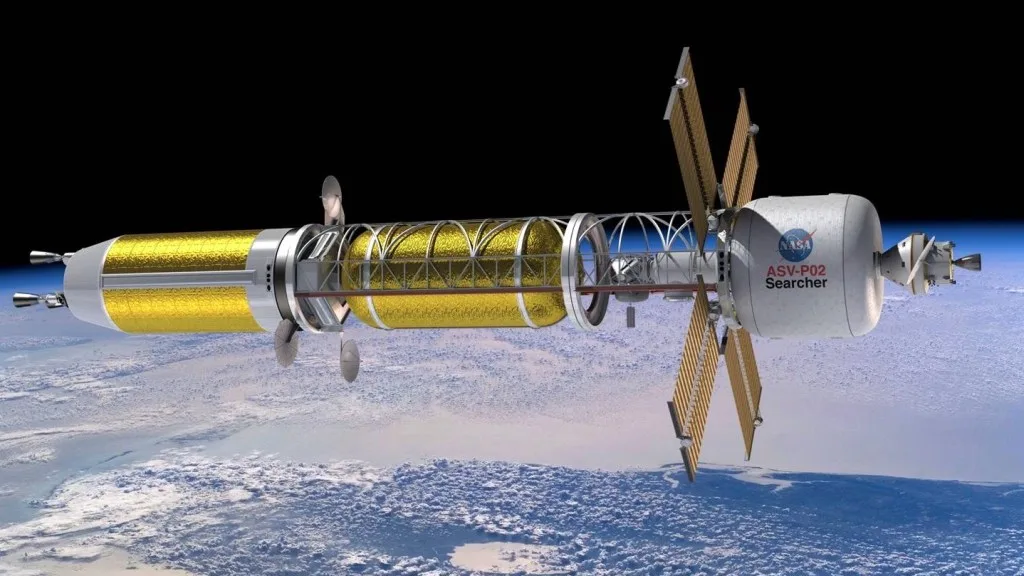
Nuclear Thermal Propulsion (NTP) is a critical technology NASA is developing to significantly reduce transit times for future human missions to Mars. By heating a propellant with a nuclear reactor, NTP can provide much higher thrust and efficiency than traditional chemical rockets, making the journey safer and faster. (Source: nasa.gov)
You might also like:
👉 Unexplained Mysteries of Science: Cosmos, Quantum & Beyond
👉 The $546 Billion Space Race: Private Money, Global Rivalries