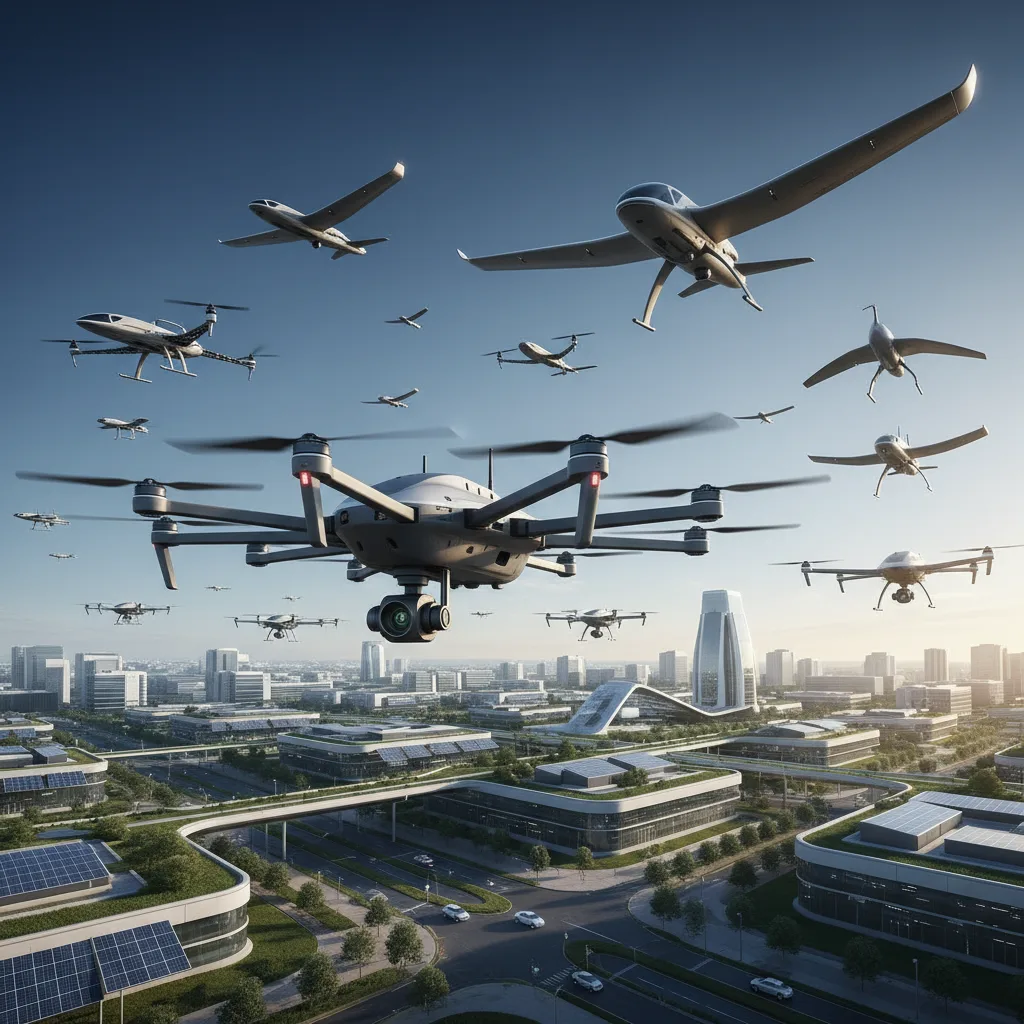
Drone Cyber War: Espionage, Privacy, Physical Harm Risks
Uncover how a drone's complex digital brain makes it a prime target. Cyberattacks mean espionage, privacy invasion, or even physical harm.
Drones: The Invisible Cyber Battleground
Forget the sleek delivery drone or the hobbyist’s toy. Beneath that simple shell hums a complex digital brain, making every drone a tempting target for hackers. A cyberattack isn’t just about a drone crashing. It can mean espionage, privacy invasion, or even physical harm.
A drone is simply an aircraft without a pilot. An operator controls it remotely, or onboard computers fly it autonomously. These machines range from tiny consumer quadcopters to massive military aircraft like the MQ-9 Reaper. Drones are now everywhere. They handle civilian tasks like agriculture and package delivery. They also perform commercial jobs such as filming and surveying, and military missions for spying and targeted attacks. All drones depend on digital communication, software, and hardware. This dependence creates many easy targets for hackers.
The invisible airwaves: drone communication vulnerabilities
In December 2011, Iran reportedly captured a US RQ-170 Sentinel stealth drone. They allegedly used cyber tactics. This incident proved that even advanced military drones are vulnerable to communication attacks. Every drone must talk to its ground station or receive signals like GPS. These radio frequency channels are prime targets for hackers.
Imagine trying to talk on the phone in a crowded stadium. Your voice gets drowned out. Attackers do the same thing with radio frequency (RF) jamming. They flood the drone’s communication channels with noise, cutting off its connection to the pilot. The drone might fall, fly wildly, or become uncontrollable. A 2012 US Government Accountability Office (GAO) report showed how easily some military drones could be jammed.
Another big threat is spoofing. An attacker sends fake signals to trick the drone. The most common type is GPS spoofing, when a drone gets false location data. Picture your car’s GPS suddenly saying you’re in another city, sending you off course. In 2012, University of Texas researchers showed they could hijack a civilian drone’s navigation with GPS spoofing. No physical access was needed for this attack. This could reroute a delivery drone, or worse, guide a military drone into enemy territory.

The RQ-170 Sentinel, a stealth unmanned aerial vehicle, gained notoriety in December 2011 when Iran reportedly captured one, allegedly using cyber tactics to bring it down intact. This incident highlighted the significant communication vulnerabilities even in advanced military drones. (Source: defenceaviation.com)
Inside the drone’s brain: software and firmware flaws
A 2023 Purdue University study found common security flaws in open-source drone flight control software. This research appeared in IEEE Transactions on Mobile Computing. Drones run on software, just like your computer. They have an operating system, flight control software, and other applications. They also use firmware, specialized software embedded directly into hardware components like motors or communication modules. Any bug in this code creates a security risk.
These software and firmware flaws often come from bad coding or unpatched vulnerabilities. Take buffer overflows: a program tries to write more data into memory than it can hold. An attacker can exploit this to inject malicious code and take control of the drone. It’s like trying to pour a gallon of water into a pint glass; the overflow causes chaos. In 2016, Check Point Research found critical flaws in DJI drone firmware, letting attackers access user data.
Attackers can also implant malware, malicious software meant to disrupt, damage, or gain unauthorized access. A drone with malware could crash, spy on its operator, or even join a botnet. Hidden backdoors also pose a big risk. These are secret access points left by developers or inserted by hackers. They allow unauthorized remote control or data theft without the drone operator knowing.
The pilot’s peril: ground control station weaknesses
In 2011, University of Texas at Austin researchers exploited a flaw in US military drone command software. This proved the Ground Control Station (GCS) is a weak link. The GCS is the operator’s computer or console. It acts as the brain of the whole operation, sending commands and receiving data. Often, these stations are just standard computers running special software.
These ground stations face typical computer attacks. Phishing attacks, for instance, trick an operator into giving up their login details through fake emails or websites. This compromises their GCS account. Suddenly, hackers have unauthorized access to the drone’s controls. Imagine clicking a bad link and your drone’s flight path gets hijacked. A 2015 Cylance report showed how easily commercial drone GCS software could be reverse-engineered and exploited.
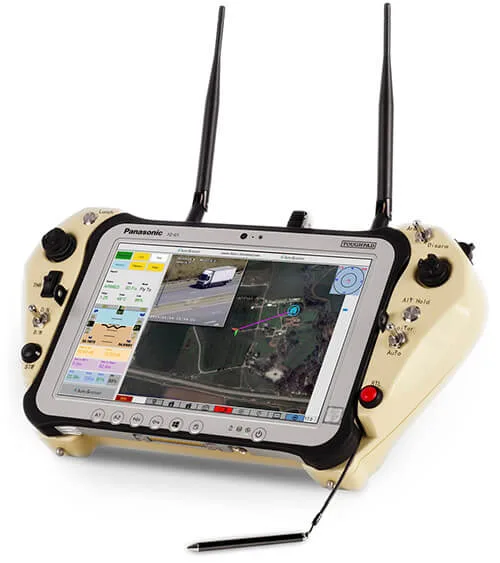
A Ground Control Station (GCS) is the operator's console that acts as the brain of a drone operation, sending commands and receiving data. In 2011, University of Texas at Austin researchers exploited a flaw in US military drone command software, proving the GCS is a critical weak link in drone security. (Source: aero-sentinel.com)
Many GCS systems connect to the internet or local networks, creating more weak spots. Unsecured networks, like public Wi-Fi without encryption, let attackers intercept communication between the GCS and the drone. Weak authentication methods, such as simple passwords or no multi-factor login, also leave the door open. If a hacker gets into the GCS, they essentially become the drone’s pilot. They get full control over its flight and payload.
Supply chain scares: hardware and manufacturing risks
In 2020, the US Department of Defense banned buying and using drones made in China. This was due to national security concerns, citing supply chain risks. Drones aren’t single pieces of tech; they’re built from hundreds of components. These parts come from many manufacturers, often in different countries. Every step in this global supply chain offers hackers a chance to sneak in flaws.
This risk extends to the drone’s actual hardware. Hardware backdoors can be hidden inside microchips or other components during manufacturing. These are physical or logical pathways meant to grant unauthorized access or control. Imagine buying a car with a secret switch that lets someone else remotely kill the engine. A 2018 report warned about the serious risks of hardware flaws in critical systems. This report came from the National Academies of Sciences, Engineering, and Medicine.
Another threat: counterfeit components. These fake parts might not meet quality standards or could hide malicious functions. Using them brings unknown security risks. For example, a fake GPS module might be pre-programmed to report false locations or have unpatched security flaws. Drone manufacturing is complex and global. That makes it hard to check every single component’s authenticity.
Protecting the skies: stopping drone cyberattacks
In 2019, the European Union Agency for Cybersecurity (ENISA) published “Baseline Security Recommendations for IoT in the context of Smart Cities.” This included specific guidance for drone security. Stopping drone cyberattacks needs many defenses. A key step is end-to-end encryption for all drone communications. This secures data from the ground station to the drone and back, making it unreadable to anyone else. Imagine sending a message in a code only you and your friend understand.
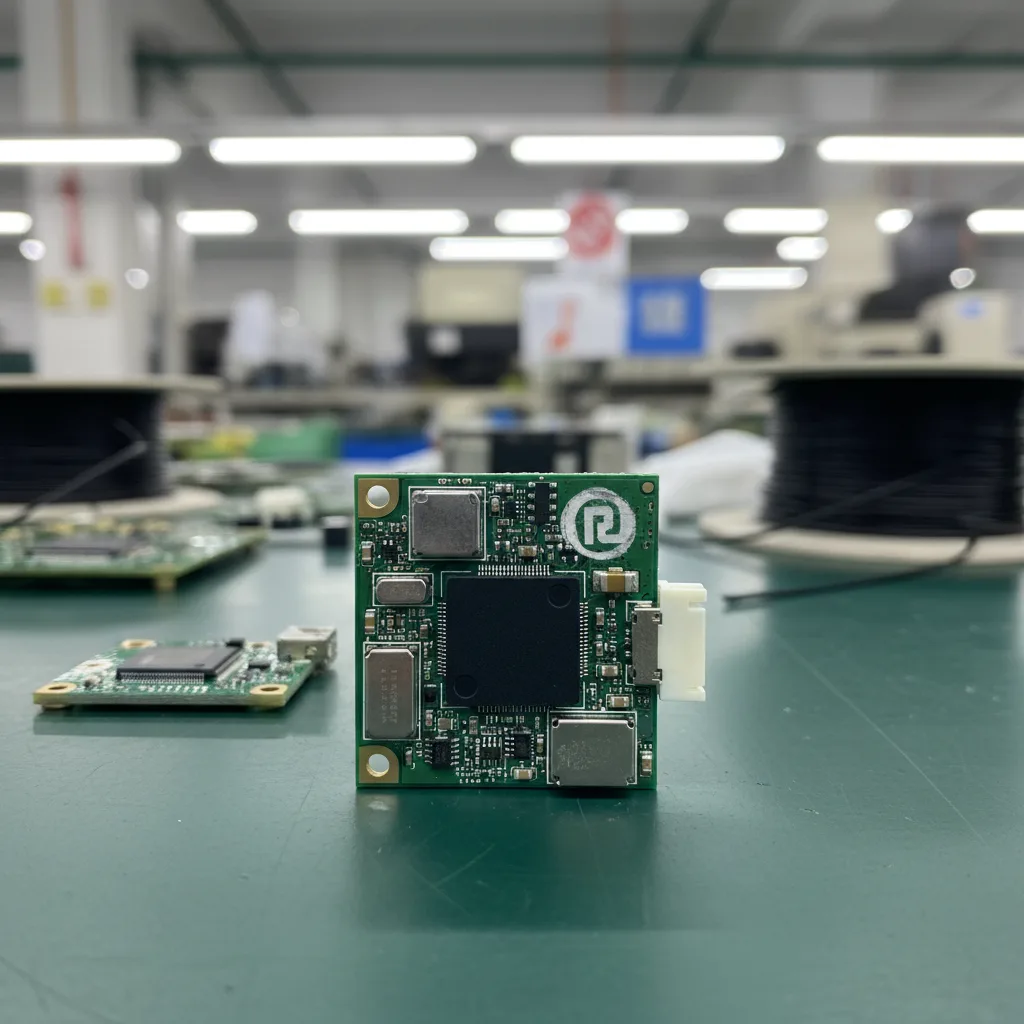
Counterfeit GPS modules, like the one pictured, represent a significant cybersecurity vulnerability for unmanned aerial vehicles. These fake components can be pre-programmed to report false locations or contain unpatched security flaws, making it nearly impossible to guarantee a drone's operational integrity. (AI-generated illustration)
Drone makers and operators must also focus on secure software development. This means writing code with security in mind from day one, doing regular audits, and quickly patching flaws. Secure boot mechanisms ensure only trusted software runs on the drone’s hardware. This stops malicious firmware from taking control. It’s like your computer checking its operating system for tampering every time it starts.
Strong authentication and authorization protocols are vital for ground control stations. This means strong, unique passwords and multi-factor authentication for operators. Regular security updates for both drone firmware and GCS software are a must. Intrusion detection systems on drones and GCS help monitor for suspicious activity. They alert operators to potential attacks. The US National Institute of Standards and Technology (NIST) also offers guidelines for securing embedded systems, which apply to drone parts.
Frequently Asked Questions
What is the biggest cybersecurity threat to a recreational drone? For recreational drones, the biggest threat is often communication jamming or GPS spoofing. These attacks can make the drone crash or become uncontrollable, possibly causing property damage or injury. User-level flaws, like weak GCS passwords, also pose a risk.
Can a hacked drone be used for spying? Yes, a hacked drone can absolutely spy. Attackers can access its camera, microphone, and other sensors. This lets them collect sensitive visual, audio, or thermal data without the operator knowing. That poses big privacy and security risks.
How can I protect my personal drone from cyberattacks? To protect your drone, always keep its firmware and ground control software updated. Use strong, unique passwords for your accounts. Avoid flying in areas with known signal interference. Be careful about connecting your GCS to unsecured public Wi-Fi networks.
Are military drones more secure than commercial ones? Military drones usually have more advanced security, including stronger encryption and hardened systems. Still, no system is entirely impenetrable, as past incidents show. Their complexity and high-value targets attract sophisticated state-sponsored attackers.
The unseen battle for tomorrow’s skies
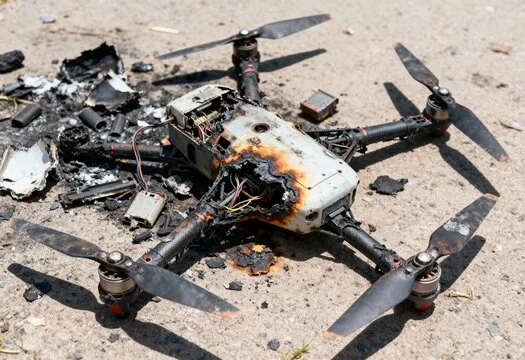
A drone lies damaged after an incident, a stark reminder of the potential physical consequences when cybersecurity vulnerabilities like jamming or GPS spoofing lead to loss of control. Such incidents highlight the critical need for robust security measures in UAV operations. (Source: stock.adobe.com)
Market research firm Drone Industry Insights predicts the global drone market will hit $54.7 billion by 2030. Drones are becoming a bigger part of our daily lives. They deliver packages, inspect critical infrastructure, and perform military spying. Because of this, their cybersecurity is incredibly important. A successful attack’s consequences could escalate dramatically. Imagine a fleet of delivery drones hijacked to drop dangerous payloads, or critical infrastructure drones feeding false data.
The “cyber arms race” now includes the very air we breathe, not just computers and networks. New threats will surely appear as drone tech advances. These could range from AI-driven attacks to exploiting new ways drones communicate. Protecting these flying machines isn’t just about technology. It’s about protecting privacy, keeping people safe, and maintaining national security. All this matters in a world that’s increasingly connected and airborne.
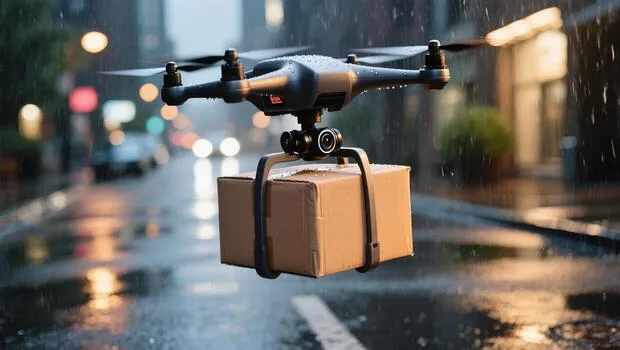
A delivery drone, like those used by companies such as Wing or Zipline, demonstrates its capability to transport packages. The increasing integration of such drones into daily logistics underscores the critical need for robust cybersecurity to prevent hijacking or data manipulation, which could have severe consequences for public safety and supply chains. (Source: vecteezy.com)
You might also like:
👉 Shahed 136 Drone: Cost-Effective Weapon Reshaping Modern Warfare
👉 Sustainable Futures: Investment, Cybersecurity & Future of Work