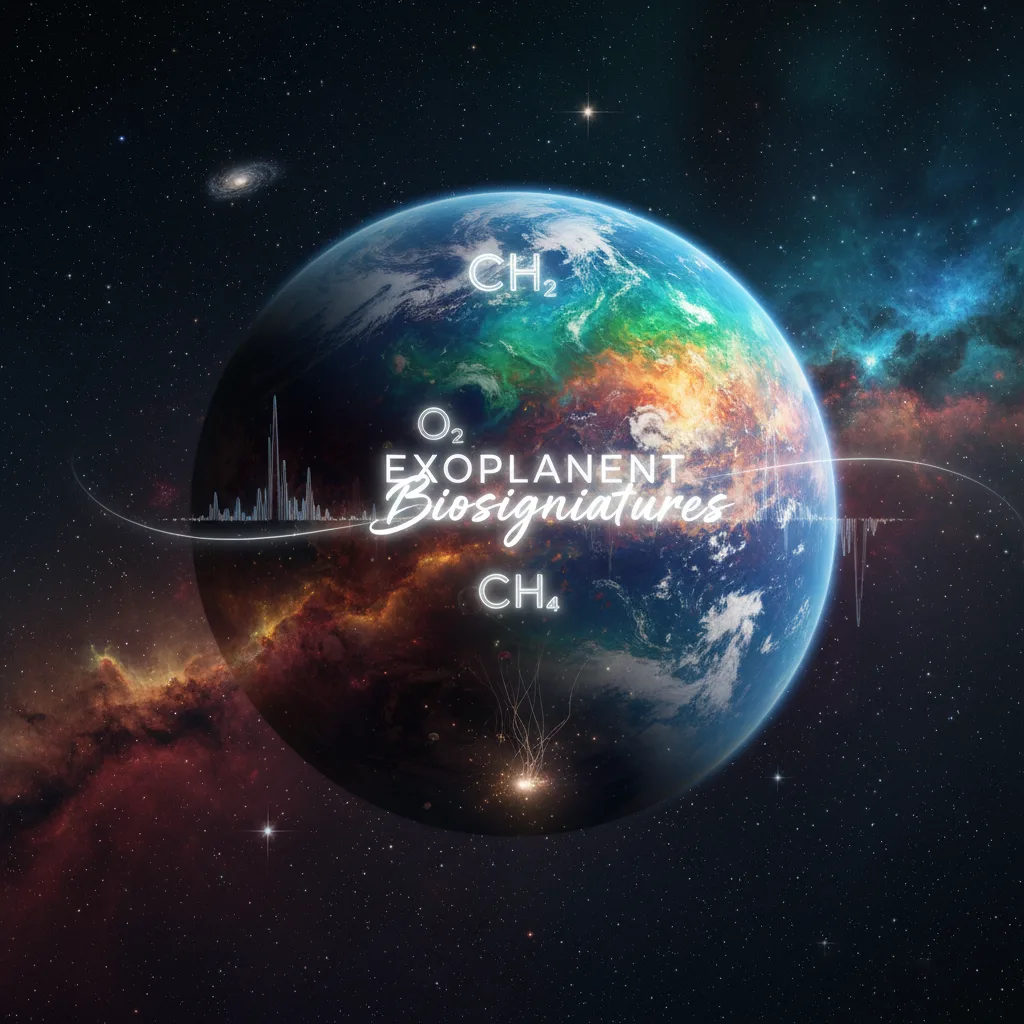
Exoplanet Biosignatures: Hunting Alien Life's Chemical Traces
Forget little green people. The real search for alien life involves finding biosignatures: chemical traces or environmental changes suggesting life.
Hunting for life: what exoplanet biosignatures tell us
Forget little green people or flying saucers. The real search for alien life is far more subtle. It’s a scientific detective story.
Scientists aren’t looking for aliens directly. They’re searching for biosignatures. These aren’t living things. They’re chemical traces or environmental changes that suggest life. Think of it like finding a specific type of air pollution on Earth. It tells you industries run, not that you’ve seen a factory worker.
The first confirmed exoplanet, 51 Pegasi b, appeared in 1995. This discovery launched a new era in astronomy. An exoplanet is simply a planet orbiting a star other than our Sun. Since then, astronomers have found over 5,500 exoplanets. These discoveries raise humanity’s oldest question: Are we alone?
We generally focus on exoplanets within a star’s habitable zone. This is where liquid water could exist on a planet’s surface. Liquid water is key for life as we know it. But even here, finding life takes more than just water.
Life’s chemical whispers
Biosignature hunting is about finding weird chemistry. Life changes its environment. On Earth, for example, photosynthesis released huge amounts of oxygen over billions of years. This changed our planet dramatically.
Scientists look for specific gases in an exoplanet’s atmosphere. These gases must appear in amounts non-biological processes can’t easily explain. Oxygen (O2) and methane (CH4) are often discussed. They react vigorously with each other. Their simultaneous presence in large amounts suggests a constant source, likely biological. This atmospheric imbalance is a key indicator.
Dr. Sara Seager, a planetary scientist at MIT, stresses the need for multi-gas biosignatures. She says one potential biosignature gas isn’t enough. We need to see a combination of gases that point strongly to life. This approach helps rule out false positives.
A strong biosignature isn’t just about presence. It’s about disequilibrium. Imagine a bathtub with both the faucet running and the drain open. If the water level stays high, something constantly adds water. Similarly, if reactive gases like oxygen and methane are plentiful, something must constantly make them. On Earth, that “something” is life.
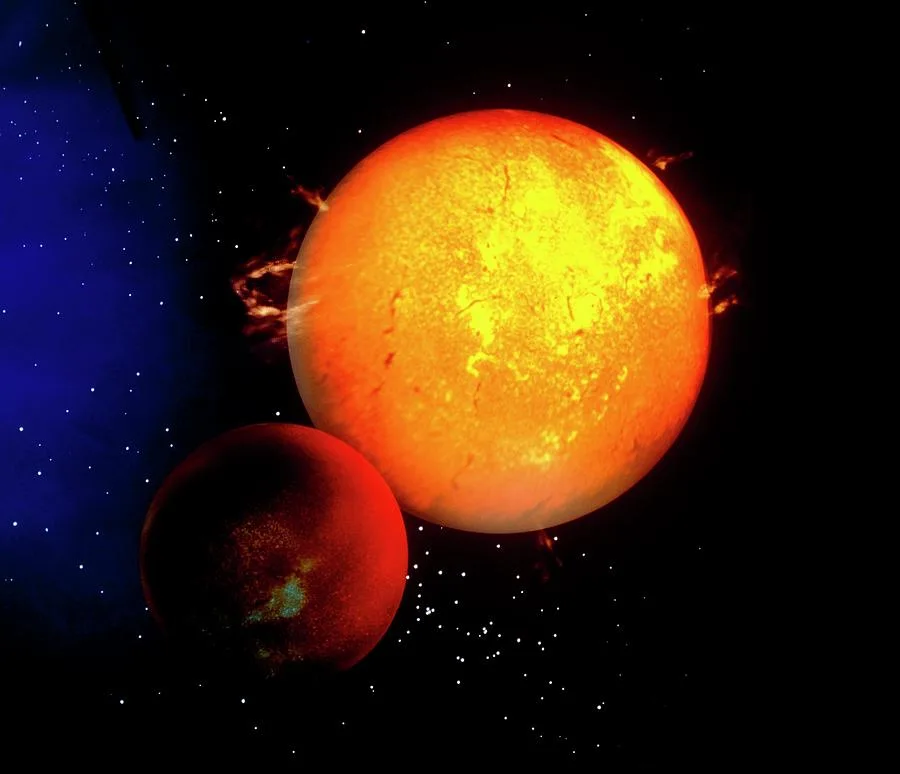
An artist's impression of 51 Pegasi b, the first confirmed exoplanet discovered in 1995. Its detection orbiting a Sun-like star revolutionized astronomy and launched the modern search for exoplanets and potential alien life. (Source: sciencephotogallery.com)
Our telescopes: cosmic detectives
NASA’s James Webb Space Telescope (JWST) launched on December 25, 2021. It greatly improved our ability to study exoplanet atmospheres. It collects light from incredibly distant objects. This lets scientists analyze their chemical makeup.
We detect these atmospheric chemicals using transit spectroscopy. When an exoplanet passes in front of its host star, starlight filters through its atmosphere. Just a tiny amount. Different gases absorb different wavelengths of light. This leaves a unique “fingerprint” in the starlight.
Think of it like looking at a barcode. Each bar’s position and thickness tells you something specific. Scientists analyze the starlight that reaches JWST. They look for specific dips in brightness at certain wavelengths. These dips show which chemicals are in the exoplanet’s atmosphere. JWST’s instruments, like NIRSpec and MIRI, are incredibly sensitive to these faint signals.
Oxygen is a very important potential biosignature. On Earth, most of our oxygen comes from photosynthetic life. Methane is another key gas. Many forms of primitive life produce methane. Water vapor (H2O) and carbon dioxide (CO2) also matter. They drive many biological and geological processes.
In 2020, a team announced the detection of phosphine (PH3) in Venus’s atmosphere. This was a controversial potential biosignature. On Earth, phosphine is associated with anaerobic life. Later studies, though, suggested the signal might have been an error. This showed how hard it is to detect biosignatures. It also highlighted how strict the rules are.
The planet’s story: context is everything
Researchers at the University of California, Riverside, published a 2023 study on atmospheric methane. They showed how non-biological processes can also make this gas. This means we must analyze carefully. We cannot jump to conclusions based on a single gas detection.
Planetary context is essential for understanding any chemical signature. We need to understand the star’s type, the planet’s size, and its temperature. We also need to know its atmospheric pressure. Is the planet tidally locked? Does it experience intense stellar flares? These factors influence what chemicals might naturally form. They also affect how long potential biosignatures could persist.
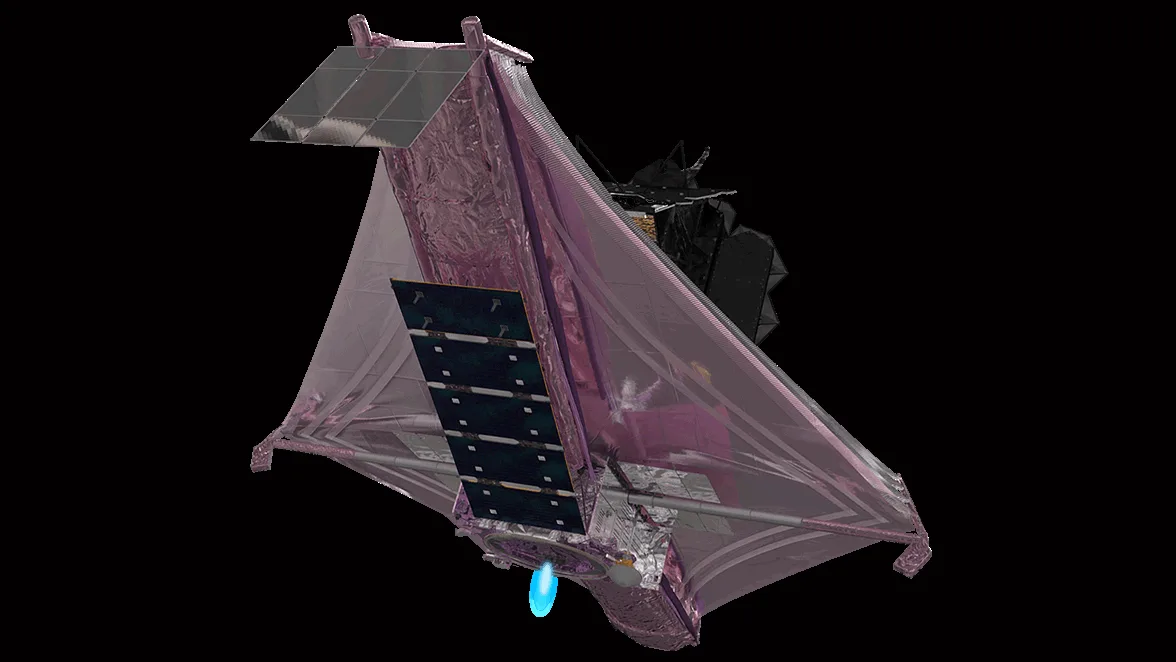
The James Webb Space Telescope, launched on December 25, 2021, is NASA's most powerful space observatory. Its advanced instruments are crucial for analyzing the chemical makeup of exoplanet atmospheres, searching for potential biosignatures like oxygen and methane. (Source: space.com)
Think of it like finding a puddle. Is it rain, or a leaky pipe? You need the bigger picture of the house and the weather to know for sure. A planet with lots of oxygen and methane, for instance, is more convincing. These gases should react and disappear quickly without a constant source. Such a chemical disequilibrium is a strong indicator of active processes. Life is the most likely active process.
Detecting these faint signals is incredibly challenging. Atmospheric hazes can block starlight. Stellar flares from the host star can destroy atmospheric molecules. Exoplanets are so far away, their signals are extremely faint. This takes powerful telescopes and smart data analysis.
Future telescopes are already being planned. NASA’s Habitable Worlds Observatory (HWO), for example, aims for even greater capabilities. These observatories would directly image exoplanets. They’d then analyze light reflecting from surfaces and atmospheres. This would give us even more details. NASA’s Exoplanet Exploration Program outlines these ambitious mission concepts.
Why this matters: The search for life
In September 2023, JWST made headlines. It detected methane and carbon dioxide in K2-18 b’s atmosphere. This “hycean” exoplanet is larger than Earth but smaller than Neptune. It lies within its star’s habitable zone. The discovery, published in Nature Astronomy, showed the telescope’s power. It also suggested a potentially water-rich world.
Dr. Nikku Madhusudhan from the University of Cambridge was the lead author of the K2-18 b study. He stressed that future observations could identify biosignatures. This isn’t just an academic exercise. It helps answer one of humanity’s oldest questions: Are we alone?
Finding biosignatures would change everything about how we understand life. It would show us the different forms and boundaries of life beyond Earth. It would also inspire generations of future scientists and explorers. This search makes us think more deeply about what life is. It makes us think about our unique place in the universe.
The next few decades will bring a lot of data from these distant worlds. New observatories will improve our search methods. We are only at the beginning of this important search. The faint chemical traces from distant planets may soon tell us the biggest story of all.
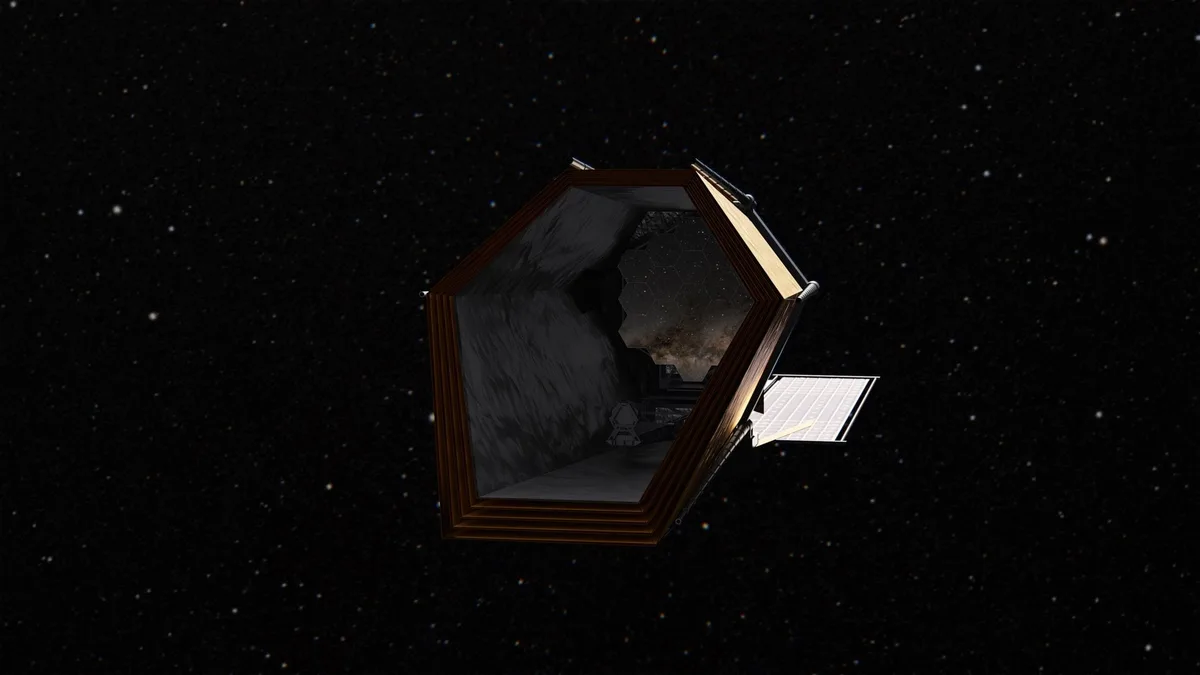
NASA's Habitable Worlds Observatory (HWO) is a planned flagship mission concept designed to directly image exoplanets and analyze their atmospheres for biosignatures, representing the next generation of space telescopes after JWST. (Source: universetoday.com)
FAQ: Exoplanet Biosignature Detection
What is a biosignature? A biosignature is a chemical or physical sign that shows if life existed or exists. It isn’t life itself. Instead, it’s a trace like a gas in an atmosphere or a specific mineral.
How do scientists detect them? Scientists use powerful telescopes like the James Webb Space Telescope. They observe starlight that passes through an exoplanet’s atmosphere. Different gases absorb specific wavelengths of light. This creates unique “fingerprints” that reveal the planet’s atmospheric composition.
Are we close to finding life? We are making significant progress in detecting potential biosignatures. However, confirming the presence of extraterrestrial life needs many clear detections. It will take more data and advanced analysis to reach a definitive conclusion.
What are “false positives”? False positives are non-biological processes that can mimic biosignatures. For example, geological activity can produce gases like methane or oxygen. Scientists must consider the planet’s full context to rule out these alternative explanations.

Active volcanoes, like this one, release a variety of gases including methane and oxygen into the atmosphere. On Earth, these emissions are a natural part of geological activity, but when detected on exoplanets, they can be 'false positives' that mimic potential biosignatures, requiring careful analysis to distinguish from signs of life. (Source: forbes.com)
You might also like:
👉 Tucker Carlson on Aliens: UFOs, UAP & Media Discourse
👉 Unexplained Mysteries of Science: Cosmos, Quantum & Beyond