Galileo's 1609 Telescope: How 4 Moons Changed Cosmos Views
Galileo's 1609 observations of Jupiter's four largest moons shattered old beliefs, revolutionizing our understanding of the cosmos.
Our cosmic calendar: A history of prediction
Galileo Galilei pointed his improved telescope to the night sky in 1609. From his Padua home, he saw mountains on the Moon. He watched Jupiter’s four largest moons orbit the giant planet. These sights shattered old beliefs about a perfect, unchanging cosmos. Galileo’s detailed notes, published in Sidereus Nuncius (1610), gave us new facts. These facts changed how we saw the cosmos and how we could predict its movements.
Humans have always looked up. They wanted to understand the sky’s patterns. From ancient cultures to today’s observatories, we’ve built calendars of the heavens. These calendars track eclipses, planet alignments, and comets. We used them for farming, travel, and religious rituals. Our search for a celestial calendar shows a deep human desire. We want to predict the future and know what’s coming. It’s a history of getting better and better at it.
Early stargazers
Around 3000 BCE, people on England’s Salisbury Plain built Stonehenge. This monument lined up with the solstices and equinoxes. Its builders tracked the Sun’s extreme positions. This let them predict seasonal changes. Their work showed an early, deep connection between life on Earth and the sky’s rhythms.
In ancient Babylon, priest-astronomers got very good at tracking the sky. By 700 BCE, they carefully recorded lunar and solar eclipses. They wrote these observations on clay tablets. Dr. Mathieu Ossendrijver, a Babylonian astronomy expert at Humboldt University, says these scribes used math to predict planet positions. Their work created a predictive calendar. It helped them interpret omens for rulers.
The Mayans, thriving in Mesoamerica from about 250 AD, also mastered sky watching. They built grand observatories, like El Caracol at Chichen Itza. These structures aligned with Venus’s extreme positions. Their Dresden Codex gives exact calculations for Venus’s 584-day cycle. This let them predict its first appearance at sunrise. They also predicted solar eclipses. These predictions were key to their complex ritual calendar.
Ancient Chinese astronomers kept sky records for thousands of years. Starting with the Shang Dynasty (c. 1600–1046 BCE), they wrote down supernovae, comets, and solar eclipses. They made detailed star maps. They also created clever calendar systems. These systems balanced lunar and solar cycles. This let them pinpoint farming seasons. Their observations were important for imperial power.
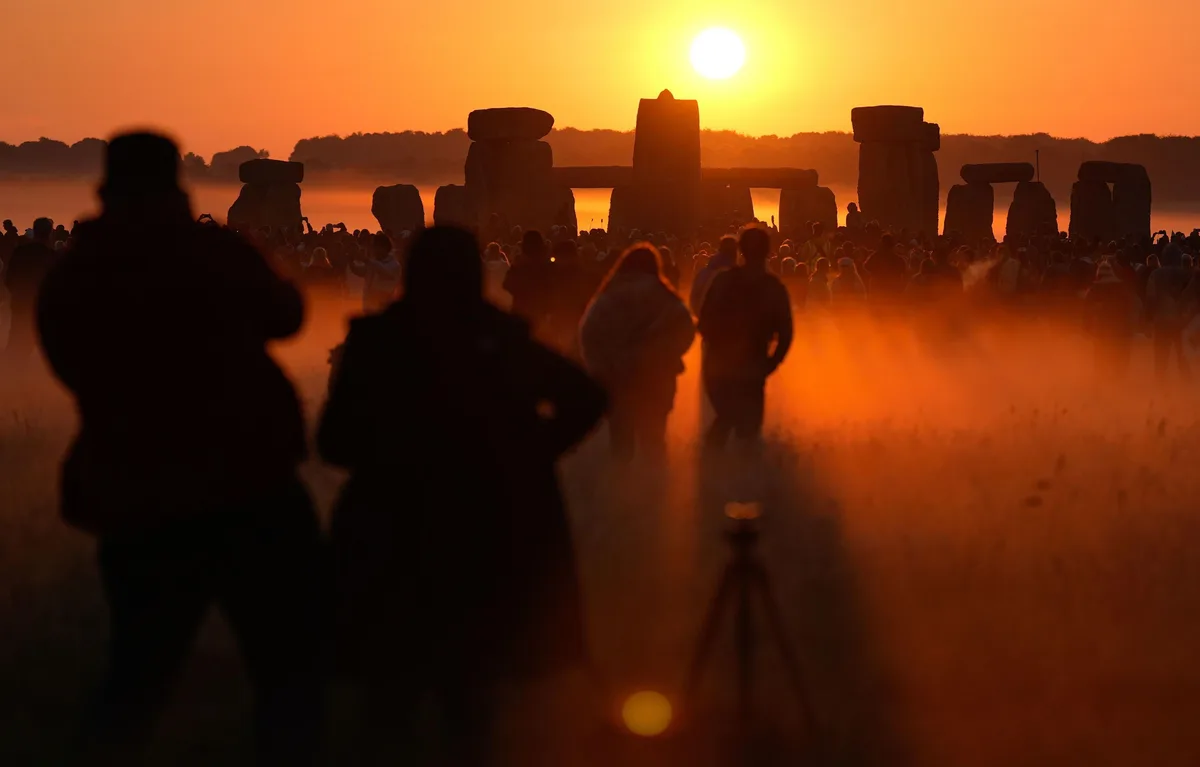
Stonehenge, the prehistoric monument on England's Salisbury Plain, was built around 3000 BCE. Its precise alignment with the solstices and equinoxes allowed its builders to track the Sun's extreme positions, forming an early celestial calendar for predicting seasonal changes. (Source: bbc.co.uk)
These early cultures shared a goal: predicting what the sky would do. They used sharp observation and pattern spotting. Their calendars gave practical and spiritual guidance. But their predictions only went so far. They relied on cycles, not the universe’s actual physical laws.
Science starts predicting
In 1543, Nicolaus Copernicus published De revolutionibus orbium coelestium. This important book suggested the Sun, not Earth, was the center of the universe. It completely changed how we thought about astronomy. The Copernican model gave us a more accurate way to understand planet motion. It offered a better foundation for predictions.
Johannes Kepler refined Copernicus’s model in the early 17th century. He studied Tycho Brahe’s vast amount of observation data. Kepler then created his three laws of planetary motion. These laws said orbits were ellipses. They explained why planets moved at different speeds. Kepler’s laws gave astronomers exact math tools. These tools greatly improved how accurate celestial calendars were. Now, astronomers could calculate future positions with incredible detail.
Galileo Galilei’s telescope observations, starting in 1609, backed up the Sun-centered view. His discoveries of Jupiter’s moons and Venus’s phases offered direct proof. They challenged the old Earth-centered model. These observations pushed science to ask more questions. They also cemented the shift towards using real-world data.
Isaac Newton’s Philosophiæ Naturalis Principia Mathematica, published in 1687, united celestial mechanics. His law of universal gravitation explained why planets moved as they did. It gave a physical reason for Kepler’s laws. Newton’s work let astronomers predict planet positions. They also predicted comet paths and eclipses with amazing accuracy. This was a huge change. Celestial calendars went from just describing to truly predicting. They now relied on universal physics.
This scientific revolution changed the celestial calendar forever. It became a tool of physics, not just a record of what we saw. This new understanding allowed even more accurate predictions. It also prepared us to look far beyond our own solar system.
Today’s observatories, digital skies
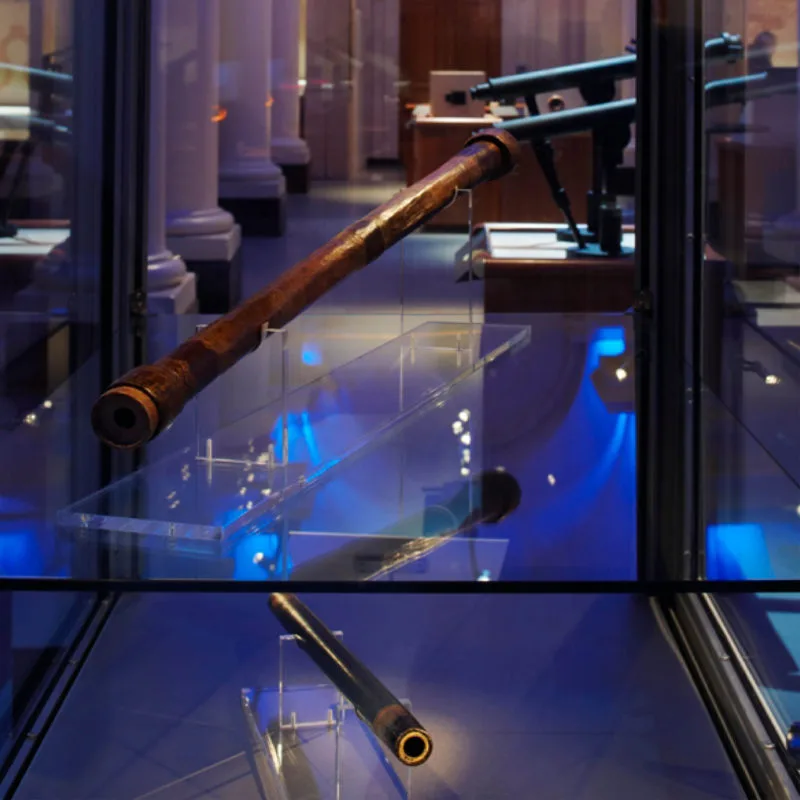
Galileo Galilei's revolutionary telescope, like this surviving example, allowed him to make observations starting in 1609 that provided direct evidence for the Sun-centered universe, challenging centuries of Earth-centered belief. (Source: exhibitsdevelopment.com)
The 19th century brought new tech. Photography let astronomers permanently record sky images. Spectroscopy showed us what stars were made of. Better telescopes, like the 100-inch Hooker Telescope at Mount Wilson, pushed how far we could see. These tools helped us understand distant objects better. They also sharpened predictions for closer events.
The 20th century saw professional observatories rise. Places like California’s Palomar Observatory became research hubs. Computers changed how we processed data and calculated things. They could simulate complex gravity interactions. This made planet alignment predictions incredibly precise. It also let us forecast rare events: transits, occultations, and meteor showers.
Space telescopes, starting with Hubble in 1990, got rid of atmospheric fuzz. They gave us incredible views of the universe. Satellites now constantly watch solar activity. They predict solar flares and geomagnetic storms. These events mess with Earth’s technology. NASA’s Solar Dynamics Observatory, launched in 2010, gives high-resolution images of the Sun. It helps predict space weather.
Today, groups like the International Astronomical Union (IAU) manage astronomical names and event announcements. They work with national observatories. The Minor Planet Center, at the Smithsonian Astrophysical Observatory, tracks millions of asteroids and comets. It gives key data for predicting possible impacts. This shows how powerful modern astronomy’s predictions are.
The digital age put the celestial calendar in everyone’s hands. Many apps and websites offer real-time sky maps. They forecast visible events for any spot on Earth. Citizen scientists add huge amounts of data. They watch variable stars and hunt for comets. This shared effort makes the celestial calendar more accurate and available than ever. This wide participation helps us anticipate every cosmic show.
What’s next for sky predictions?
The sky calendar will only get bigger. New instruments will show us details we’ve never seen. The Vera C. Rubin Observatory, now building in Chile, will do the Legacy Survey of Space and Time. It will map the whole visible sky every few nights. This will find quick events like supernovae and asteroids near Earth. Its massive data stream will sharpen our understanding of how the cosmos works.
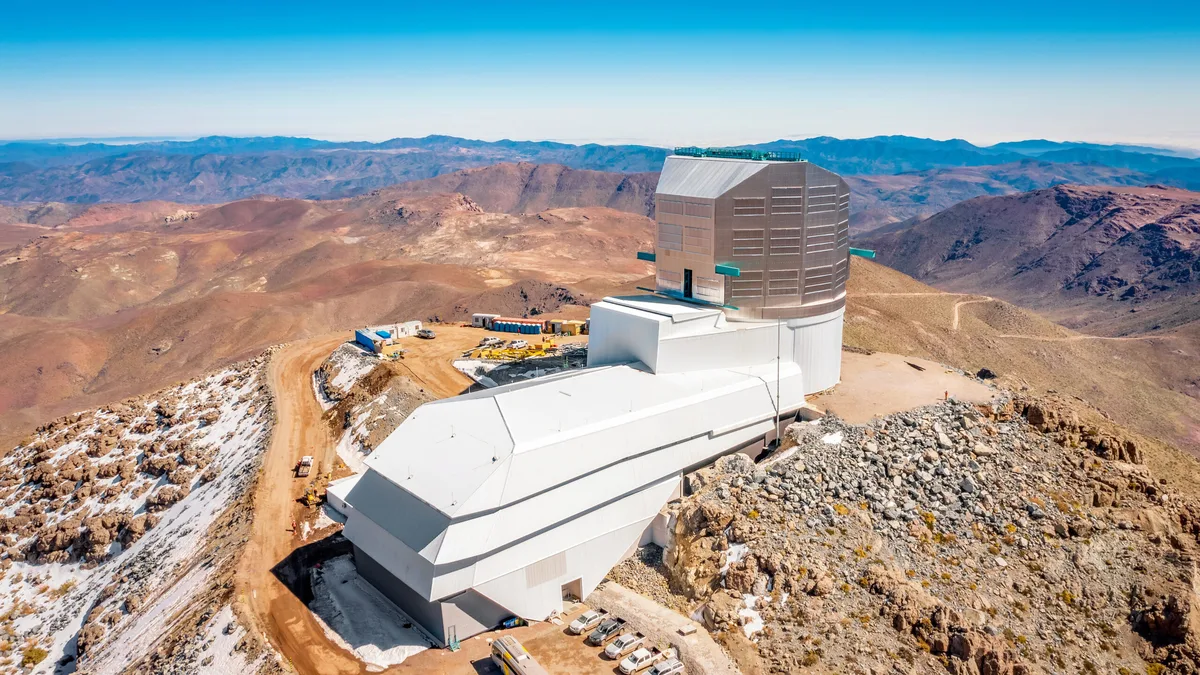
The Vera C. Rubin Observatory, currently under construction in Chile, is poised to revolutionize celestial event calendars. Its Legacy Survey of Space and Time (LSST) will map the entire visible sky every few nights, detecting transient events like supernovae and near-Earth asteroids with unprecedented speed. (Source: news.ucsc.edu)
Gravitational wave astronomy, started by LIGO (Laser Interferometer Gravitational-Wave Observatory), gives a new way to observe the universe. It finds ripples in spacetime from huge events. These include black hole mergers. Future detectors could predict such mergers. They could also pinpoint their light signals. This will add entirely new kinds of events to our sky calendars.
Exoplanet research is also moving fast. The James Webb Space Telescope looks at distant world atmospheres. It could spot exoplanet transits or occultations more precisely. This would let us predict when they pass in front of their host stars. This pushes the sky calendar far beyond our solar system.
AI and machine learning will play a bigger part. They can sort through huge datasets. They can find tiny patterns. AI will improve models for meteor showers. They’ll forecast solar activity with more warning. They can even help find new sky objects. This will boost our ability to predict the unpredictable.
People will still be key. Events like total solar eclipses draw millions. Groups like Astronomers Without Borders promote worldwide involvement. They back citizen science projects. The sky calendar will keep connecting humanity. It gives us a shared wonder at the universe’s large, continuous display. Our effort to predict the cosmos isn’t over. It promises even more amazing discoveries.
Questions you might have
What is a sky event calendar? It’s a guide that predicts natural astronomical events you can see from Earth. This includes eclipses, meteor showers, planet alignments, and comet sightings. It tells observers when and where to look.
How accurate are today’s sky predictions? Today’s predictions are very accurate. They use advanced physics, lots of observation data, and powerful computers. We can predict planet positions and eclipses precisely years ahead.
Who makes these calendars now? Professional observatories, space agencies like NASA and ESA, and groups like the IAU provide data. Then, public astronomy magazines and websites put this info together for sky watchers.
Why do sky calendars matter? They do a few things. They help science, get people excited about astronomy, and offer practical help for travel and telling time. They also link us to the universe’s old, steady beat.
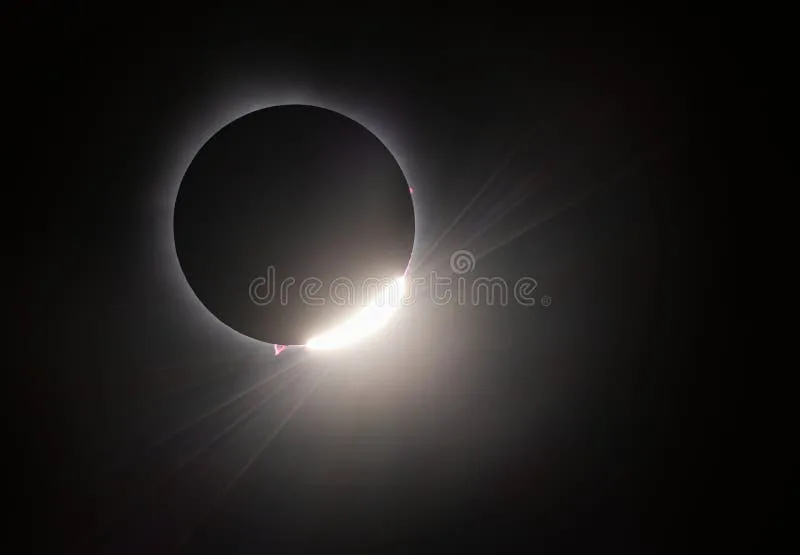
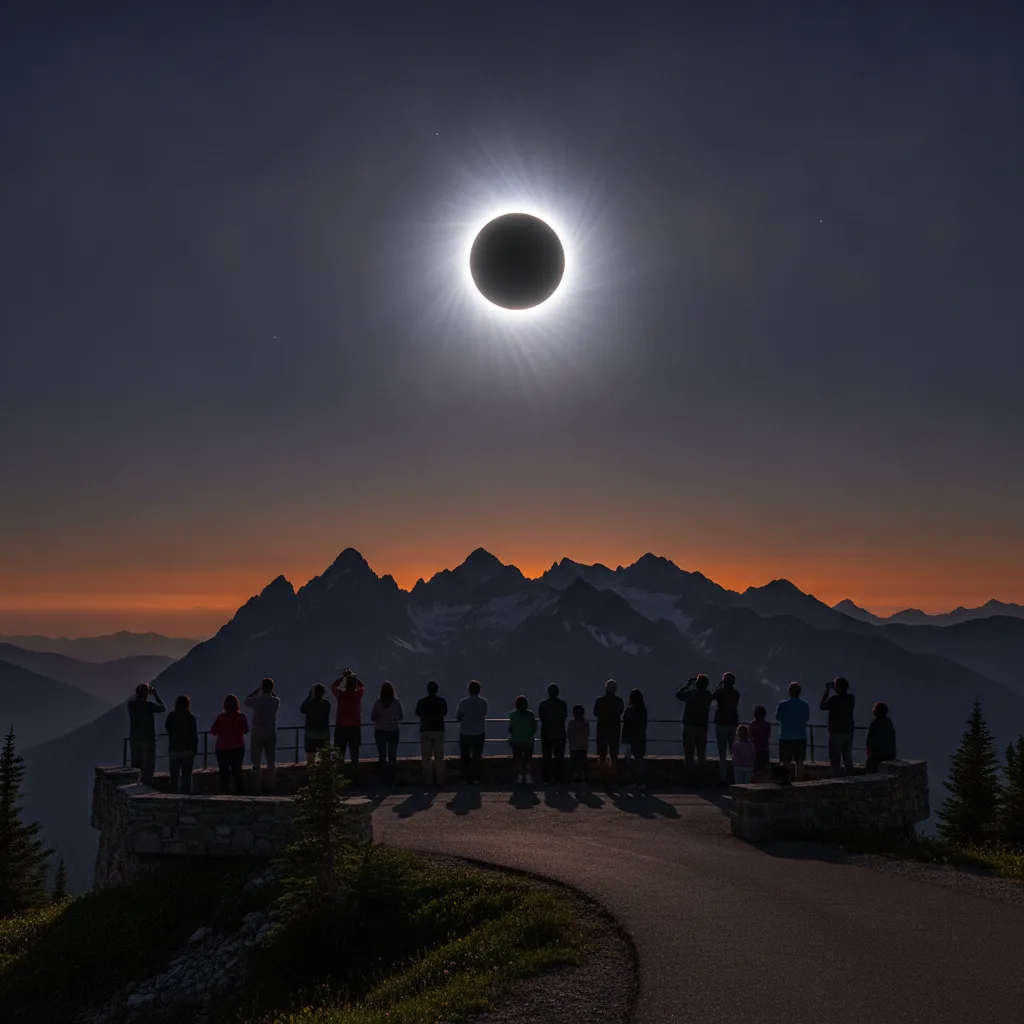
A total solar eclipse, like this one revealing the Sun's ethereal corona, is a rare and awe-inspiring celestial event. These dramatic phenomena draw millions worldwide, offering a profound shared experience and a powerful example of the precise predictions made by modern sky calendars. (Source: dreamstime.com)
You might also like:
👉 Unexplained Mysteries of Science: Cosmos, Quantum & Beyond
👉 Venus: Why 475°C Hell Holds Earth’s Climate Future
👉 Unearthing History: Famous Archaeological Discoveries & Their Impact