
Who Owns the Moon? The 1967 Treaty vs. New Space Gold Rush
The global race for Moon, Mars, and asteroid resources challenges the 1967 Outer Space Treaty, which declares space the 'province of all mankind.'
A new era has begun, defined by a global race for space resources. Nations and companies are now targeting the Moon, Mars, and asteroids. They seek strategic advantage and profit. This aggressive pursuit is reshaping international relations. It creates a complex geopolitical arena beyond Earth.
The Lunar Race Begins
The 1967 Outer Space Treaty declares space the “province of all mankind.” It prohibits nations from claiming celestial bodies like the Moon or any planet. However, the treaty does not address resource extraction. This legal gap is fueling a growing race for materials from space.
The US, China, and Russia are leading this new space race. Each aims for a sustained human presence beyond Earth. They are looking for valuable resources. Water ice on the Moon’s poles is a prime target. This ice can be converted into rocket fuel and breathable air.
NASA’s Artemis program outlines America’s strategy. It plans to land humans on the Moon again by 2026. The program seeks a long-term lunar presence. It also promotes international cooperation through the Artemis Accords. As of June 2024, 42 nations have signed these non-binding principles.
China and Russia have a competing plan. They are developing the International Lunar Research Station (ILRS). This joint project aims to deploy robotic missions by 2028. It also plans a permanent human research outpost by 2035. This parallel effort highlights a strategic division.
Private companies are also key players. SpaceX, Blue Origin, and Axiom Space are developing advanced rockets and habitats. These firms receive large government contracts. They also pursue independent commercial ventures. Their rapid technological advances are reshaping global space policy.
Two Paths to the Moon
The US-led Artemis Accords establish principles for lunar exploration. Signatories commit to peaceful use and transparency. They also agree to help astronauts in distress. Importantly, the Accords confirm the right to extract and use space resources. This challenges the Outer Space Treaty’s silence on the matter.
China and Russia view the Artemis Accords with suspicion. They see them as a US attempt to unilaterally set space norms. Dr. Bleddyn Bowen, a lecturer at the University of Leicester, noted this tension in a 2022 analysis. He suggests the Accords could create a “de facto legal regime” favoring its signatories. China promotes the ILRS as a more inclusive alternative.
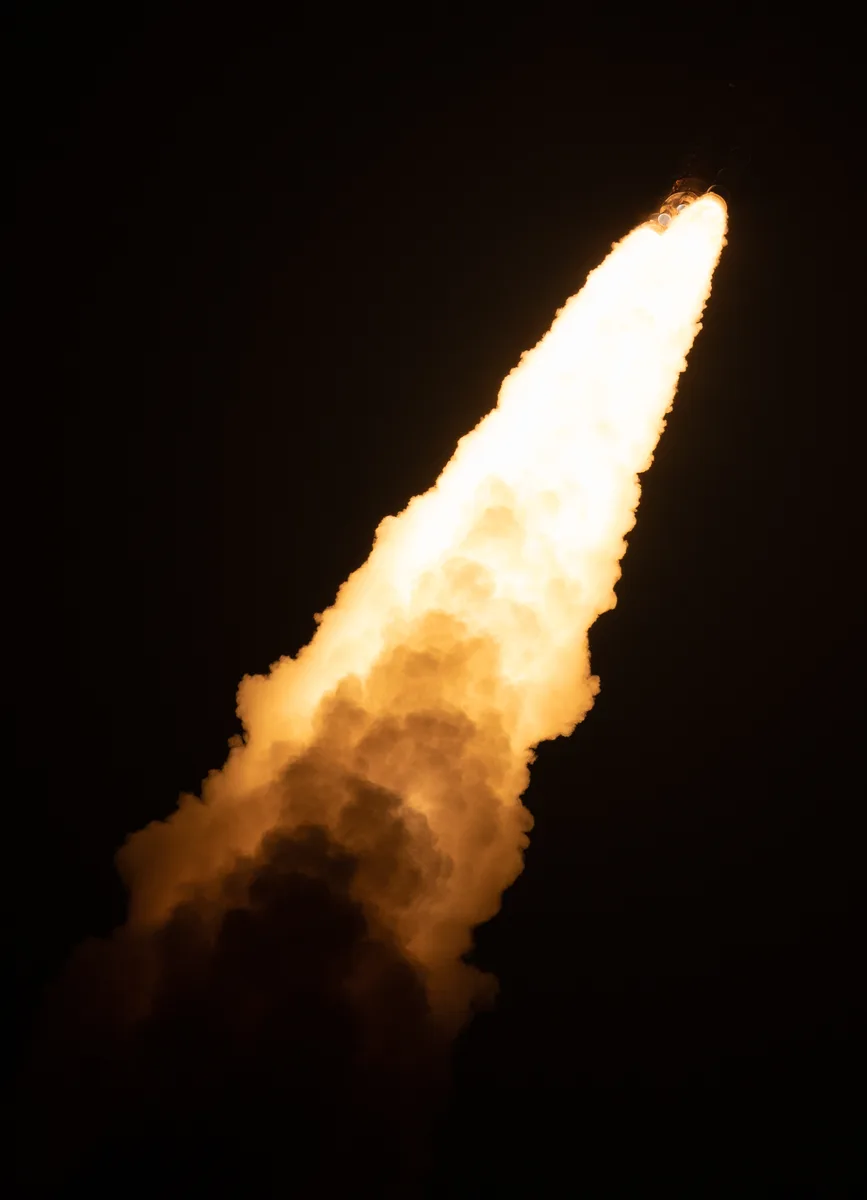
The Space Launch System (SLS) rocket, seen here during its Artemis I launch, is NASA's powerful heavy-lift vehicle designed to return humans to the Moon. It is a cornerstone of the Artemis program, America's strategy for a sustained human presence on the lunar surface.
The Moon’s south pole contains significant water ice. NASA’s Lunar Reconnaissance Orbiter has confirmed these reserves. This ice is crucial for future space missions. It provides propellant for rockets heading to Mars. It also supports life on lunar bases. Control over these resources offers a significant strategic advantage.
China’s Chang’e missions demonstrate its lunar capabilities. The Chang’e 4 mission achieved the first soft landing on the lunar far side in 2019. Chang’e 5 brought lunar samples back to Earth in 2020. These missions showcase China’s advanced robotic exploration. They also highlight its ambitions.
The US Department of Defense monitors China’s space activities. A 2023 Pentagon report highlighted China’s dual-use space technologies. These technologies serve both civilian and military purposes. Space-based surveillance and communication systems are examples. The report warned of potential military uses in lunar operations.
Asteroid mining presents another resource opportunity. Asteroids contain platinum-group metals and rare earth elements. These materials are essential for Earth’s high-tech industries. Companies like AstroForge are developing asteroid prospecting technologies. The potential economic value of these resources is immense.
Money, Power, and Missing Rules
The global space economy is growing quickly. PricewaterhouseCoopers (PwC) projected it could reach $1 trillion by 2030. Satellite services and space tourism are driving this growth. The possibility of using off-world resources also contributes to it. Investment in space infrastructure demonstrates this confidence.
No international legal framework currently governs space resource ownership. The Outer Space Treaty prohibits national claims. However, it does not specify how to manage extracted resources. This legal gap causes uncertainty. It also raises the risk of future disputes.
The US Commercial Space Launch Competitiveness Act of 2015 allows US citizens to own space resources they extract. Luxembourg passed similar legislation in 2017. These national laws encourage private investment. But they are not recognized internationally. This unilateral approach complicates global governance.
Developing nations are concerned about fair access. They worry about a new scramble for space resources, similar to colonial practices. Ambassador Peter Hulsroj, former Director of Legal Affairs at the European Space Agency, emphasized this point. He stated in a 2021 interview that common heritage principles must be respected. Without clear rules, only powerful nations and wealthy corporations will benefit.
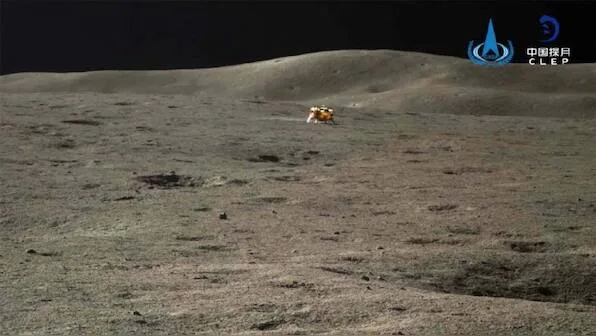
China's Chang'e 4 lander and its Yutu-2 rover made history in 2019 by achieving the first-ever soft landing on the Moon's far side. This mission demonstrated China's advanced robotic exploration capabilities and its growing ambitions in lunar resource acquisition. (Source: firstpost.com)
Military strategists are also focusing on space. The US Space Force was established in 2019. Its goal is to protect US interests there. Other nations, including China and Russia, are also improving their space security. This militarization of space raises concerns about conflict.
Satellite networks like SpaceX’s Starlink have dual uses. They provide internet services globally. They also offer communication for military operations. Elon Musk’s decision to provide Starlink to Ukraine demonstrated this dual nature. It highlighted the geopolitical influence of private space entities.
What’s Next for Space?
The next decade will likely see increased competition in cislunar space (the region between Earth and the Moon). Both the US and China plan sustained lunar presences. Their actions will shape future space norms. The choices made now will determine whether there is cooperation or confrontation.
New international agreements are urgently needed. These agreements must address resource ownership, environmental protection, and ensure wide participation. The Secure World Foundation supports a multilateral approach. It suggests strengthening the UN Committee on the Peaceful Uses of Outer Space.
The private sector’s influence will continue to grow. Companies are developing lunar landers and orbital stations. They are also investing in asteroid mining technologies. Their commercial interests will increasingly overlap with national strategies. This requires new models for governance.
Earth’s politics now extend into space. Rivalries over resources, technology, and influence are unavoidable. A new “Cold War in space” is a real worry. John Logsdon, founder of George Washington University’s Space Policy Institute, often warns of this. He stressed the importance of dialogue.
Humanity’s move into space marks a new chapter. It is full of discovery and opportunity. However, it also brings unique geopolitical challenges. The future of space depends on establishing clear, fair rules now. Failing to do so could turn the vastness of space into a new battleground. That would be a tragedy.
FAQ
What is the Outer Space Treaty? The 1967 Outer Space Treaty is a key international agreement. It declares space a common heritage. It also prevents nations from claiming celestial bodies. The treaty bans weapons of mass destruction in orbit.
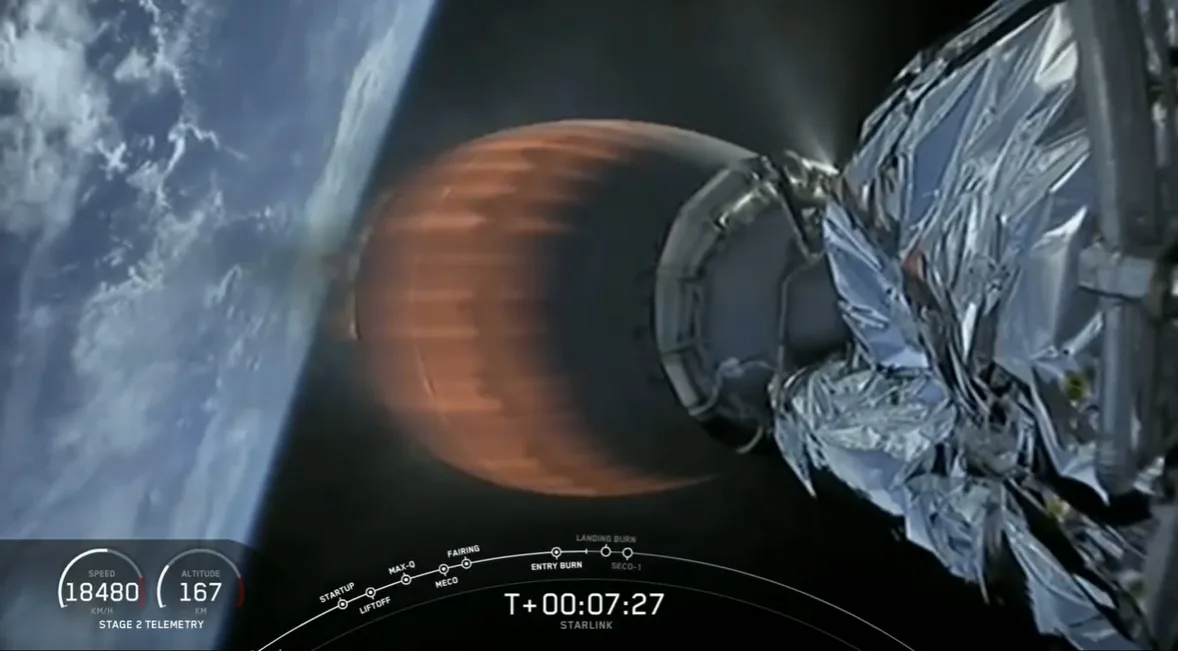
SpaceX's Starlink constellation, seen here in low Earth orbit, provides global internet services but also serves critical military communication needs, highlighting the dual-use nature of private space technology and its growing geopolitical influence. (Source: space.com)
What are the Artemis Accords? The Artemis Accords are non-binding principles for lunar exploration. They promote peaceful cooperation and transparency. They also affirm the right to extract and use space resources.
Why is the Moon important for colonization? The Moon is important due to its proximity and resources. Its water ice can produce rocket fuel and life support. It serves as a testing ground for technologies needed for Mars missions.
Who are the main players in space colonization? The main players include the United States, China, and Russia. Key private companies like SpaceX and Blue Origin are also significant. Several other nations, such as India and Japan, have growing space programs.
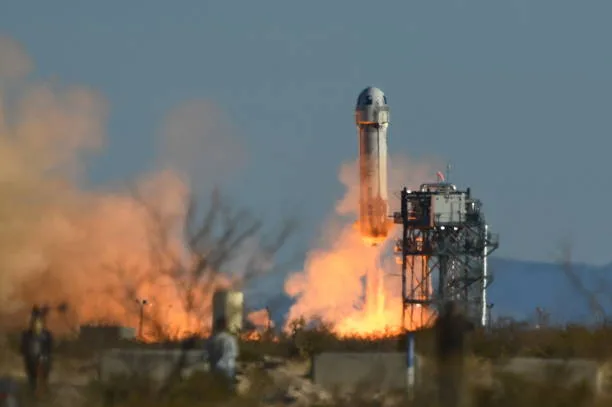
Blue Origin's New Shepard rocket is a reusable suborbital launch system designed for space tourism and scientific payloads. It represents a key private player in the burgeoning space industry, demonstrating technologies vital for future lunar and Mars colonization. (Source: gettyimages.com)
You might also like:
👉 The $546 Billion Space Race: Private Money, Global Rivalries
👉 US-China: $664B Trade Masks Zero-Sum Global Power Struggle