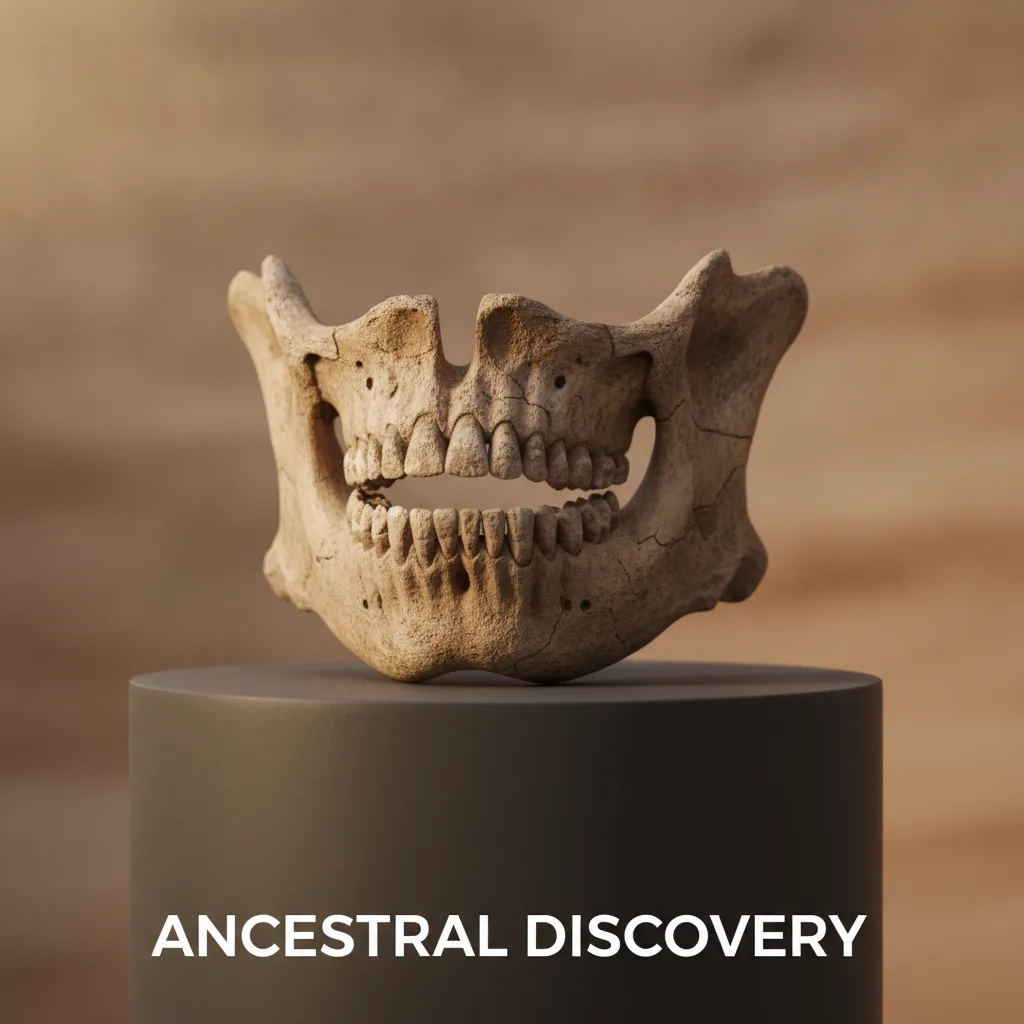
Mandibles: The 6 Million-Year Story of Hominid Jaw Evolution
The common story of hominid jaw evolution, starting 6 million years ago in East and South Africa, reveals how mandibles adapted to diet changes.
Our jaws: more than just tools and fire
The story of our jaws is usually simple. It suggests big, strong jaws for tough plants. Then, jaws became smaller as tools and fire made food easier to eat. This tale starts 6 million years ago in East and South Africa. Early hominids, our bipedal ancestors, faced huge dietary challenges. Their lower jaws, or mandibles, show how they adapted to what they could find.
The common story says jaw evolution was a straight line. Early hominids like Australopithecus had big, powerful jaws and teeth. These were perfect for grinding coarse plants. But then came stone tools and controlled fire. These changes let them process food outside the mouth, making diets softer. This supposedly eased the pressure for strong chewing, freeing up energy for bigger brains.
This idea holds true for the Homo genus. Early Homo species appeared around 2.8 million years ago. They show a clear trend: smaller teeth and less robust jaws than their australopithecine ancestors. Stone tools appeared even earlier, 3.3 million years ago, at Lomekwi 3 in Kenya. This signaled a coming shift. By 1.8 million years ago, Homo erectus had noticeably smaller jaws. This matches evidence of systematic butchery and, later, fire.
But the “tools-and-fire” story doesn’t tell everything. It misses important evolutionary twists and biomechanical compromises. The fossil record shows times when jaws got stronger, not weaker. This challenges the idea of a simple, one-way trend. These exceptions point to a more complex mix of diet, environment, and specific adaptations.
The Paranthropus paradox: jaws that broke the mold
Around 2.7 million years ago, a different hominid line appeared in East and South Africa: the genus Paranthropus. These creatures had some of the biggest jaws and chewing muscles we’ve ever found. Paranthropus boisei is a perfect example of this extreme build. Mary Leakey famously called it “Nutcracker Man” after its discovery in Tanzania in 1959. Its enormous molars and thick mandibles suggest an incredible bite force.
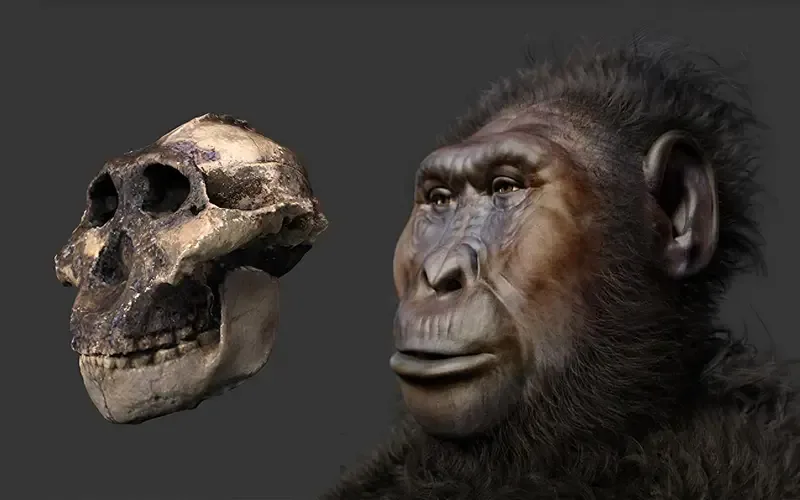
The robust skull of Paranthropus boisei, famously nicknamed "Nutcracker Man" by Mary Leakey, showcases its enormous molars and thick mandibles, suggesting an incredible bite force that challenges simple narratives of hominid jaw evolution. (Source: archaeologymag.com)
P. boisei’s skull had a prominent sagittal crest. This bony ridge along the top of its head anchored powerful temporalis muscles. These muscles ran from the crest to the lower jaw. This setup gave it immense leverage for chewing. Paranthropus robustus, found in South Africa, had similar, though less extreme, features. Both species defy the idea that all jaws were getting smaller.
For decades, scientists thought these strong jaws meant Paranthropus ate hard nuts and seeds. It seemed logical, given their teeth. But advanced isotopic analyses showed something different. A 2011 study by Thure E. Cerling and colleagues looked at carbon isotopes in P. boisei tooth enamel. It was published in Proceedings of the National Academy of Sciences. They found a diet rich in C4 plants, mostly grasses and sedges.
This surprising diet means Paranthropus ate huge amounts of low-quality, fibrous foods. Such meals needed long chewing times and strong dental equipment. They didn’t crack hard things; they processed bulk. David Strait and Peter Lucas, in their 2010 review of hominin diet, make a point about chewing efficiency. It’s not just about bite force. It’s also about handling large food volumes. Paranthropus carved out a niche that demanded sustained, powerful grinding.
Beyond simple reduction: biomechanics and brain growth
Hominid jaws weren’t just about tools. They also involved complex biomechanical and genetic factors. The jaw’s design, its muscles, and where they attach all greatly affect chewing. For example, the mandibular condyle’s shape influences jaw movement. This is where the jaw connects to the skull. A flatter condyle, found in some early hominids, allows for more grinding.
People often oversimplify the link between jaw size and brain size. Leslie Aiello and Peter Wheeler proposed the “expensive tissue hypothesis” in 1995. It connects bigger brains to smaller guts. The idea is that metabolic energy saved by a smaller, more efficient digestive system could go to the brain instead. Brains are very costly. A smaller jaw might fit this by meaning less energy for chewing, but it’s not a direct cause.
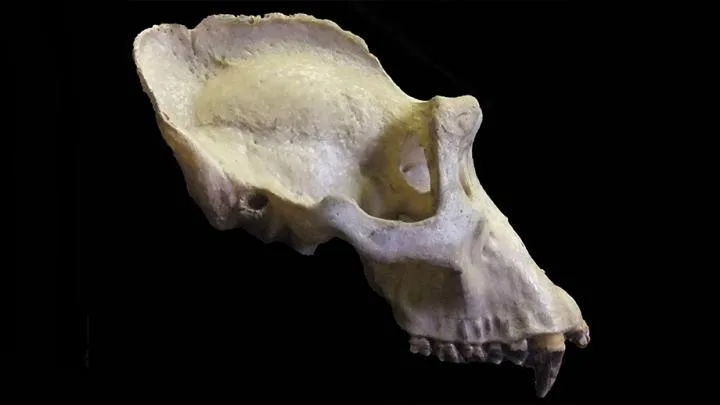
A prominent sagittal crest, a bony ridge along the top of the skull, anchored powerful temporalis muscles in hominids like Paranthropus, providing immense leverage for chewing tough, fibrous foods. (Source: archaeologyalmanac.com)
Genes also play a part. The MYH16 gene makes a protein found in jaw muscles. In 2004, Hansell Stedman and colleagues found a 2-base pair deletion in MYH16 in humans. Other primates don’t have this. This mutation happened around 2.4 million years ago. It might have reduced the size and strength of human jaw muscles. This genetic shift could have eased limits on skull growth, indirectly helping brains get bigger.
But the MYH16 mutation’s impact is still debated. Researchers like Bernard Wood and David Lieberman say its effects might be less dramatic than first thought. They note that smaller muscles don’t automatically mean big skull changes. Plus, the timing doesn’t quite match the biggest jumps in brain size. Jaw evolution seems shaped by many things: genetic traits and environmental pressures, not just one genetic switch.
Diet changes and dental clues
Hominid jaw evolution ties directly to diet changes. We see these changes in tooth shape and wear patterns. Early Australopithecus afarensis had large molars and thick enamel. They were found at sites like Hadar, Ethiopia, around 3.2 million years ago. This suggests they ate tough, fibrous plants. Their jaws show they needed to process such foods, which fits their woodland and savanna homes.
As the climate dried and savannas spread, diets changed. Homo habilis, appearing around 2.4 million years ago, had slightly smaller teeth and jaws than Australopithecus. This might mean they relied more on scavenging and eating meat when they could. But their tooth wear still points to a wide, omnivorous diet. There wasn’t a sudden, drastic change.
Cooking was a major dietary innovation, often linked to Homo erectus around 1.8 million years ago. It gelatinizes starches and denatures proteins. This makes food easier to digest and needs less chewing. Richard Wrangham argues cooking drove smaller teeth, jaws, and bigger brains in Homo erectus. He made this case in his 2009 book Catching Fire: How Cooking Made Us Human. It’s a powerful, well-supported theory.

The Hadar archaeological site in Ethiopia's Afar Region is renowned as the discovery location of 'Lucy,' a nearly complete *Australopithecus afarensis* skeleton, offering crucial evidence for early hominid jaw and dental evolution. (Source: alchetron.com)
But even with cooking, the story isn’t simple. Widespread evidence of controlled fire use appears much later, between 800,000 and 400,000 years ago. Early Homo erectus likely ate raw meat and plants, processed with tools. Susan Antón’s research on Homo erectus skull morphology shows something important. Their faces, though less strong than australopithecines, could still handle significant chewing stress. This suggests a varied diet, not just soft, cooked foods.
Our evolving understanding of jaw change
Hominid jaws didn’t just shrink because of tools and fire. Those innovations were important, especially for the Homo line. But the full picture is much more complex. Paranthropus’s strong jaws, built for processing huge amounts of fibrous plants, offer a powerful counter-example. They show that evolution took parallel, distinct paths.
Jaw shape was also formed by genetic mutations, biomechanical limits, and changing environmental pressures. A smaller jaw isn’t simply a result of softer food. It also shows changes in muscle attachment, how efficiently one bites, and skull structure. Seeing these many influences helps us move past a single explanation.
Future research will surely reveal even more details. New tools like proteomics, ancient DNA analysis, and micro-CT scanning of fossils open up new ways to learn. These will let scientists rebuild jaw function and diets with amazing accuracy. Our jaws’ evolution is a tale of constant adaptation. It’s often surprising, and always complex.
FAQ
Q: What’s the main difference between hominid and hominin? A: “Hominid” is a broader term. It includes all great apes and humans. “Hominin” refers specifically to the group after the split from chimpanzees. This includes modern humans, extinct human species, and all our direct ancestors, like Australopithecus.
Q: How do scientists figure out ancient hominid diets from jaws? A: Scientists look at tooth shape and enamel thickness. They also study microwear patterns – scratches and pits on the enamel. Finally, they do isotopic analysis of carbon and strontium in tooth enamel. These methods give clues about the foods eaten.
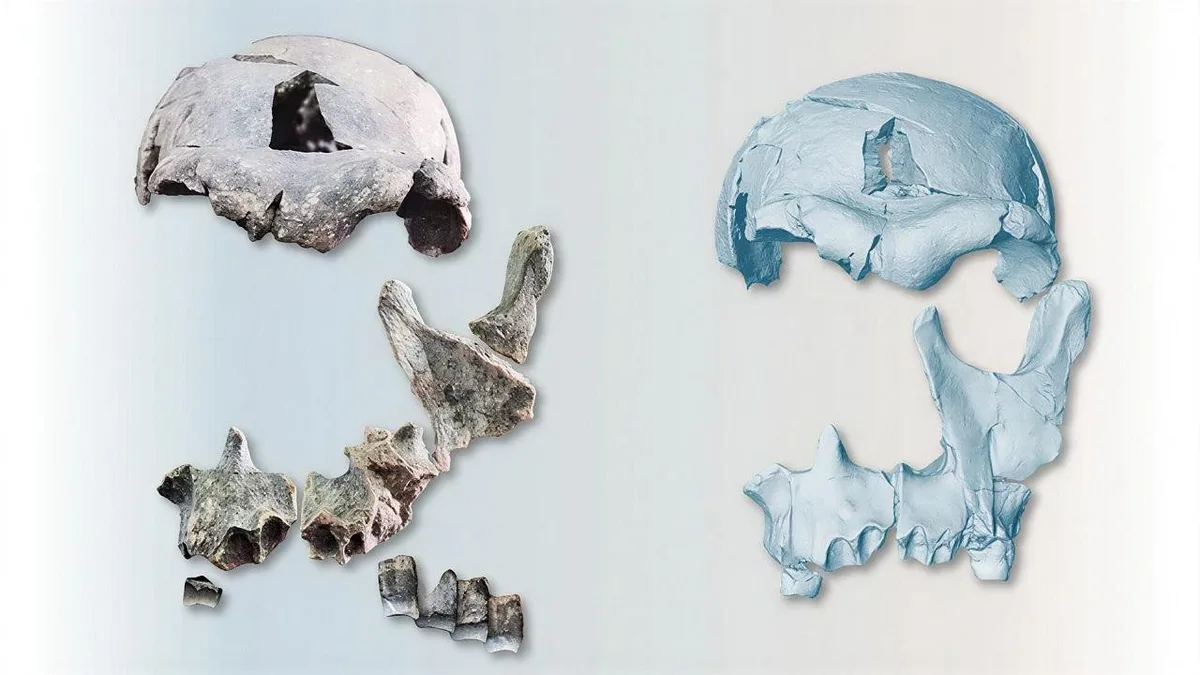
Homo erectus was an early human species that lived from about 1.9 million to 110,000 years ago. Research on their skull morphology suggests their faces could handle significant chewing stress, indicating a varied diet beyond just soft, cooked foods. (Source: archaeologymag.com)
Q: Did all hominids have big jaws before Homo sapiens? A: No. Many early hominids like Australopithecus and Paranthropus had strong jaws. But species in the Homo genus generally show a trend toward smaller jaws and teeth. This shrinking sped up with advanced tool use and cooking.
Q: What’s the “expensive tissue hypothesis”? A: This idea suggests that a big brain costs a lot of energy to maintain. It proposes that the energy needed for brain development was balanced. This happened by reducing the size of other energy-hungry organs, like the gut.

A fossilized skull of *Australopithecus afarensis*, an early hominid known for its strong jaws and teeth, which were adapted for a diet requiring significant chewing. This genus represents a crucial stage in human evolution, predating the *Homo* genus and showing a different jaw morphology. (Source: etsy.com)
You might also like:
👉 Unearthing History: Famous Archaeological Discoveries & Their Impact