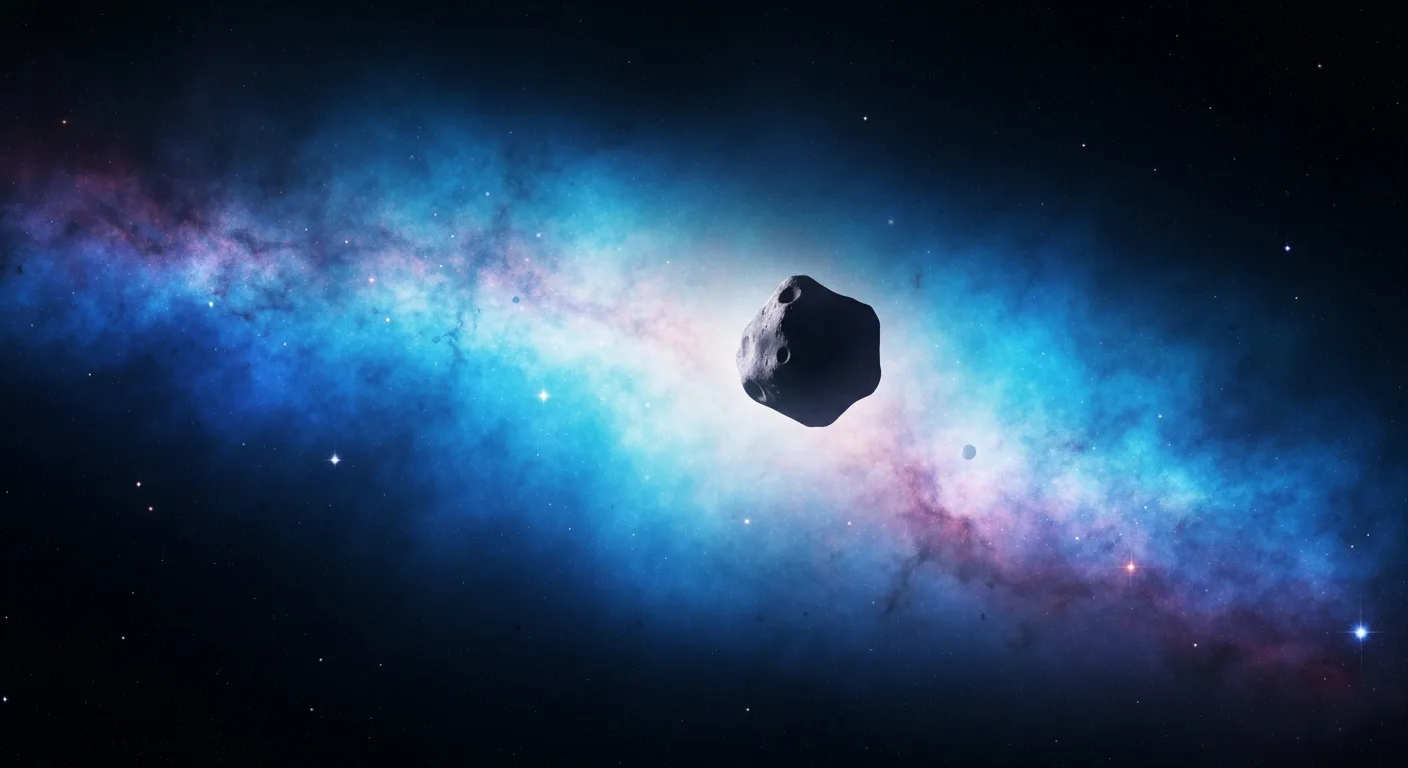
JWST & Earth-Bound Object: Why the Massive Rumor is False
Social media is flooded with rumors of a massive object heading for Earth, but no official space agency has reported such a discovery. Uncover the truth about Webb's mission.
No, the Webb Telescope Didn’t Find an Asteroid Heading for Earth
No official space agency or scientific body has reported the discovery of a massive object hurtling toward Earth. The James Webb Space Telescope has not found such a thing. Despite this fact, a terrifying rumor floods social media. It paints a picture of unseen, imminent danger. This popular belief is completely unfounded by any credible science. The truth about Webb’s mission and how science works contradicts these widespread rumors.
The Webb Telescope’s True Mission
The James Webb Space Telescope (Webb) is humanity’s most powerful eye on the distant universe. It works about 1.5 million kilometers from Earth at the second Lagrange point (L2). This spot lets it see the cosmos in infrared light, peering through cosmic dust. NASA, the European Space Agency (ESA), and the Canadian Space Agency (CSA) manage this huge mission together.
Webb’s main goals include studying the first stars and galaxies. It also analyzes exoplanet atmospheres and observes how stars and planets are born. Since its first full-color images came out in July 2022, the telescope has sent back amazing data. These images show nebulae, galaxy clusters, and water vapor on distant exoplanets.
Online groups often see Webb’s new images differently. Claims about the telescope finding a “massive object course correcting towards Earth” spread everywhere. These stories often hint at a hidden, urgent threat. They imply that officials are keeping vital information secret. This idea sparks public worry and a feeling of coming cosmic doom.
These claims have no basis in published science or official news. Neither NASA nor its partners have confirmed any approaching object. Dr. Jane Rigby, Webb Operations Project Scientist at NASA’s Goddard Space Flight Center, highlights the telescope’s focus. Its work is on deep-space astrophysics and cosmology. Her public statements describe discoveries of distant galaxies and exoplanets, never an Earth threat.
Webb’s Real Work: Precision, Not Panic
The Webb Telescope launched on December 25, 2021. It became fully operational in mid-2022. It uses four advanced science tools. These include the Near-Infrared Camera (NIRCam) and Spectrograph (NIRSpec). It also has the Mid-Infrared Instrument (MIRI). The Fine Guidance Sensor/Near Infrared Imager and Slitless Spectrograph (FGS/NIRISS) is the fourth. These tools capture light from visible red to mid-infrared.
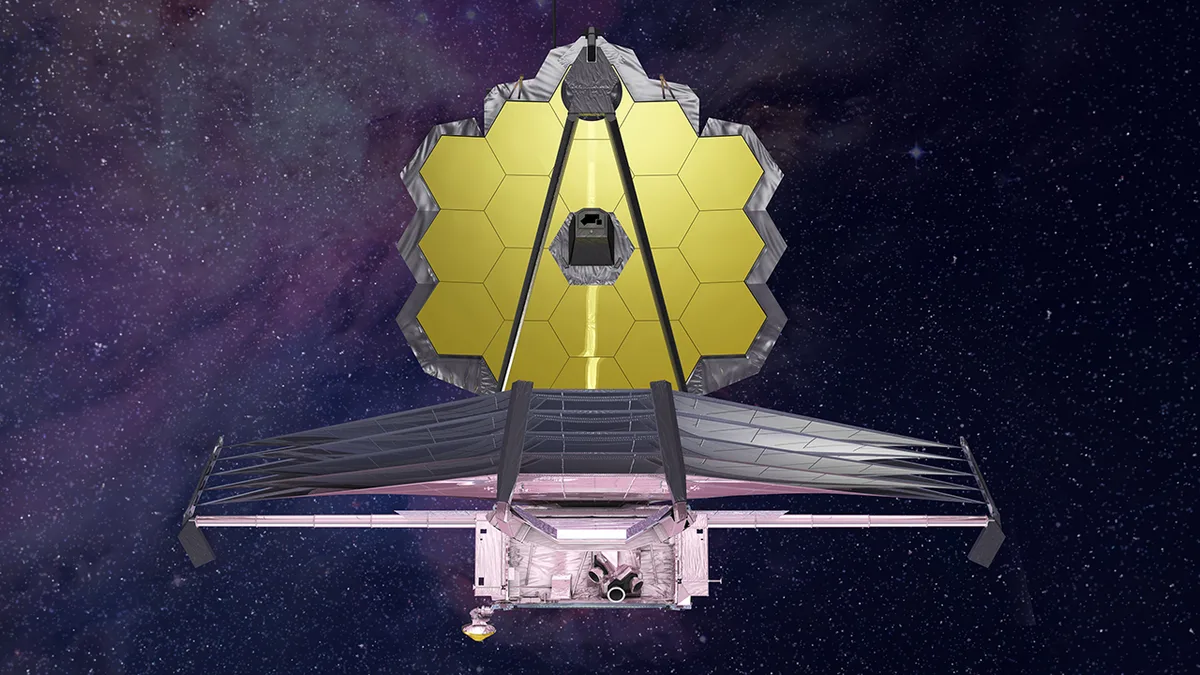
The James Webb Space Telescope (JWST), humanity's most powerful eye on the distant universe, operates 1.5 million kilometers from Earth at the second Lagrange point (L2). Managed by NASA, ESA, and CSA, it launched on December 25, 2021, to study the first stars and galaxies, exoplanet atmospheres, and stellar birth. (Source: space.com)
Webb’s infrared vision lets it cut through cosmic dust clouds. This reveals hidden star-forming regions. It can also check the chemical makeup of exoplanet atmospheres, looking for signs of life like methane or water. For example, in September 2022, Webb found carbon dioxide in the atmosphere of exoplanet WASP-39 b. This gas giant orbits a star 700 light-years away. Nature Astronomy published this direct observation.
Verifying space discoveries is a very strict process. Scientists first gather data. Then they analyze it deeply with complex models. They send findings to peer-reviewed journals. There, other experts check the methods and conclusions. Only after this strict review, and often independent checks, do space agencies announce big discoveries. Dr. John Mather, Webb Senior Project Scientist, often emphasizes this careful way of working.
An object “course correcting towards Earth” would be a never-before-seen event. It would demand immediate, global attention from planetary defense networks. NASA’s Planetary Defense Coordination Office runs some of these. No alerts, warnings, or official statements have come from these groups. This proves the rumors wrong. A threat like that wouldn’t stay secret.
Webb is mainly a deep-field observatory. It’s great at finding incredibly faint light from objects billions of light-years away. While it can track things in our solar system, it works best for distant, still targets. Ground-based telescopes and asteroid surveys usually find and watch Near-Earth Objects (NEOs). Deep-space infrared observatories like Webb do not. Projects like Pan-STARRS constantly scan the sky for threats.
Rumors in the Digital Cosmos
In July 2022, Webb released its first stunning images. Afterward, a flood of speculative and misleading content hit online platforms. Many social media users misunderstood the images. They created fictional stories around them. Some posts called distant galaxies “approaching objects” or showed artistic pictures as raw data.
Unverified claims spread fast for several reasons. Social media algorithms favor engaging content, often ignoring facts. Sensational headlines and emotional stories quickly catch on. They overshadow calm scientific explanations. This creates an echo chamber where false information spreads freely.
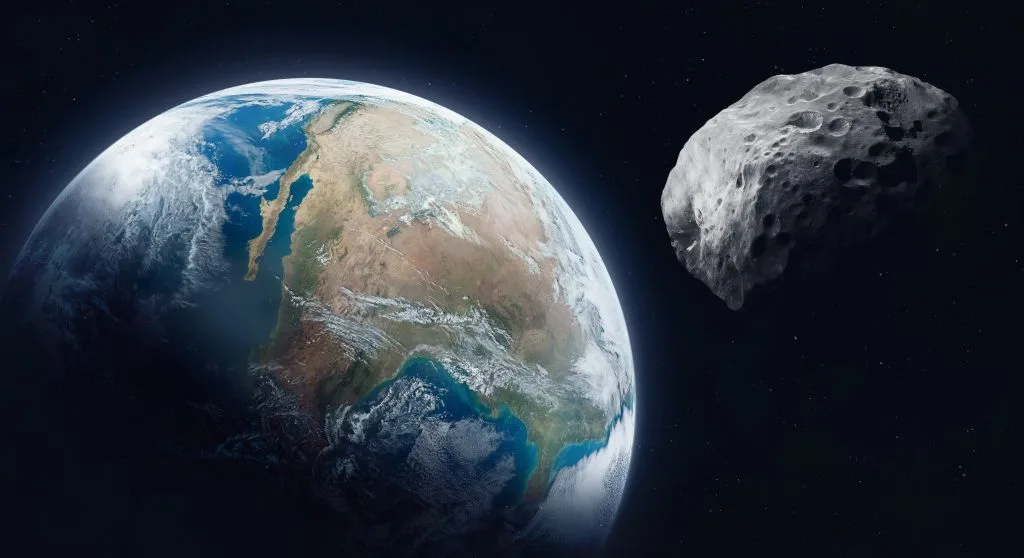
Near-Earth Objects (NEOs) are asteroids and comets whose orbits bring them within 1.3 astronomical units of the Sun, posing potential impact risks. Unlike the fictional 'course correcting' object, these are real celestial bodies constantly monitored by ground-based surveys for planetary defense. (Source: news.nau.edu)
Human psychology also matters a lot. People naturally love stories of mystery, danger, and the unknown. Space’s vastness sparks both wonder and fear. This, plus a general lack of science knowledge about astronomy, creates perfect conditions for dramatic, unproven claims. Dr. Neil deGrasse Tyson often talks about our fascination with cosmic threats. He also notes the public’s occasional struggle to tell science from science fiction.
It’s true that Webb does observe massive objects. It regularly images supermassive black holes at galaxy centers, for example, like the one in Messier 87. It studies huge galaxy clusters, such as SMACS 0723. This cluster acted as a gravitational lens for some of its first observations. These objects are indeed massive. But they are at immense, cosmic distances, posing no threat to Earth.
People’s fascination with space is understandable. But this curiosity can be used by those wanting clicks or pushing their own goals. Claims like an “approaching course-correcting object” play on old fears of signs from the sky. Without critical thinking and trusted sources, these fears can quickly become widespread panic.
The Real Universe: What We Know
As of early 2024, the Webb Telescope keeps changing how we see the universe. Its proven successes include finding some of the earliest galaxies. These existed less than 300 million years after the Big Bang. It has also given us never-before-seen detail on many exoplanet atmospheres. For example, on K2-18 b, it found methane and carbon dioxide. These are real, peer-reviewed discoveries that push human knowledge forward.
Understanding the universe depends on real data and strict science. Webb’s amazing discoveries are far more awe-inspiring than any rumor. It’s peering into the dawn of time and analyzing life’s building blocks on other worlds. We must trust established science and official space agency news. Don’t fall for online speculation. Webb’s true wonder is its power to show us the universe as it actually is, not as our fears imagine it.
FAQ
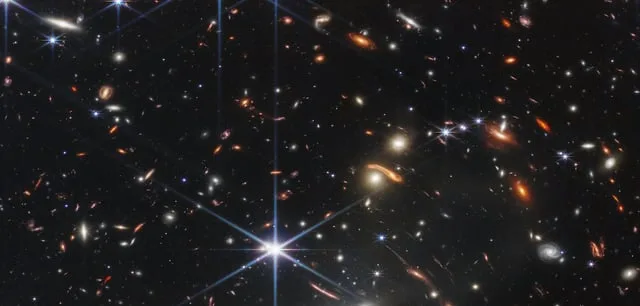
The SMACS 0723 galaxy cluster, captured by the James Webb Space Telescope, is a stunning example of a massive object whose gravity bends light from even more distant galaxies, acting as a cosmic magnifying glass. This deep field image was one of JWST's first and most iconic observations, showcasing the telescope's unprecedented power. (Source: reddit.com)
Q1: Has JWST found anything dangerous approaching Earth? A: No. JWST’s primary mission involves deep-space observation, not monitoring for near-Earth objects. It has not detected any object on a collision course with Earth.
Q2: How are major astronomical discoveries verified? A: Discoveries undergo strict peer review by other scientists. They require independent confirmation and official announcements from credible space agencies like NASA, ESA, or CSA.
Q3: What are JWST’s actual major discoveries? A: JWST has identified the earliest known galaxies, pushing back the timeline of galactic formation. It has also characterized exoplanet atmospheres, revealing insights into their chemical compositions and potential habitability.
Q4: Why do these rumors appear? A: Sensational claims often spread quickly online due to algorithms and human curiosity. They can stem from misinterpretations of scientific data or entirely fabricated stories, lacking any factual basis.
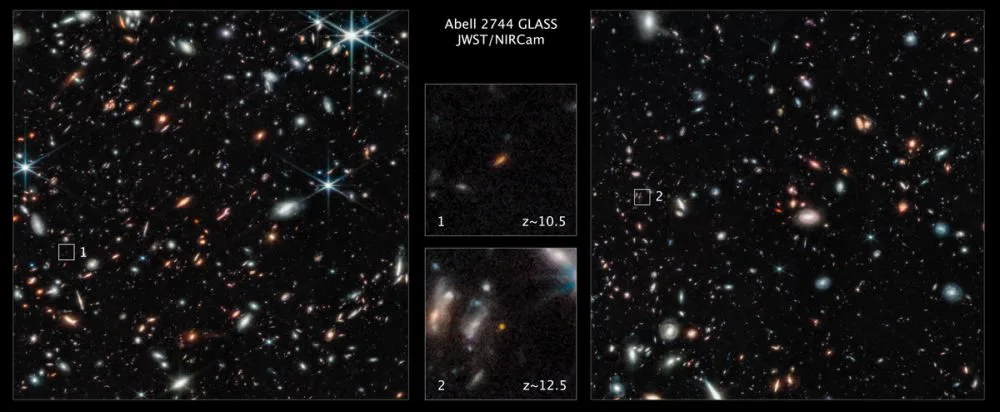
The James Webb Space Telescope has revolutionized our understanding of cosmic history by capturing images of the earliest known galaxies, some forming just a few hundred million years after the Big Bang. These breathtaking views offer unprecedented insights into the universe's infancy and galactic evolution. (Source: universetoday.com)
You might also like:
👉 Tucker Carlson on Aliens: UFOs, UAP & Media Discourse
👉 Unexplained Mysteries of Science: Cosmos, Quantum & Beyond