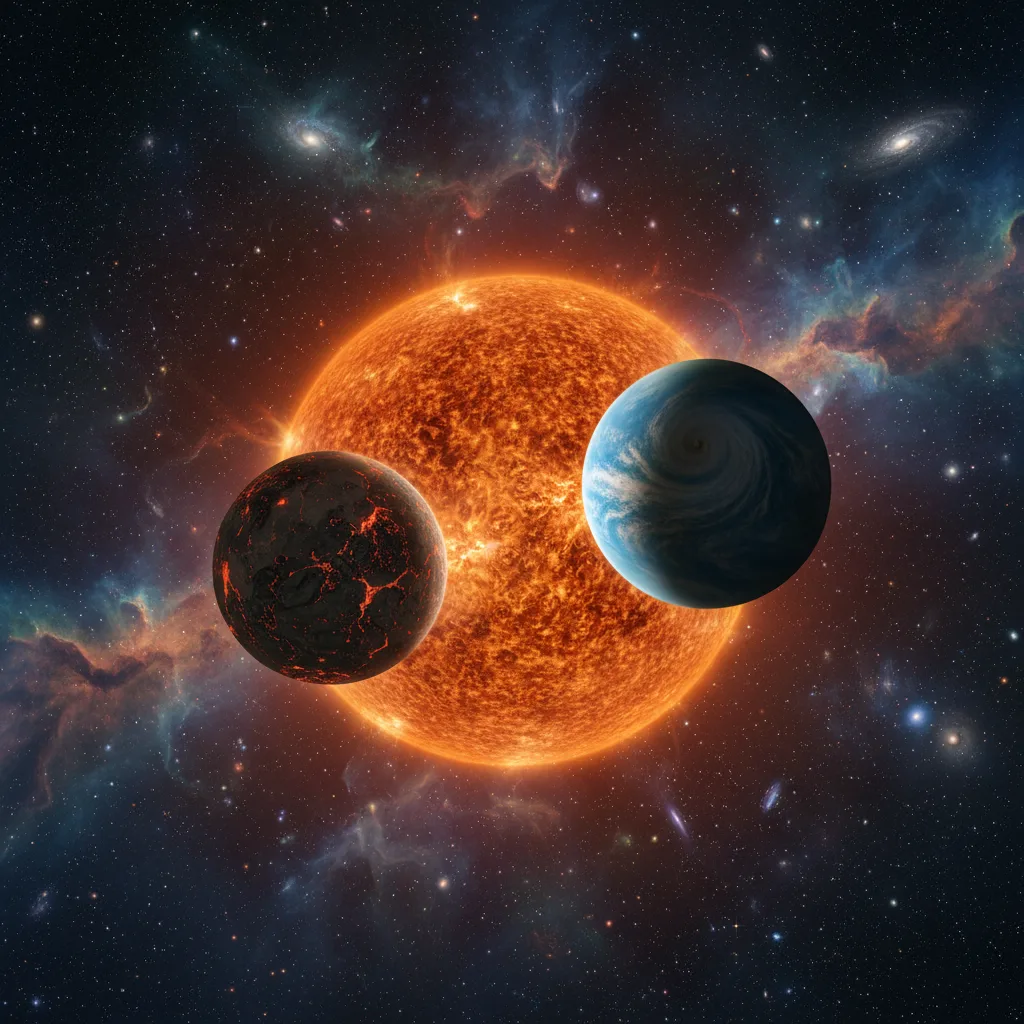
Kepler-36: Two Planets Defy Stability in Cosmic Brawl
The 2012 discovery of Kepler-36 revealed two planets orbiting so close together their system is wildly chaotic, challenging planetary stability theories.
The Kepler-36 system: A cosmic brawl
In 2012, astronomers found the Kepler-36 system. This exoplanet system has wildly chaotic orbits. This discovery questioned existing ideas about planetary stability. Kepler-36 has two planets. They orbit very close together in an unstable way. Researchers identified them using data from NASA’s Kepler Space Telescope.
This discovery changed exoplanetary science. It showed a planetary system. This system was different from any known before. This unusual setup makes scientists reconsider how planets form and change. The system is about 1,530 light-years from Earth. It sits in the constellation Lyra.
What is planetary chaos?
An exoplanet is a planet that orbits a star outside our solar system. Astronomers have found thousands since the 1990s. Most known planetary systems seem orderly. Their planets follow stable, predictable paths.
“Chaotic” in orbital mechanics means something specific. It describes systems where tiny changes at the start lead to wildly different outcomes later. These systems aren’t just random. They are very sensitive to small nudges. Their future becomes impossible to predict after some time.
This unpredictability comes from strong gravity between objects. In our solar system, Jupiter’s gravity affects other planets. These interactions are generally stable. Our planets keep predictable orbits for billions of years.
Kepler-36 is different. Its planets interact so strongly they cause complex, unpredictable shifts in each other’s paths. This shows true orbital chaos. It points to a much less stable environment.
Kepler-36 up close
Joshua A. Carter, then at the Harvard-Smithsonian Center for Astrophysics, led the study. Their findings appeared in Science in 2012. The team used transit data from the Kepler Space Telescope.
Kepler-36 is a subgiant star, older and larger than our Sun. Two planets, Kepler-36b and Kepler-36c, orbit it. Their orbital periods are very close.
Kepler-36b is a “super-Earth” or “mini-Neptune.” It’s about 1.5 times Earth’s radius. This inner planet orbits every 13.8 days.
Kepler-36c is a “mini-Neptune.” It measures about 3.7 times Earth’s radius. This larger, outer planet orbits every 16.2 days.
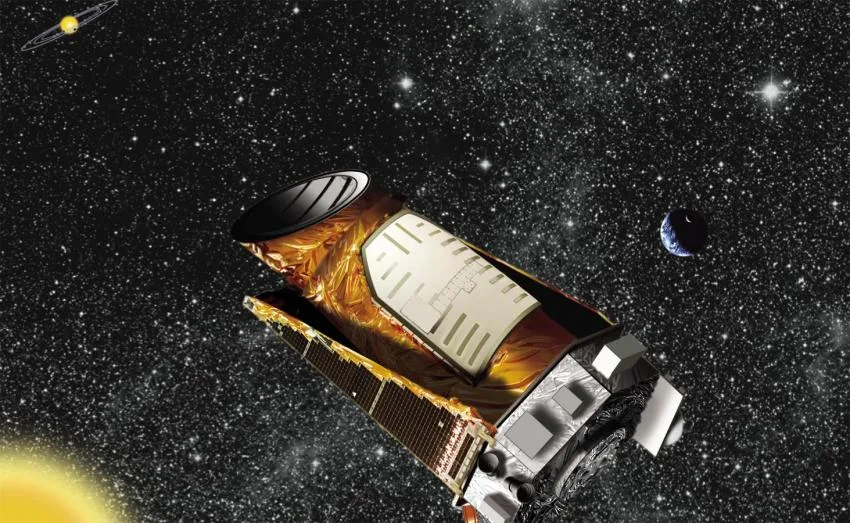
The Kepler Space Telescope, launched in 2009, was NASA's groundbreaking mission dedicated to discovering exoplanets using the transit method. Its extensive data collection was crucial in identifying thousands of exoplanets, including the unusual and chaotic Kepler-36 system. (Source: ras.ac.uk)
The planets get extremely close to each other. At their nearest, they’re within 0.013 astronomical units (AU). That’s roughly 1.2 million miles. It is about five times the Earth-Moon distance. Their closeness creates intense gravity between them.
These strong gravitational pushes and pulls happen roughly every 97 days. This is a near 7:6 resonance. Kepler-36b completes seven orbits while Kepler-36c completes six. This resonance is not perfectly stable.
David Nesvorný, a planetary dynamicist at the Southwest Research Institute, confirmed the chaos. His independent analysis, also published in 2012 in The Astronomical Journal, backed the findings. Nesvorný’s models showed the planets’ orbits shifting dramatically and unpredictably. Their eccentricities swing wildly.
Both planets feel strong tidal forces from their star. Kepler-36b’s surface temperature is around 1,400 degrees Fahrenheit. Kepler-36c is a bit cooler. Its temperature remains extreme. These temperatures make the planets uninhabitable.
Rethinking planet formation
Kepler-36’s unique configuration challenges ideas about how planets form. Most models say planets grow in a disk. They then settle into stable, often resonant orbits. This system does not fit that model.
Such a tightly packed, non-resonant setup is very unusual. It suggests planetary systems can form or change into states we once thought impossible. This questions the idea of one universal path for planet development. It points to other ways planets might come to be.
For example, planets might form further apart. They could then move inward through complex interactions with the disk. Kepler-36’s chaos makes us wonder if such systems can last. Many scientists believe this system is unstable over cosmic time.
Jack Lissauer, a planetary scientist at NASA Ames Research Center, called the system unique. He said planets in such a close, chaotic dance are “very rare.” Lissauer stressed the need for more observations. These could show similar, extreme systems.
The system also acts as a natural laboratory. Researchers can study how orbital chaos affects planetary atmospheres and interiors. The extreme gravity likely creates internal heat. This might drive geological activity on these planets.

David Nesvorný, a planetary dynamicist at the Southwest Research Institute, played a crucial role in confirming the chaotic nature of the Kepler-36 exoplanet system. His independent analysis, published in 2012, revealed the dramatic and unpredictable shifts in the planets' orbits. (AI-generated illustration)
Its chaotic nature means the system’s current setup won’t last long. Over millions of years, one planet could be ejected. Or, the planets might collide. Kepler-36 is a fleeting cosmic event.
The future of cosmic chaos
Future studies will help find more chaotic exoplanet systems. Kepler-36 showed that exoplanet systems are widely diverse. Our solar system’s calm, predictable order is not the only way things work.
The James Webb Space Telescope (JWST) brings new tools. It can study exoplanet atmospheres. It might also spot subtle gravitational wobbles from other, unseen planets. Such data could help find more complex, possibly chaotic systems.
Next-generation ground telescopes will give us sharper views. Extremely Large Telescopes (ELTs) are now under construction. They will allow more precise measurements of exoplanet properties. This will help us better understand their movements.
Advanced computer models are also vital. Scientists can simulate planetary evolution over billions of years. These simulations help predict how long chaotic systems might last. They can also test different ideas about how planets form.
Researchers like David Nesvorný keep improving these models. They want to understand how such systems keep their arrangements, even for a short time. This work adds to our understanding of celestial mechanics. It shows us just how dynamic the universe is.
The hunt for more chaotic exoplanet systems goes on. Every new discovery adds another piece to the cosmic puzzle. It gives us deeper insights into how planets form, interact, and change. What we learn next could change planetary science again.
Frequently asked questions
Q1: What does “chaotic” mean in astronomy? “Chaotic” in astronomy describes orbital systems where tiny starting differences lead to wildly different futures. These systems are very sensitive to small gravitational nudges. Their long-term behavior becomes unpredictable.
Q2: Are chaotic exoplanet systems common? Chaotic exoplanet systems like Kepler-36 seem rare. Most planetary systems found so far show more stable, predictable orbits. Their extreme nature makes them stand out.
Q3: Can life exist in a chaotic system? It’s highly unlikely life could exist in a system like Kepler-36. The planets face extreme temperature changes and tidal forces. Their chaotic orbits create an unstable environment, unsuitable for life as we know it.
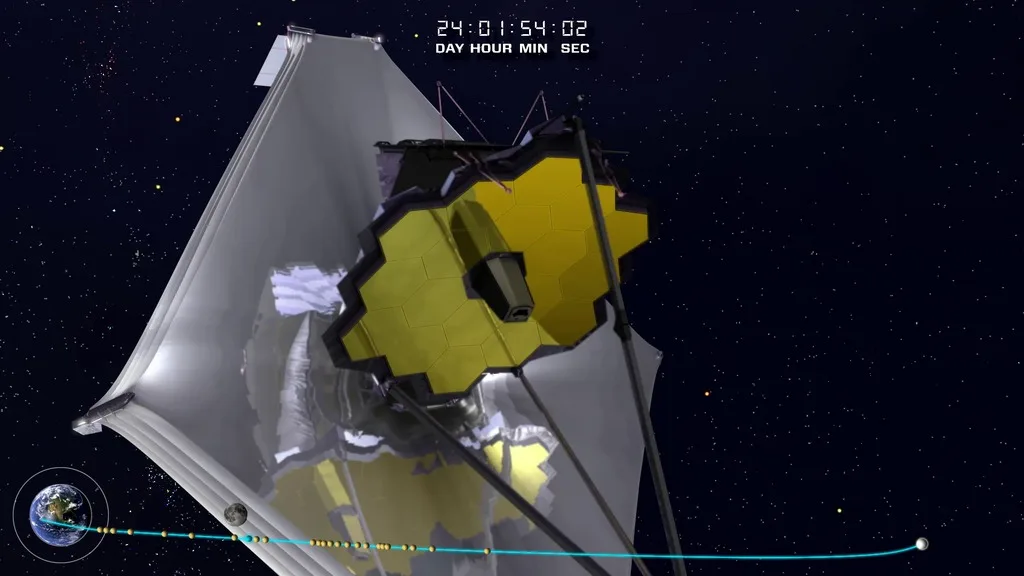
The James Webb Space Telescope (JWST) is a crucial tool in the hunt for chaotic exoplanet systems, capable of studying exoplanet atmospheres and detecting subtle gravitational wobbles that could reveal complex, unpredictable orbital arrangements. (Source: svs.gsfc.nasa.gov)
Q4: How was Kepler-36 discovered? Kepler-36 was discovered using the transit method. NASA’s Kepler Space Telescope watched for tiny dips in the star’s brightness. These dips happened as planets passed in front of the star.
You might also like:
👉 Unexplained Mysteries of Science: Cosmos, Quantum & Beyond