Mars Landing Zones: Survival Trumps Science for Astronauts
Human Mars mission landing zones aren't chosen for science alone. Survival dictates almost every decision, shifting focus from geological wonders.
The Hard Truth About Mars Landing Zones
Landing sites for human missions to Mars are chosen differently than many people might imagine. For years, I pictured future Mars missions as scientific expeditions. I imagined rovers and astronauts picking landing spots. They’d choose based purely on geological wonders or signs of ancient life. Then I started looking into Mars exploration zones, and my perspective shifted. It turns out survival, not just science, influences almost every decision about where we land humans.
Mars is a planet of extremes. Its thin atmosphere and harsh radiation challenge human explorers. For decades, robotic missions like Perseverance explored specific scientific targets. These missions chose sites like Jezero Crater for its ancient river delta, a great spot for astrobiology.
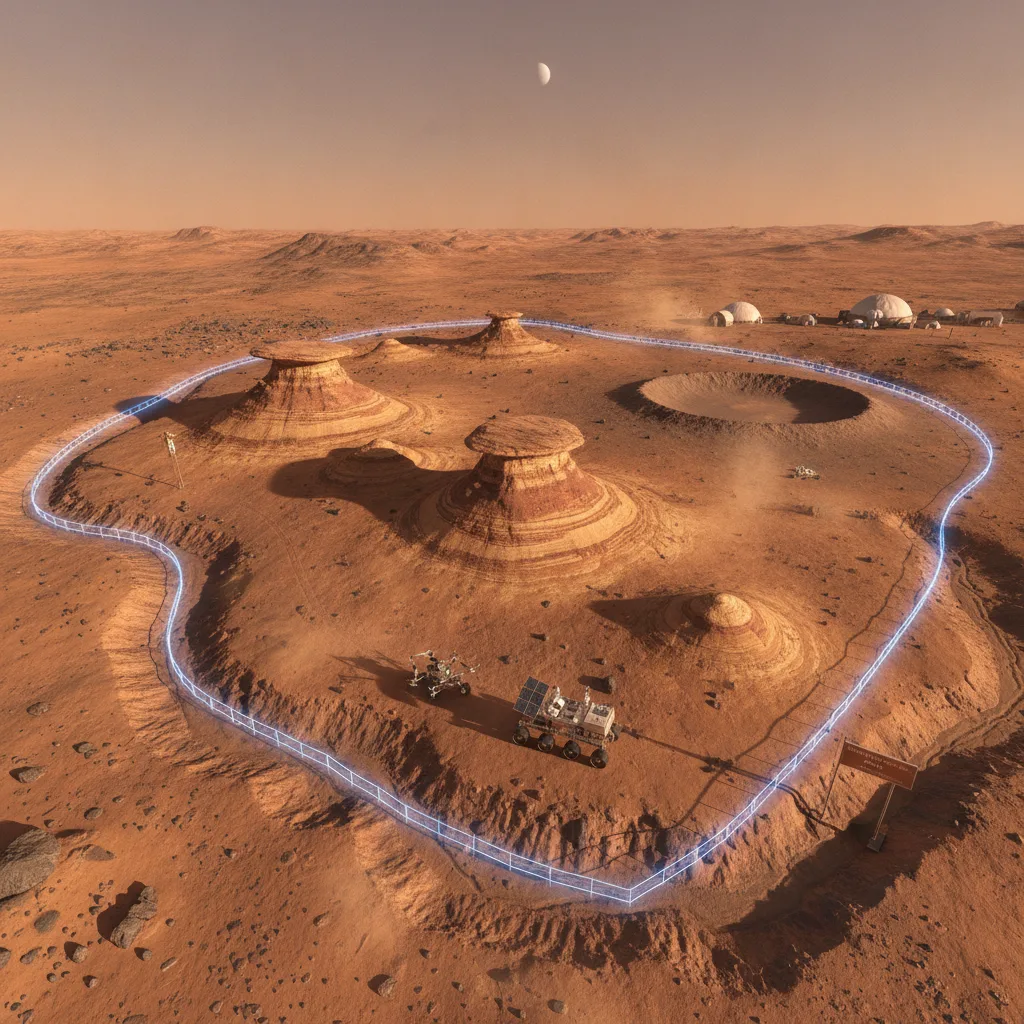
Human missions need something more. NASA defines an Exploration Zone (EZ) as a 100-kilometer diameter circle on Mars. This zone must contain enough resources and scientific value to support a crew for an extended stay. It also needs safe landing and departure options for large spacecraft.
Defining the zone: why location matters on Mars
NASA scientists and engineers developed the Exploration Zone concept in the early 2010s. This idea identifies safe havens for astronauts. These zones are essential for the main goal: sending humans to Mars, potentially by the late 2030s.
An EZ needs several features. It needs accessible water ice for drinking and rocket fuel. It also needs varied scientific targets within walking or short-drive distance. Finally, the terrain must be flat enough for landing large vehicles and setting up a habitat.
The initial selection process started with a broad survey of the Martian surface. Teams looked for regions that had these needed elements. The Mars Reconnaissance Orbiter (MRO) provided high-resolution imagery and subsurface radar data for this important phase. Its instruments helped map ice deposits.
The scramble for ice: water as the primary driver
Water ice is the primary factor in selecting Mars Exploration Zones. I assumed groundbreaking geology or unique mineralogy would top the list. Instead, my research pointed to one main factor: water ice. It’s not just a preference; it’s a non-negotiable requirement.
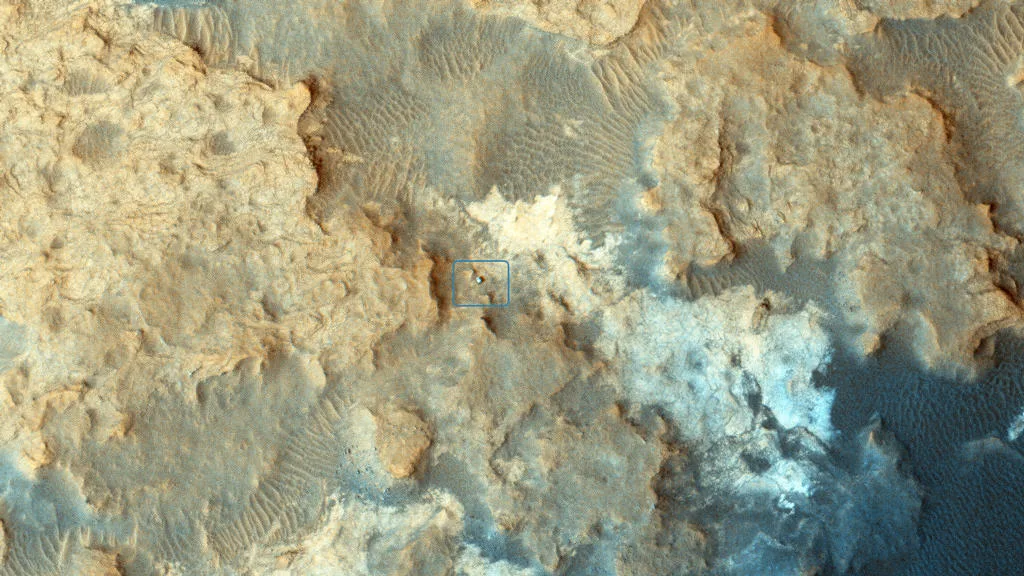
NASA defines an Exploration Zone (EZ) as a 100-kilometer diameter circle on Mars, carefully selected for its accessible water ice, diverse scientific targets, and flat terrain suitable for landing large spacecraft and establishing a habitat for future human missions. (Source: space.com)
Water ice on Mars has multiple important functions. Astronauts need it for drinking and hygiene. It can also be split into hydrogen and oxygen, creating breathable air. These components can be recombined to produce rocket propellant. This process, called In-Situ Resource Utilization (ISRU), reduces the fuel astronauts must carry from Earth.
Dr. R. Aileen Yingst, a senior scientist at the Planetary Science Institute, stressed this in a 2019 presentation. She explained that “water ice is the currency of Mars exploration.” Without it, a human mission’s cost and mass become astronomical. This makes the search for accessible ice most important.
Early candidates for EZs focused on mid-latitude regions. These areas have much shallow subsurface water ice. For example, regions within Arcadia Planitia and Deuteronilus Mensae became strong candidates. Data from the Mars Odyssey mission’s Gamma Ray Spectrometer confirmed these widespread ice deposits.
Science’s compromise: balancing discovery with survival
Past robotic missions, like Curiosity in Gale Crater, prioritized scientific exploration. These missions aimed to learn about Mars’ ancient habitability and geological history. Their landing sites were chosen for specific mineralogical or geomorphological features. Human EZs need a different balance.
Astronaut safety and resource availability often come before scientific novelty. This means a great scientific location might be overlooked if it lacks enough water ice. It could also be too difficult or too dangerous for human operations. This trade-off constantly challenges mission planners.
Dr. Bethany Ehlmann, a professor of planetary science at Caltech, pointed this out during a 2018 NASA workshop. She noted the difficulty in finding “goldilocks zones” that are both resource-rich and scientifically interesting. Scientists work to identify sites with diverse geology while remaining within resource limits. They seek evidence of past liquid water, hydrothermal systems, or volcanic activity.
One such candidate is a region within the Hellas Planitia basin. This site has potential water ice and diverse geology. It features ancient crater floors and younger volcanic flows, with multiple scientific targets. The goal is to get the most science without risking crew safety or mission success.
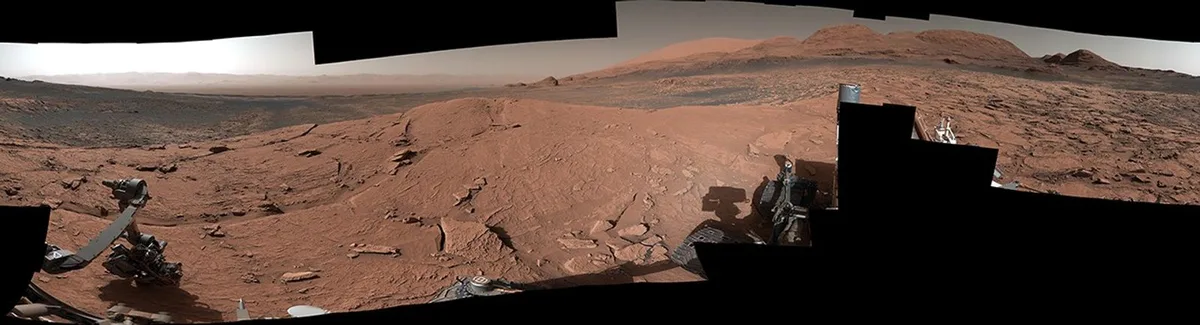
The Curiosity rover, seen here exploring Gale Crater, represents past robotic missions that prioritized scientific exploration. Future human Mars Exploration Zones will need to balance scientific discovery with astronaut safety and the availability of resources like water ice. (Source: science.nasa.gov)
The unseen hurdles: radiation, dust, and landing precision
Beyond terrain and water, the Martian environment poses serious threats to human missions. I soon realized the Martian environment has far more serious threats. The lack of a global magnetic field leaves the surface exposed to dangerous cosmic radiation. This radiation can seriously harm astronauts over long stays.
NASA’s Human Landing Sites Study (HLSS) found radiation shielding an essential factor. Some EZ candidates offer natural shielding, such as lava tubes or deep canyons. These features could protect from solar particle events and galactic cosmic rays. Such natural shelters would reduce the need for heavy, artificial shielding.
Landing precision is another big hurdle. Current robotic missions can land within an ellipse of several kilometers. Human missions need much greater accuracy for larger spacecraft. They must land safely near equipment or resources already there. This needs advanced navigation and propulsion systems.
Martian dust also creates big engineering challenges. Fine, abrasive dust can clog mechanisms, damage sensitive equipment, and pose respiratory risks to astronauts. Future EZs must consider dust mitigation strategies. This includes selecting sites with less widespread dust or designing habitats to keep dust out.
The future of Mars zones: working together
NASA announced its initial list of 47 candidate Exploration Zones in 2015. This list has improved over the years, adding new data and changing requirements. The agency still evaluates these sites through workshops and scientific analysis. International partners like the European Space Agency (ESA) also help with this current selection process.
Future missions will provide even more detailed data on these zones. The Mars Sample Return campaign, for example, could help decide about specific geological features. High-resolution imaging from orbiters will keep mapping terrain hazards and resource locations. This steady data flow is essential for narrowing the options.
Selecting the final human landing site will involve many people working together. Scientists, engineers, and mission planners from many nations will have a say. Their decision will shape humanity’s first steps on Mars. It will also influence the science we do.
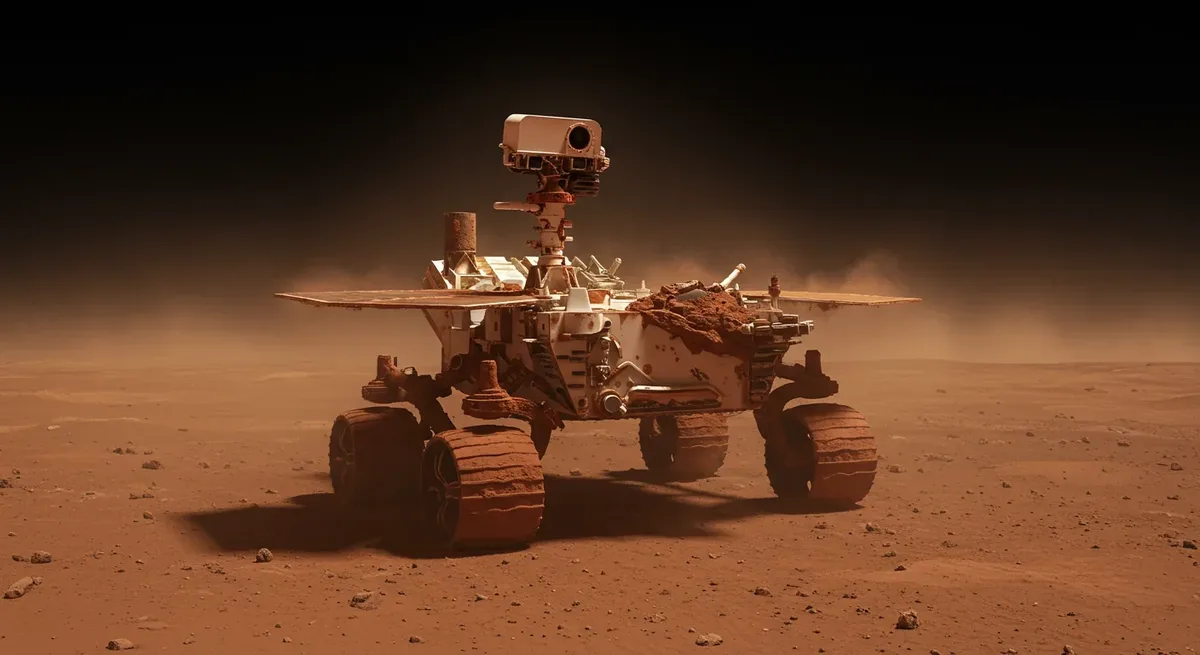
Martian dust, fine and abrasive, poses significant engineering challenges for human missions. It can clog sensitive mechanisms, damage equipment, and even pose respiratory risks to astronauts, making dust mitigation a critical factor for future Mars Exploration Zones. (Source: space.sciencearray.com)
These exploration zones are more than just landing spots. They are the start of humanity’s off-world future. The choices made today will echo for generations. They will determine not just if we land, but how well we live and learn on Mars. Our success there depends entirely on finding the right places.
FAQ
What is an Exploration Zone (EZ)? An Exploration Zone is a 100-kilometer diameter region on Mars for human missions. It must contain enough resources like water ice, offer scientific targets, and provide safe landing conditions. These zones are important for supporting astronaut crews for extended periods.
Why is water ice so important for Mars EZs? Water ice is essential for human survival and mission long-term success. It provides drinking water and breathable air. It can also be processed into rocket propellant for return journeys. This significantly reduces mission costs and mass from Earth.
How do human EZs differ from robotic landing sites? Robotic landing sites focus on specific scientific targets, like evidence of past water. Human EZs must balance scientific value with important factors. These include accessible water ice, flat landing terrain, and radiation shielding for astronaut safety and long-term habitation.
What are some main challenges in selecting an EZ? Main challenges include finding enough water ice and reducing radiation exposure. We also need high-precision landing for large spacecraft and ways to manage widespread Martian dust. Balancing these engineering and safety requirements with scientific goals is also a big hurdle.
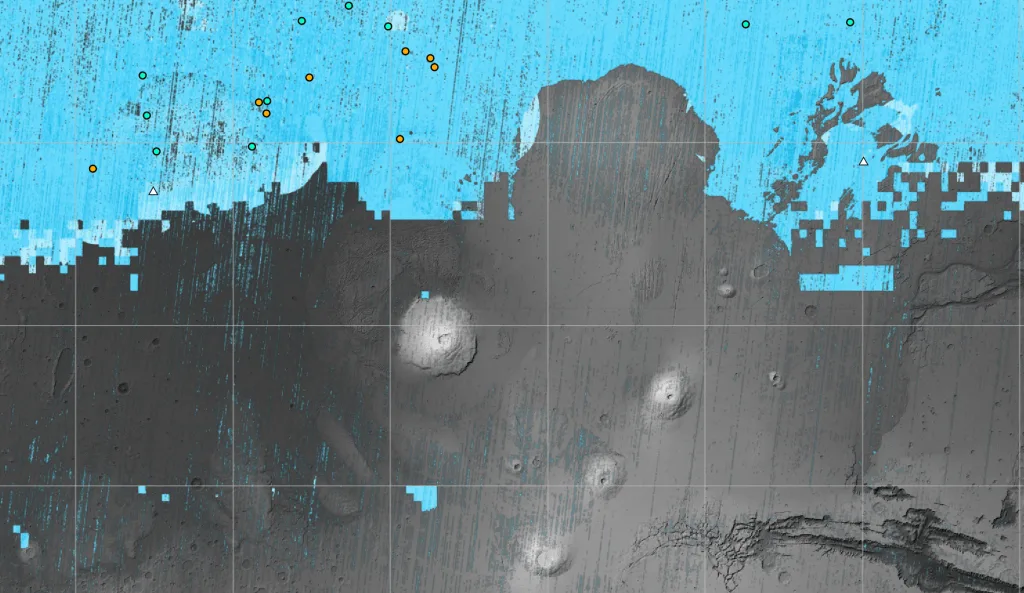
Water ice is a critical resource for future human missions to Mars, providing drinking water, breathable air, and rocket propellant. Orbital missions like NASA's Mars Reconnaissance Orbiter have detected vast reservoirs of subsurface water ice, particularly in the planet's mid-latitudes, which are prime targets for human exploration zones. (Source: nasa.gov)
You might also like:
👉 The $546 Billion Space Race: Private Money, Global Rivalries