
Microfluidics: The Sub-Millimeter Hurdles to Green Energy
Microfluidic porous media promise high efficiency for fuel cells and CO2 capture, but face significant practical and economic hurdles at the sub-millimeter scale.
Microfluidics for Energy: The Unseen Hurdles
Microfluidic porous media hold great promise for sustainable energy. They could bring very high efficiency and control to fuel cells, CO2 capture, and other applications. However, this vision often overlooks significant practical and economic challenges.
The Promise of Microfluidic Porous Media
Microfluidics manipulates fluids at the sub-millimeter scale. This engineering precisely controls flow, mixing, and reactions. Porous media are materials with interconnected pores, like sponges or catalysts. When combined, they form microfluidic porous media: highly structured materials with complex channels and large surface areas.
In 2002, Professor George Whitesides’ group at Harvard demonstrated paper-based microfluidics. This work showed that cheap, tiny devices were possible. It sparked wider interest in microfluidic uses beyond just diagnostics. Researchers like Dr. Sarah E. Baker at Lawrence Livermore National Laboratory highlight better mass transfer. They also note improved reaction rates in these precisely controlled systems.
The core idea is simple: smaller channels mean faster diffusion. This moves reactants and products more efficiently. A larger surface area also means more active sites in catalysts, which boosts reaction rates. For instance, microfluidic designs offer better water management in fuel cells. They can also provide more selective CO2 capture.
These features are often seen as a direct path to better energy devices. Many envision compact, high-performance systems. These systems would operate with very high efficiency, cutting energy consumption and costs. The possibilities appear significant for many clean energy technologies.
The Scalability Gap: From Lab to Industry
A lab microfluidic chip might cover a few square centimeters. However, industrial uses often require square meters, or even cubic meters, of material. Scaling up these complex designs presents a huge challenge. Current fabrication methods simply cannot bridge this gap.
High-precision microfabrication is slow and expensive. Common techniques include photolithography for silicon or soft lithography for PDMS. Dr. David A. Weitz’s work at Harvard on droplet microfluidics, while clever, often uses batch processes. These are not suitable for mass production. Making one square meter of a complex microfluidic membrane can cost far more than conventional alternatives. Researchers at ETH Zurich highlighted this economic barrier in a 2021 Nature Communications study.
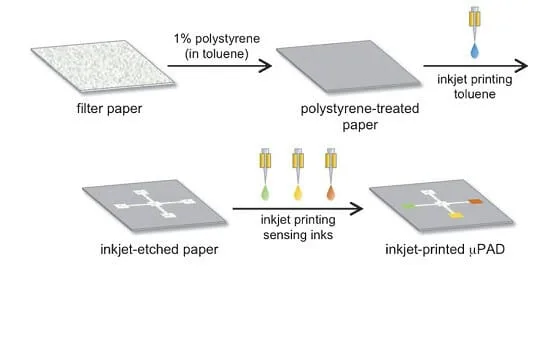
Pictured is a paper-based microfluidic device, a technology first demonstrated by Professor George Whitesides' group at Harvard in 2002. This innovation showed the potential for cheap, tiny devices, sparking widespread interest in microfluidics applications beyond traditional diagnostics, including sustainable energy solutions. (Source: elveflow.com)
Making millions of microchannels perform identically is difficult. Even tiny defects can greatly change fluid flow and efficiency. A 2019 Lab on a Chip review by Professor Steven S. Lee at Stanford discusses these challenges. He points to the ongoing difficulties in producing high-yield, defect-free microfluidic devices in large numbers. This variability directly harms product reliability.
Integrating many small microfluidic units into a large system adds complexity. Manifolding, sealing, and uniform fluid distribution become significant engineering challenges. These integration steps add considerably to the total cost. They also create potential failure points. This complexity often negates the efficiency gains of the individual micro-components.
The Harsh Realities of Operation and Durability
Microfluidic devices face difficult conditions in energy applications. Fuel cells operate in highly acidic or alkaline environments. CO2 capture often uses corrosive amines. These conditions severely challenge the durability of tiny components.
Microchannels foul easily. Particulates, biofilms, or chemical precipitates can quickly block them. A 2020 Environmental Science & Technology study by Tsinghua University researchers showed rapid fouling. This occurred in microfluidic reactors for wastewater treatment, cutting throughput considerably within hours. Such fouling means frequent, energy-intensive cleaning or component replacement, which increases operational costs.
Tiny features mean even slight material degradation harms performance. Traditional materials like silicon or glass are often brittle. Polymers cost less, but they might lack chemical resistance or thermal stability. Perfluorosulfonic acid membranes (like Nafion) break down over time in microfluidic fuel cells. Scientists at UC Irvine documented this in a 2018 Journal of Power Sources article. This breakdown reduces proton conductivity and power output.
Pumping fluids through large networks of tiny channels creates a significant pressure drop. Professor Juan G. Santiago’s group at Stanford has extensively researched electrokinetic phenomena in microfluidics. Even with advanced control, the energy required for pumping can become a significant operational cost. This often negates some efficiency gains. A 2022 Applied Energy analysis highlighted this problem. For some microfluidic heat exchangers, pumping power consumed up to 15% of the recovered thermal energy.
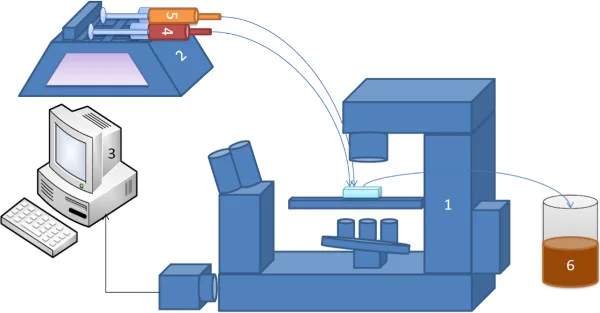
A magnified view of a microfluidic channel reveals a dense biofilm, illustrating a critical challenge in sustainable energy applications. Such fouling, as documented by Tsinghua University researchers, can rapidly cut throughput in microfluidic reactors for wastewater treatment within hours. (Source: jove.com)
Reconciling Ambition with Practicality
Investment in microfluidics research for energy has grown over 20% annually since 2015, according to a European Microfluidics Consortium report. This ongoing interest shows the technology’s true promise. Its core advantage – precise control over mass and heat transport – remains valid. For specific, high-value, or niche uses, microfluidic benefits are clear.
Portable fuel cells for military or remote sensing, for instance, benefit from tiny designs. Size and weight are critical in these applications. Microfluidics can provide compact, efficient power sources in these specialized settings. These examples show where the technology excels today, proving its specific advantages outweigh its complexities.
However, widespread, cost-effective use across all sustainable energy sectors faces a significant challenge. The current focus on improving single device performance often ignores engineering realities. These include system integration, long-term reliability, and economic competitiveness. Dr. Mark Modera, a distinguished scientist at Lawrence Berkeley National Laboratory, often discusses the “valley of death.” This refers to the gap between lab breakthroughs and commercial deployment. It is especially wide for technologies needing entirely new manufacturing approaches.
Progress requires a shift in research focus. We need more emphasis on strong, scalable, and cost-effective manufacturing. We also need materials built specifically for microfluidic durability, able to withstand harsh industrial environments. Hybrid approaches might offer an intermediate step, combining microfluidic principles with larger, more conventional components. The goal is not just efficiency, but sustainable efficiency across the whole lifecycle, including manufacturing, operation, and disposal.
Frequently Asked Questions
What are microfluidics? Microfluidics is a science and technology that precisely manipulates small amounts of fluids. These fluids are handled in channels typically tens to hundreds of micrometers in size. This allows for fine control over chemical and physical processes.
How do microfluidic porous media improve energy solutions? They improve energy solutions by providing large surface areas and precise control over fluid flow. This improves reaction kinetics, mass transfer, and heat exchange. It can lead to more efficient energy conversion and storage.
Dr. Mark Modera, a distinguished scientist at Lawrence Berkeley National Laboratory, frequently highlights the 'valley of death' – the significant gap between promising lab breakthroughs in microfluidics and their successful commercial deployment. His work emphasizes the need to bridge this divide for sustainable energy solutions. (Photo: National Institute of Allergy and Infectious Diseases / Unsplash)
What’s the biggest challenge for their widespread adoption? The biggest challenge is scalability and cost-effective manufacturing. Current methods are often expensive and difficult to scale up. This makes it hard to compete with existing, larger-scale energy technologies.
Are microfluidic porous media used anywhere in energy today? Yes, they are used in niche applications. These include portable power sources for specialized electronics or military equipment. Their compact size and high efficiency are critical in these specific use cases.
Microfluidic porous media will not solve every energy challenge. They will excel where their specific advantages—precise control and high surface area—outweigh their manufacturing and operational complexities. Consider specialized sensors, compact power sources, or highly selective separation processes. Mass-market applications require fundamental breakthroughs in materials and manufacturing. These breakthroughs must significantly reduce costs and increase durability. The future is not one where every energy device becomes microfluidic. Instead, microfluidics will effectively enhance specific, important energy functions, driving progress through targeted innovation rather than a sweeping replacement.
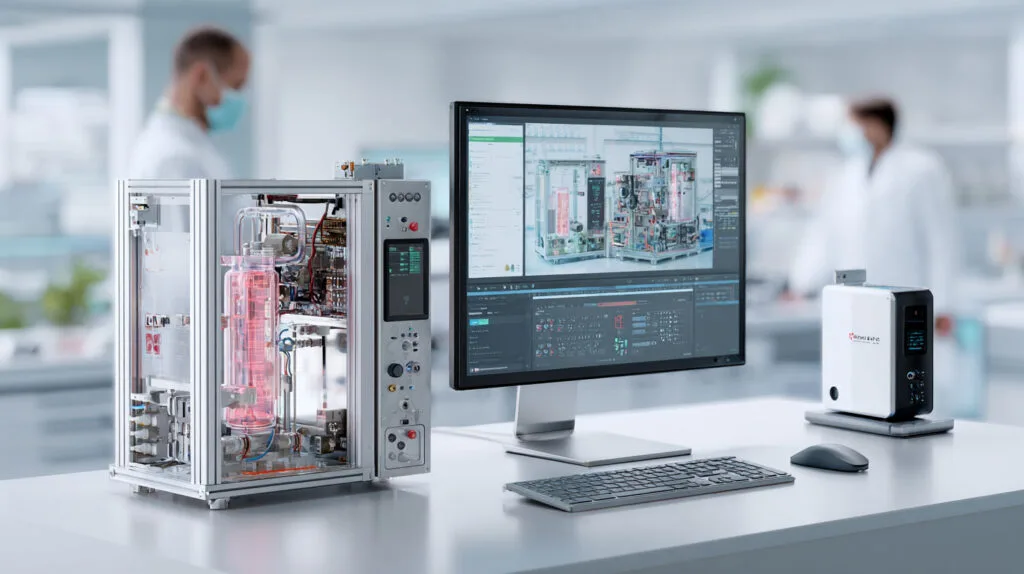
Microfluidic portable power sources are currently utilized in niche applications, such as specialized electronics or military equipment, where their compact size and high efficiency offer critical advantages over traditional energy solutions. (Source: phihong.com)
You might also like:
👉 Understanding Energy Independence: Security, Economy, Future