
How a Multi-Billion Dollar Space Industry Powers Your Day
From government projects to a multi-billion dollar commercial business, space technology now impacts your daily life, mirroring the internet's rise since the early 1990s.
Your Life Runs on Space: A Hidden Economy
Space is no longer just about astronauts and distant planets. It is a massive, fast-growing global industry. This industry impacts your daily life, often without you even knowing it.
Consider the internet in the early 1990s. It began as a niche tool for researchers. Today, it is society’s invisible backbone. Space technology has undergone a similar transformation. It moved from a government project to a multi-billion dollar commercial business.
The Invisible Web: How Space Powers Your World
The space industry is more than just rockets. It is a global network of technologies and services. This network includes government agencies, international organizations, and hundreds of private companies. These players operate across continents. You’ll find them from California’s Silicon Valley to Europe’s spaceports and Asia’s manufacturing hubs. Space-based assets provide essential data and services on Earth.
Over 8,500 active satellites orbit our planet every day, according to the Union of Concerned Scientists. They are not just for looking at stars. They form an invisible web supporting essential services. When you use your phone for navigation, you access Global Positioning System (GPS) satellites. These satellites constantly broadcast signals. This allows receivers on Earth to pinpoint locations.
Satellite technology also provides accurate weather forecasts. Geostationary satellites, like NOAA’s, track weather patterns continuously. Farmers use satellite data to monitor crop health. Disaster relief agencies rely on satellite communication after hurricanes or earthquakes. These systems provide critical data when ground infrastructure fails.
Beyond Government Spending: A Trillion-Dollar Economy
In 2022, the global space economy generated $546 billion. This represents a 16% increase from the prior year, states The Space Foundation’s “Space Report 2023 Q2.” This figure far exceeds initial government investments. It demonstrates significant commercial growth in recent decades. The industry is divided into two main segments: upstream and downstream.
Upstream involves getting objects into space and keeping them there. This includes rocket manufacturing, launch services, satellite construction, and ground control systems. Companies like SpaceX, Blue Origin, and Rocket Lab are major players in launch services. They build the rockets that carry satellites and people. Boeing and Airbus, along with newer firms like Maxar Technologies, design and build complex satellites.
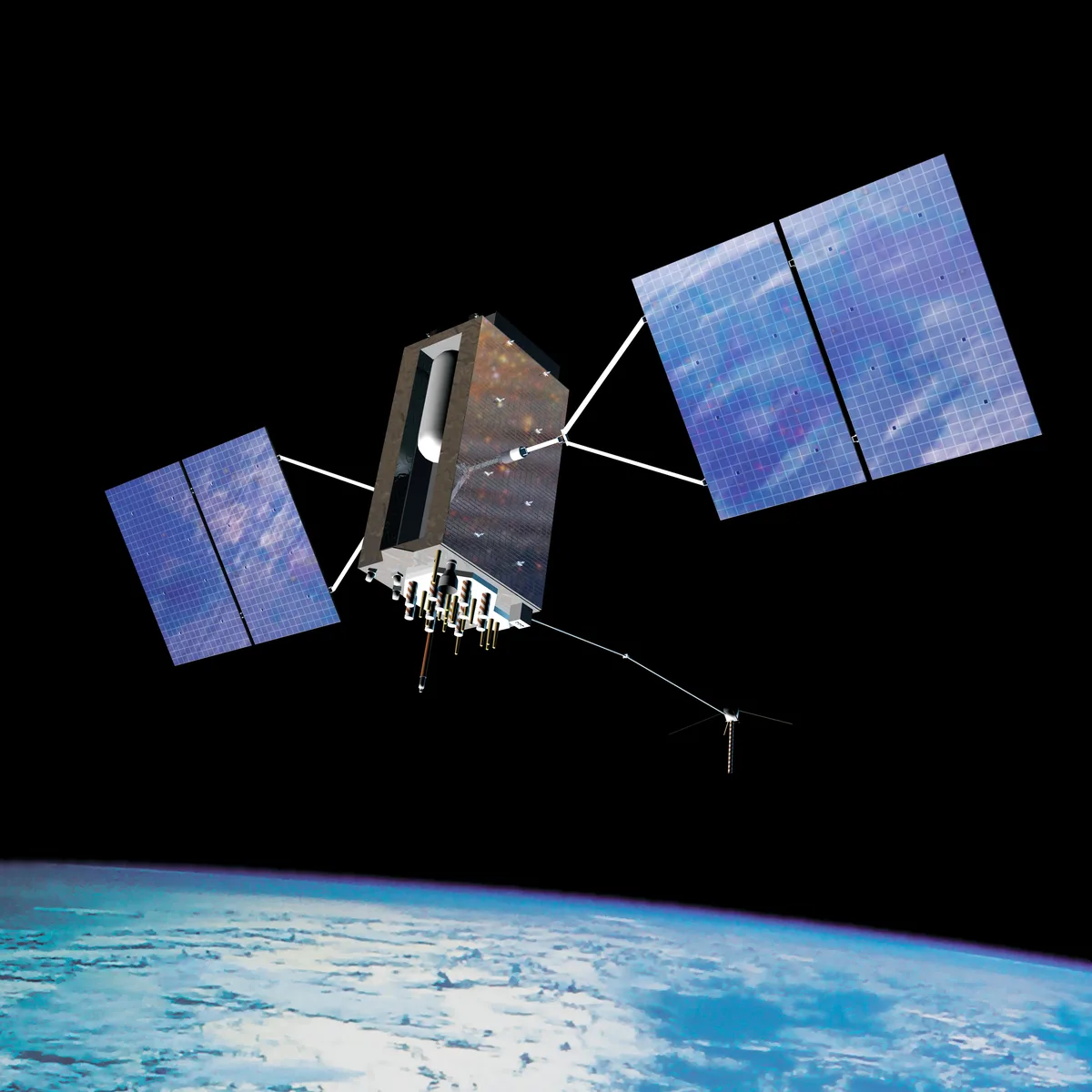
The Global Positioning System (GPS) relies on a constellation of 31 operational satellites orbiting Earth, constantly broadcasting signals that allow receivers on the ground to pinpoint locations with remarkable accuracy, powering navigation for billions worldwide. (Source: en.wikipedia.org)
Downstream delivers actual value to everyday users. This segment utilizes data and services from space assets. It covers satellite television, broadband internet, Earth observation data for environmental monitoring, and GPS applications. Companies like Viasat provide satellite internet. Garmin manufactures GPS devices. Farmers subscribe to services that analyze satellite images of their fields.
The New Space Race: Private Sector Innovation
On May 30, 2020, SpaceX became the first private company to launch astronauts to the International Space Station (ISS). This event marked a turning point in space exploration. It signaled a major shift from government-led projects to private sector leadership. The original “Space Race” was a geopolitical contest. It occurred between the US and the Soviet Union. The “New Space Race” features private companies competing to innovate and reduce costs.
Companies like SpaceX, founded by Elon Musk, have changed the industry with reusable rocket technology. Traditionally, rockets were used once and then discarded after each launch. SpaceX’s Falcon 9 rocket can land vertically after delivering its payload. This is similar to a commercial airliner. It lands, refuels, and is ready for its next flight, instead of being scrapped. This significantly lowers launch costs.
Other private companies, such as Jeff Bezos’s Blue Origin and Richard Branson’s Virgin Galactic, also develop their own launch systems. Blue Origin aims for lunar missions and space tourism. Virgin Galactic has already flown tourists to the edge of space. These companies are not just exploring. They are building new markets, making space more accessible for research, tourism, and future industrial activities.
Space Debris and Orbital Crowding: Urgent Challenges
More launches mean more objects in orbit. This creates significant problems. The European Space Agency (ESA) estimates over 36,500 pieces of space debris larger than 10 centimeters are now in Earth’s orbit. These are not just tiny specks. They include old rocket stages, dead satellites, and fragments from collisions. Even a small piece of debris can cause major damage to an active satellite or spacecraft.
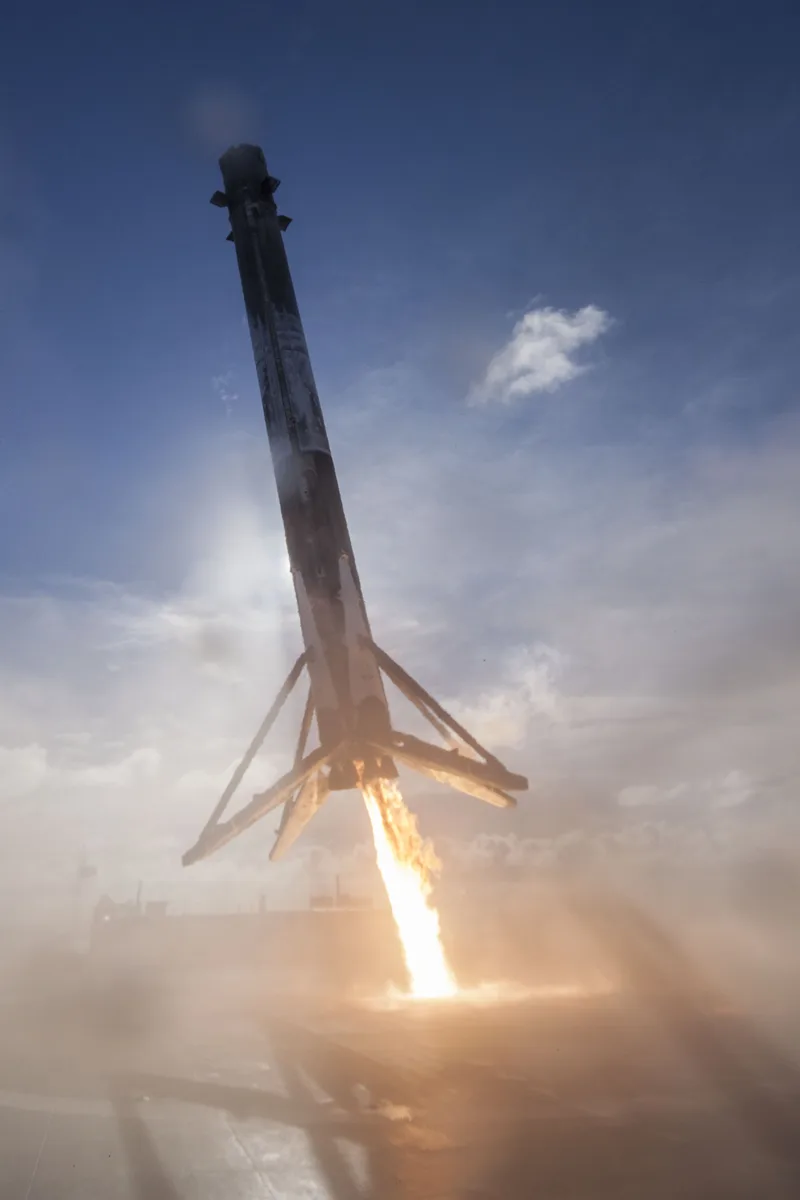
A SpaceX Falcon 9 rocket booster makes a historic vertical landing after delivering its payload to orbit. This reusable rocket technology, pioneered by SpaceX, dramatically reduces launch costs and is a cornerstone of the 'New Space Race' driven by private innovation. (Source: en.wikipedia.org)
This problem is known as orbital crowding. It increases the risk of collisions, which in turn creates even more debris. This scenario, called the Kessler Syndrome, could make some orbits unusable. It threatens vital services like GPS and weather forecasting. Solving this issue requires international cooperation. It also demands new technologies for debris removal. Companies are developing solutions such as “space tugs” to de-orbit old satellites.
Another challenge is space regulation. The 1967 Outer Space Treaty, signed by over 100 countries, forms the basis of international space law. It declares space “the province of all mankind.” It prevents countries from claiming space. However, the treaty does not fully address issues like space mining rights or environmental responsibilities. As commercial activities expand, new legal frameworks are needed.
The Next Frontier: Mining, Manufacturing, and Beyond
The future of the space industry holds vast potential. Asteroid mining, for example, could uncover immense resources. Asteroids contain precious metals like platinum and rare earth elements. These are essential for modern electronics. Companies like AstroForge are already developing technologies to extract these materials. This could lessen our reliance on Earth-based mining.
In-space manufacturing is another exciting area. Zero-gravity conditions allow for the creation of unique materials and components. These are not possible to make on Earth. For instance, perfect optical fibers or specialized medical products could be made in orbit. The ISS already hosts experiments in 3D printing and material science. This technology suggests new types of space-based factories.
Finally, human expansion into space remains a long-term goal. NASA’s Artemis program aims to return humans to the Moon by 2025. It plans to establish a lasting lunar presence. SpaceX has ambitious plans to colonize Mars. These efforts push the limits of technology. They also inspire new engineers and scientists. They envision a future where humanity becomes a multi-planetary species.
FAQ
Is space exploration only for rich countries? No. While initial investments are high, the benefits reach globally. Developing nations use satellite data for agriculture, disaster management, and education. International collaborations also bring diverse countries into space projects.
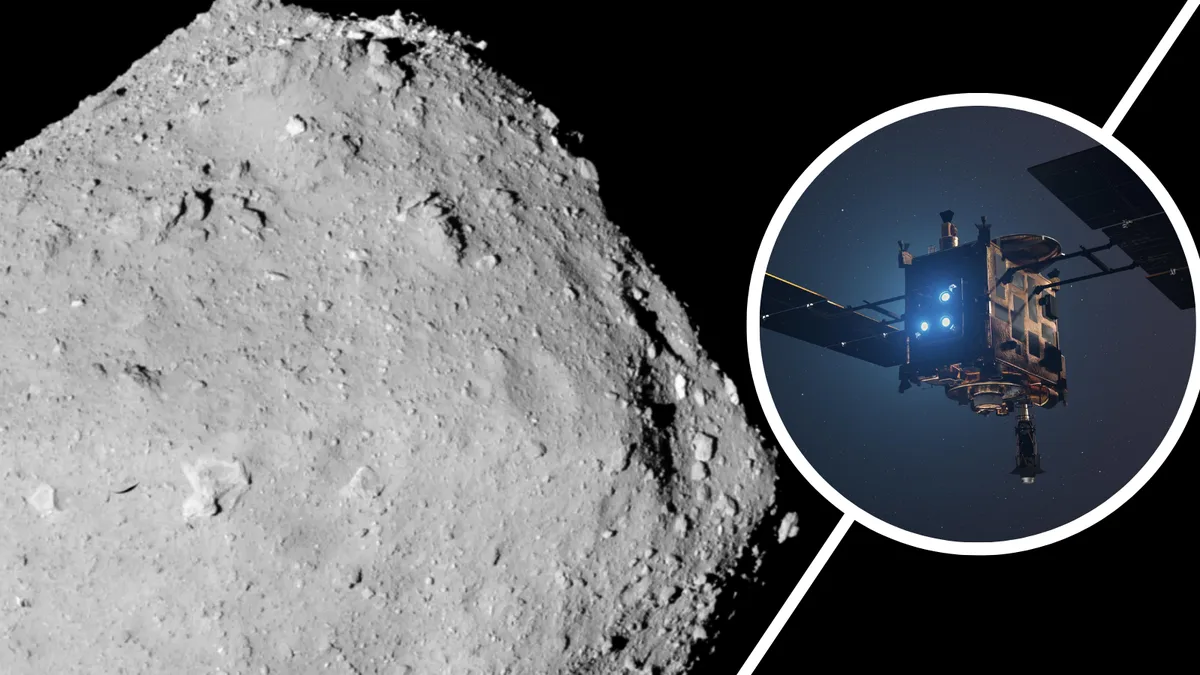
Asteroids are rich in precious metals like platinum and rare earth elements, vital for modern electronics. Companies are actively developing technologies for asteroid mining, aiming to extract these resources and reduce our dependence on Earth-based mining. (Source: space.com)
How does space debris affect us? Space debris risks collisions with active satellites. A major collision could disable satellites for communication, navigation, and weather. This would disrupt many daily services.
Will I ever go to space? Space tourism is growing. Companies like Virgin Galactic and Blue Origin offer suborbital flights for private citizens. As technology advances and costs decrease, space travel could become more accessible.
Space is no longer a distant dream. It is a real force shaping our present and future. It provides essential services every day. As it grows, it will redefine what humanity can achieve, both on Earth and beyond.
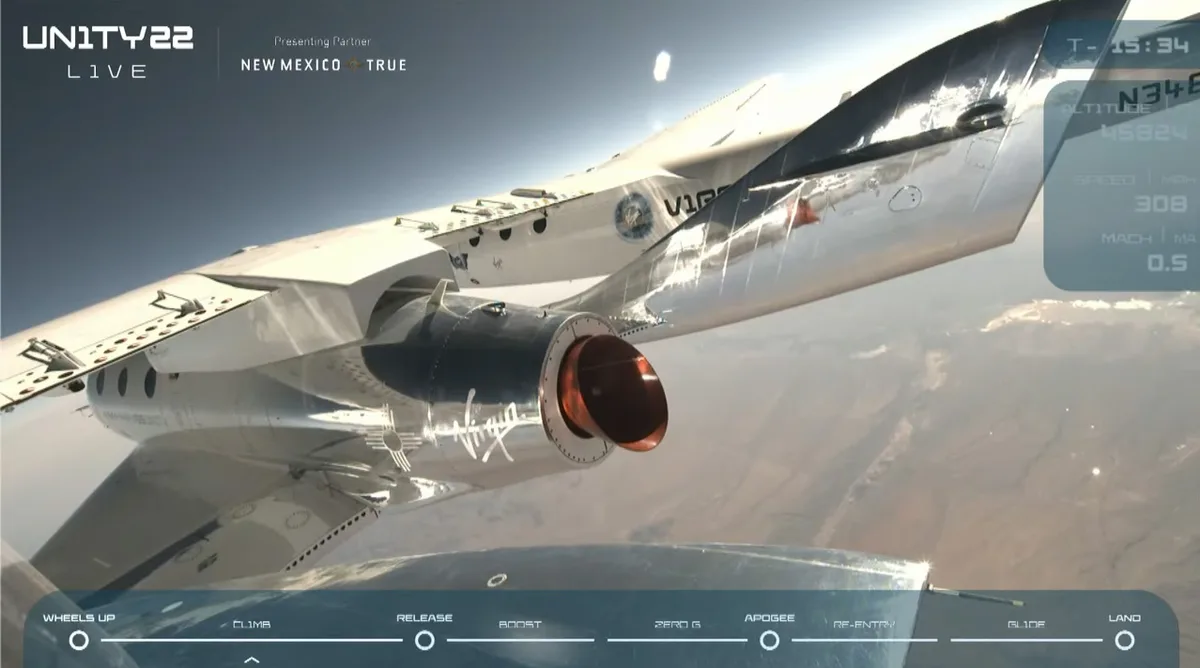
Virgin Galactic's SpaceShipTwo, VSS Unity, is a suborbital spaceplane designed to carry private citizens on brief trips to the edge of space. It is launched from a carrier aircraft, WhiteKnightTwo, before firing its own rocket motor to ascend. (Source: space.com)
You might also like:
👉 The $546 Billion Space Race: Private Money, Global Rivalries
👉 The 2016 Shift: How Phones Became AI Companions
👉 Virtual Reality Applications: Exploring VR’s Impact Across Industries