
NASA 'New Planet' Hype: The 2006 IAU Definition Explained
NASA's 'new planet' announcements often create buzz, but the definition varies. Learn why the IAU's 2006 criteria are crucial.
NASA’s “New Planet” Buzz: What’s Really Going On?
Headlines frequently announce NASA’s discovery of new planets, sometimes even within our solar system. These reports suggest a major announcement. However, the meaning of “new planet” varies greatly. NASA’s role in these discoveries is complex.
The International Astronomical Union (IAU) set criteria for planets in our solar system back in 2006. A planet must orbit the Sun. Its gravity also needs to make it round. Plus, it must clear the neighborhood around its orbit. This definition famously reclassified Pluto as a dwarf planet. But when we look beyond our Sun, the rules shift. An exoplanet is any planet outside our solar system, orbiting another star. These are the “new planets” NASA and its partners find constantly.
NASA, through missions like Kepler and TESS, systematically searches for these distant worlds. The agency doesn’t usually “discover” a single planet in isolation. Instead, it operates vast observatories that collect data, which scientists then analyze. This data often points to many exoplanet candidates, which require further confirmation. The process is meticulous and often takes years.
The exoplanet explosion: thousands confirmed
As of early 2024, the NASA Exoplanet Archive lists over 5,600 confirmed exoplanets. This astonishing count is not a single “discovery” but the cumulative result of decades of work. Many of these detections come from NASA’s dedicated planet-hunting telescopes.
The Kepler Space Telescope, launched in 2009, revolutionized exoplanet science. It monitored a single patch of sky, looking for tiny dips in star brightness. These dips often signal a planet passing in front of its star, a method called the transit method. Kepler identified thousands of exoplanet candidates before its mission ended in 2018.
Following Kepler, NASA launched the Transiting Exoplanet Survey Satellite (TESS) in 2018. TESS surveys nearly the entire sky, focusing on brighter, closer stars. This allows for easier follow-up observations from ground-based telescopes. TESS has already discovered hundreds of new confirmed exoplanets and thousands of additional candidates.
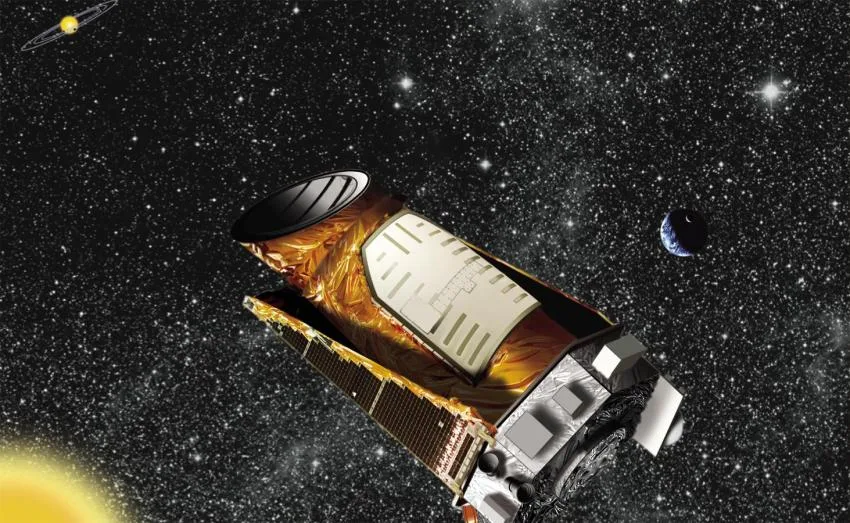
The Kepler Space Telescope, launched by NASA in 2009, revolutionized the search for exoplanets. During its nine-year mission, it discovered over 2,600 confirmed exoplanets by observing tiny dips in star brightness, vastly expanding our understanding of planetary systems beyond our own. (Source: ras.ac.uk)
Take TRAPPIST-1, a particular highlight. In 2017, NASA announced seven Earth-sized planets. They orbit a single ultra-cool dwarf star, about 40 light-years away. Three of these planets reside in the star’s habitable zone, meaning liquid water could exist on their surfaces. This discovery came from ground and space telescopes. It showed the potential for complex planetary systems beyond our own.
The search for planet nine: a different kind of quest
Public perception often associates “new planets” with our own solar system, despite the thousands of known exoplanets. This leads to discussions about the hypothetical Planet Nine. This isn’t an exoplanet; it’s a theoretical planet within our solar system, far beyond Neptune.
The story of Planet Nine began in 2016, with astronomers Konstantin Batygin and Mike Brown at Caltech. They published research in The Astronomical Journal suggesting the existence of a massive planet. Their hypothesis arose from observing the unusual clustering of orbits for several distant Kuiper Belt objects (KBOs). These icy bodies, located beyond Neptune, all seemed to be influenced by an unseen gravitational force.
Batygin and Brown proposed a planet 5 to 10 times Earth’s mass. This could explain these strange orbital patterns. This object, if it exists, would orbit the Sun at an average distance of about 500 AU (Astronomical Units). Neptune, for comparison, orbits at about 30 AU. This makes Planet Nine incredibly distant and faint.
No telescope has directly observed Planet Nine. It remains a theoretical object, a gravitational signature inferred from the movements of other bodies. Scientists continue to use powerful telescopes like the Subaru Telescope in Hawaii to search for it. The hunt is challenging. Planet Nine’s predicted location spans a vast area of sky. Its faintness makes it incredibly difficult to spot.
The nuance of “discovery”
The difference between confirmed exoplanets and Planet Nine highlights the nuance of “discovery” in astronomy. When NASA announces an exoplanet, it’s typically a statistically strong detection. For instance, the TESS mission often provides initial data, which is then confirmed by other telescopes. Dr. Jessie Christiansen, a lead scientist for the NASA Exoplanet Archive, emphasizes the rigorous vetting process. “Every confirmed exoplanet goes through multiple checks,” she states. “It’s not just a single data point.”
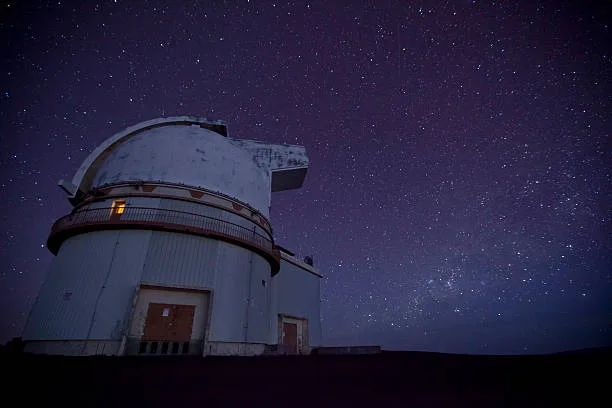
The Subaru Telescope, located atop Mauna Kea in Hawaii, is one of the world's largest optical-infrared telescopes. It is actively used by astronomers in the challenging hunt for the hypothetical Planet Nine, leveraging its vast light-gathering power to search for faint, distant objects. (Source: gettyimages.com)
Planet Nine, conversely, is a scientific hypothesis based on indirect evidence. It’s a powerful explanation for observed phenomena, but it lacks direct observational proof. Think of it like a detective finding a motive and fingerprints but no body. The evidence strongly suggests a culprit, but the suspect remains at large. Dr. Brown himself often refers to it as a “strong gravitational inference” rather than a discovery.
Thousands of exoplanets are confirmed. However, the percentage of Earth-sized, potentially habitable ones is much smaller. For instance, a 2013 study by Erik Petigura, Andrew Howard, and Geoffrey Marcy found that roughly one in five Sun-like stars could host an Earth-sized planet in its habitable zone. This suggests billions of potential worlds exist, but confirming their habitability is far more complex.
What comes next for planet hunters?
The search for new planets, both near and far, continues with increasing sophistication. The James Webb Space Telescope (JWST), launched in 2021, is already transforming exoplanet science. JWST can analyze the atmospheres of exoplanets, searching for biosignatures – chemical indicators of life. It offers unprecedented detail for worlds already known.
Future missions aim to build on these capabilities. NASA is developing concepts for telescopes that could directly image exoplanets. We could then see them as distinct points of light, not just inferred shadows. This would provide far more information about their size, color, and potential for life. Scientists are also refining techniques to detect even smaller, more distant worlds.
For Planet Nine, the search continues across the outer solar system. Astronomers are using advanced survey telescopes to systematically scan vast swathes of the sky. The hope is that one day, a faint moving dot will confirm its existence. If found, Planet Nine would fundamentally alter our understanding of our own solar system’s formation and evolution.
The era of planetary discovery is far from over. What began with indirect wobbles and subtle dimmings is evolving into atmospheric analysis and, eventually, direct imaging. Each new data point pushes our cosmic understanding. This applies whether it’s a confirmed exoplanet or a stronger hint of Planet Nine.
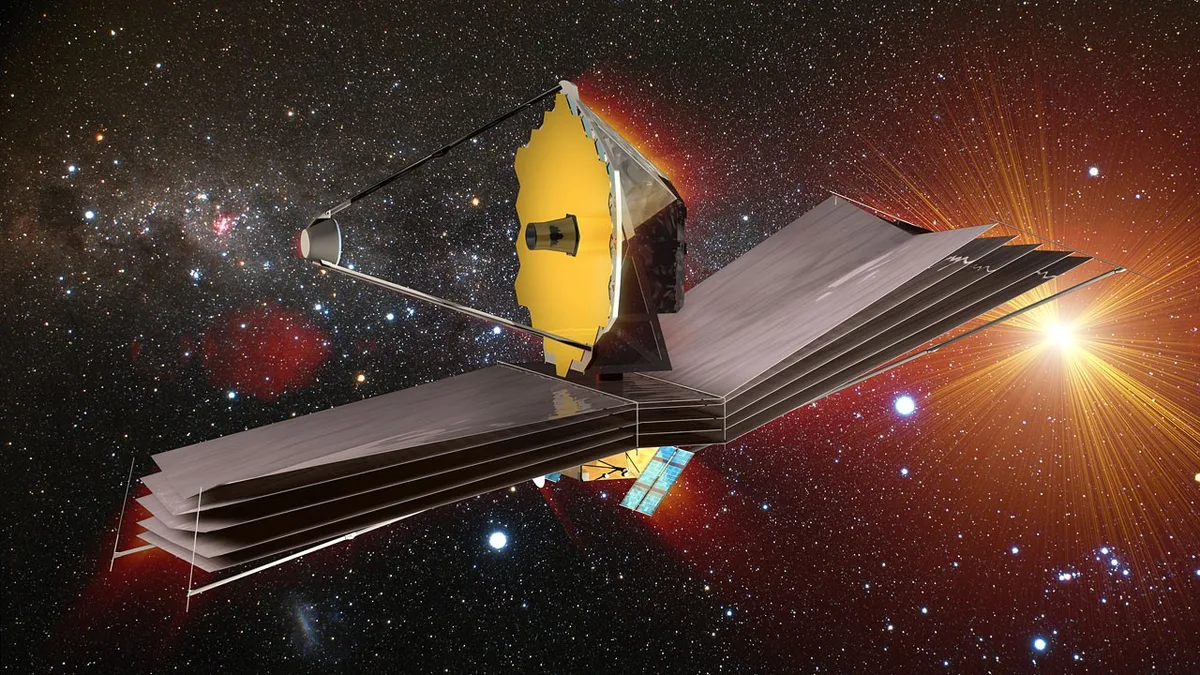
The James Webb Space Telescope (JWST), launched in 2021, is NASA's premier space observatory, designed to peer into the universe's earliest moments and analyze exoplanet atmospheres for signs of life. Its revolutionary infrared capabilities are transforming our understanding of distant worlds and cosmic origins. (Source: space.com)
FAQ
Has NASA officially announced a new planet in our solar system? No, NASA has not officially announced the discovery of a new planet within our solar system. The concept of “Planet Nine” remains a hypothesis. Its existence is based on indirect gravitational evidence.
How many exoplanets has NASA found? NASA and its scientific partners have contributed to the discovery and confirmation of over 5,600 exoplanets as of early 2024. These planets orbit stars other than our Sun.
What is “Planet Nine”? Planet Nine is a hypothetical planet in our solar system. It is theorized to exist far beyond Neptune. Its existence is inferred from the unusual clustering of orbits of distant Kuiper Belt objects.
Are any of these new planets habitable? Many confirmed exoplanets are located within their stars’ “habitable zones.” In these zones, temperatures could allow for liquid water. Confirming actual habitability requires detailed atmospheric analysis. The James Webb Space Telescope is now beginning to perform this for some targets.
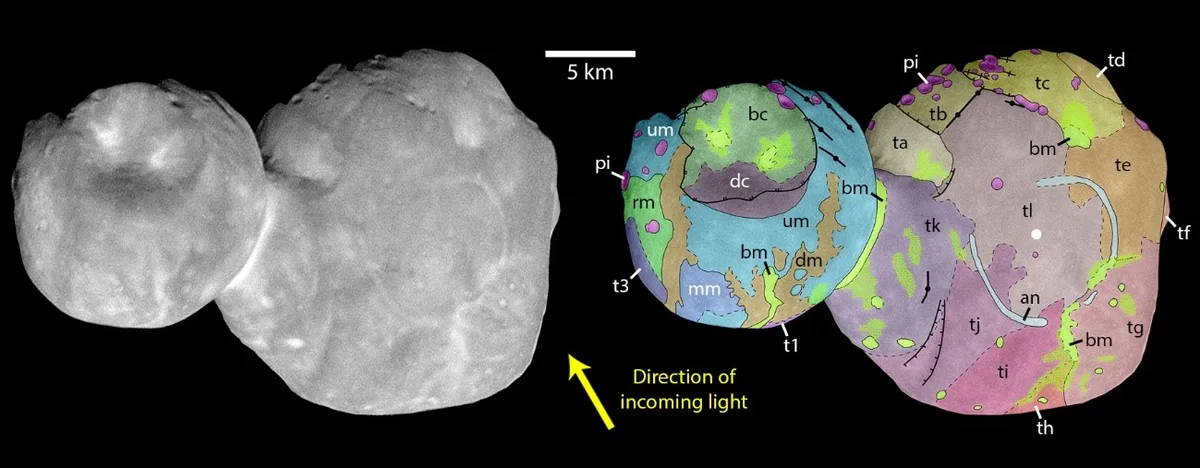
Arrokoth, a distant Kuiper Belt object, is the most primitive and farthest object ever explored by a spacecraft. The unusual orbits of objects like Arrokoth are key indirect evidence supporting the hypothesis of 'Planet Nine'. (Source: newhorizons.jhuapl.edu)
You might also like:
👉 Venus: Why 475°C Hell Holds Earth’s Climate Future
👉 Space Travel: Earth’s Best Investment, Not Mars
👉 Unexplained Mysteries of Science: Cosmos, Quantum & Beyond