Why Khrushchev's 1953 Thaw Was the USSR's First Crack
After Stalin's 1953 death, Nikita Khrushchev initiated 'the Thaw,' a wild, contradictory era of reforms that profoundly shook the Soviet Union.
Khrushchev’s Thaw: How One Man Changed the USSR
Forget the shoe-banging Nikita Khrushchev, the Cold War cartoon. Most people see him as just another hardline communist, Stalin’s brutal heir. They’re wrong. Khrushchev, a communist to his core, kicked off a wild, contradictory era of reforms called “the Thaw.” These changes shook the Soviet Union. They helped lead to its downfall decades later.
Khrushchev inherited a terrifying world. Joseph Stalin died in 1953. He left a vast, totalitarian empire. The Soviet Union, or USSR, stretched from Eastern Europe to the Pacific. The Communist Party (CPSU) ruled this single-party state.
Stalin ruled with paranoia and terror. In the 1930s, he orchestrated the “Great Purge.” It eliminated millions of perceived enemies through arrests, show trials, and executions. Millions more suffered in the Gulag, a vast network of forced labor camps. A “cult of personality” made Stalin seem like an infallible god. Ordinary citizens lived in constant fear. The secret police silenced everyone. Even mild criticism could mean death or decades in a labor camp. The economy was centrally planned. It focused on heavy industry and military production. Consumer goods were an afterthought. This was the brutal reality Khrushchev stepped into.
The Secret Speech: De-Stalinization Begins
On February 25, 1956, Nikita Khrushchev gave a closed-door speech. He spoke to delegates at the 20th Communist Party Congress. This was a huge moment in Soviet history. He ripped into Stalin’s “cult of personality,” his mass purges, and his wartime mistakes.
A “cult of personality” is when leaders get too much public praise and fake adoration. It often crushes individual thought. For decades, Stalin had seemed faultless. Khrushchev revealed Stalin had committed terrible abuses of power. He talked about Stalin’s arbitrary executions of loyal communists. He also mentioned his disastrous military decisions early in World War II.
Soviet newspapers never published the speech. It was only for Party members, then for leaders in satellite states. Khrushchev kept it secret. He feared public unrest if the full truth came out. Historian Archie Brown called it “the most important event in Soviet history since the October Revolution.”
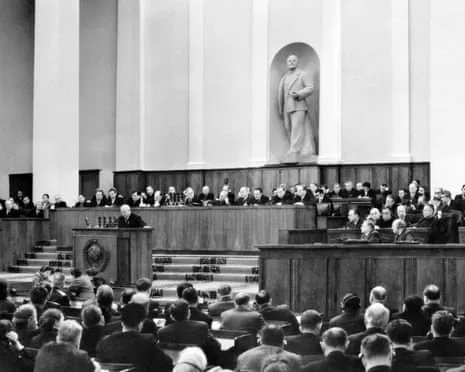
Nikita Khrushchev's 'Secret Speech' at the 20th Party Congress in 1956, though delivered behind closed doors, was a watershed moment, exposing Stalin's abuses and initiating the de-Stalinization process that profoundly reshaped the USSR. (Source: theguardian.com)
Imagine a powerful family patriarch dies. Then a junior member reveals his dark, secret history to everyone. That’s what happened. It shattered illusions and deeply shocked Party officials. After the speech, Soviet authorities freed hundreds of thousands of political prisoners from the Gulag. Many purge victims were “rehabilitated” posthumously. This meant their convictions were officially overturned. The secret police (NKVD, then MGB) lost much of its power. It got rebranded as the KGB.
The Thaw: Politics and Society Loosen Up
Starting in 1956, people called this era “the Thaw.” It meant less repression and more openness. Many political and societal changes followed.
Khrushchev pushed for decentralization in the Party and state. He tried to move decision-making power from Moscow to regions. His goal was efficiency. But it often led to chaos, historian William Taubman noted. He also brought in term limits for Party officials. This was a radical idea in a system where people served for life. Central Committee members, for example, could serve only three terms. This move aimed to stop new dictators from rising.
In 1957, former Stalin loyalists like Georgy Malenkov and Vyacheslav Molotov tried to oust Khrushchev. They called themselves the “Anti-Party Group.” Khrushchev didn’t use the secret police for executions. Instead, he defeated them with a Central Committee vote. They were demoted to minor posts, not killed. This showed a real break from Stalin’s brutal ways.
Cultural life also loosened up. Censorship decreased in arts and literature. Writers like Alexander Solzhenitsyn published works that hinted at Soviet problems, such as One Day in the Life of Ivan Denisovich. Boris Pasternak won the Nobel Prize for Doctor Zhivago in 1958. The novel was first suppressed inside the USSR. The Soviet Union also boosted cultural exchanges with the West. It hosted international youth festivals.
Legal reforms were another big part of the Thaw. The Soviet Criminal Code got revised between 1958 and 1960. These changes made the legal system less random. They cut back on political crimes. They also stopped applying laws retroactively. The system focused more on legal procedures. It relied less on forced confessions. Citizens gained a bit more legal protection, though it was still limited.
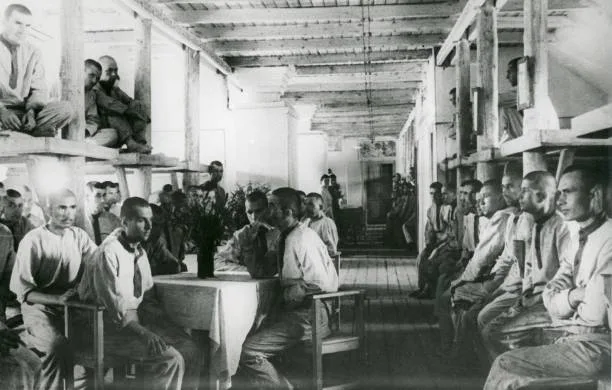
A stark image of a Soviet Gulag labor camp, where millions were imprisoned under Stalin's regime. Following Khrushchev's denunciation of Stalin's crimes, hundreds of thousands of political prisoners were freed from these camps, symbolizing a major step towards 'de-Stalinization' and the beginning of the 'Thaw' era. (Source: gettyimages.com)
The Thaw’s Limits and Contradictions
The Communist Party still held absolute power despite the reforms. Khrushchev’s “Thaw” had clear, often brutal, limits.
Free expression remained tightly restricted. Nobody pushed for a multi-party system. Genuine free speech challenging Party ideology didn’t exist. Dissent still brought punishment. Critics, for example, might end up in psychiatric hospitals instead of the Gulag. The state controlled all media and information.
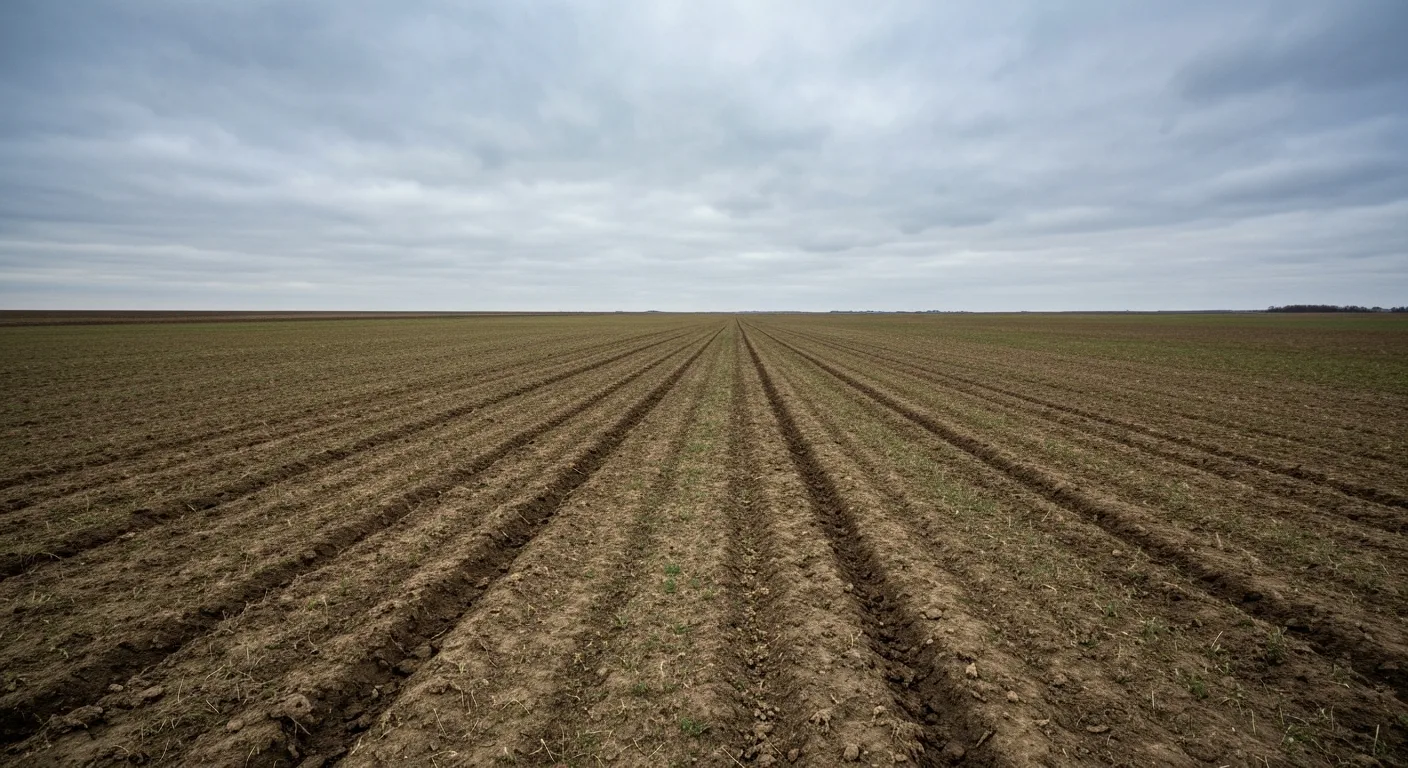
Khrushchev’s economic reforms often failed, especially in agriculture. His ambitious “Virgin Lands Campaign” tried to farm vast steppe lands. It was mostly a disaster. The campaign caused soil erosion and poor harvests. Consumer goods were still scarce and shoddy. Economist Alec Nove documented these economic struggles well. They hurt public support for Khrushchev’s policies.
The Thaw’s limits hit hard in Soviet satellite states. In October 1956, Soviet tanks brutally crushed the Hungarian Revolution. This proved Khrushchev wouldn’t tolerate challenges to Soviet dominance. He wouldn’t allow changes to the communist system in Eastern Europe. Five years later, in August 1961, the Berlin Wall went up. It stopped East Germans from fleeing West. The wall became a powerful symbol of ongoing repression and division.
Khrushchev himself had an authoritarian streak. He was impulsive and erratic. He often ignored collective leadership. Instead, he centralized power around himself. Biographer Robert Service points out Khrushchev’s autocratic ways. These often went against his stated goals of collective leadership. His risky foreign policy, like the Cuban Missile Crisis in 1962, pushed the world to nuclear war. This loss of trust helped bring him down among Party leaders.
What Khrushchev Left Behind (And Why It Still Matters)
In October 1964, a Party coup removed Nikita Khrushchev. Leonid Brezhnev replaced him. The Thaw was over.
Khrushchev’s reforms left a permanent mark. Stalin’s mass terror never came back. The Party grew more bureaucratic, less openly brutal. The Soviet system stayed authoritarian, but its methods fundamentally changed.
Khrushchev exposed Stalin’s crimes. He accidentally undermined the whole Soviet system’s legitimacy. The system rested on Stalin’s myth as an infallible leader. Historian Richard Pipes said this created a deep crisis of faith. People tasted freedom and learned some truth. They wanted more. This helped spark later dissident movements. It also grew public disillusionment.
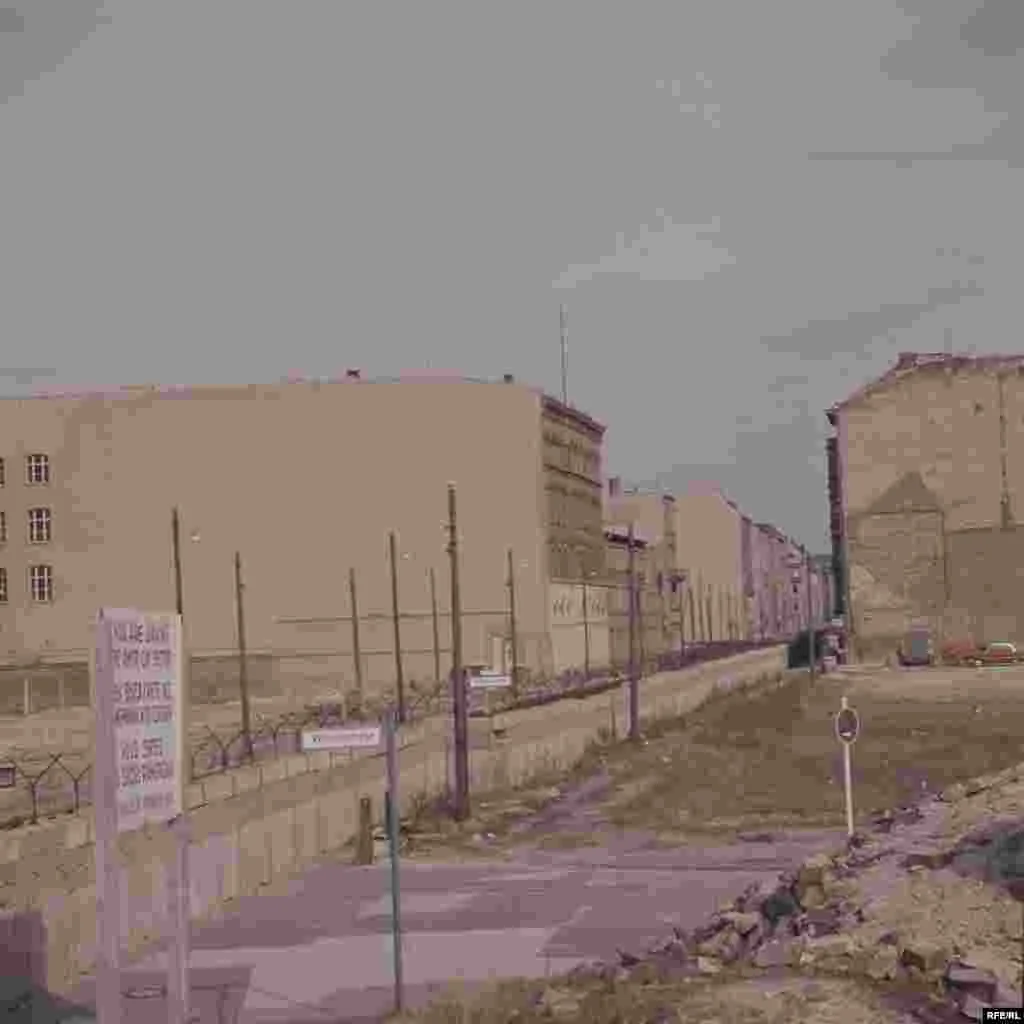
Erected overnight in August 1961, the Berlin Wall became the most potent symbol of the Cold War's division, physically separating families and embodying the brutal limits of Khrushchev's 'Thaw' on free movement. (Source: rferl.org)
Khrushchev’s actions also set a precedent for reform inside the Soviet system. He showed that change, even small change, was possible. This idea came back decades later with Mikhail Gorbachev’s perestroika and glasnost. It helped lead to the Soviet Union’s collapse in 1991.
Khrushchev’s reforms teach us about the huge challenges of changing a totalitarian state. They show the impossible bind of a system trying to be both open and totally controlled. The Thaw’s legacy still shapes post-Soviet politics today. These nations wrestle with their past and old authoritarian urges. The fight between control and limited freedom? It’s a story that keeps playing out, everywhere.
FAQ Section
Q1: What was the main goal of Khrushchev’s reforms? Khrushchev’s primary goal was to reform the Soviet system by de-Stalinizing it, eliminating the mass terror, and making the Communist Party more efficient. He wanted to strengthen communism by shedding its most brutal excesses.
Q2: Why was de-Stalinization not more complete? De-Stalinization was incomplete because Khrushchev and the Party elite feared losing control. A full accounting of Stalin’s crimes would have discredited the entire Soviet system, which they were committed to preserving.
Q3: Did ordinary citizens benefit from the Thaw? Yes, ordinary citizens benefited from reduced fear, fewer arrests, and a slight increase in cultural freedom. However, economic improvements were limited, and fundamental political freedoms remained absent.
Q4: How did Khrushchev’s reforms lead to his downfall? His reforms alienated conservative Party members who feared instability. His economic failures and impulsive decision-making eroded trust among the leadership. The Cuban Missile Crisis was a key example. These factors led to his removal.
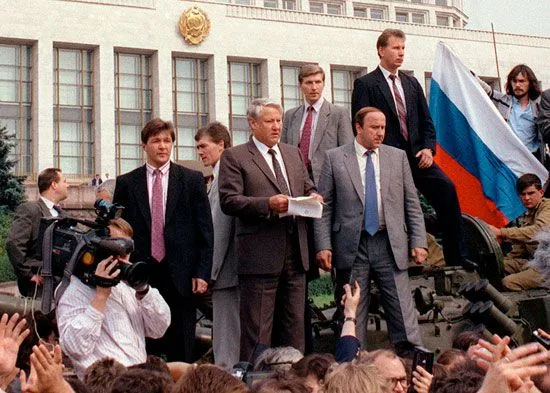
The dissolution of the Soviet Union in December 1991, marked by events like Boris Yeltsin standing on a tank in Moscow, represented the ultimate, albeit unintended, consequence of the reformist ideas first introduced by Khrushchev decades earlier. (Source: britannica.com)
You might also like:
👉 Medieval Empires: Power, Culture, and Lasting Global Impact
👉 US-China: $664B Trade Masks Zero-Sum Global Power Struggle
👉 The $546 Billion Space Race: Private Money, Global Rivalries