North America's ATC: The FAA's Safety Challenge
Human air traffic controllers keep millions of flights safe daily. But North America's ATC system is under pressure, raising safety concerns.
Near misses and strained skies: North America’s air traffic control challenges
The reality of air travel is more complex than many imagine. While advanced computers assist, human air traffic controllers manage our crowded skies. They work constantly to keep millions of flights safe. When these controllers are under pressure, the entire system can show strain.
North America’s air traffic control (ATC) is a huge system. Two main groups manage it. The Federal Aviation Administration (FAA) oversees the United States. NAV CANADA handles Canadian airspace. These agencies guide planes from takeoff to landing. They direct aircraft through busy paths and around bad weather.
Air traffic controllers choreograph a constant, complex dance. They direct thousands of aircraft at once. Each plane has specific needs for altitude, speed, and path. Controllers prevent collisions. They keep planes moving efficiently. This job demands constant communication and quick decisions.
The FAA manages 45,000 flights daily across US airspace. NAV CANADA supervises about 18 million aircraft movements each year. These systems run 24/7. Controllers use radar, radios, and specialized computers. Their job is demanding. It requires constant watchfulness.
These professionals work in airport control towers. They also staff en route centers. These centers manage planes cruising at high altitudes. They also run terminal radar approach control (TRACON) facilities. TRACONs handle traffic near major airports. Their work separates aircraft.
The invisible guardians under pressure
On February 4, 2023, a FedEx cargo plane almost hit a Southwest Airlines jet. This happened at Austin-Bergstrom International Airport in Texas. The Southwest plane was cleared for takeoff. At the same time, the FedEx plane was cleared to land on the same runway. This was a “runway incursion.”
A runway incursion means an unauthorized aircraft, vehicle, or person is on a runway. This creates a risk of collision. The FedEx pilots aborted their landing just 100 feet above the ground. The National Transportation Safety Board (NTSB) investigated. They called it a serious safety event.
The Austin event wasn’t isolated. The FAA recorded 1,732 runway incursions in 2023. This included 46 serious incidents. These incidents carried a high risk of collision. An FAA report from March 2024 shared this data. It showed a worrying trend.
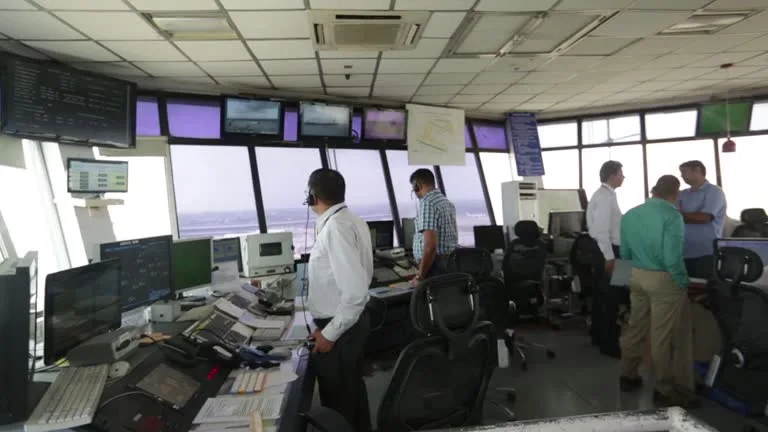
Air traffic controllers are the unseen choreographers of our skies, managing thousands of flights daily across North America. Their constant vigilance, quick decisions, and coordination are crucial for preventing collisions and ensuring safe passage through complex airspace. (Source: gettyimages.com)
Another close call happened on August 11, 2023, at San Diego International Airport. A private jet and a Southwest Airlines plane came dangerously close. Air traffic controllers stepped in. They issued urgent instructions. The NTSB is now investigating this incident.
These near misses have raised alarms. Aviation safety experts worry. They point to a strained system. The incidents show human error or system failures can lead to danger, even with advanced technology. This puts lives at risk.
A growing tally of close calls
Close calls aren’t just runway incursions. On January 13, 2023, two airliners almost hit each other at New York’s JFK Airport. A Delta Air Lines plane began its takeoff. It headed towards an American Airlines plane crossing the same runway. An air traffic controller quickly stepped in.
The controller ordered the Delta crew to stop. The Delta plane halted just 1,000 feet from the American Airlines jet. This quick action prevented a disaster. The FAA and NTSB investigated the event. They blamed a communication breakdown.
In fiscal year 2022, the US saw 23 “Category A” runway incursions. Category A means planes lost proper separation. A collision was avoided only by luck. The FAA’s Aviation Safety Action Program reported this. It covered the 12 months ending September 30, 2022.
These events show the pressure on controllers. The system needs their constant watchfulness. Errors can happen in fractions of a second. The consequences can be devastating. This tests the entire air travel system.
Pilot reports also show growing concern. Many pilots report unclear instructions. Others note delayed clearances. These issues affect flight safety. They increase workload for crews.
Beneath the surface: why safety is strained
A severe shortage of air traffic controllers is straining the system. The National Air Traffic Controllers Association (NATCA) said this in January 2024. They claim the FAA needs to hire 3,000 more controllers right away. This would meet current demands.
FAA data shows a big staffing gap. As of March 2024, the agency employs 14,000 fully certified controllers. That’s 3,000 fewer than in 2012. Air traffic has steadily increased. This means more work for fewer people.
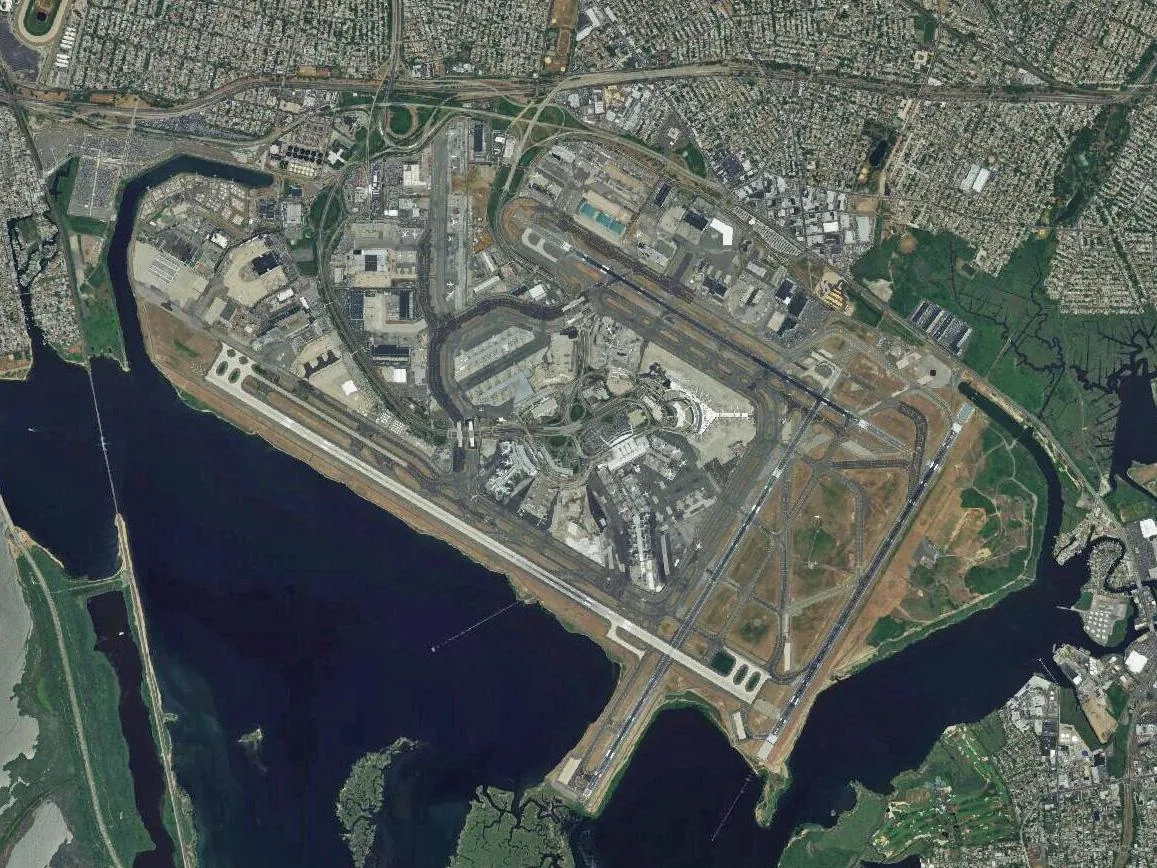
New York's John F. Kennedy International Airport (JFK) was the site of a critical near-miss on January 13, 2023, when a Delta Air Lines plane began takeoff towards an American Airlines jet on the same runway. Quick action by an air traffic controller prevented a disaster, highlighting the intense pressure on the system at major hubs. (Source: reddit.com)
Controller fatigue is a serious problem. Controllers often work mandatory overtime. They take fewer breaks. This raises the risk of errors. A 2023 report by the Government Accountability Office (GAO) confirmed this. It called staffing a major challenge.
Training new controllers is also a struggle. It takes three to five years to fully certify a new controller. Many experienced controllers are retiring. New hires aren’t keeping pace. This leaves a knowledge gap.
Aging technology also adds to safety worries. Many FAA facilities use decades-old equipment. The En Route Automation Modernization (ERAM) system, for example, has seen delays. ERAM helps controllers manage high-altitude traffic. Its full rollout has been slower than expected.
Outdated systems are less reliable. They also need more manual input. This adds to controller workload. It makes the system less efficient. Modernizing these systems costs a lot and takes time. It’s a big infrastructure challenge.
The Canadian picture: similar pressures, different systems
NAV CANADA manages Canada’s civil air navigation services. This includes all air traffic control. It’s a private, non-profit company. It funds operations through service fees. This model differs from the US government-funded FAA.
Canada faces similar safety pressures. Staffing levels are a main concern. The Canadian Air Traffic Control Association (CATCA) has said this many times. They report a need for more controllers. The COVID-19 pandemic reduced training. This made existing shortages worse.
In 2023, NAV CANADA reported more operational errors. This included times when planes lost minimum separation. The Transport Safety Board of Canada (TSB) investigates these events. They often point to human factors and workload.
Canada is also upgrading its technology. NAV CANADA is investing in new surveillance systems. They are also improving communication tools. These projects aim to improve safety and efficiency. But rolling them out requires careful planning.
One difference is funding. NAV CANADA’s fee-based model means revenue changes with air traffic volume. Downturns, like the pandemic, can affect investment. The FAA relies on money from Congress. Both models have their own challenges.
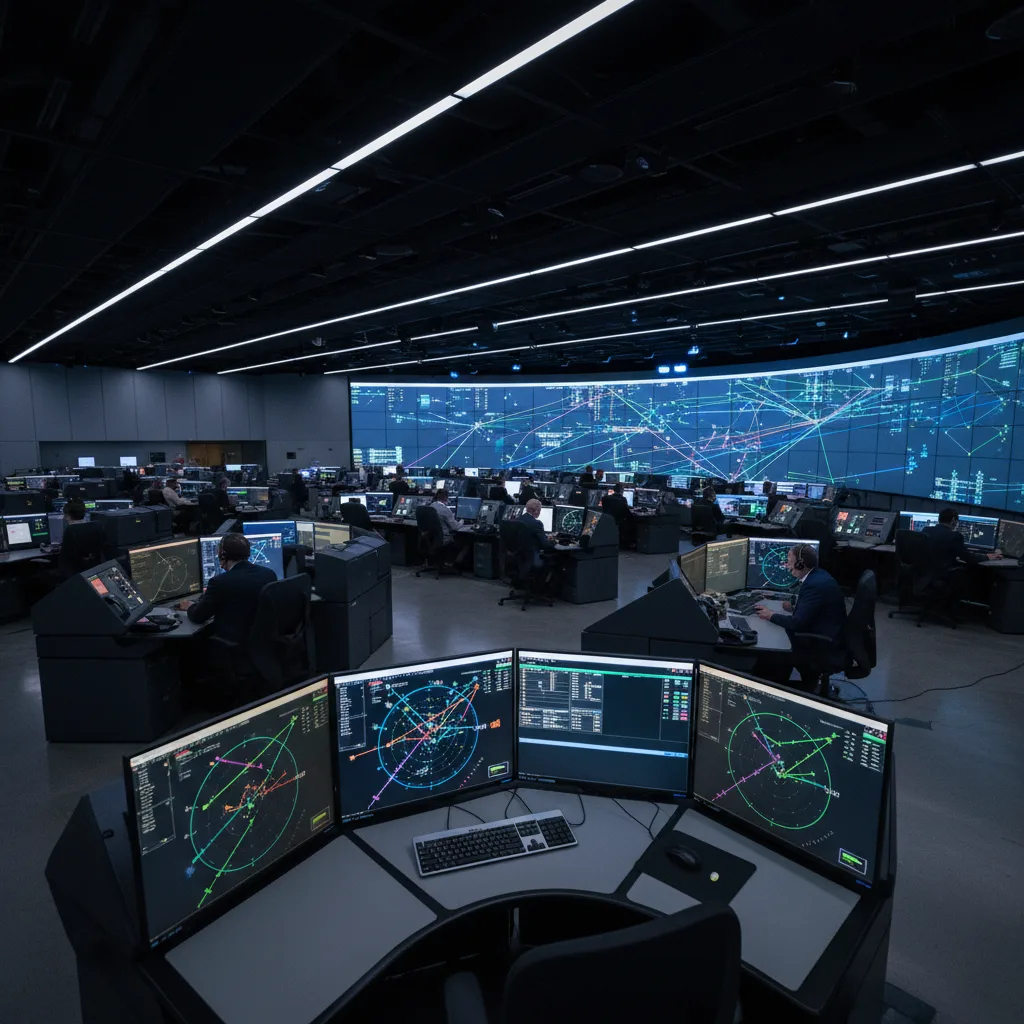
The En Route Automation Modernization (ERAM) system is a critical FAA technology designed to manage high-altitude air traffic across the United States. Despite its importance, the system has faced significant delays in its full rollout, contributing to concerns about aging infrastructure and controller workload. (AI-generated illustration)
Despite these pressures, Canadian airspace remains among the safest worldwide. Both US and Canadian systems keep high safety standards. But both face similar system-wide challenges. These include staff and infrastructure. They need constant attention.
Charting a safer course ahead
The US Congress is working on these issues. In May 2024, a five-year reauthorization bill for the FAA passed. This bill sets aside major funds. It aims to boost controller hiring. It also speeds up training programs. This is an important step.
The law requires more controller staff. It provides resources to modernize facilities. It also supports research into new aviation technologies. This includes adding drones to national airspace. This funding is essential.
Technology offers part of the solution. Automation systems can help controllers. They can filter non-critical information. They can flag potential conflicts sooner. These tools reduce mental workload. They improve controllers’ awareness.
Automation acts like a helpful co-pilot. It supports human decision-making, rather than replacing it. Future systems will likely use more artificial intelligence. This will further improve safety predictions.
Collaboration is also essential. The FAA, airlines, pilot unions, and controller unions must work together. They need to share data. They must find solutions. This teamwork strengthens the entire aviation system. It builds trust.
For travelers, these efforts mean continued safety. Airlines are adapting to new rules. They invest in crew training. They upgrade aircraft technology. The goal is a strong system. It can handle more demand.
North America’s skies are some of the busiest in the world. Keeping them safe is a constant challenge. This requires vigilance, investment, and innovation. We must ensure these invisible guardians have the support they need. This will help keep us flying safely into the future.
FAQ
What is a “runway incursion”? A runway incursion happens when an unauthorized aircraft, vehicle, or person is on a runway. This creates a risk of collision. Controllers work to prevent these events.
Is air travel still safe despite these concerns? Yes, air travel remains one of the safest ways to travel. The concerns show issues that need attention. They don’t mean the system is failing.
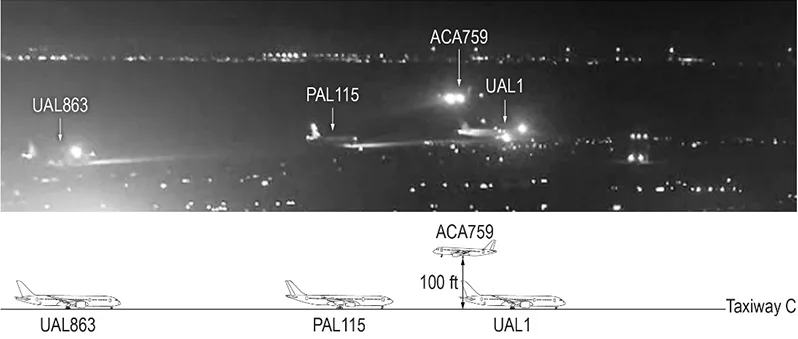
A runway incursion, defined as an unauthorized aircraft, vehicle, or person on a runway, poses a critical risk of collision. Air traffic controllers are constantly vigilant to prevent these rare but serious events, which remain a primary focus for aviation safety improvements. (Source: flightsafety.org)
Who trains air traffic controllers? In the US, the FAA runs its own academy in Oklahoma City. NAV CANADA trains controllers at its facilities across Canada. Both programs are tough.
How does automation help air traffic control? Automation helps controllers by processing data and finding potential conflicts. It provides warnings and reduces manual tasks. This frees controllers to focus on vital decisions.
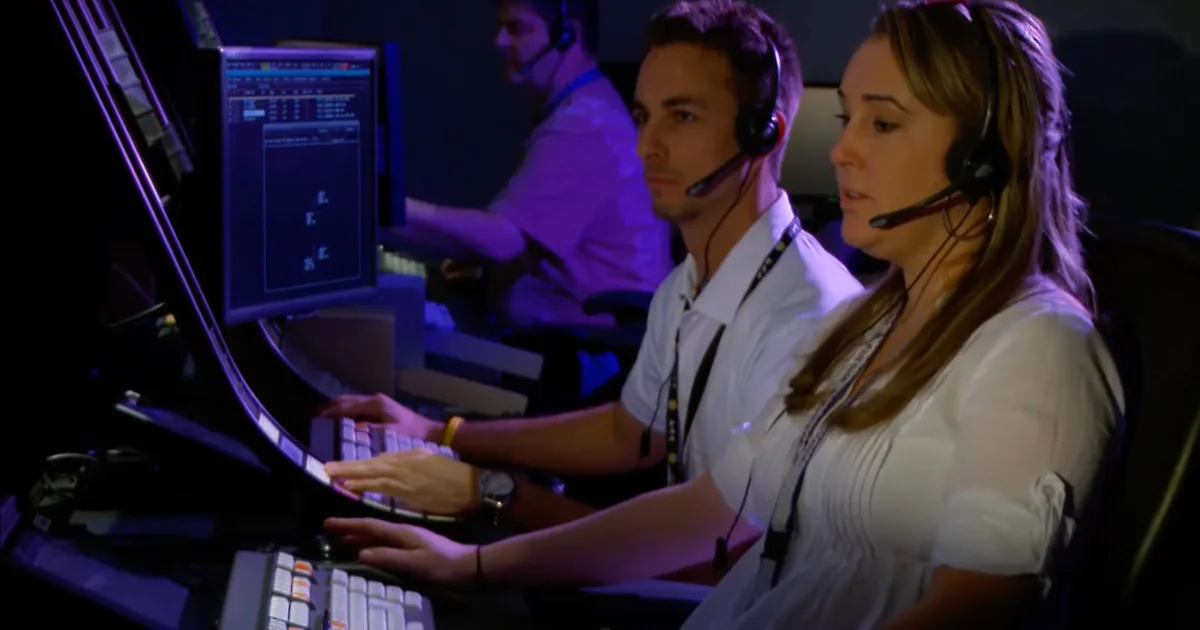
The FAA Academy, located at the Mike Monroney Aeronautical Center in Oklahoma City, is the primary training ground for all air traffic controllers in the United States. Its rigorous programs are designed to prepare controllers for the immense responsibilities of managing complex airspace. (Source: ainonline.com)
You might also like:
👉 Challenger’s 73 Seconds: The 1986 Disaster That Shocked NASA
👉 VR for Construction Safety: Effective Training & Education?