12,500 Nuclear Warheads: Is the NPT Failing in 2023?
Nine nations possess 12,500 nuclear warheads as of early 2023. Explore the NPT's struggle to prevent proliferation and global instability.
The Nuclear Tightrope: A World on Edge
Nine nations hold roughly 12,500 nuclear warheads as of early 2023. That staggering number highlights a constant danger: nuclear proliferation. When these weapons spread, the world becomes less stable. It raises the terrifying risk of them landing in dangerous hands.
The Non-Proliferation Treaty (NPT) is the foundation of international efforts to control these weapons. It started on March 5, 1970. The NPT splits countries into two groups. Nuclear-weapon states (NWS) built and tested nuclear weapons before 1967. These include the United States, Russia, China, France, and the United Kingdom.
Non-nuclear-weapon states (NNWS) promised not to get such weapons. NWS, in turn, committed to eventual disarmament. They also agreed to share peaceful nuclear technology with NNWS. This deal is now under immense pressure.
The Treaty’s Cracks
Three countries never joined the NPT. India, Pakistan, and Israel built nuclear arsenals outside the treaty. India tested its first nuclear weapon in 1974. Pakistan followed with tests in 1998. Israel keeps its nuclear status secret.
North Korea is a unique problem. It joined the NPT in 1985. Pyongyang then quit the treaty in 2003, after accusations of a secret weapons program. Its later nuclear tests shocked the world.
The International Atomic Energy Agency (IAEA) watches NPT compliance. It inspects to confirm peaceful nuclear work. IAEA Director General Rafael Grossi often reports on compliance problems. Checking up is always hard.
Hot Zones and Stubborn Programs
North Korea first tested a nuclear weapon on October 9, 2006. This changed security in Northeast Asia. The Democratic People’s Republic of Korea (DPRK) has since done six more nuclear tests. It also tests ballistic missiles.
Pyongyang sees its nuclear arsenal as vital for its survival. It uses these weapons to stop attacks. U.S. and South Korean intelligence found preparations for a seventh nuclear test in 2022. This shows it keeps defying the world. The U.S. Department of Defense reports on this often.
Iran’s nuclear program, revealed in 2002, presents another major challenge. Tehran says its program is for peaceful energy. Western spies think it wants weapons.
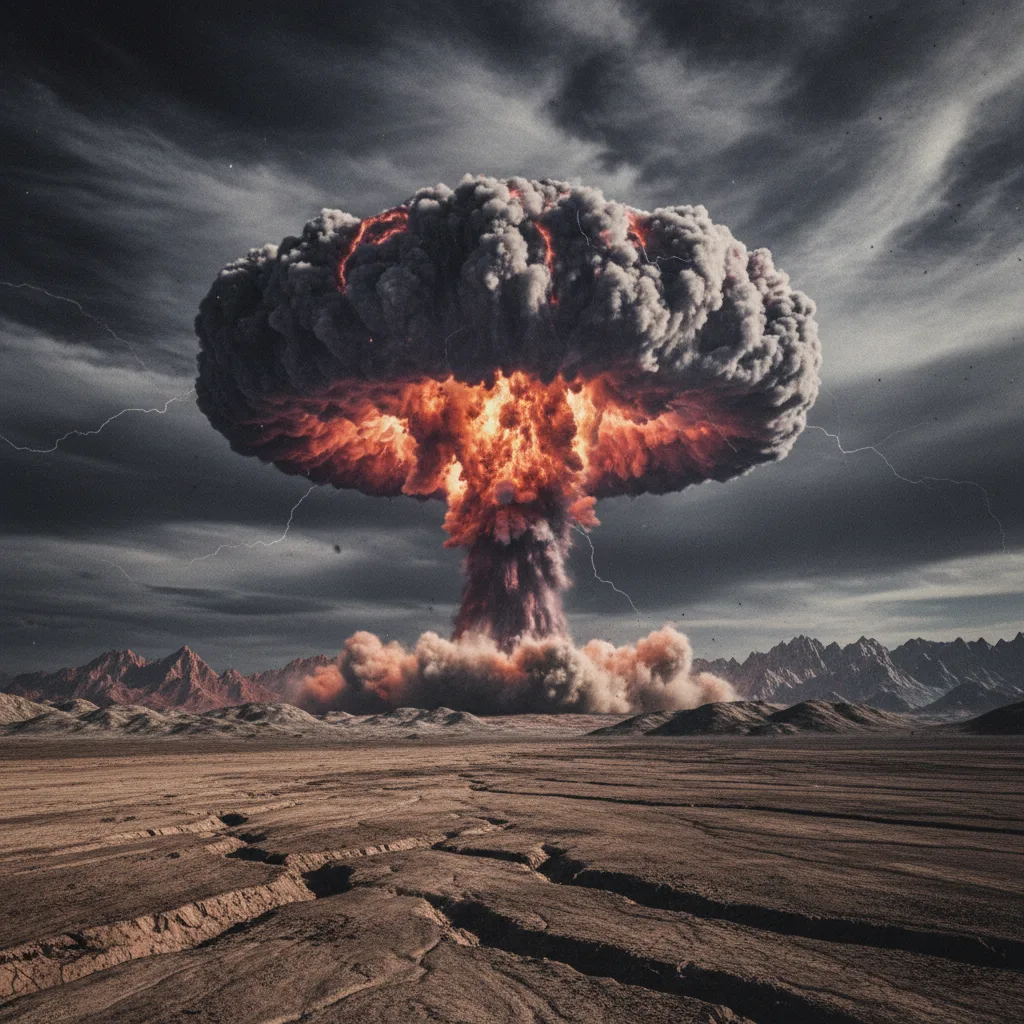
North Korea's first nuclear test on October 9, 2006, which produced a mushroom cloud like this, marked a significant escalation in global security concerns and demonstrated its defiance of international norms and the Non-Proliferation Treaty. (AI-generated illustration)
The 2015 Joint Comprehensive Plan of Action (JCPOA) cut Iran’s uranium enrichment. The U.S. quit the deal in 2018. Iran then started breaking JCPOA limits. As of February 2023, Iran enriched uranium to 83.7% purity. This is almost weapon-grade. IAEA Director General Grossi confirmed this.
The Double-Edged Sword of Nuclear Tech
Nuclear power plants made 2,545 terawatt-hours globally in 2022. This shows how much nuclear energy we use. Many nations want nuclear power for energy independence. But the technology has two uses.
Civilian nuclear programs can lead to weapons. Uranium enrichment facilities make reactor fuel. They can also produce highly enriched uranium for bombs. Reprocessing spent fuel makes plutonium. Plutonium is another weapon material. The World Nuclear Association tracks global energy production.
The A.Q. Khan network showed the danger of illegal tech sharing. This Pakistani metallurgist built a global black market. He sold nuclear weapons designs and centrifuges to Libya, Iran, and North Korea. The network ran for decades. It was exposed in 2004.
David Albright, founder of the Institute for Science and International Security (ISIS), documented this network in detail. His research shows how easily sensitive tech spreads. Stronger export controls and intelligence sharing are key to stopping these threats. Stopping leaks takes constant global work.
The Jitters of Nuclear Deterrence
The 2019 India-Pakistan crisis showed nuclear risks. After a terrorist attack in Kashmir, both nations launched airstrikes. India and Pakistan have nuclear weapons outside the NPT. This makes their rivalry very dangerous.
Both countries keep a “minimum credible deterrence.” But no one knows their exact nuclear red lines. Simon M. Smith, a senior researcher at SIPRI, points out this uncertainty. It raises the risk of mistakes during crises. Even normal fights could turn nuclear.
New nuclear powers might not have good command and control. This worries us about accidental launches. It also risks unauthorized use. Crisis stability needs clear communication. It also needs strong safeguards.
The Federation of American Scientists (FAS) tracks global nuclear arsenals. Their data shows arsenals are slowly but steadily modernizing. This includes new kinds of nuclear weapons. It makes arms control even harder.
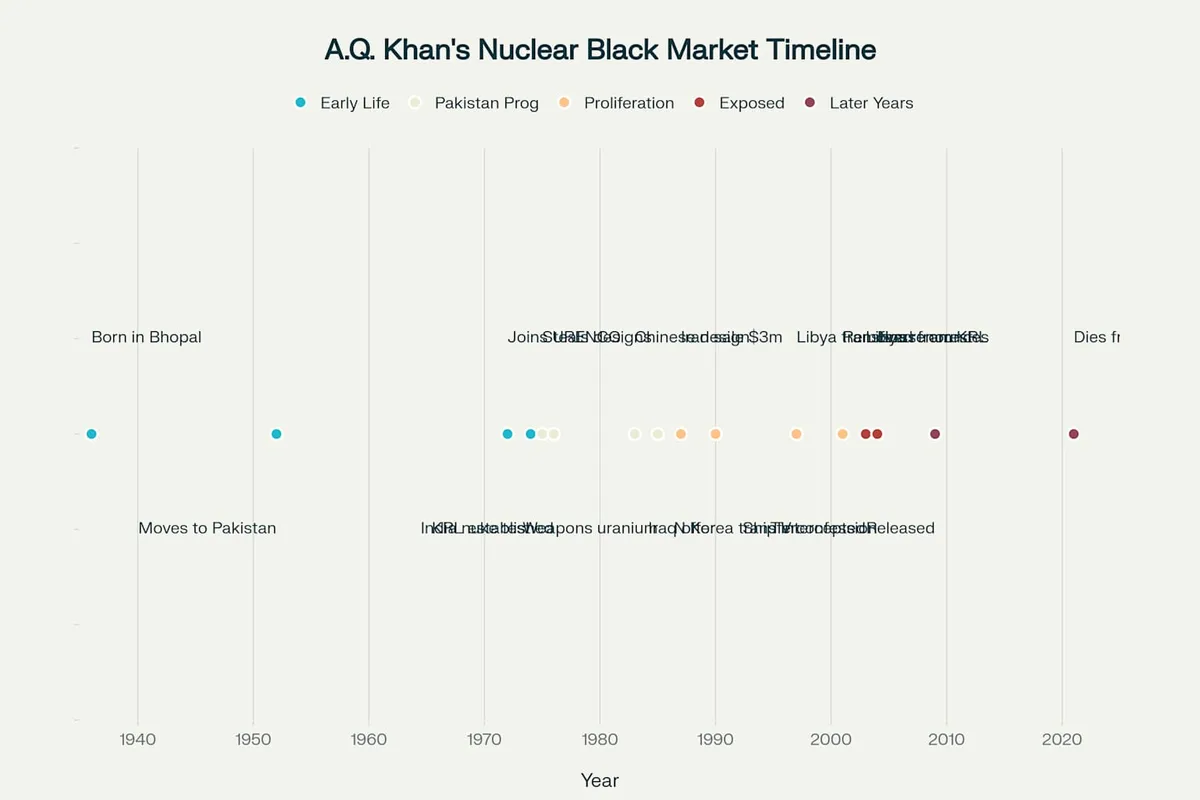
Abdul Qadeer Khan, the Pakistani metallurgist often called the 'father of Pakistan's nuclear bomb,' built a global black market for nuclear weapons designs and centrifuges, selling them to nations like Libya, Iran, and North Korea before his network was exposed in 2004. (Source: fordow.net)
What’s Next? The Road Ahead
The Comprehensive Nuclear-Test-Ban Treaty (CTBT) opened for signature in 1996. It bans all nuclear explosions. The treaty has 178 ratifications. But it needs eight more countries to sign on for it to start. These include the United States, China, Egypt, Iran, Israel, and North Korea.
If everyone joined the CTBT, it would solidify the global ban against testing. It would also make it tougher for new countries to build working nuclear weapons. The CTBTO Preparatory Commission runs monitoring systems. These systems can detect even small underground tests.
Diplomacy is the main tool for stopping proliferation. The P5 nations (US, Russia, China, UK, France) have a special job. They are the NPT’s recognized nuclear-weapon states. They must commit to disarmament.
New technologies pose future challenges. Artificial intelligence and cyber warfare might mess with nuclear command systems. Space-based weapons also create new problems. International cooperation is vital to adapt to these changing threats. Keeping strong verification and deterrence will be constant work.
FAQs
What is nuclear proliferation? Nuclear proliferation is when nuclear weapons, materials, or knowledge spread to new countries or groups. This raises the risk of nuclear conflict.
What is the Non-Proliferation Treaty (NPT)? The NPT is an international treaty. It aims to stop nuclear weapons from spreading. It also promotes disarmament and peaceful nuclear energy. Almost every country has joined.
Which countries possess nuclear weapons? Nine countries have nuclear weapons. These are the United States, Russia, China, France, United Kingdom, India, Pakistan, Israel, and North Korea.
What is dual-use technology? Dual-use technology means technology with both civilian and military uses. For nuclear power, this means reactors that make electricity can also produce plutonium for bombs. Uranium enrichment facilities are another example.
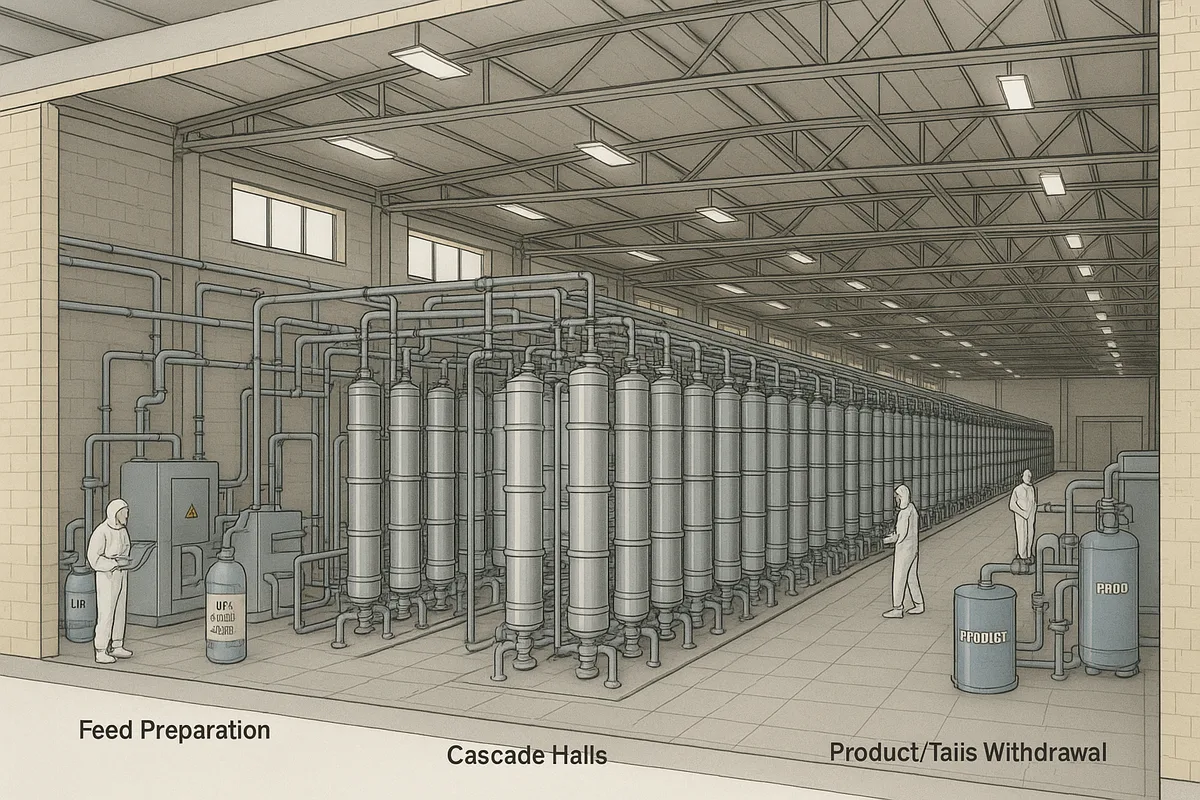
A uranium enrichment facility, often characterized by vast halls filled with centrifuges, is a critical dual-use technology. While essential for producing fuel for nuclear power, these facilities can also be repurposed to create highly enriched uranium for nuclear weapons, posing a significant proliferation risk. (Source: fordow.net)
You might also like:
👉 US-China: $664B Trade Masks Zero-Sum Global Power Struggle
👉 The $546 Billion Space Race: Private Money, Global Rivalries