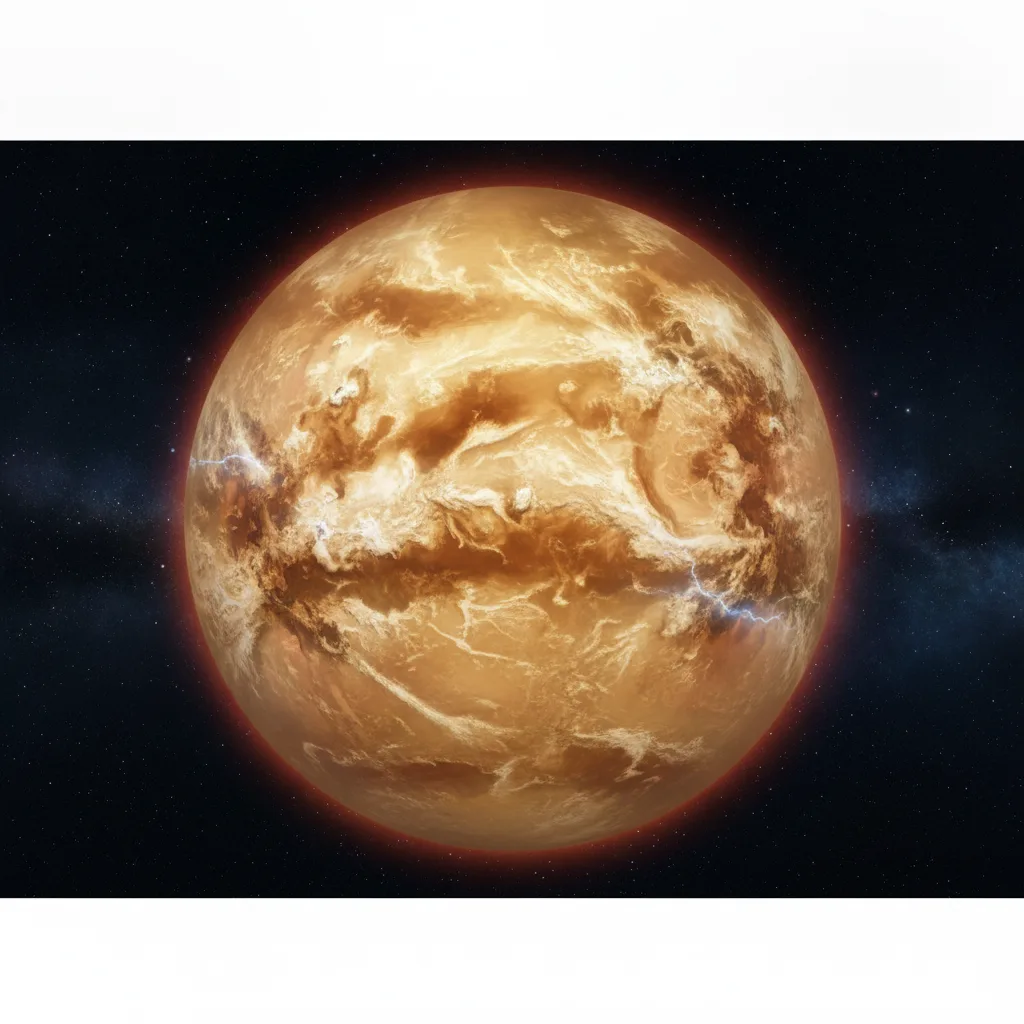
Earth's Fiery Twin: Why We're Braving Venus's 464°C Hell
Forget Mars. Venus, Earth's closest neighbor, is making a comeback despite its 464°C surface temperature and sulfuric acid clouds.
Venus: why we’re going back
Mars gets all the glory. For decades, the space community has talked about it, sent rovers, and dreamed of human colonies.
A shift in planetary exploration priorities is now evident. Venus, Earth’s fiery twin, is making a comeback. Venus is a hellscape. Its surface temperature reaches 464°C, hot enough to melt lead. Atmospheric pressure is 92 times Earth’s. Thick clouds of sulfuric acid shroud the planet.
Venus is vital. It’s Earth’s closest planetary neighbor, nearly identical in size and mass. It offers a stark lesson in planetary evolution. Understanding Venus could teach us about Earth’s climate future. It might also help us find habitable exoplanets.
Early missions gathered basic data. The Soviet Venera program landed probes on Venus in the 1970s and 1980s. They sent back fleeting images before failing in the heat and pressure. NASA’s Magellan mission mapped 98% of Venus’s surface in the early 1990s using radar. We learned about its vast plains, mountains, and volcanoes. But the extreme conditions meant we couldn’t learn much directly from the surface.
New missions will investigate Venus
NASA announced two new Venus missions in June 2021. The DAVINCI+ (Deep Atmosphere Venus Investigation of Noble gases, Chemistry, and Imaging) launches around 2029. It will send a probe through Venus’s thick atmosphere. The probe will analyze atmospheric gases. It will also capture high-resolution images of the planet’s tesserae regions. These are ancient, complex geological features. Dr. James Garvin, DAVINCI+ Principal Investigator, said the mission aims to understand Venus’s past water history.
Planetary scientists, including Dr. Lori Glaze, Director of NASA’s Planetary Science Division, share a belief. They think Venus once had oceans and plate tectonics. DAVINCI+ will measure noble gases and trace gases. These measurements could tell us if Venus ever had water. The probe will also study atmospheric layers.
The second NASA mission, VERITAS (Venus Emissivity, Radio Science, InSAR, Topography, and Spectroscopy), also launches around 2029. It’s an orbiter. VERITAS will map Venus’s surface with great detail. It will use radar to create 3D global maps. This will show if Venus is still geologically active. Dr. Suzanne Smrekar, VERITAS Principal Investigator, said it can detect active volcanoes. It will also search for signs of past plate tectonics.
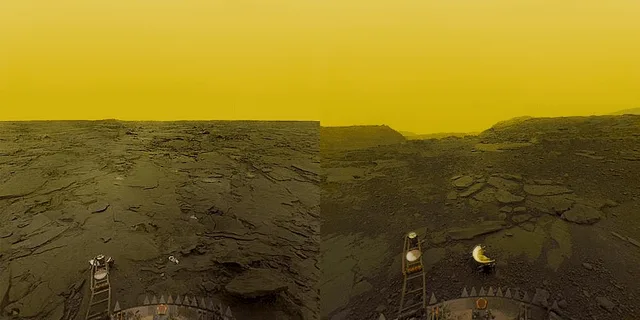
A Venera lander, like this one, was part of the Soviet program that achieved the first successful landings on Venus in the 1970s and 80s. These probes sent back the only direct images from Venus's scorching, high-pressure surface before succumbing to the extreme conditions. (Source: reddit.com)
The European Space Agency (ESA) also funded its EnVision orbiter in 2021. EnVision launches in the early 2030s. It has several instruments, including a radar sounder. This sounder will penetrate the surface to study its core. EnVision will also monitor trace gases in the atmosphere. These gases could show active geology. These missions show a coordinated international effort. They will answer big questions about Venus.
Building tech for a hellish world
Building probes for Venus needs extreme engineering. New approaches show cleverness. Traditional silicon-based electronics fail quickly in Venus’s heat. They last only minutes on the surface. Engineers are now developing “hot electronics” to withstand these conditions.
NASA’s Jet Propulsion Laboratory (JPL) leads this effort. They are experimenting with silicon carbide semiconductors. These materials can operate at hundreds of degrees Celsius. Dr. Philip Neudeck, a lead researcher at NASA Glenn Research Center, has developed circuits. These circuits operate at 500°C for thousands of hours. Such technology is essential for long-duration surface missions.
Another approach uses “refrigerators” for landers. Some concepts suggest using liquid nitrogen to cool instruments. This would extend their life to hours, not minutes. The Venera-D mission, a proposed joint U.S.-Russian effort, considers this idea. It wants a longer-duration lander. This lander would operate for weeks or even months. It would perform advanced geology and atmospheric studies.
Atmospheric platforms are another solution. NASA’s HAVOC (High Altitude Venus Operational Concept) looks at human-occupied airships. These would float in the temperate upper atmosphere. At 50-60 kilometers altitude, conditions are far milder. Temperature and pressure are similar to Earth’s sea level. These airships could do long-term atmospheric research. They could also act as bases for robotic descents.
Life beyond the surface?
In September 2020, a discovery sparked new interest in Venus’s habitability. Scientists announced phosphine gas in Venus’s atmosphere. Dr. Jane Greaves and her team published their findings in Nature Astronomy. On Earth, phosphine is linked to anaerobic life. This discovery, though debated, made people very curious.
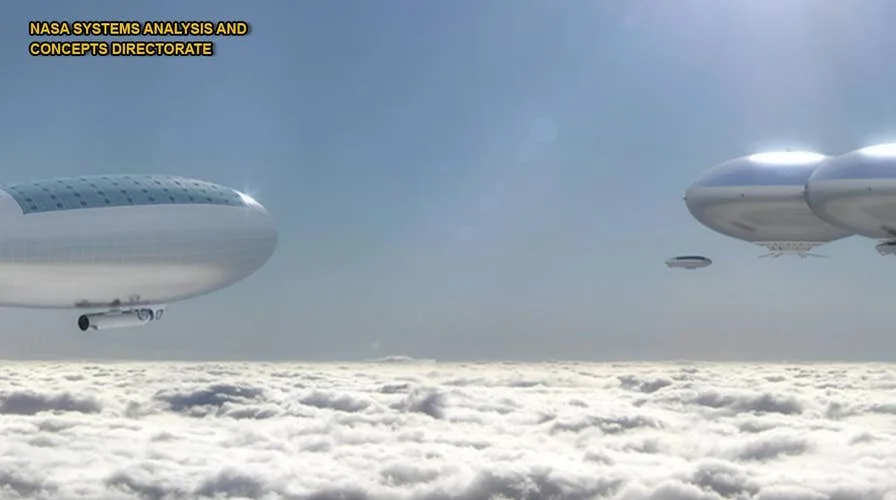
Artist's impression of NASA's HAVOC (High Altitude Venus Operational Concept) airship. This ambitious proposal envisions human-occupied airships floating in Venus's upper atmosphere, where temperatures and pressures are surprisingly similar to Earth's sea level. (Source: foxnews.com)
The scientific community reacted quickly to this. Subsequent studies re-analyzed the data. Some found the signal less strong. Others suggested non-biological origins for phosphine. Volcanic activity or geological processes could produce it. This debate shows the need for direct measurements.
The phosphine detection renewed the idea of an aerial habitable zone. This zone exists between 50 and 60 kilometers above Venus’s surface. Here, temperatures range from 0°C to 60°C. Pressure is similar to Earth’s surface. Water vapor is present, though scarce. Many scientists believe this region could hold microbial life. If life arose when Venus had oceans, it might have retreated to these clouds as the planet dried.
Future missions will directly investigate this possibility. DAVINCI+ will analyze atmospheric chemistry during its descent. It will look for other biosignatures. These include specific organic compounds or isotopic ratios. The European Space Agency’s EnVision will also analyze atmospheric gases. It will aim to pinpoint sources of unusual chemical compounds. These missions won’t definitively find life. They will provide vital data to improve our understanding of Venus’s habitability.
FAQ
Q1: Why is Venus so hot? Venus experiences a runaway greenhouse effect. Its thick atmosphere, mainly carbon dioxide, traps immense heat. Sunlight penetrates the clouds, but the heat cannot escape back into space.
Q2: Did Venus ever have oceans? Many scientists believe Venus once had significant liquid water oceans. Evidence comes from models of planetary formation and atmospheric chemistry. Future missions like DAVINCI+ will search for direct chemical evidence of this past water.
Q3: What is the “habitable zone” on Venus? The habitable zone on Venus is not on its surface. It’s a region in the atmosphere, roughly 50-60 kilometers above the surface. Here, temperatures and pressures are Earth-like.
Q4: Are there plans for human missions to Venus? Currently, no definitive plans exist for human surface missions to Venus due to the extreme conditions. However, concepts like NASA’s HAVOC propose human-occupied airships. These would operate in the more temperate upper atmosphere.
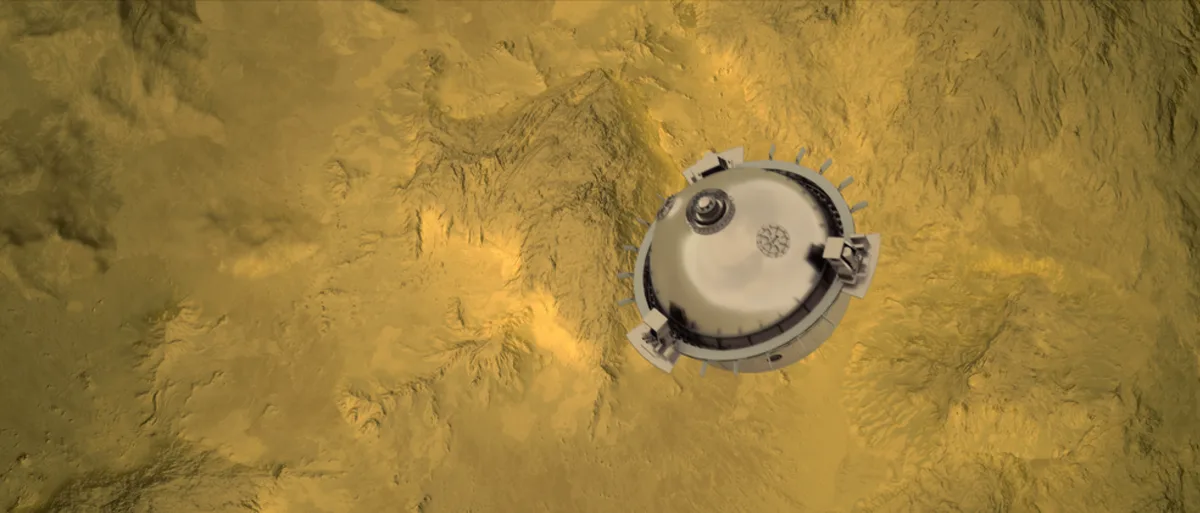
The DAVINCI+ probe, a planned NASA mission, will be the first U.S. probe to enter Venus's atmosphere since 1978. It aims to analyze atmospheric chemistry and search for biosignatures and evidence of past oceans. (Source: mashable.com)
What’s next: future exploration
The next decade will see many missions heading to Venus. NASA’s DAVINCI+ and VERITAS, along with ESA’s EnVision, are only the start. India’s Shukrayaan-1 orbiter is also launching by 2031. Russia’s Venera-D is still being discussed for the late 2020s or early 2030s.
There is a clear shift in scientific priorities. Venus is no longer just a warning. It’s a living laboratory. These missions will change how we understand Earth’s sister planet. We will learn about planetary evolution, climate change, and the chance for life beyond Earth. The answers these missions bring could reshape our view of Earth, our solar system, and life itself.
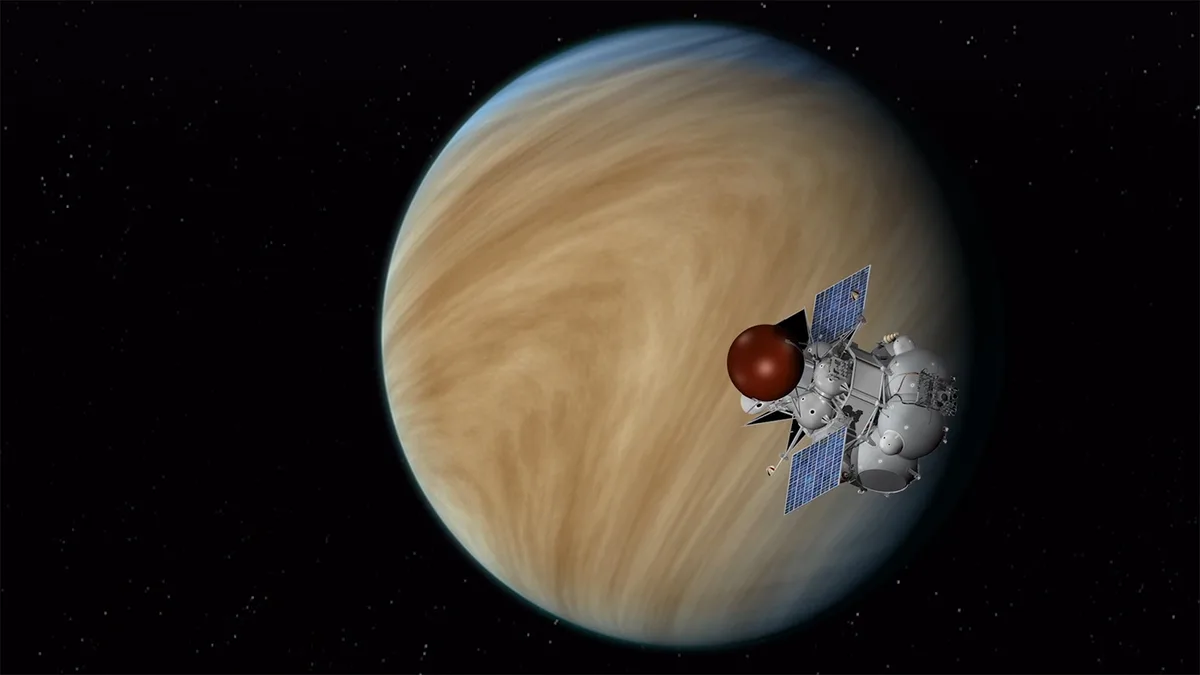
An artist's concept of India's Shukrayaan-1 orbiter, planned for launch by 2031. This mission marks India's first dedicated venture to Venus, aiming to study its atmospheric chemistry, surface features, and interaction with the solar wind. (Source: space.com)
You might also like:
👉 Venus: Why 475°C Hell Holds Earth’s Climate Future
👉 The $546 Billion Space Race: Private Money, Global Rivalries
👉 Unexplained Mysteries of Science: Cosmos, Quantum & Beyond