
Why Billions of Stars Hide No Alien Empires
Despite billions of stars and countless planets, the universe seems quiet. We expected ancient empires and cosmic highways, but found silence.
The Quiet Cosmos: What I Found Hiding in Plain Sight
Here’s something that doesn’t quite add up. When I first started looking for life beyond Earth, I pictured a galaxy bursting with it. I imagined ancient empires and busy cosmic highways. This felt like a natural assumption.
My early ideas came straight from sci-fi. Billions of stars, countless planets — life had to be everywhere. The universe seemed too vast for us to be alone. I thought we just hadn’t listened hard enough.
The Search for Intelligence and the Fermi Paradox
In 1961, astronomer Frank Drake proposed an equation. It estimated the number of detectable alien civilizations in our Milky Way. This formula, the Drake Equation, considers several factors. These include star formation rates, the fraction of stars with planets, and the number of planets that could support life.
It also considers the chance of life starting, intelligent life evolving, and tech-savvy civilizations developing. Finally, it accounts for how long they’d send signals into space. Drake’s first estimate, from a conference, suggested anywhere from 10 to 1 million civilizations. That range certainly implied a crowded cosmos.
Five years before that, in 1950, physicist Enrico Fermi asked an important question over lunch. He famously wondered, “Where is everybody?” This simple question highlights a deep paradox. If the universe is so vast and life so common, why haven’t we found any proof of other civilizations? This became the Fermi Paradox.
We mostly look for alien intelligence using radio astronomy. The Search for Extraterrestrial Intelligence (SETI) program started its regular observations in 1960. It uses big radio telescopes to listen for artificial signals. These signals would stand out from natural cosmic noise.
The Arecibo Observatory in Puerto Rico, a huge radio telescope until its 2020 collapse, had a big role. It sent a famous message into space in 1974. Today, projects like Breakthrough Listen, funded by Yuri Milner in 2015, are active. They spend $100 million to scan millions of stars for technosignatures.
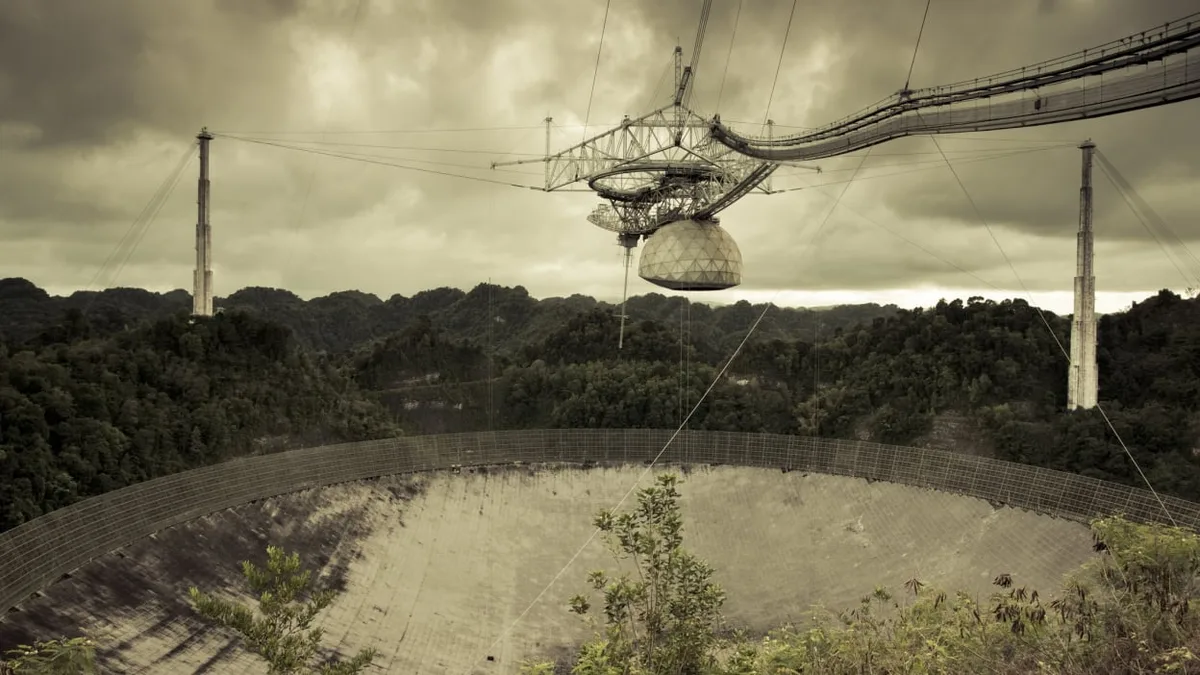
The iconic Arecibo Observatory in Puerto Rico, a massive radio telescope, played a crucial role in the search for extraterrestrial intelligence, famously sending a message into space in 1974 before its tragic collapse in 2020. (Source: mashable.com)
I expected these efforts to find something. The universe’s sheer scale made me confident. Our Milky Way alone holds 100 to 400 billion stars, many with multiple planets. The numbers seemed to favor discovery.
SETI had only scanned a tiny fraction of the cosmic haystack. I thought we just needed more powerful telescopes. More time, more patience. The silence, I figured, was simply our lack of effort.
Beyond Radio Waves: How We Look Now
NASA’s Kepler Space Telescope launched in 2009. It changed our understanding of planetary systems a lot. Kepler watched a fixed patch of sky, looking for tiny dips in star brightness. These dips showed planets passing in front of stars.
Then I found something truly surprising. By early 2024, astronomers had confirmed over 5,500 exoplanets. Many orbit in “habitable zones,” where temperatures could allow liquid water. This broke the idea that Earth-like planets are rare.
The sheer number of exoplanets changed the whole discussion. It’s no longer about whether planets exist. It’s about whether complex, intelligent life actually starts on them. My early assumption about few planets was completely wrong. The universe is full of potential homes.
This abundance also showed the difference between biosignatures and technosignatures. Biosignatures are chemical signs of life, like oxygen or methane in a planet’s atmosphere. The James Webb Space Telescope (JWST), launched in 2021, can analyze exoplanet atmospheres for these signs.
Technosignatures are direct proof of technology. Radio transmissions are one example. Massive engineering projects, like a theoretical Dyson sphere enclosing a star for its energy, are another.
The hunt for technosignatures now goes beyond just radio waves. Scientists look for light pulses, waste heat from huge civilizations, and orbital debris. SETI keeps improving its search strategies, looking for subtle signs of advanced societies.
My journey opened my eyes. We’re not just scanning; we’re building new instruments and developing new ways to detect intelligence. The problem isn’t a lack of places to look. It’s the deep, persistent silence.
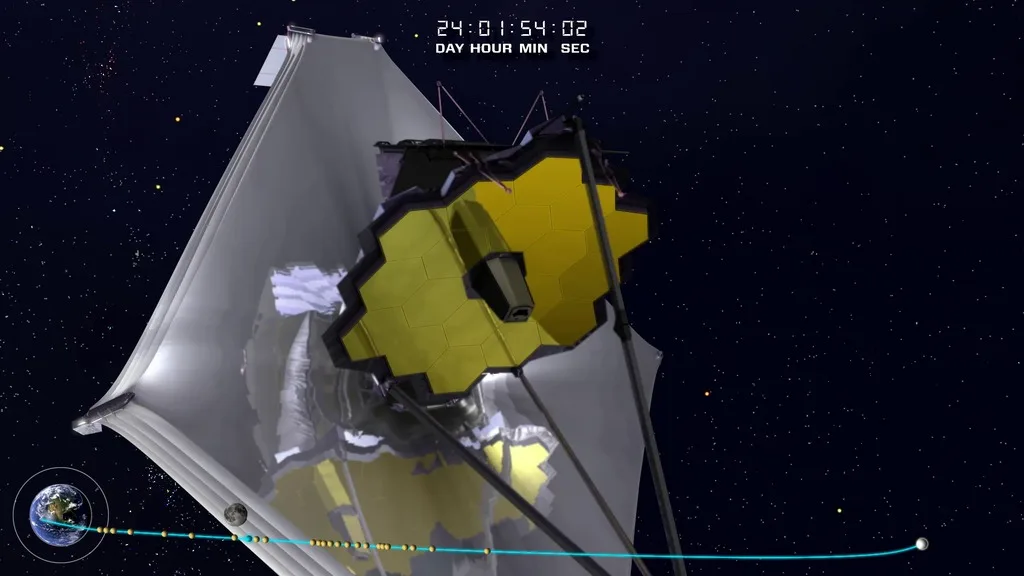
The James Webb Space Telescope (JWST), launched in 2021, is NASA's most powerful space observatory, designed to detect biosignatures in exoplanet atmospheres and explore the early universe. Its distinctive gold-coated mirrors and sunshield are crucial for its infrared observations. (Source: svs.gsfc.nasa.gov)
This made me rethink my early optimism. If habitable planets are common, and life should be common, then why haven’t we heard anything? Our listening and looking technology has improved significantly. Still, the quiet persists.
The Great Filter: A Troubling Idea
The Great Filter, an unsettling idea from the 1990s, helps explain the Fermi Paradox. It says some evolutionary or technological step is very hard to achieve. It acts like a barrier, stopping life from reaching other stars.
What I found most disturbing is what this idea means for us. The Great Filter could be behind us. This would make us incredibly rare. Maybe the leap from single-celled to complex multicellular life is almost impossible. Or perhaps intelligence itself is a rare cosmic event. If so, we’ve already passed it.
The Great Filter could also be ahead of us. This means almost all advanced civilizations destroy themselves. They might fall to environmental collapse, nuclear war, or resource depletion. This possibility is very serious.
One possible “filter” is self-destructive technology. Humanity developed nuclear weapons in 1945. Climate change, fueled by industrial activity, is another threat to our existence. Advanced civilizations might universally face these challenges and not always beat them.
Another theory suggests advanced civilizations lose the will to expand. Perhaps they become inward-focused, developing virtual realities that meet all their needs. They could simply lose the drive to explore. This would also explain the silence: they exist, but they don’t go anywhere.
Oxford philosopher Nick Bostrom has written a lot about risks to our existence. His work shows how easily advanced civilizations could fail. He points out many possible dangers for any species developing powerful technology. These risks could be the filter.
My perspective completely shifted here. I’d hoped we just hadn’t found them due to technology limits. The Great Filter suggests they might not exist to be found. Or, they existed but are gone. This idea made me see humanity’s future in a stark new light, questioning our own path.

The Trinity Test, the first detonation of a nuclear weapon, occurred on July 16, 1945, in New Mexico. This event marked humanity's acquisition of the power to cause its own widespread destruction, serving as a stark example of a potential 'Great Filter' that advanced civilizations might face. (Source: nationalinterest.org)
Our Future in a Quiet Cosmos
Earth’s population hit 8 billion in 2022, showing our rapid growth and increasing demand for resources. Searching for alien intelligence isn’t just about finding others. It’s deeply about understanding ourselves and our place in the universe.
If the Great Filter is behind us, humanity might be incredibly rare. This makes our existence precious. Protecting Earth and our species becomes most important. We might be unique in this corner of the cosmos.
If the filter is still ahead, then our biggest challenges are yet to come. Developing artificial intelligence, climate change, and global conflicts are all potential future filters. Handling these challenges will decide our survival, and if we become another silent civilization.
The search for technosignatures goes on. The James Webb Space Telescope, while mostly for biosignatures, could also spot unusual light patterns. Future missions might use larger space telescopes, even sending probes to nearby star systems.
Stephen Hawking, the famous physicist, warned against actively contacting alien civilizations. He thought they might not be friendly. This view shows the potential risks of discovery and the vast unknowns.
What this means for human society is huge, no matter the outcome. Finding alien life would reshape our philosophies, religions, and science. It would redefine “humanity.”
The lack of detection also makes us look inward. It makes us consider our responsibilities as the only known intelligent life. Ultimately, I’ve realized, the quest for other societies isn’t just about them. It’s about us: finding our own meaning and ensuring our long-term survival.
Frequently Asked Questions
What’s the Fermi Paradox? The Fermi Paradox asks why we haven’t found any proof of alien life, despite its high probability. It highlights the contradiction between that high chance and our lack of observations.
What’s the Drake Equation? The Drake Equation estimates the number of active, communicating alien civilizations in the Milky Way. It multiplies factors like star formation rates and how long civilizations last.
Are there active SETI projects? Yes, several projects are active. The SETI Institute continues its research, and Breakthrough Listen is a big initiative. They use radio telescopes and other tools to scan for technosignatures.

Stephen Hawking, the renowned theoretical physicist, famously warned against actively contacting alien civilizations, fearing potential risks. Despite his motor neuron disease, his groundbreaking work on black holes and cosmology profoundly shaped our understanding of the universe. (Source: metro.co.uk)
What are technosignatures? Technosignatures are any detectable signs of technology. They include radio emissions, laser pulses, waste heat, and large artificial structures like Dyson spheres. They’re different from biosignatures, which only show life is present.
You might also like:
👉 Tucker Carlson on Aliens: UFOs, UAP & Media Discourse
👉 Unexplained Mysteries of Science: Cosmos, Quantum & Beyond