Deep Space: Why Alan Shepard's Rocket Won't Get Us There
Alan Shepard's 1961 flight relied on massive chemical fuel. Future deep space missions demand new propulsion beyond current rocket limitations.
Beyond the Flame: How We’ll Power Deep Space Travel
We’ve always explored space with fire. On May 5, 1961, Alan Shepard rode a Mercury-Redstone rocket into orbit. That powerful chemical engine, like all others since, burned liquid fuel. These rockets generate immense thrust, enough to escape Earth’s gravity. They’ve launched every astronaut, probe, and satellite into space.
These rockets have a huge problem. Even short trips, like going to the Moon, demand massive amounts of fuel. Rocket physics says most of a launch’s mass must be propellant. This makes long missions, say to Mars, incredibly slow and costly. If we want to explore the solar system, we need faster, farther, and smarter travel.
The Cosmic Speed Limit
The Tsiolkovsky rocket equation, developed by Konstantin Tsiolkovsky in 1903, defines rocket speed. It shows how a rocket’s final velocity depends on its exhaust speed and mass ratio. To go faster or carry more cargo, a rocket needs to expel propellant much quicker. Or it needs a far larger fuel tank. Current chemical rockets hit their limits fast. They shoot out exhaust at about 4 kilometers per second. That’s a tiny fraction of what deep space travel requires.
Earth’s gravity is another huge problem. Escaping it eats up most of a rocket’s energy and fuel. Every kilogram launched from the surface needs dozens, even hundreds, of kilograms of propellant. This basic waste limits missions and payload sizes. Sending humans beyond Earth orbit remains a big challenge.
Dr. Wernher von Braun, a rocket pioneer, knew this limit well. He often talked about needing better engines to make Mars missions possible. Without them, we’d stay stuck near Earth.
The Atomic Promise: Nuclear Rockets
In 1957, physicist Theodore Taylor proposed Project Orion. This bold idea used nuclear bomb detonations to propel a spacecraft. Small atomic bombs would explode behind a large “pusher plate,” turning their energy into thrust. Dr. Robert Bussard, a plasma physicist, championed Orion.
Orion promised high performance, even interstellar travel. It could theoretically reach Saturn in months, not years. But detonating nuclear weapons in space carried huge political and ethical problems. The 1963 Partial Test Ban Treaty ended its development, despite its potential.
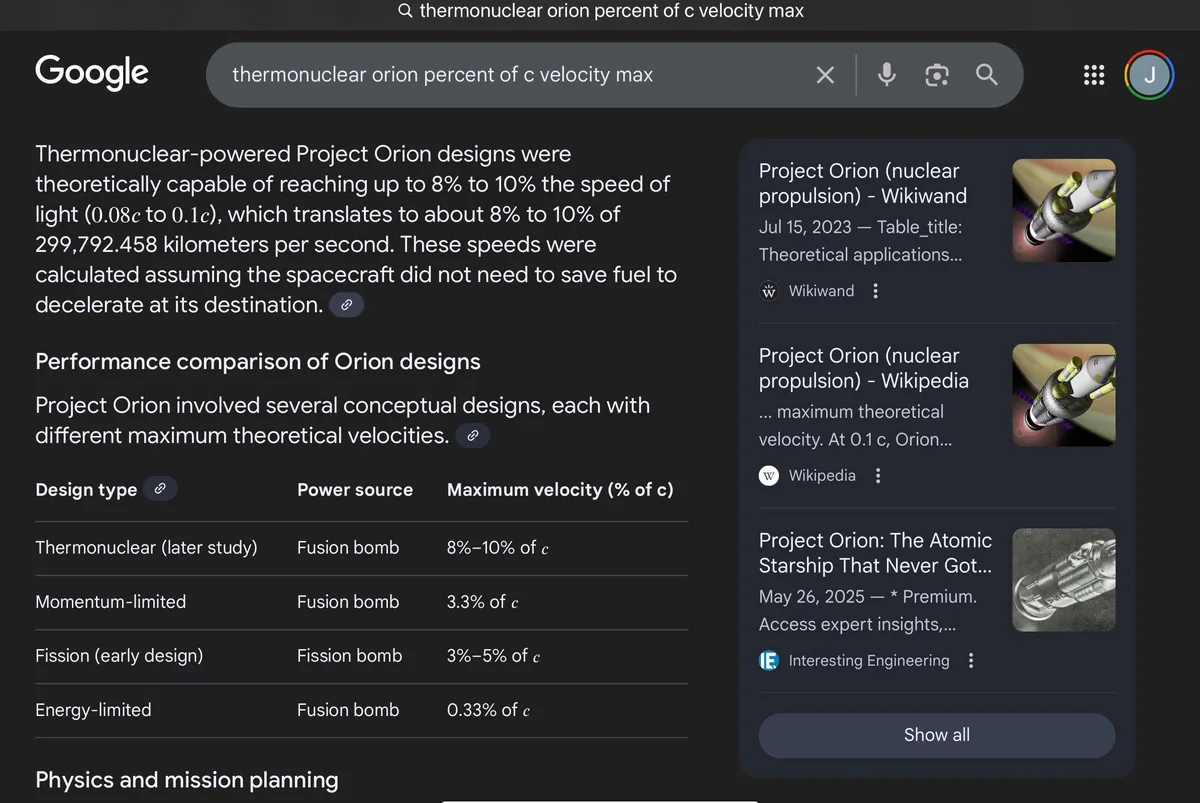
Project Orion was a bold 1950s concept for a spacecraft propelled by detonating nuclear bombs behind a large "pusher plate." Though promising high-speed deep space travel, ethical concerns and the 1963 Partial Test Ban Treaty ultimately halted its development. (Source: reddit.com)
NASA pursued a different atomic path: the Nuclear Engine for Rocket Vehicle Application (NERVA) program. From 1959, NERVA focused on nuclear thermal propulsion (NTP). A nuclear reactor would heat hydrogen propellant to extreme temperatures. The superheated gas then expands through a nozzle, creating thrust. Dr. George Mueller, NASA’s Associate Administrator for Manned Space Flight, saw NERVA as important for Mars missions.
NERVA engines performed well during ground tests in the 1960s. For instance, the NERVA XE engine ran for over two hours at full power in 1969. It showed a specific impulse (engine efficiency) twice that of chemical rockets. This meant a NERVA-powered Mars mission could significantly cut travel times. Yet, budget cuts and a change in NASA priorities killed NERVA in 1972. The dream of human Mars missions with nuclear thermal rockets vanished for decades.
Silent Push: Electric Propulsion
In 1964, NASA’s SERT-1 spacecraft tested an ion engine in orbit. This was a quiet but major shift in propulsion. Ion engines work very differently from chemical rockets or nuclear thermal systems. They use electricity to ionize a noble gas, usually xenon. Then electric fields accelerate these ions. The ions shoot out at very high speeds, often over 30 kilometers per second.
This high exhaust speed means very high fuel efficiency. But ion engines produce very little thrust. They give a gentle, continuous push, not a powerful shove. It takes days or weeks for them to build significant speed. Dr. Ernst Stuhlinger, a German-American rocket scientist, advocated for ion propulsion early on. He saw their potential for long robotic missions.
NASA’s Deep Space 1 mission launched in 1998. It was the first interplanetary craft to use an ion engine as its main propulsion. It visited an asteroid and a comet. Later, the Dawn mission (2007) used three ion engines to orbit two massive asteroids: Vesta and Ceres. This showed good maneuverability and efficiency for deep space. The upcoming Psyche mission (2024) also uses Hall effect thrusters, another electric propulsion type. It will reach its metal asteroid target. Electric propulsion has improved robotic planetary science. It allows for longer missions and more scientific data. Still, its low thrust makes it unsuitable for fast human trips to distant planets.
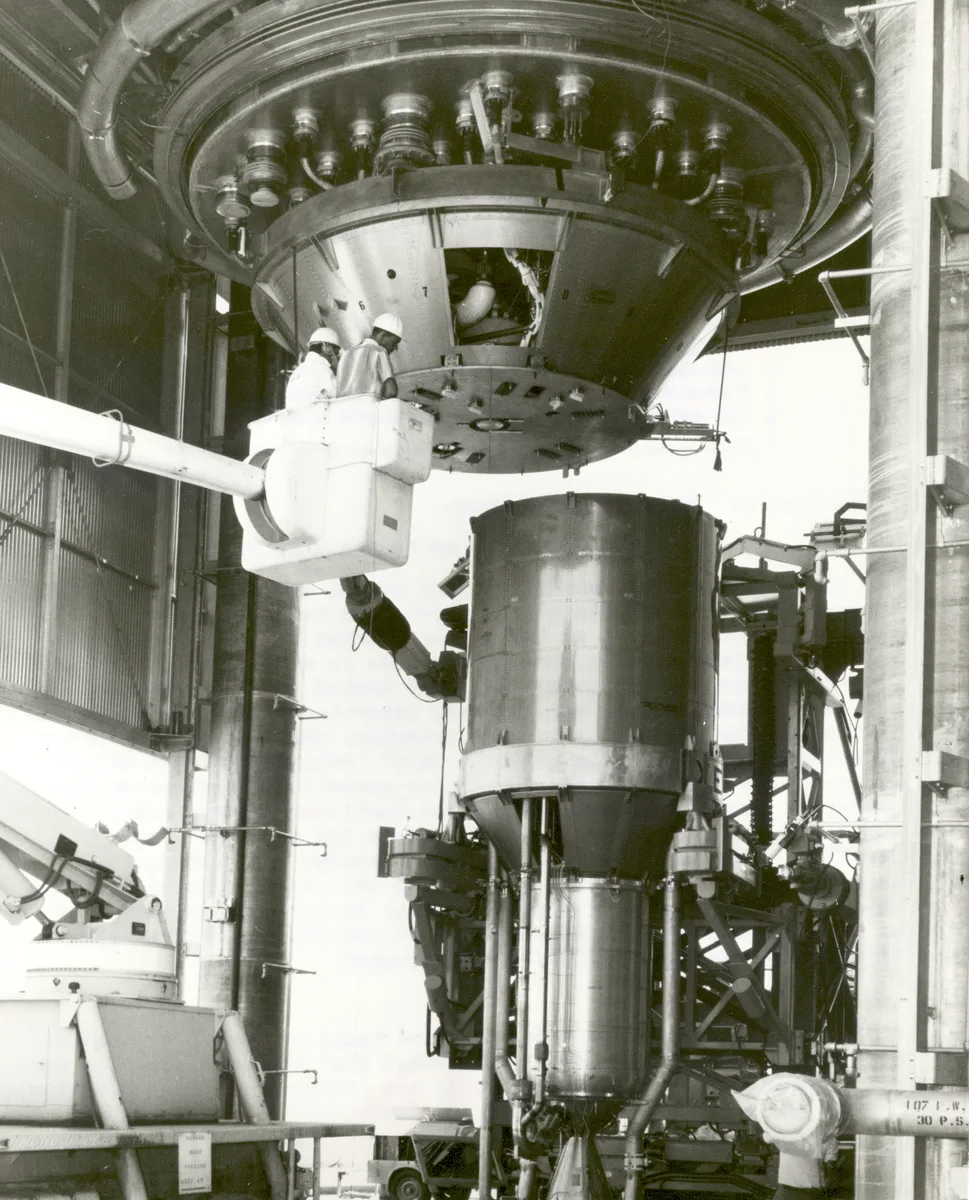
The NERVA XE engine, seen here during ground tests in the 1960s, was a nuclear thermal rocket designed for human Mars missions. It ran for over two hours at full power, demonstrating an efficiency twice that of chemical rockets, before the program was canceled in 1972. (Source: beyondnerva.wordpress.com)
Reigniting the Atom: Modern Nuclear Rockets
In January 2023, NASA and DARPA announced the DRACO program. This stands for Demonstration Rocket for Agile Cislunar Operations. The initiative aims to develop and test a nuclear thermal rocket (NTR) in space by 2027. This project builds on NERVA’s legacy, using modern materials and engineering. Its goal: create an NTR that significantly cuts travel times for human Mars missions.
An NTR could shrink the Mars trip from seven to nine months down to just 45 days. This significant reduction lessens astronaut risks from radiation exposure and bone loss. It also reduces the supplies needed for the journey. NASA administrator Bill Nelson called this partnership important for future human space exploration. The DRACO program shows a renewed focus on nuclear propulsion after decades of quiet.
Research also continues on nuclear electric propulsion (NEP). NEP systems use a nuclear reactor to generate electricity. This electricity then powers efficient electric thrusters, like advanced ion or Hall effect engines. NEP still has low thrust, but it offers far higher power than solar-electric systems. This allows faster acceleration for heavy payloads over long distances. NEP could move huge amounts of cargo, maybe even entire habitats, to Mars or beyond. These modern nuclear efforts aim to develop the technology for a permanent human presence throughout the solar system.
The Far Frontier: Fusion, Antimatter, & Warp Drives
Scientists like Dr. John Slough have explored fusion propulsion for decades. Fusion, the sun’s power source, fuses light atomic nuclei to release much energy. Controlling this energy for propulsion is a big challenge. One concept, the Direct Fusion Drive (DFD) from Princeton Satellite Systems, uses a fusion reactor. It would directly expel plasma for thrust. This could provide very high specific impulse and good thrust. Such an engine could theoretically send a probe to Pluto in just two years.
Then there’s antimatter propulsion. When matter and antimatter meet, they annihilate, turning 100% of their mass into energy. This process is far more efficient than nuclear fusion or fission. A tiny speck of antimatter could provide much power. Scientists have made small amounts of antimatter in labs, like at CERN. But producing enough of it and storing it safely poses big technical problems. Dr. Gerald Smith, a Penn State physicist, studied how to build antimatter rockets. He admits the practical challenges are large.
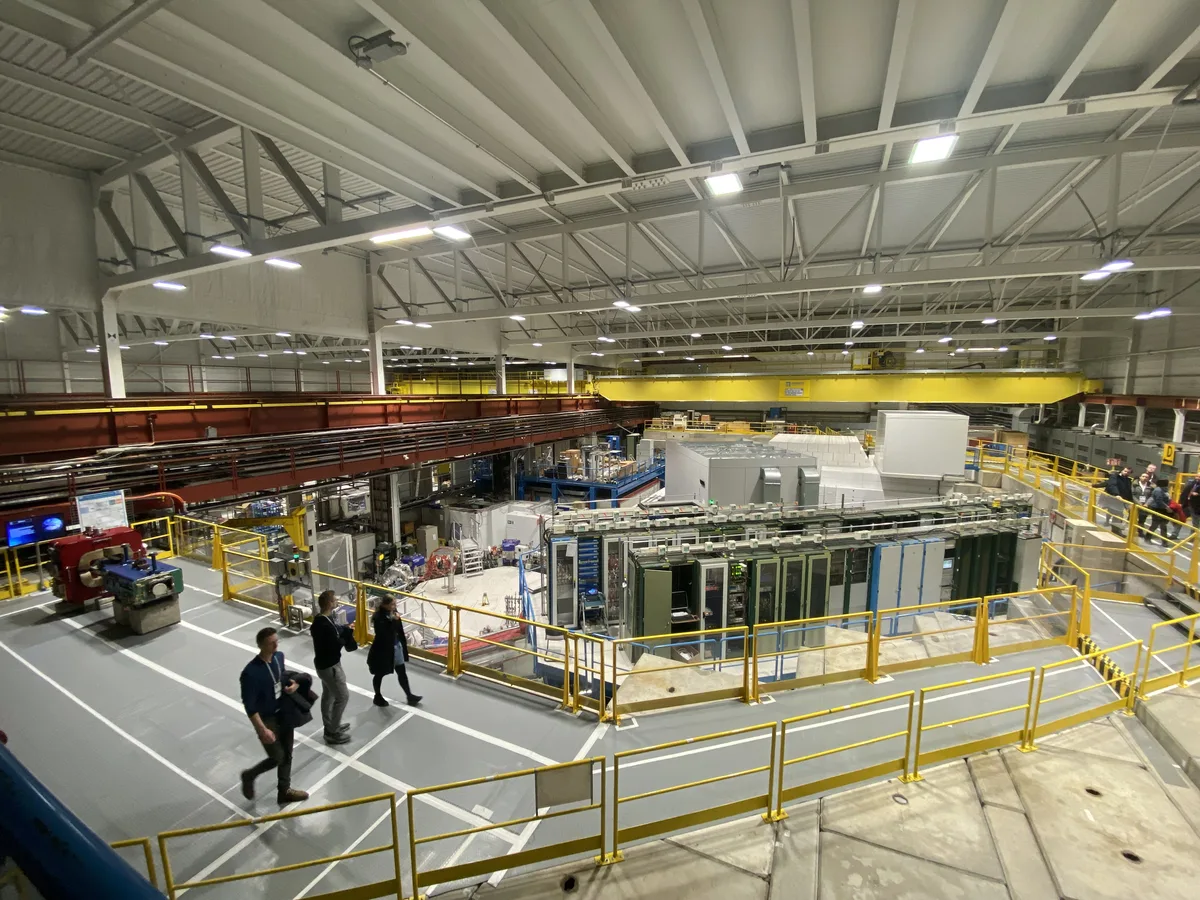
CERN, the European Organization for Nuclear Research, is where scientists have successfully produced and studied antimatter, a crucial step for the theoretical antimatter propulsion discussed in the passage. Its massive accelerators and detectors, like the Large Hadron Collider, push the boundaries of fundamental physics. (Source: en.wikipedia.org)
Other ideas are theoretical physics. The Alcubierre warp drive, for example, proposes bending spacetime itself for faster-than-light travel. Physicist Miguel Alcubierre proposed this idea in 1994. It needs exotic matter with negative mass-energy density. We’ve never seen such matter. These speculative concepts are beyond current science. They suggest interstellar travel, but are centuries away, if ever possible.
The Next Giant Leap: Our Multi-Engine Future
By 2040, we want permanent lunar bases and crewed Mars missions. To do this, we’ll need many types of space engines. Chemical rockets will still be important for escaping Earth’s gravity, providing that initial boost. For the long trips, nuclear thermal rockets will provide the speed for human Mars missions. This cuts travel times and astronaut risk. Nuclear electric propulsion will power steady cargo transport, building infrastructure across the solar system.
Advanced electric thrusters, with their high efficiency, will keep powering robotic explorers to the outer planets. The hunt for fusion and antimatter propulsion is the long-term goal. It could make interstellar travel possible. Each new engine, from a chemical rocket’s powerful roar to an ion thruster’s silent push, stretches our reach. This drive makes science fiction become engineering reality. It’s how we’ll finally understand our place in the universe.
FAQ: Future Engines for Space Travel
Q: Why do we need new engines for space travel? A: Chemical rockets are too slow and inefficient for deep space missions. They need much fuel. This makes long journeys, like to Mars, take many months or years. New engines are needed for faster trips, more cargo, and cheaper missions.
Q: How do nuclear thermal rockets work? A: Nuclear thermal rockets use a nuclear reactor to superheat hydrogen fuel. This super hot gas then expands through a nozzle, creating thrust. They are twice as efficient as chemical rockets. This significantly cuts travel times to places like Mars.
Q: What is electric propulsion used for? A: Electric propulsion, like ion thrusters, uses electricity to speed up charged particles. These engines create low thrust, but they are very fuel-efficient. They are perfect for long robotic missions where speed is not the main factor. Fuel efficiency is key for deep space probes.
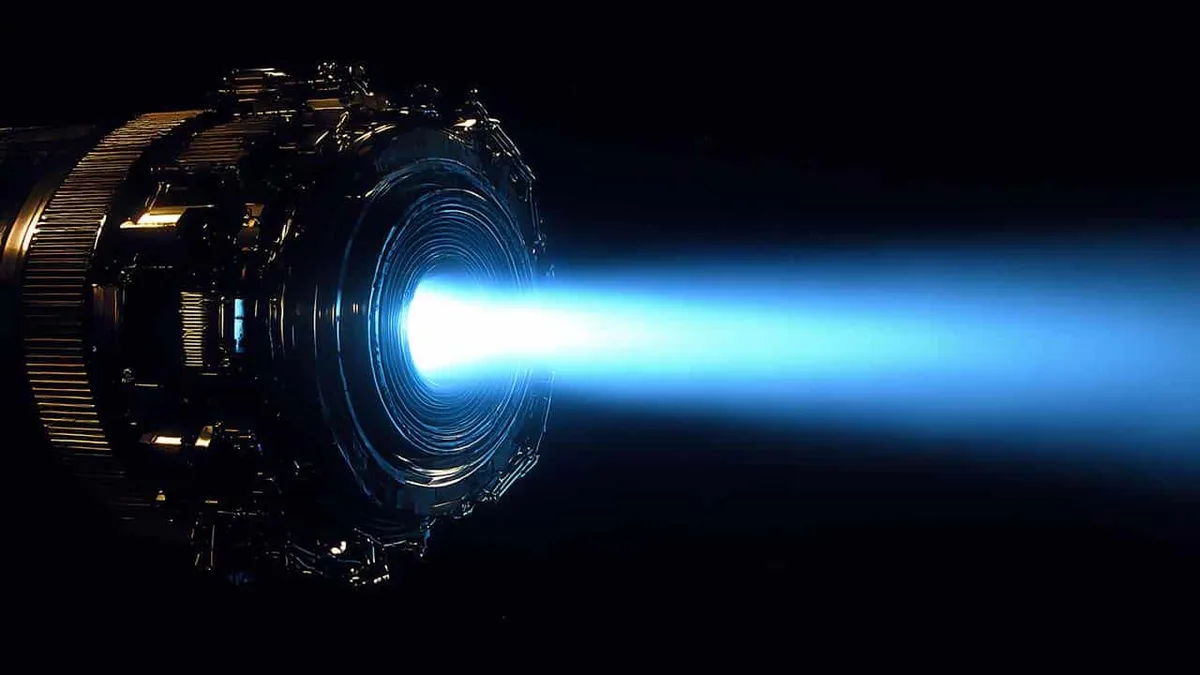
An operational ion thruster, like this one, uses electricity to accelerate charged particles, creating a faint but continuous thrust. These highly fuel-efficient engines are ideal for long-duration robotic missions to the outer planets, significantly extending the reach of space exploration. (Source: altpropulsion.com)
Q: Are warp drives possible? A: Warp drives are theoretical concepts, like the Alcubierre drive. They propose bending spacetime itself to travel faster than light. These ideas need exotic matter with unknown properties. Such concepts remain theoretical. They are not achievable with current or near-future technology.
You might also like:
👉 The $546 Billion Space Race: Private Money, Global Rivalries
👉 Unexplained Mysteries of Science: Cosmos, Quantum & Beyond