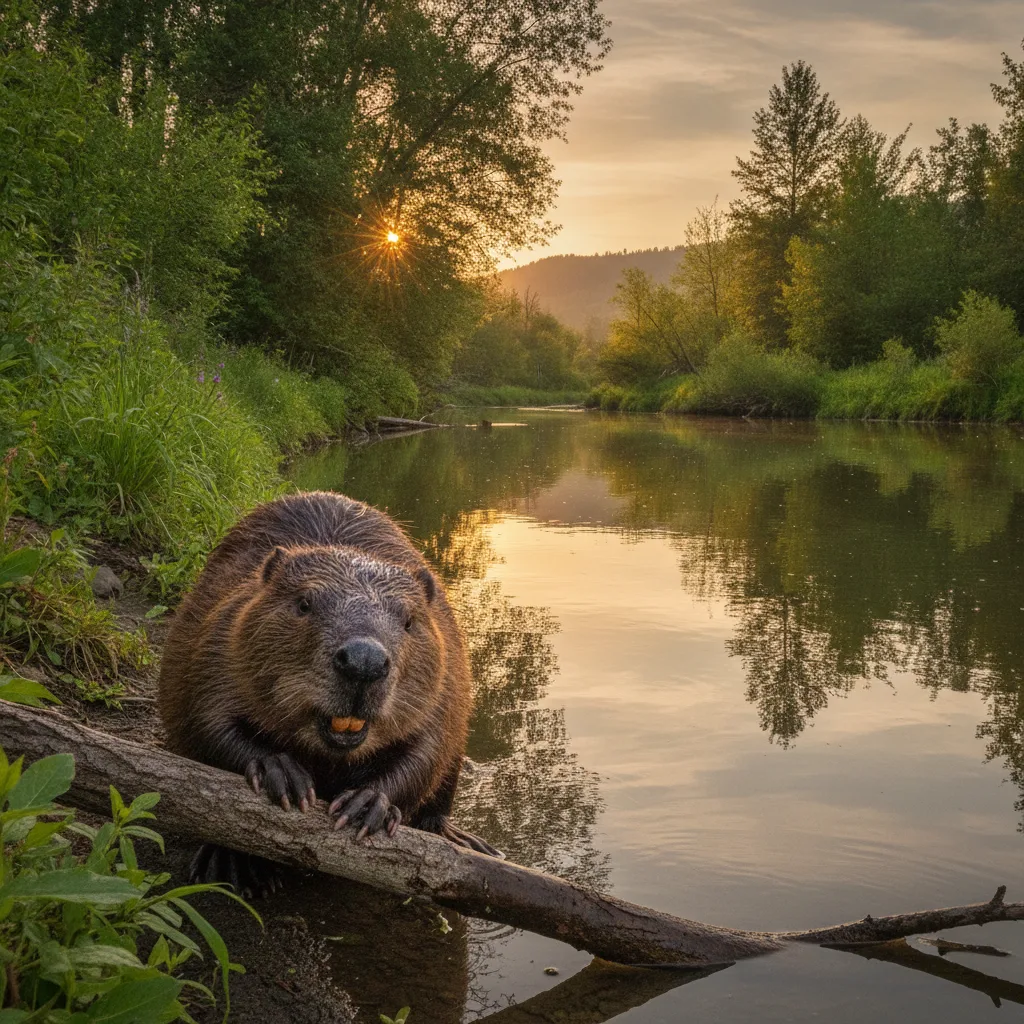
Beavers vs. 86,000 Acres: Nature's Firefighters in California
The 2020 CZU Lightning Complex fire ravaged over 86,000 acres. Discover how beavers are being deployed as nature's firefighters to prevent future devastation.
Beavers: nature’s firefighters in a warming west
Flames ripped through California’s Santa Cruz Mountains on August 18, 2020. The CZU Lightning Complex fire devoured over 86,000 acres. Smoke blanketed the region, forcing thousands to evacuate. Firefighters battled the inferno, but the destruction felt overwhelming.
This wasn’t an isolated event. The American West faces a growing wildfire crisis. Years of drought, combined with rising temperatures, create tinderbox conditions. This pushes scientists and land managers to find new solutions.
The growing threat and a hidden solution
The year 2020 saw a devastating fire season across the Western United States. California alone lost over 4.2 million acres to fire. Oregon experienced its worst fire season in recorded history. These blazes destroyed homes, choked cities with smoke, and released huge amounts of carbon.
Such extreme events show a clear need. Current firefighting strategies, though heroic, can’t fully contain these megafires. The traditional approach of aggressive fire suppression also created dense, fuel-heavy forests. This increased the risk of huge blazes.
Scientists and conservationists started looking at older, natural solutions. They searched for processes that could help landscapes recover. One overlooked ally emerged from the region’s past: the beaver. This busy rodent once shaped much of North America’s waterways.
Its building skill now offers a surprising defense against wildfire. Beavers build dams. These structures raise local water tables. They create lush, wet habitats. These green refuges resist fire, making important breaks in a parched landscape.
A missing architect: why beavers disappeared
Beavers were once abundant across North America, but their numbers rapidly declined. In the early 1800s, an estimated 60 to 400 million beavers thrived across the continent. Their dams created vast wetland networks. These shaped river systems and supported many kinds of wildlife.
Then came the European fur trade. Trappers hunted beavers relentlessly for their pelts. By the late 19th century, beaver populations plummeted. They became locally extinct in many areas. This drastic reduction had major ecological consequences.
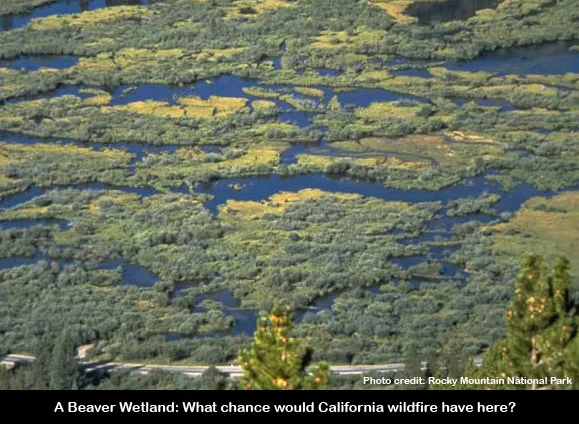
Beaver dams raise local water tables, creating lush, wet habitats that act as natural firebreaks, resisting blazes and providing crucial green refuges in otherwise parched, fire-prone landscapes. (Source: beaversandbrush.com)
Removing beavers dried out riparian zones. Streams became incised. Their banks eroded. The lush, wet meadows that once defined these areas vanished. This left landscapes more likely to suffer from drought and fire.
For over a century, people largely forgot the beaver’s ecological role. Land managers saw them as a nuisance, if they thought of them at all. This oversight helped create the very conditions now fueling modern wildfires. The beaver’s absence left river systems vulnerable, unknowingly creating fire-prone areas.
Rediscovering the beaver: early observations and studies
During the severe fire seasons of the 2010s, a striking pattern emerged. Some areas stayed green amidst burned-out landscapes. Dr. Emily Fairfax, a hydrologist at California State University Channel Islands, noticed this phenomenon. She began investigating these “beaver baffles” and “wet islands” of unburned vegetation.
Fairfax used satellite imagery and field observations. She studied wildfire perimeters across the American West. Her research, published in 2020 in Ecological Applications, provided strong evidence. Beaver-modified landscapes consistently showed less severe burn intensity. They burned less frequently than surrounding areas.
These findings confirmed what some Indigenous communities had known for generations. Beavers are ecosystem engineers. Their dams slow water flow. They spread water across floodplains. This raises the water table. The resulting wetlands grow dense, green vegetation. This vegetation stays wet, even during droughts.
Fairfax’s work showed the mechanism. Wet vegetation simply doesn’t burn easily. These areas act as natural firebreaks. They slow or stop advancing flames. They also provide refugia for animals fleeing wildfires. Fairfax’s work provided scientific evidence, shifting perception from nuisance to natural asset.
Bringing them back: reintroduction efforts take root
Inspired by growing scientific evidence, land managers and conservationists started to act. The idea of beaver reintroduction, once controversial, became more accepted. Organizations and state agencies started programs to bring beavers back to their ancestral lands.
In Oregon, the Confederated Tribes of the Grand Ronde initiated a major beaver reintroduction project. They recognized beavers as important partners in ecosystem restoration. The tribe works to relocate beavers to suitable habitats. They aim to restore stream health and improve fire resilience.
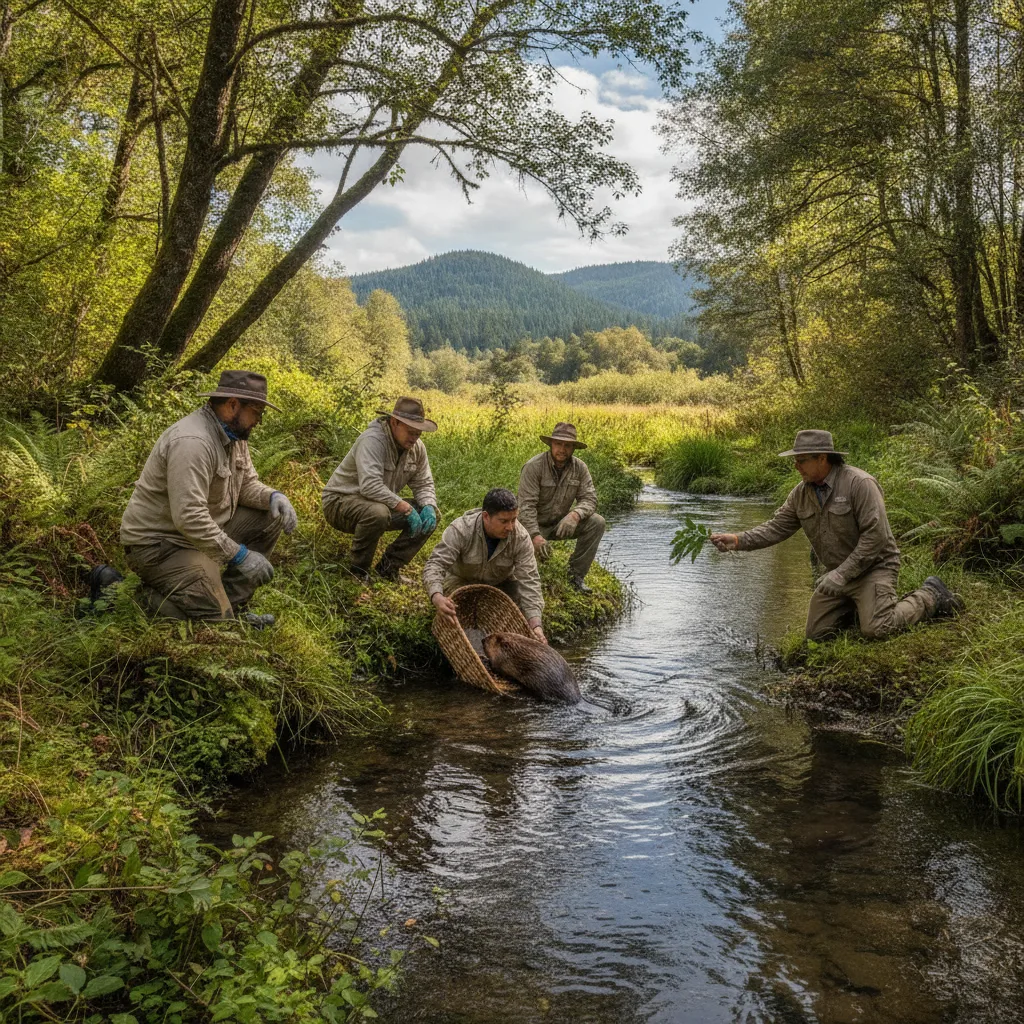
In Oregon, the Confederated Tribes of the Grand Ronde are actively reintroducing beavers to ancestral lands, recognizing their vital role in ecosystem restoration and wildfire resilience. This initiative helps restore stream health and create natural firebreaks, demonstrating a powerful blend of traditional ecological knowledge and modern conservation. (AI-generated illustration)
California launched its own statewide Beaver Restoration Program in 2022. The California Department of Fish and Wildlife (CDFW) now actively supports beaver reintroduction. They provide guidance and funding for restoration projects. This program focuses on relocating “nuisance” beavers from developed areas. They move them to wilder, fire-prone regions.
One such effort is by The Lands Council in Washington State. They have successfully moved beavers to streams in the Colville National Forest. This project began in 2013. It aims to restore degraded waterways and reduce wildfire risk. These initiatives represent a growing collaboration. Communities and agencies began to see beavers as valuable partners in land management.
The mechanics of mitigation: how beavers fight fire
Beavers use simple yet powerful engineering to combat wildfire. Their dams create impoundments of water. These ponds expand the riparian zone. They saturate the surrounding soil. This process leads to the growth of dense, green vegetation.
This lush growth acts as a natural fire barrier. Wet plants are much harder to ignite. They burn less intensely, if at all. Dr. Joe Wheaton, a geomorphologist at Utah State University, points out this effect. He notes how beaver activity can turn dry, flammable stream corridors into wet, fire-resistant oases.
During a wildfire, these beaver-created wetlands become important. They slow the fire’s advance. They can even stop it altogether. Firefighters also gain access to important water sources within these ponds. This aids in suppression efforts. The cool, moist conditions offer refuge for small mammals, birds, and insects.
Research by Emily Fairfax showed that beaver complexes burned less intensely across 50 wildfire events. These areas maintained higher moisture content in vegetation. They created a network of fire-resistant green spaces. The clear benefits of beaver activity showed their potential as a cost-effective, ecological solution.
The future of fire resilience: a beaver-assisted west
Beaver restoration efforts are growing. States like Nevada, Arizona, and Colorado are exploring or expanding their own programs. The goal is to use nature’s engineers. They can help landscapes adapt to a hotter, drier climate. This approach represents a major shift in conservation philosophy.
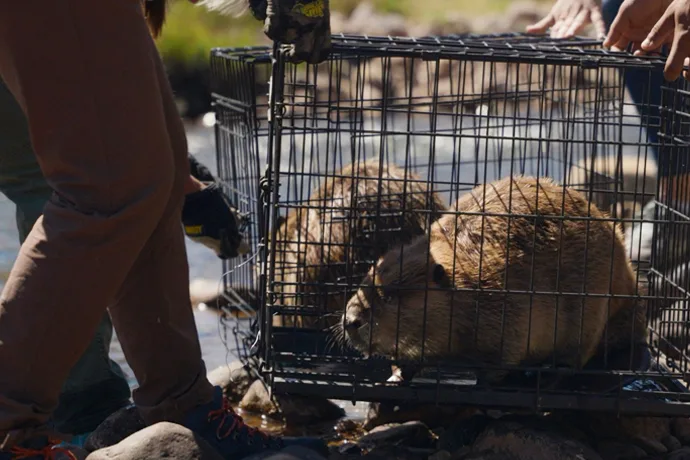
Wildlife officials carefully relocate a beaver, often moving 'nuisance' animals from developed areas to fire-prone wildlands where their dam-building can help prevent wildfires. This human-assisted reintroduction is a key part of modern beaver restoration programs. (Source: qanr.usu.edu)
Challenges remain, of course. Some landowners express concerns about potential flooding or tree damage. Scientists and restoration practitioners work to address these issues. They use strategies like “beaver deceivers.” These devices regulate water levels in beaver ponds. They prevent unwanted flooding.
The long-term vision isn’t just about moving beavers. It’s about letting them return to their natural role. This means building a West that can better withstand fire. This future relies on understanding the true worth of keystone species. Beavers offer a simple, sustainable way forward in a fire-prone world.
FAQ
Q1: Do beavers cause flooding that can harm human infrastructure? Yes, beavers can cause localized flooding if their dams are built in problematic areas. However, solutions like “beaver deceivers” can manage water levels. These devices allow beavers to maintain their dams without causing excessive flooding.
Q2: Are beavers native to all parts of the American West? Beavers were historically widespread across most of North America. They inhabited nearly every suitable aquatic environment. Their populations were decimated by the fur trade, leading to their absence in many areas today.
Q3: How long does it take for beavers to make an impact on fire resilience? Beavers can begin altering stream environments immediately. Significant hydrological and vegetation changes often become visible within a few years. The full ecological benefits, including better fire resistance, develop over a decade or more.
Q4: What are the main challenges to beaver reintroduction efforts? Key challenges include finding suitable habitats with sufficient water and food. Gaining landowner acceptance is also important. Overcoming historical perceptions of beavers as pests requires education and outreach.
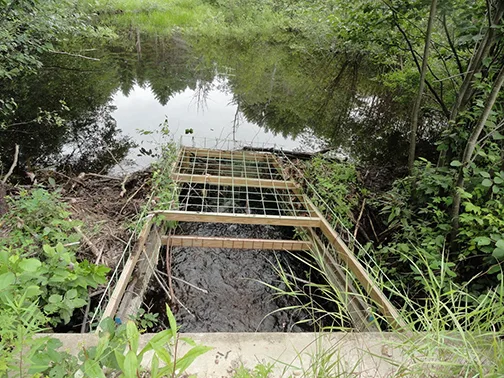
A 'beaver deceiver' device, also known as a pond leveler, is strategically installed to regulate water levels in beaver ponds. This ingenious solution allows beavers to maintain their crucial dams, which create fire-resistant wetlands, while preventing localized flooding that could impact human infrastructure. (Source: andoverbeacon.com)
You might also like:
👉 1 Billion Urban Poor: How Cities Fight Climate Shocks