
Disney's $7.4 Billion Pixar Buy: A Merger Masterclass
Unpack the strategic genius behind Disney's $7.4 billion acquisition of Pixar in 2006, a deal that redefined industry standards. What can top mergers teach us?
Building giants: What top mergers teach us
The news hit like a bolt: Disney would buy Pixar. On January 24, 2006, Walt Disney Company CEO Bob Iger made this big announcement. He stood before reporters, confirming the acquisition of Pixar Animation Studios. The deal was valued at $7.4 billion in stock. This move stunned many industry observers.
A business merger is the combining of two companies into a single new entity. Companies pursue mergers for many reasons. They might seek to expand market share or acquire new technologies. Others aim for greater operational efficiency or to eliminate a competitor. Mergers are complex transactions. They involve integrating finances, cultures, and operations.
Despite their potential, mergers often disappoint. Studies show that between 70% and 90% of mergers ultimately fail. This failure often stems from cultural clashes or poor integration planning. Yet, successful mergers can create great value for shareholders. They can reshape entire industries. They build corporate giants that define their eras.
Creative integration: Disney and Pixar
In the early 2000s, Disney and Pixar’s relationship was strained. Pixar, led by Steve Jobs, had a profitable distribution deal with Disney. This partnership made hit films like Toy Story and Finding Nemo. But creative control and financial terms caused constant friction. Steve Jobs grew increasingly frustrated with Disney’s then-CEO Michael Eisner. He announced Pixar would look for a new distributor once their contract ended in 2006.
Bob Iger became Disney CEO in October 2005. He quickly saw Pixar’s huge creative value. Disney’s own animation studio struggled to make hits. Iger knew Disney needed Pixar’s talent and fresh ideas. He also knew he had to fix their broken relationship. On January 24, 2006, Iger announced Disney would buy Pixar. The $7.4 billion all-stock deal put Pixar’s leaders at the heart of Disney’s animation future.
Iger convinced Jobs that Pixar’s unique culture would stay. He made Edwin Catmull, Pixar’s president, head of both Pixar and Walt Disney Animation Studios. John Lasseter, Pixar’s creative chief, became chief creative officer for both studios. Jobs himself joined Disney’s board. This structure meant Pixar’s leaders shaped Disney’s animation strategy. It stopped Disney from just swallowing and weakening Pixar.
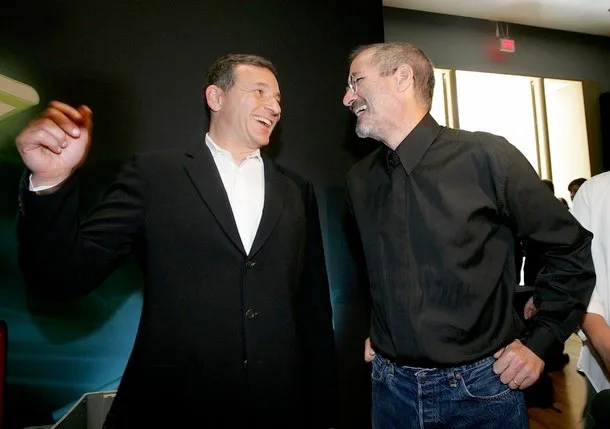
Walt Disney Company CEO Bob Iger (left) and Pixar CEO Steve Jobs (right) shake hands after announcing Disney's acquisition of Pixar in January 2006. Jobs joined Disney's board of directors as part of the $7.4 billion all-stock deal, a move that integrated Pixar's creative leadership directly into Disney's animation strategy. (Source: allaboutstevejobs.com)
The merger gave Disney a jolt of creative energy. It stabilized Disney’s animation division. Pixar got access to Disney’s huge distribution and marketing power. The combined studios released critically acclaimed, successful films. These included Up, Frozen, and Zootopia. This strategy changed Disney’s animation future. It protected Pixar’s creative freedom and financial success.
Daily products: P&G and Gillette
On January 28, 2005, consumer goods giant Procter & Gamble announced a massive deal. It would buy The Gillette Company for $57 billion in stock. This was P&G’s largest acquisition ever. It created the world’s biggest consumer products company. The new company had 21 brands, each making over $1 billion in annual sales.
Procter & Gamble, led by CEO A.G. Lafley, wanted more strong brands. P&G already owned Pampers, Tide, and Crest. Gillette added famous brands: Gillette razors, Duracell batteries, and Oral-B toothbrushes. This merger promised big cost savings. P&G estimated $14 billion to $16 billion in combined value. These savings would come from better supply chains and merged marketing. Lafley explained the reason. He said, “This combination of two of the world’s best consumer products companies is a hand-in-glove fit.”
The integration was carefully planned. P&G focused on keeping key Gillette talent. Lafley knew Gillette’s male grooming expertise was valuable. The combined company used its increased size. It negotiated better terms with retailers. It invested heavily in research and development. This kept innovation going across its larger product lines.
Within two years, P&G beat its savings targets. The company reported $1.8 billion in annual cost savings by 2007. The Gillette acquisition strengthened P&G’s lead in the global market. It gave P&G a stronger presence in emerging markets. The combined company offered consumers a wide range of household products. This gave P&G significant power in retail worldwide.
Future vision: Facebook and Instagram
On April 9, 2012, Mark Zuckerberg, CEO of Facebook, announced a shocking acquisition. Facebook would buy Instagram, a popular photo-sharing app, for about $1 billion. This was a huge sum for a company with only 13 employees and no revenue. Instagram had launched just 18 months earlier. It had around 30 million users.
Zuckerberg saw Instagram’s fast growth and unique appeal. He viewed it as a potential competitor in mobile social media. He also understood the power of visual communication. Instead of competing, he bought it. Kevin Systrom and Mike Krieger, Instagram’s co-founders, were hesitant at first. They valued their company’s independence. Zuckerberg personally promised them Instagram would run mostly on its own.
The deal closed in September 2012. Instagram’s team stayed small. It kept its distinct brand and product plan. Facebook provided the infrastructure and resources. This helped Instagram grow fast. It gained from Facebook’s advertising knowledge and global reach. Systrom and Krieger stayed, guiding Instagram’s changes.
Instagram thrived under Facebook. Its user base exploded. It grew from 30 million users to over 1 billion monthly active users by 2018. It launched new features like Stories and Reels. These features were huge successes. Instagram became a main source of Facebook’s (now Meta’s) mobile advertising revenue. The acquisition is widely seen as one of the most successful tech buys ever. It removed a potential rival and secured Facebook’s social media dominance.
What makes mergers work
Successful mergers share common traits. They all had clear goals. Disney needed fresh creative energy. P&G wanted market dominance and efficiency. Facebook aimed to stop a threat and grow its mobile reach. Each deal met a specific, urgent business need.
One key factor is integrating cultures. Bob Iger carefully kept Pixar’s unique creative culture alive. He made sure its leaders got important roles. Mark Zuckerberg gave Instagram much freedom. He knew its distinct identity was valuable. This avoids the common trap of forcing different cultures together.
Effective post-merger planning is also crucial. P&G had a detailed plan for combining operations and finding savings. Disney carefully set up its new animation leadership. These plans tackled operational challenges from day one. They made the transition smooth. They caused minimal disruption for employees and customers.
Finally, strong leadership helps deals succeed. Iger’s vision and diplomacy were key to the Disney-Pixar deal. Lafley’s disciplined approach guided the P&G-Gillette merger. Zuckerberg’s foresight secured Instagram’s future. Leaders must communicate clearly. They must make tough decisions. They must guide the new company toward its goals.
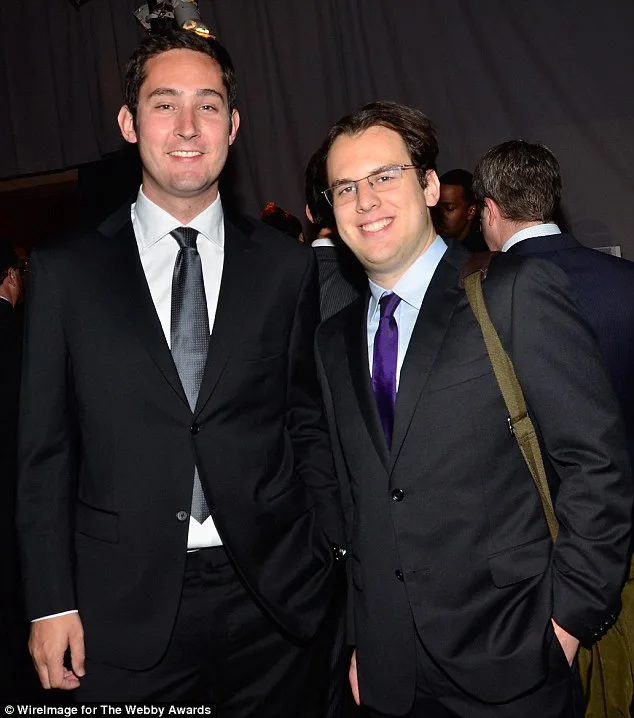
Kevin Systrom and Mike Krieger, co-founders of Instagram, initially valued their company's independence but eventually sold to Facebook in 2012. They stayed on to guide Instagram's explosive growth, making the acquisition one of the most successful in tech history. (Source: dailymail.co.uk)
Common questions
Q: What’s the difference between a merger and an acquisition? A: A merger usually means two similar-sized companies join to form a new one. An acquisition happens when one company buys another, often smaller, company. The bought company often stops existing on its own.
Q: Why do so many mergers fail? A: Most mergers fail because of poor cultural integration and bad planning. Companies often underestimate how hard it is to combine different corporate cultures. They also struggle to bring together IT systems and operations.
Q: What’s “synergy” in a merger? A: Synergy means the combined value and performance of two companies will be more than what they’d achieve apart. This can come from cost savings, higher revenues, or stronger market power.
Q: How long does merger integration take? A: Merger integration is a complex process. It can take 12 to 36 months to fully combine operations, cultures, and systems. The time depends on the size and complexity of the companies.
The future of corporate mergers
Mergers will continue as companies seek growth and efficiency. Companies will seek new technologies. They’ll expand into new markets. They’ll consolidate existing industries. The digital age brings new challenges. It also creates new chances for smart combinations.
Companies must stay sharp in their approach. They must learn from past wins and losses. The focus will increasingly be on intelligent integration. It will prioritize keeping top talent. It will adapt to changing market forces. The next wave of corporate giants will be built through these careful, smart unions.
You might also like:
👉 The $546 Billion Space Race: Private Money, Global Rivalries
👉 Abu Dhabi Halts $23 Billion F-35 Deal for 50 Stealth Jets
👉 US-China: $664B Trade Masks Zero-Sum Global Power Struggle