China's 200,000 Judges: Beyond the Communist Party Black Box
Despite perceptions of party control, China's legal system processes millions of cases, showing a complex reality and legal modernization.
China’s courts: more than meets the eye
Many people view China’s legal system as a mere extension of the Communist Party. They see it as a black box. It appears to be a tool for control, not justice. This was my initial assumption.
However, research reveals a different picture. The reality is more complex than simply “no rule of law.” It involves millions of cases and thousands of judges. There is also a constant, often surprising, push for legal modernization. My initial assumptions quickly changed.
China’s legal system operates with constant tension. It balances the Party’s absolute authority with the practical need for a working legal structure. This is not blind obedience. It means working within a politically charged environment.
On paper, the system looks familiar. It has courts, prosecutors, and laws. China’s unique political structure, however, greatly shapes its principles and daily operations. This research changed my understanding of justice in a one-party state.
Law in a one-party state
China adopted its current Constitution on December 4, 1982. This document declares China a socialist state. It theoretically grants citizens rights. However, it also places the Chinese Communist Party (CCP) at the top of power. The Party’s leadership is explicitly the core principle of socialism with Chinese characteristics.
The National People’s Congress (NPC) is China’s highest state organ. It enacts laws and supervises the government, including the courts and procuratorates. In practice, the NPC mostly approves decisions made by Party leaders. Its standing committee handles most legislative work.
China uses a civil law system, which differs from common law. Laws are primarily written in statutes and regulations. Judicial decisions do not create binding precedent, though high court rulings offer guidance. This structure shapes how legal disputes are resolved.
The CCP guides all legal reform. Its Central Political and Legal Affairs Commission (PLAC) oversees police, courts, and procuratorates. This direct Party oversight makes sure the legal system serves the Party’s broader political goals. It emphasizes “rule by law.” In this system, law is a tool for governance, not an independent check on power. This is a critical distinction.
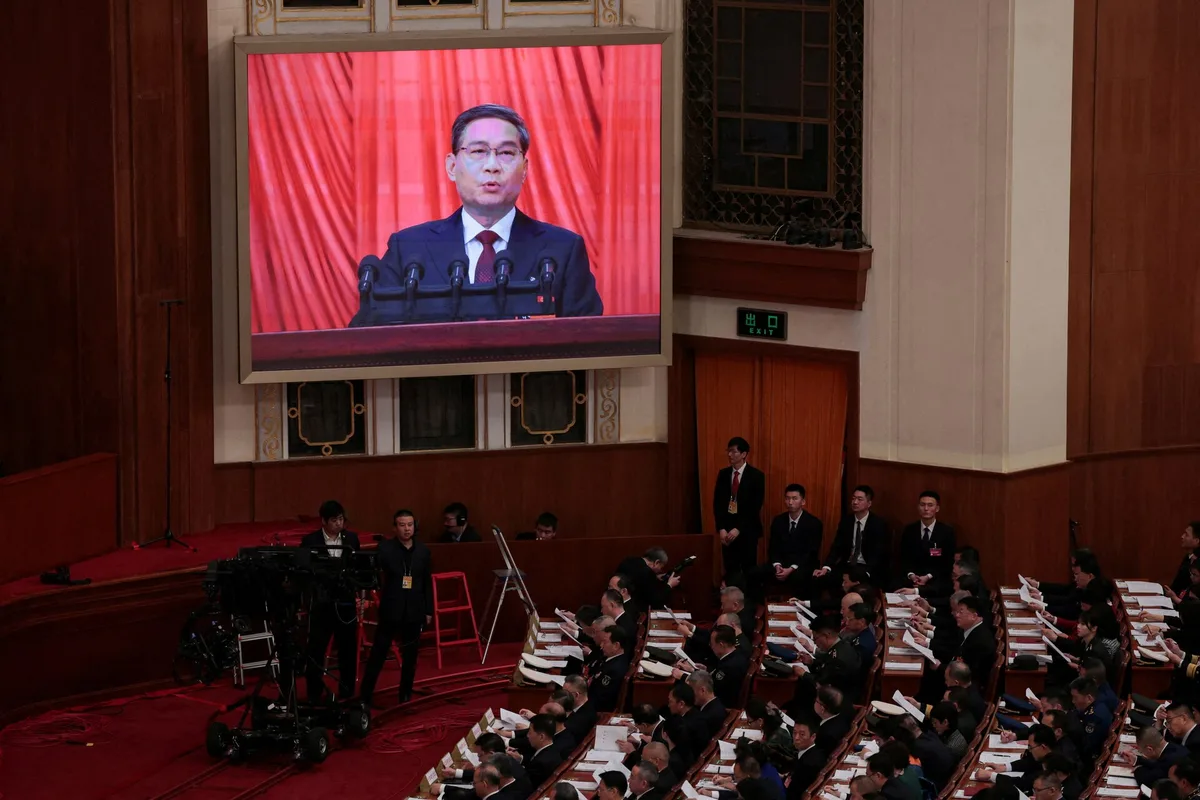
The National People's Congress (NPC) is China's highest state organ, responsible for enacting laws and supervising the government, including the courts. While theoretically powerful, it primarily approves decisions made by the Chinese Communist Party leaders, illustrating the Party's ultimate authority over the legal system. (Source: reuters.com)
Courts, judges, and the Party’s hand
China’s court system has four tiers. These include basic, intermediate, and high people’s courts, plus the Supreme People’s Court (SPC). Each level has specific jurisdictional limits. This structure handles a vast number of cases across the country.
The sheer volume of cases is astounding. In 2022, Chinese courts concluded over 30 million cases, according to the SPC work report. This figure includes civil, commercial, administrative, and criminal matters. It shows a legal system very active in daily life.
Judges are appointed by people’s congresses at each level. They are often former military personnel or Party cadres. Recent reforms aim for more professionalization. Still, political loyalty remains a primary consideration. This influences judicial decision-making.
Each court also has a judicial committee. These committees discuss difficult or politically sensitive cases. They make sure Party policy is consistently followed. This mechanism provides an internal check, but also limits individual judicial independence.
The Party’s influence extends through local Political-Legal Committees (PLCs). These bodies coordinate local courts, procuratorates, and public security bureaus. They can intervene in cases important for “social stability.” This practice guarantees Party control over sensitive legal outcomes.
The procuratorate and public security: enforcement & investigation
The Supreme People’s Procuratorate (SPP) oversees investigations and prosecutions nationwide. It acts as both a public prosecutor and a supervisory body. This dual role is unique to China’s legal system. It maintains legal compliance across state organs.
Public Security Bureaus (PSBs) are essentially the police. They conduct most criminal investigations. They are responsible for maintaining order and preventing crime. PSBs fall under the Ministry of Public Security. They serve as the initial contact point for many citizens with the legal system.
The procuratorate reviews PSB investigations. They approve arrests and decide whether to bring charges. This step provides important oversight, aiming to prevent arbitrary detentions.
Beyond that, the procuratorate also supervises trials and court judgments. They can challenge court decisions they deem incorrect or unlawful. This gives them great power throughout the entire legal process. It acts as a check, but also offers another avenue for Party influence.

The Supreme People's Court (SPC) in Beijing is China's highest judicial body, overseeing a vast four-tiered court system that handled over 30 million cases in 2022. Its imposing architecture reflects the central role it plays in the nation's legal landscape. (Source: gettyimages.com)
The procuratorate’s role extends beyond criminal matters. They can also initiate public interest lawsuits, for instance, in environmental protection cases. This shows their broad mandate. It reveals how the system tries to address societal concerns within its framework.
Rights, reforms, and reality checks
China amended its Criminal Procedure Law in 2012 to better protect suspects. These amendments formally recognized the right to legal counsel earlier in investigations. They also aimed to limit evidence obtained through torture. These were important legal changes, on paper.
Despite these reforms, implementing them remains a serious challenge. Access to lawyers, especially in politically sensitive cases, can be restricted. Human Rights Watch has documented ongoing issues with coerced confessions. This gap between law and practice is a recurring theme.
Public trials are generally required, but exceptions exist for state secrets or juvenile cases. Many trials are open. Still, political interference can influence outcomes. Jerome Cohen, a prominent scholar of Chinese law, has often shown these limits. He points out that true judicial independence is missing.
Judicial reform efforts continue, driven by the CCP. One key initiative introduced a case registration system in 2015. This system aimed to reduce local interference in accepting cases. It was a step towards greater transparency and judicial professionalism.
Another reform focuses on professionalizing judges. New judges must pass a national legal professional qualification exam. This raises the bar for judicial entry. However, political background and Party loyalty often still outweigh purely legal qualifications for higher positions. That is a sobering thought.
Looking ahead: China’s changing legal system
President Xi Jinping has emphasized “rule of law with Chinese characteristics” since 2014. This phrase shows the Party’s intent to strengthen the legal system. It also confirms this strengthening must serve Party goals. This is a pragmatic approach to governance.
The push for “smart courts” represents a big technological shift. China invests heavily in AI and big data for judicial processes. This includes automated case management and predictive analytics. The goal is to improve efficiency and consistency.
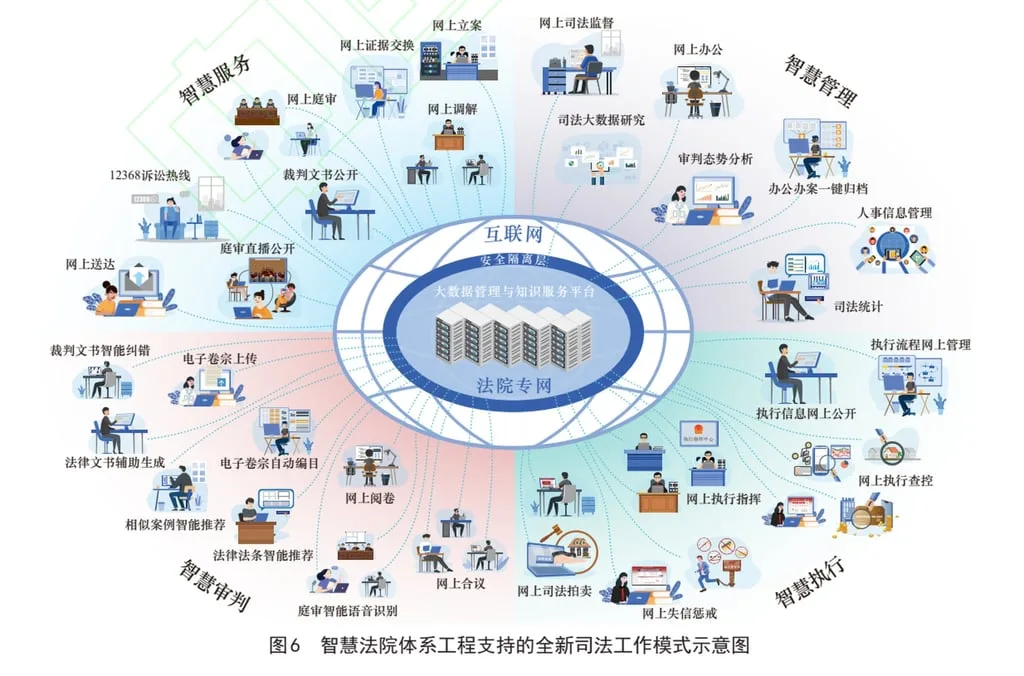
China's 'smart courts' represent a significant technological shift, integrating advanced AI and big data into judicial processes for automated case management and predictive analytics, aiming to improve efficiency and consistency. (Source: scmp.com)
However, these technological advancements also raise concerns about surveillance and control. A system optimized for efficiency could also become more effective at enforcing Party directives. This creates a new layer of difficulty for legal observers.
The legal system continues to balance economic development with social stability. Courts play an important role in resolving commercial disputes. This creates a more predictable business environment and helps attract foreign investment.
Ultimately, the Chinese Communist Party remains the final arbiter of legality. All legal reforms and institutions operate under its guidance. This fundamental truth shapes every aspect of China’s legal future. The system is not static; it constantly adapts, but always within strict political boundaries. This reality cannot be changed by modernization.
FAQ
Q: Is China’s legal system independent? A: No, China’s legal system is not independent in the Western sense. The Constitution explicitly places the Chinese Communist Party (CCP) in charge. Courts are politically supervised by the CCP through various mechanisms.
Q: Can ordinary people get justice in China? A: For many routine civil and commercial disputes, ordinary people can find resolution through the courts. However, cases involving political sensitivity or powerful interests often face serious challenges. Justice can be influenced by factors beyond the law.
Q: What’s the biggest challenge for China’s legal system? A: The biggest challenge is the tension between legal professionalization and Party control. Reforms aim for more fairness and efficiency. However, Party directives can override legal principles. This undermines the rule of law.
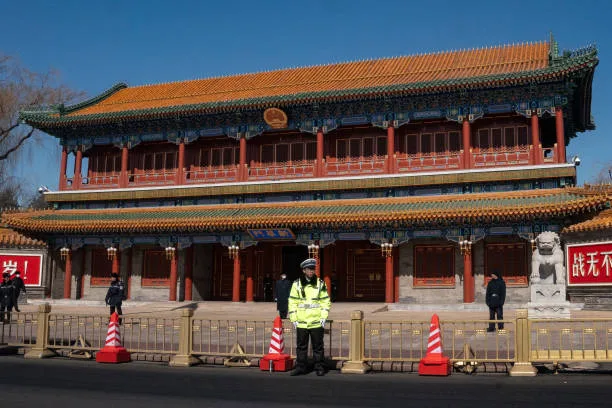
The Chinese Communist Party (CCP) is explicitly placed in charge of China's legal system by the Constitution, acting as the final arbiter of legality and guiding all legal reforms and institutions. (Source: gettyimages.co.uk)
You might also like:
👉 US-China: $664B Trade Masks Zero-Sum Global Power Struggle