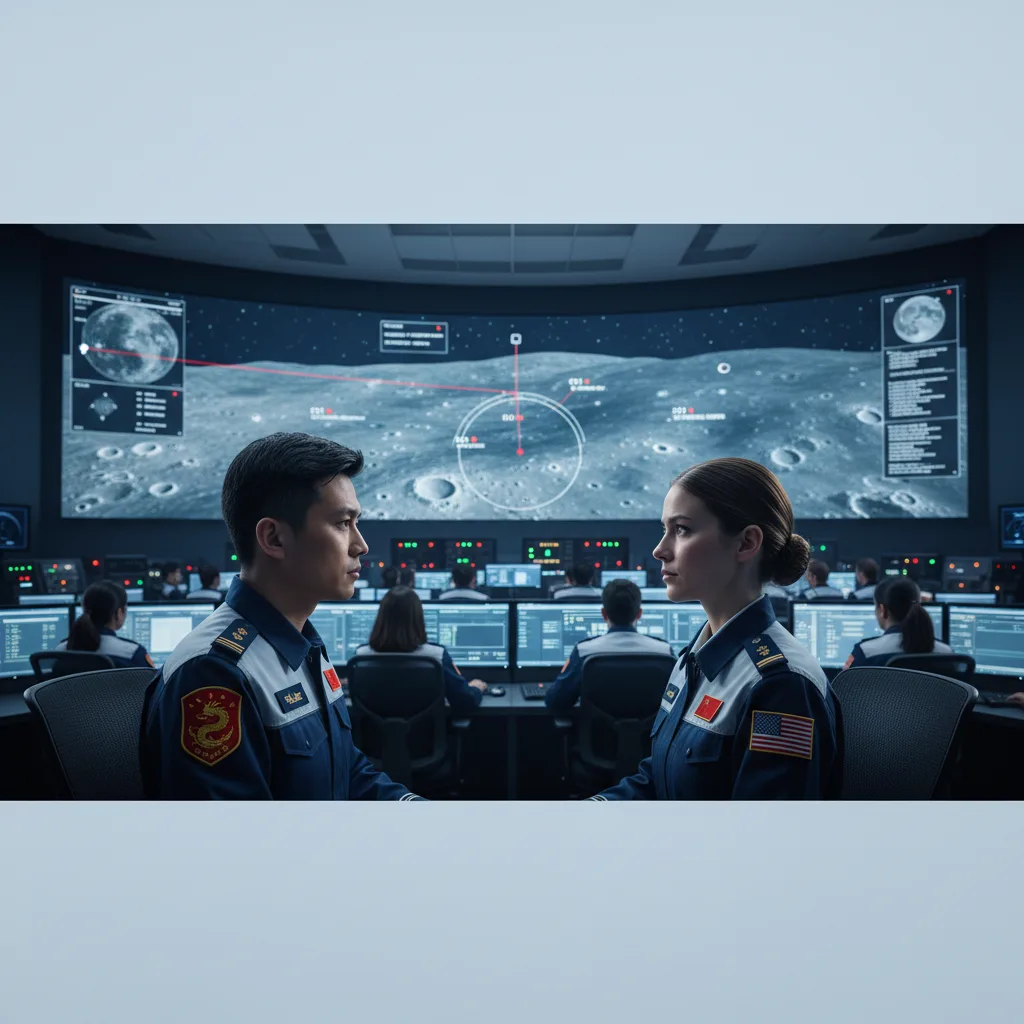
Apollo to Hubble: Why US Still Leads China in Space
The popular belief of China rapidly closing the space gap with the US misses fundamental differences in approach, capability, and strategic intent.
China’s Space Ambitions: Beyond the Headlines
For decades, the United States dominated space exploration. Its achievements, from Apollo to the Hubble Telescope, cemented a perception of unchallenged leadership. Today, a new narrative suggests China is rapidly closing the gap, threatening to overtake the US in space. This popular belief, while recognizing China’s undeniable progress, often misses the fundamental differences in approach, capability, and strategic intent that define this complex rivalry.
The Unseen Architecture of Space Power
Space is no longer an exclusive domain; it is a critical theater for economic growth, scientific discovery, and national security. The United States operates through a hybrid model, featuring NASA’s scientific and exploratory missions, the U.S. Space Force’s military role, and a vibrant commercial sector led by companies like SpaceX and Blue Origin. China’s space program, managed by the China National Space Administration (CNSA), operates under a centralized, state-controlled system, deeply integrated with the People’s Liberation Army (PLA). This structural difference profoundly shapes their respective capabilities and long-term goals. The common belief is that the US commercial sector offers an inherent, insurmountable advantage. This view, however, overlooks China’s ability to rapidly mobilize national resources under a singular strategic vision.
Launch Momentum: Quantity vs. Capability
China completed 67 orbital launches in 2023, surpassing the United States’ total of 66, excluding suborbital tests. This raw number often serves as evidence of China’s ascendance in space. However, raw launch counts alone do not reflect the full picture of space capability. The US, primarily through SpaceX, deployed significantly more total payload mass into orbit. SpaceX’s Falcon 9 alone carried approximately 95% of all US payload mass in 2023, according to statistics from Jonathan McDowell, an astrophysicist at the Harvard-Smithsonian Center for Astrophysics. These payloads included thousands of Starlink satellites, which are rapidly building a global internet constellation.
China’s launches often involve smaller, less complex satellites or components for its Tiangong space station. The US launches, conversely, deploy a broader array of sophisticated missions. These include advanced scientific probes, large intelligence satellites, and a high volume of commercial assets. While China’s launch cadence is impressive, the qualitative difference in payload mass and mission diversity remains a critical distinction. The US leverages a robust commercial sector for cost-effective, high-volume launches that China’s state-owned enterprises have yet to replicate.
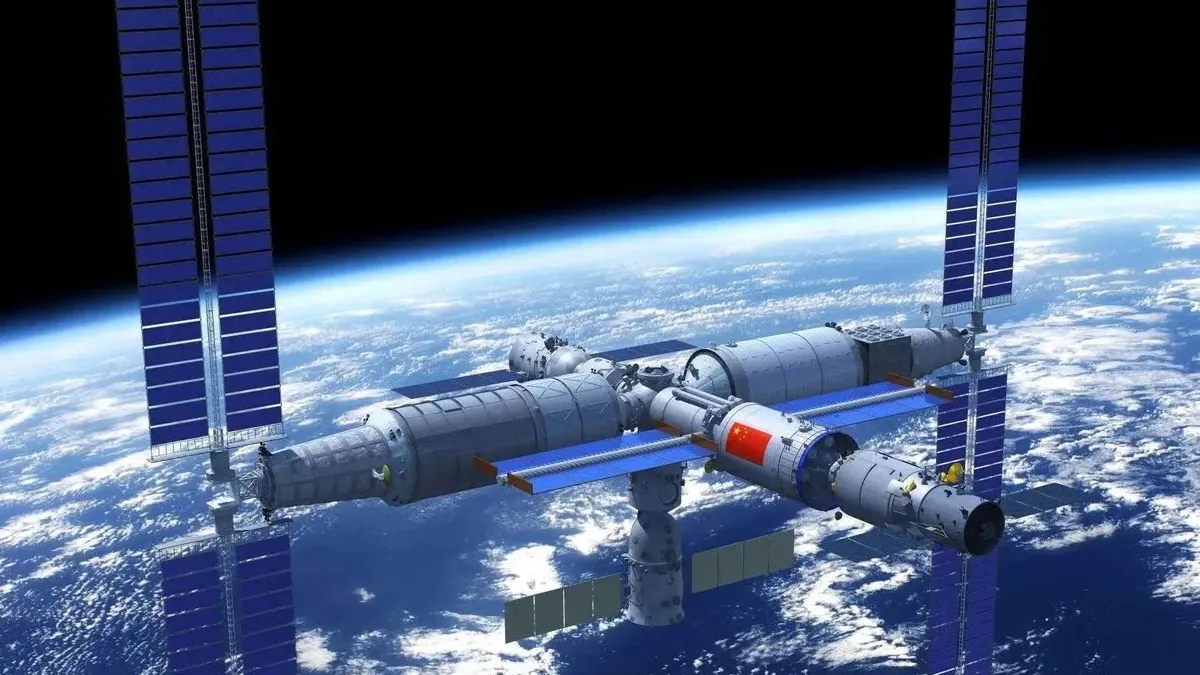
China's Tiangong space station is a modular orbital outpost, serving as a cornerstone of the nation's ambitious independent space program. It represents a significant achievement, providing a platform for long-duration missions and scientific research, and is a key destination for many of China's orbital launches. (Source: space.com)
The Moon and Mars: Different Paths to Proximity
China made history in January 2019 by landing its Chang’e 4 probe on the lunar far side, a global first. Its subsequent Chang’e 5 mission in December 2020 successfully returned lunar samples to Earth. These achievements are frequently cited as proof of China quickly matching US deep-space capabilities. Yet, these missions, while groundbreaking for China, build upon technologies and techniques the US perfected decades ago. The US has returned 382 kilograms of lunar samples from six Apollo missions between 1969 and 1972. China’s Chang’e 5 returned 1.73 kilograms.
On Mars, China’s Zhurong rover landed in May 2021, making China only the second nation to successfully operate a rover on the red planet. However, NASA has operated multiple rovers on Mars for decades, including the advanced Perseverance rover, which landed in February 2021. Perseverance carries a sophisticated suite of instruments for astrobiological research and collects samples for future return to Earth. Dr. Greg Autry, a space policy expert at the University of Southern California, highlights that US deep-space missions often push entirely new scientific boundaries. China’s deep-space efforts, while highly visible, currently focus on replicating and perfecting known mission profiles.
Commercialization and Military Integration
SpaceX launched its first commercial crew mission to the International Space Station (ISS) in May 2020, demonstrating the strength of the US commercial space sector. This model is seen as an unparalleled advantage, fostering innovation and reducing costs for NASA. This belief is not incorrect; the commercial sector indeed provides significant benefits to US space endeavors. However, it exists within a different operational framework than China’s system. China’s space program operates under a doctrine of military-civil fusion. This means its ostensibly civilian space efforts, including commercial ventures, are inextricably linked to the People’s Liberation Army.
The U.S. Department of Defense’s “China Military Power Report” consistently details this fusion. Technologies developed for civilian satellites or rockets can be rapidly integrated into military systems. This dual-use capability is a core tenet of China’s national strategy. Dr. Joan Johnson-Freese, a professor at the Naval War College specializing in Chinese space programs, explains that China lacks the clear institutional separation between military and civilian space assets that the US maintains. This allows China a streamlined process for leveraging all space advancements for national security objectives, creating an advantage in strategic flexibility.
The Long Game: Geopolitics and Future Dominance
The Artemis Accords, a US-led framework for responsible space exploration, count 33 signatory nations as of April 2024. This international coalition demonstrates strong US leadership in setting norms for lunar exploration. Many believe this alliance network gives the US an insurmountable geopolitical advantage in space. However, China is actively building its own set of alliances. Russia formally agreed in March 2021 to partner with China on its International Lunar Research Station (ILRS). This station, planned for the moon’s south pole, directly competes with the US-led Artemis program.
China also leverages its Belt and Road Initiative to expand its space influence. It offers technological assistance and satellite infrastructure to developing nations, particularly in Africa and Southeast Asia. These bilateral agreements create dependencies and foster goodwill, forming a distinct bloc of space partners outside the US-led framework. The Secure World Foundation, an organization dedicated to sustainable space, notes that China’s approach creates a “parallel system” of space governance and cooperation. The future of space exploration will see these two distinct international coalitions vying for influence and resources.
FAQ
Q1: Is China’s space program a military threat? Yes, the U.S. Department of Defense considers China’s space program a significant military threat. Its military-civil fusion strategy means all space technologies, including those for civilian use, can be repurposed for military applications. This includes anti-satellite weapons and surveillance capabilities.
Q2: What are the biggest differences in funding? The US funds its space program through a mix of government appropriations (NASA, Space Force) and private investment in commercial companies like SpaceX. China’s program is almost entirely state-funded and controlled, allowing for direct, centralized resource allocation without public market fluctuations.
Q3: Who will land humans on Mars first? Both nations have long-term ambitions for human Mars missions. NASA has a more developed roadmap and deeper experience in human deep-space travel. However, China’s centralized decision-making could enable rapid resource shifts, potentially accelerating their timeline, though the US currently holds a significant lead in this complex endeavor.
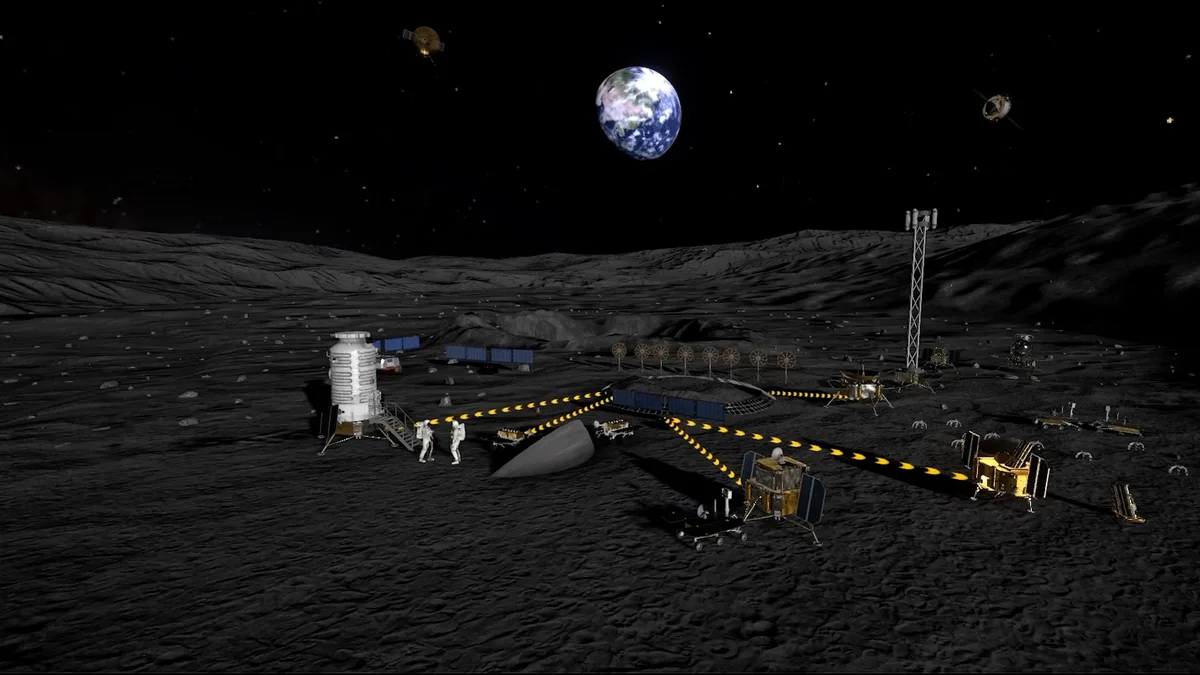
The International Lunar Research Station (ILRS) is a joint China-Russia project planned for the Moon's south pole, directly competing with the US-led Artemis program. Russia formally agreed to partner on this ambitious lunar base in March 2021. (Source: news.cgtn.com)
Q4: How do their space stations compare? The US is a primary partner in the International Space Station (ISS), a collaborative venture. China operates its own Tiangong space station, which is smaller than the ISS but fully owned and controlled by China. Tiangong offers China independent access to a permanent human presence in low Earth orbit.
The competition for space is not simply a technological race; it is a profound contest of governance models and long-term strategic visions. The US innovation engine, fueled by commercial dynamism and international partnerships, remains incredibly potent. China’s centralized, state-driven approach, deeply integrated with national security, allows for rapid, coordinated execution of ambitious goals. The coming decades will clarify which model proves more sustainable and dominant beyond Earth. The future of space exploration will likely involve these two distinct approaches shaping separate spheres of influence, extending geopolitical rivalries into the cosmos.
You might also like:
👉 The $546 Billion Space Race: Private Money, Global Rivalries
👉 US-China: $664B Trade Masks Zero-Sum Global Power Struggle