
Tennis for Two (1958): How Consoles Conquered Living Rooms
Beyond better graphics: trace the intense market competition and tech shifts from William Higinbotham's 1958 Tennis for Two to modern consoles.
Console History: Beyond Better Graphics
Gaming consoles have evolved significantly. This history involves more than just faster chips and improved graphics. It features intense market competition, technological setbacks, and shifts in how people play.
Console gaming began as an idea. Early electronic games, such as William Higinbotham’s Tennis for Two in 1958, used oscilloscopes. These were not sold to the public. The idea of playing games on a home television was theoretical for many years.
Early Home Gaming
Home gaming started before Atari brought arcade games home. An inventor first created the concept.
In 1966, engineer Ralph Baer imagined games on a TV. He built the “Brown Box” prototype. He secured its patents in 1971. This simple machine used transistor-transistor logic. It let two players control squares on screen.
Magnavox licensed Baer’s technology. They released the Magnavox Odyssey in September 1972 across North America. The console included physical accessories, screen overlays, and twelve games. Baer’s records show it sold 69,000 units by 1975.
Atari’s Pong became a huge arcade success in 1972. Its home version, released in 1975, led to many “Pong clones.” Devices like the Coleco Telstar offered only one game. These did not advance console technology much.
The 1983 Crash and Gaming’s Revival
The Nintendo Entertainment System (NES) is often credited with saving gaming after the 1983 crash. Many point to its advanced technology and popular games. However, the NES’s success also came from clever business strategies. It filled a clear market need, beyond just its technical strength.
The North American video game market crashed in 1983. Revenues dropped sharply. They fell from $3.2 billion in 1982 to just $100 million by 1985, The New York Times reported. This crash cost many companies, including Atari, a lot of money.
Too many poor-quality games filled store shelves. Many came from unregulated third-party developers. Consumers became cautious of costly consoles and bad software. The Atari 2600, despite early success, saw many low-quality “shovelware” games. This eroded player trust in the industry.

Pictured is Ralph Baer's "Brown Box" prototype, built in 1966. This groundbreaking device proved the concept of playing games on a home television, directly leading to the creation of the Magnavox Odyssey, the world's first commercial home video game console. (Source: en.wikipedia.org)
Nintendo’s Famicom launched in Japan in 1983. It arrived as the NES in North America in October 1985. Nintendo enforced strict quality control for third-party developers. This limited game releases. The “Nintendo Seal of Quality” policy helped rebuild consumer trust. Gaming historian Steven Kent confirms this in “The Ultimate History of Video Games.”
CD-ROMs: Impact on Games and Costs
CD-ROMs brought bigger games and better graphics. However, their introduction also changed game finances and control. Publishers altered how they worked with developers. It transformed how games were created.
Sony’s PlayStation used CD-ROMs for games. It launched in Japan in December 1994. It came to North America in September 1995. This was a big change from costly ROM cartridges. Cartridges were expensive to make and held little data. The shift made things easier for smaller developers.
CD-ROMs cost under $1 per disc to produce. Cartridges, however, cost $10-15 each, according to former Sega of America CEO Tom Kalinske. This large cost reduction lowered financial risks for publishers. Developers could then include full-motion video and improved audio. This changed game storytelling and presentation.
Nintendo stayed with cartridges for the Nintendo 64, launched in 1996. The company cited faster loading and anti-piracy as reasons. However, this choice deterred many third-party developers. They preferred the PlayStation’s lower production costs and larger storage. Electronic Arts, a major publisher, mostly moved its focus to PlayStation. Former executive Bing Gordon noted the CD-ROM’s clear financial benefits.
Online Gaming: Early Efforts and Evolution
Online gaming existed before the Xbox 360 and PlayStation 3. While those consoles popularized multiplayer, earlier, less visible efforts laid the groundwork. Console makers faced challenges building online systems.
Sega’s Mega Drive (Genesis in North America) offered early online features. This began in 1990 with the Sega Meganet in Japan. The service used a dial-up modem for multiplayer and downloads. The Sega Channel launched in North America in 1994. It delivered games on demand via cable TV to subscribers.

Launched in Japan in 1990, the Sega Meganet was a pioneering dial-up modem for the Mega Drive, enabling early console online multiplayer and game downloads, a significant step in the evolution of online gaming. (Source: techeblog.com)
The Dreamcast, released in 1998, had a built-in modem. This made online play a main feature. SegaNet allowed players to connect and compete, showing future possibilities. However, the system faced issues with slow dial-up speeds and limited broadband in the late 1990s. This is according to former Sega of America President Peter Moore.
Microsoft’s Xbox Live launched in November 2002 for the original Xbox. It created a standard online service based on subscriptions. It provided dedicated servers, a single friend system, and reliable online play. This significant service set a new standard for console online gaming. It required large, often overlooked, investments in networks and server centers worldwide.
Mobile Gaming’s Rise and Console Adaptation
Mobile gaming was once seen as a casual market, distinct from consoles. However, mobile technology transformed the industry. Its growth forced console makers to rethink their purpose. This led to new hardware and business models. These models made market boundaries less clear.
Apple’s iPhone, released in 2007, quickly popularized mobile gaming. Its App Store made games easy to find. By 2018, mobile gaming earned a remarkable $70.3 billion globally. This far surpassed console gaming’s $34.6 billion, says Newzoo. This major change directly affected console makers’ plans.
Nintendo responded with the Nintendo Switch, released in March 2017. This device combined handheld and home console features. It addressed mobile gaming’s portability, offering adaptable play. The Switch saw great success, selling over 132 million units by September 2023. It created a strong new direction for console design.
Sony and Microsoft, however, focused more on detailed graphics and rich experiences for their PlayStation 4 and Xbox One. They also started large subscription services. Xbox Game Pass, launched in June 2017, offered access to many games. These models mirrored mobile’s “freemium” and subscription styles. They adjusted to players’ changing demands for content.
The Future: Streaming and Subscriptions
Future consoles will offer more than just better graphics and faster loads. Significant changes are coming. The future of console gaming depends more on how games are accessed and owned. Small hardware upgrades will not be the primary focus.

The original Apple iPhone, released in 2007, revolutionized mobile gaming with its intuitive interface and the App Store, making games easily accessible. Its immense popularity and the subsequent rise of mobile gaming forced traditional console makers to rethink their strategies and adapt to a changing market. (AI-generated illustration)
Cloud gaming services like Nvidia GeForce Now (2015) and Xbox Cloud Gaming (2020) stream advanced games to simpler devices. This reduces the need for consumers to buy costly local hardware. Google’s Stadia (2019-2023) showed both the great challenges and the promise of this streaming model.
Subscription services are growing in importance for consoles. PlayStation Plus Premium and Xbox Game Pass Ultimate provide large game libraries, cloud streaming, and online multiplayer. These models prioritize access to games over ownership for many. IDC analyst Lewis Ward notes this trend. It shows wider entertainment habits.
Future console hardware might become modular. Users could upgrade specific parts instead of replacing the entire system. Consoles could also integrate AI game creation or very personal experiences. The main console hardware might shift from a single box. It could become a more flexible entertainment center. The next generation will not just look different; it will play differently, too.
FAQ
- What was the first home video game console? The Magnavox Odyssey, invented by Ralph Baer, was released in September 1972. It connected to a standard television set. It also included various physical accessories for gameplay.
- Why did the video game crash of 1983 happen? The crash resulted from too many low-quality games and consoles flooding the market. It also caused a severe loss of consumer trust. Poorly made games quickly reduced player trust in the growing industry.
- How did CD-ROMs change console gaming? CD-ROMs greatly lowered game production costs compared to cartridges. This allowed for larger game worlds, full-motion video, and higher-quality audio. It changed game storytelling and overall size.
- Are consoles being replaced by mobile gaming? No, but mobile gaming has greatly changed the console market. Consoles adapted by focusing on unique experiences. They also adopted hybrid designs like the Nintendo Switch. Subscription services help them work alongside mobile platforms.
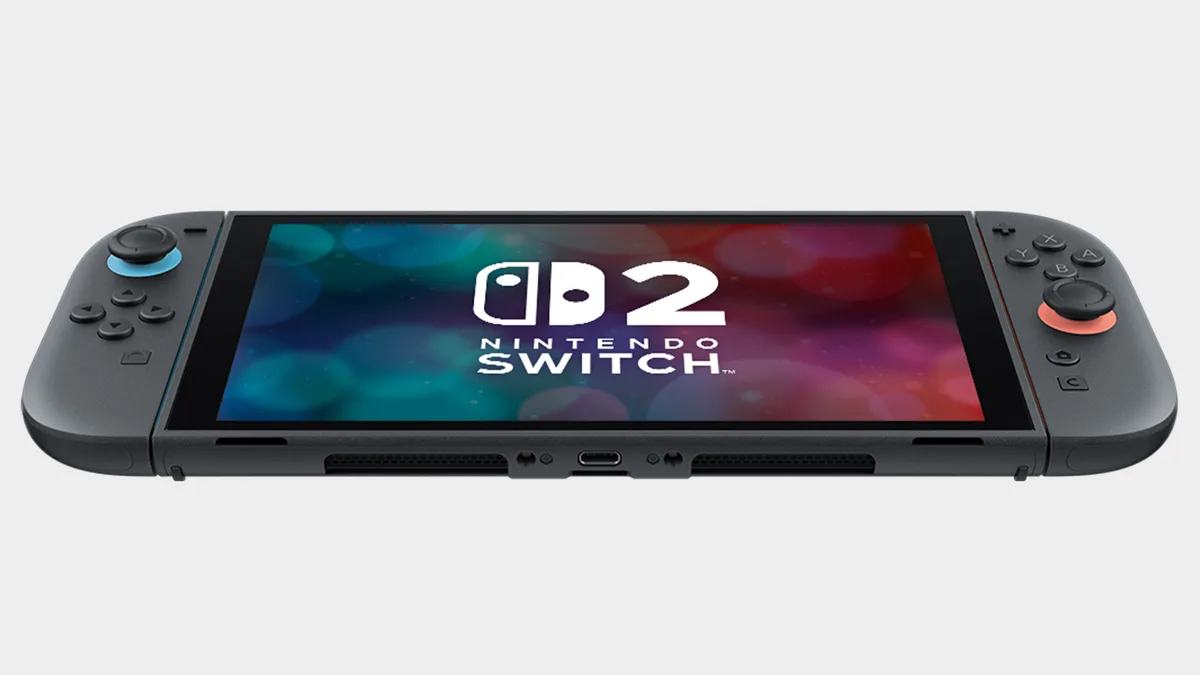
The Nintendo Switch, released in 2017, exemplifies how consoles adapted to the rise of mobile gaming by offering a unique hybrid design that functions as both a home console and a portable handheld device. Its versatility helped it become one of the best-selling consoles of all time. (Source: gamesradar.com)
You might also like:
👉 The 2016 Shift: How Phones Became AI Companions
👉 Virtual Reality Applications: Exploring VR’s Impact Across Industries