Hollywood's Political Myth: Why Stars Don't Sway U.S. Elections
Despite popular belief that a famous endorsement shifts millions of votes, celebrity influence in U.S. politics is often misunderstood and overstated.
Celebrity Politics: Less Sway Than We Imagine
Many people believe celebrities sway elections. They think a famous endorsement shifts millions of votes. This idea, however, overstates their direct impact. Celebrities are active in politics, but their influence is often misunderstood.
In the U.S., entertainment has always mixed with political life. Movie stars once lent glamour to presidential campaigns. Today, social media amplifies their voices. This creates an illusion of vast influence.
Celebrities are one player in politics, alongside voters, parties, and the media. They endorse candidates, campaign for causes, and even run for office. This raises the question of how effectively they turn fame into political power.
Issue advocacy: a real impact
Celebrities are very good at raising awareness for specific causes. They gather attention and money for humanitarian issues. This influence often goes beyond their ability to swing an election. It is where they are most effective.
Consider Bono’s work. In 2005, he co-founded the ONE Campaign. This group worked against global poverty and preventable diseases. Bono spoke directly to world leaders. These included President George W. Bush and British Prime Minister Tony Blair. His appeals influenced policy. The ONE Campaign helped secure an $18 billion increase in US funding for AIDS relief. It also pushed for debt cancellation for developing nations.
Actor George Clooney used his fame to highlight the crisis in Darfur, Sudan. In 2006, he testified before the United Nations Security Council. He also co-founded the Not On Our Watch Project. Clooney’s work brought global media attention to a conflict that might have been ignored. His advocacy increased humanitarian aid and diplomatic pressure.
Celebrities use their fame to open doors and get media coverage. They build public support and push for specific policies. That is a clear, measurable impact.
Mobilizing supporters, not changing minds
Most people think celebrity endorsements persuade undecided voters. Research shows they do not. Celebrities mostly mobilize people who already lean toward a candidate or cause. They do not change minds.
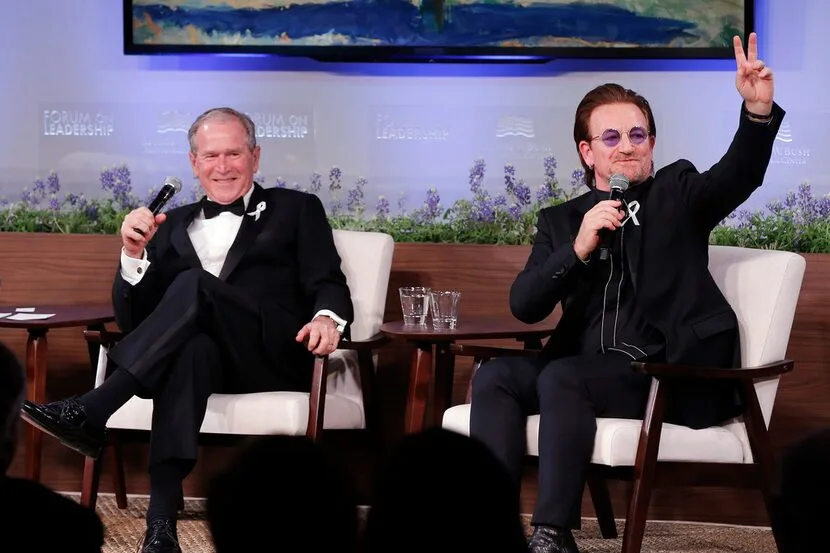
U2 frontman Bono, co-founder of the ONE Campaign, frequently met with world leaders like President George W. Bush to advocate for global poverty and preventable diseases. His appeals influenced policy, helping secure an $18 billion increase in US funding for AIDS relief. (Source: dallasnews.com)
A 2012 study by Pasek, Kenski, Romer, and Jamieson looked at Oprah Winfrey’s endorsement of Barack Obama. This was during the 2008 Democratic primary. The study found her endorsement shifted about 1 million votes to Obama. That was out of 130 million total votes cast. It was a small percentage of the overall electorate. She mainly encouraged viewers who already liked Obama.
More recently, singer Taylor Swift posted on Instagram in September 2023. She urged her 272 million followers to register to vote. This single post caused a huge surge. Vote.org reported over 35,000 new voter registrations in 24 hours. That was a 23% increase over the previous year’s “National Voter Registration Day.” Swift did not persuade anyone here. She simply encouraged existing fans to take civic action.
Celebrities encourage existing supporters. They can boost voter turnout among their fanbase. They do not usually sway people with opposing political views. Their audience often already agrees with them.
Celebrity fundraising: where the money is
Celebrities raise a lot of money. They attract huge sums for political campaigns and causes. This money helps candidates survive and reach more people. It funds advertising, staff, and outreach.
Hollywood figures are big political donors and fundraisers. In the 2020 election cycle, entertainment professionals gave over $122 million to campaigns. Most of that money went to Democrats. Producer Jeffrey Katzenberg is a good example. He raised millions for Barack Obama and Hillary Clinton.
These high-profile fundraisers bring in serious money. This money lets campaigns spread their message. It pays for more ads and on-the-ground operations. While it does not change a voter’s mind directly, it shapes the information voters see. It gives an edge to candidates who can connect with celebrity networks.
Celebrities also donate to political action committees (PACs) and Super PACs. These groups then spend money independently. Their cash can fund attack ads or push specific policies. This indirect spending also shapes political stories.
When celebrities become politicians
Sometimes, celebrities do not just influence politics; they become politicians themselves. This is a different kind of influence. Their existing fame gives them a ready-made platform and name recognition. It skips many traditional hurdles for new politicians. Their celebrity status is their main political asset.
Ronald Reagan went from Hollywood actor to Governor of California in 1967. He became President of the United States in 1981. His public image as “The Great Communicator” came from his acting career. His charisma connected deeply with voters. Fame gave him an instant link to the public.
In 2003, actor Arnold Schwarzenegger won the California gubernatorial recall election. He had no prior political experience. His global fame from action films pushed him into office. Schwarzenegger’s campaign used his public image as a strong, decisive leader.
More recently, Donald Trump used his reality television fame to launch a successful presidential campaign in 2016. His brand as a businessman and media personality was central to his appeal. His public identity let him speak directly to voters. He bypassed traditional media.
Celebrity can be a powerful start for a political career. It is not about influencing others from the sidelines. It is about using personal fame as the base for direct political power. This flips conventional politics on its head.
FAQs
Do celebrity endorsements change election outcomes? No, rarely. They mostly mobilize existing supporters to vote. They do not usually persuade undecided voters.
Are celebrities more effective for issue advocacy or candidate endorsements? They are more effective at raising awareness and resources for specific issues. They can influence policy through long-term advocacy. Their impact on candidate endorsements usually just mobilizes voters.
Can celebrity political involvement backfire? Yes, it can. People can react negatively if celebrities seem out-of-touch or hypocritical. This can turn voters away instead of drawing them in.
The shifting nature of influence
Celebrity influence in politics keeps changing. Social media has made communication open to everyone. It lets celebrities skip traditional media. They speak directly to their fans. This direct access boosts their ability to mobilize and fundraise.
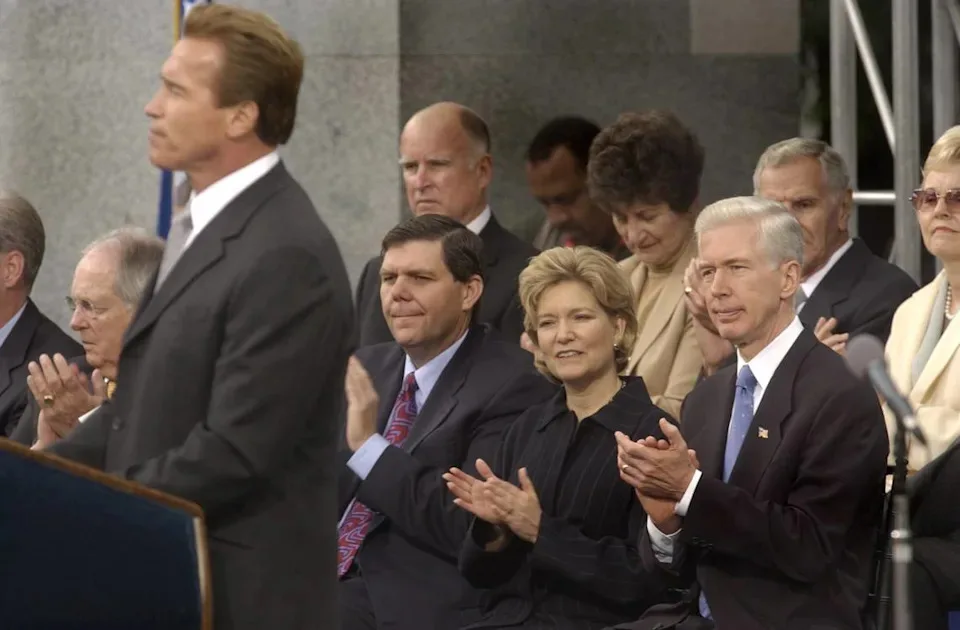
Action movie star Arnold Schwarzenegger, known for films like 'The Terminator,' was sworn in as the 38th Governor of California in 2003 after winning a historic recall election. He served two terms, leveraging his global fame and public image as a decisive leader. (Source: yahoo.com)
The digital age also splits audiences. It creates echo chambers. This limits how much any voice, famous or not, can persuade. People often follow celebrities who already share their political views. This confirms what people already believe.
It is important to separate different types of celebrity involvement. These include issue advocacy, voter mobilization, fundraising, and direct political candidacies. Each type works differently and has its own impact. The direct, persuasive power of celebrity endorsements is often exaggerated. Still, their ability to get people active, raise money, and highlight causes is real. Their true influence lies in these real, measurable actions. It is not in the myth that they widely convert voters. The future of celebrity politics will depend on how well they adjust. They must operate in a world where attention is easily gained, but minds are harder to change.
You might also like:
👉 Taylor Swift’s Partner: The Brutal Price of Public Love