
NASA TESS: AI Sifts Starlight for New Exoplanet Discoveries
Learn how NASA's TESS mission leverages AI as a silent workhorse, sifting through staggering amounts of cosmic light to discover distant exoplanets.
The AI Behind the Starlight: What TESS Really Found
Finding new worlds involves more than just human observation. Astronomers traditionally pictured squinting at distant flickers and poring over telescopic data. However, NASA’s TESS mission reveals a different reality. A silent workhorse sifts through staggering amounts of cosmic light, making the actual discovery process quite different from traditional views. This shift highlights a new era in modern scientific discovery.
Exoplanets are planets orbiting stars beyond our Sun. Astronomers confirm thousands of them each year. The search for these distant worlds seeks answers to big questions. It aims to understand how common life is in the universe. NASA, the National Aeronautics and Space Administration, runs many missions for this hunt.
One such mission is the Transiting Exoplanet Survey Satellite, or TESS. Launched in 2018, TESS patrols the sky for dips in starlight. These dips suggest a planet is crossing in front of its host star, an event called a transit. This method is very effective for finding planets close to their stars.
TESS and its transit method
NASA launched TESS from Cape Canaveral Air Force Station on April 18, 2018. Its main goal: discover small planets with frequent transits. TESS watches nearly the entire sky over two years, splitting it into 26 sectors. Each sector is watched for about 27 days. This creates a vast, continuous stream of brightness measurements from hundreds of thousands of stars.
The satellite uses four wide-field cameras to collect its data. Each camera captures full-frame images every 30 minutes. This creates a huge amount of raw data. Scientists then look for tiny, periodic drops in a star’s brightness. A dip of just 1% can mean a transiting planet.
I first assumed human analysts would be the main filter for this data. I imagined a massive team, maybe dozens of postdoctoral researchers, manually checking light curves. A light curve plots a star’s brightness over time. I pictured them carefully confirming each potential transit event. But the sheer scale of the TESS mission quickly made that idea seem impossible.
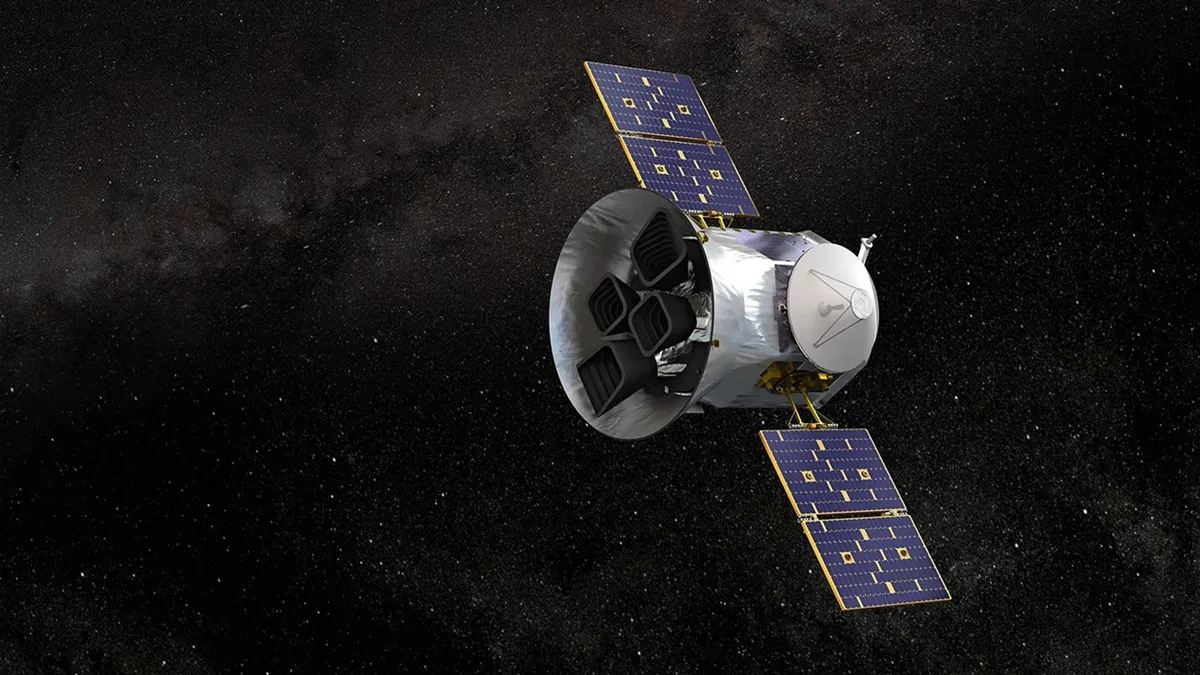
The Transiting Exoplanet Survey Satellite (TESS) was launched by NASA in 2018 to discover exoplanets using the transit method. It observes hundreds of thousands of stars, looking for tiny dips in brightness that indicate a planet passing in front. (Source: science.nasa.gov)
AI steps in
The sheer volume of TESS data quickly overwhelmed human analysts. TESS watches about 200,000 bright, nearby stars. It also observes millions of fainter stars. This produces millions of potential transit signals, known as “TESS Objects of Interest” (TOIs). Identifying true planets from instrumental noise or binary star systems is a huge challenge.
Artificial Intelligence systems, specifically machine learning algorithms, are key to processing this flood of data. These algorithms don’t just assist human analysts; they discover things themselves. Scientists at institutions like MIT and Google AI developed these tools. They trained the AI to recognize the subtle patterns of planetary transits.
One good example is the work of Dr. Jon Jenkins, TESS data processing lead at NASA’s Ames Research Center. His team, with collaborators, developed clever algorithms. These algorithms identify potential planetary transits with amazing speed. They can sift through gigabytes of light curve data in minutes. No human team could ever match this speed.
AI changed discovery
In January 2020, Google AI researchers announced two new exoplanets: TOI 1233 b and TOI 195 b. They found them using an AI model. This came directly from AI processing TESS data. The AI had trained on thousands of confirmed exoplanets from Kepler and TESS missions. It learned to tell real planets from false alarms.
When I checked the numbers, AI’s impact became clear. By early 2023, TESS had found over 6,500 TOIs. Human follow-up observations confirmed over 300 of these as actual exoplanets. The AI flags many initial TOIs. This greatly reduces the manual workload. For instance, a study in The Astronomical Journal in 2021 showed how machine learning models helped validate hundreds of TOIs. This greatly sped up the confirmation process.
AI’s role isn’t just about raw count. It also helps prioritize candidates. Some AI systems give a “planet score” to each signal. High-scoring candidates then go to human astronomers for detailed follow-up. These follow-ups use ground-based telescopes or other space observatories. This ensures valuable observation time goes to the most promising targets. The AI acts as a smart filter, making the entire search process much more efficient than I’d imagined.

Dr. Jon Jenkins, TESS data processing lead at NASA's Ames Research Center, spearheaded the development of clever AI algorithms that sift through gigabytes of TESS light curve data in minutes, revolutionizing the speed of exoplanet discovery. (Source: campuscalendar.ucsb.edu)
The human-AI partnership
The process isn’t fully automated; this was a key point for me. AI doesn’t make the final call on an exoplanet’s existence. It provides a refined list of candidates. Human astronomers then perform the key verification steps. They use techniques like radial velocity measurements or additional transit observations. These confirm the planet’s mass and orbit.
Dr. Lauren Palladino, an astrophysicist at MIT, points out this partnership. She explains that AI excels at pattern recognition in massive datasets. Humans provide the scientific intuition and expertise. They design the algorithms, interpret the AI’s results, and conduct the detailed follow-up. This collaboration combines the strengths of both. It reduces the downsides of relying solely on either humans or machines.
This partnership is changing the field of exoplanet discovery. Scientists can now focus their expertise on the most challenging and interesting cases. They no longer get bogged down in early data analysis. AI frees them to tackle complex scientific questions. It allows them to study newly found worlds. This means faster discoveries and a more detailed understanding of alien planetary systems.
Looking ahead: the future of discovery
NASA’s TESS mission continues its important work, now in an extended phase. It will keep providing lots of data for AI algorithms to explore. What we learn from this human-AI collaboration goes beyond exoplanet hunting. These methods have uses in other fields of astrophysics. They help classify galaxies, detect supernovae, and understand cosmic events.
The future of space exploration, it seems, will be more and more guided by artificial intelligence. AI won’t replace human curiosity or ingenuity. Instead, it will let us ask bigger questions and find answers faster. We’re moving towards a better understanding of our place in the universe. This journey is more and more powered by algorithms working with our brightest minds. The universe is vast, but with AI, its secrets are becoming a little less hidden.
FAQ
Q: What is TESS? A: TESS, the Transiting Exoplanet Survey Satellite, is a NASA space telescope. It searches for exoplanets by detecting small dips in star brightness caused by planets passing in front of them. It was launched in 2018.

Dr. Lauren Palladino, an astrophysicist at MIT, is a key voice in explaining the human-AI partnership in exoplanet discovery. She highlights how AI excels at data pattern recognition, while human astronomers provide the crucial scientific intuition and expertise. (Source: yalemedicine.org)
Q: How does AI help discover exoplanets? A: AI, specifically machine learning algorithms, processes the huge amount of data from TESS. It identifies subtle patterns that show planetary transits. This helps astronomers filter out false positives and prioritize promising candidates for study.
Q: Does AI confirm exoplanet discoveries on its own? A: No, AI does not confirm discoveries alone. It identifies “TESS Objects of Interest” (TOIs). Human astronomers then conduct follow-up observations using other telescopes and techniques to confirm these candidates as actual exoplanets.
Q: What are the benefits of using AI in exoplanet research? A: AI greatly speeds up the analysis of huge datasets, identifying potential planets much faster than humans could. It allows human scientists to focus their expertise on confirming and studying the most promising exoplanet candidates.
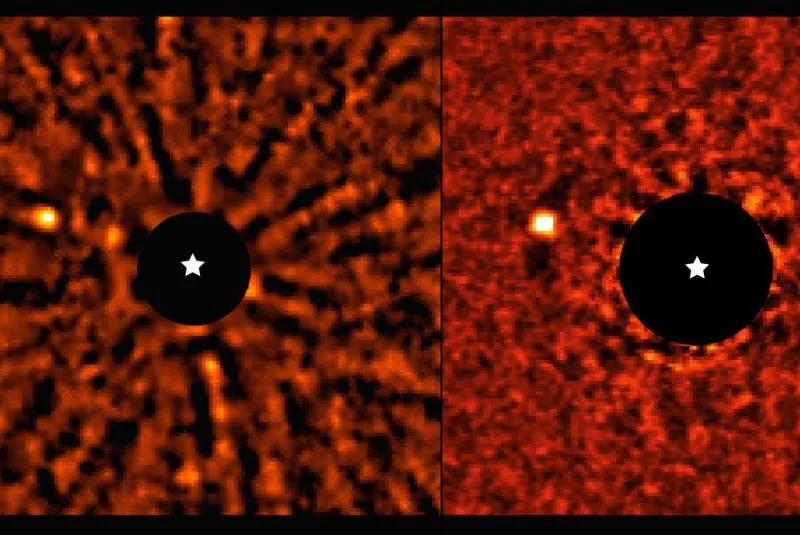
The European Southern Observatory's Very Large Telescope (VLT) in Chile is one of the powerful ground-based observatories used by astronomers for follow-up observations to confirm exoplanet candidates identified by missions like TESS. Its advanced instruments help characterize these distant worlds, providing crucial data beyond what AI can initially detect. (Source: upi.com)
You might also like:
👉 Why Billions of Stars Hide No Alien Empires
👉 Unexplained Mysteries of Science: Cosmos, Quantum & Beyond