San Andreas: Why Earthquake Prediction Remains a Failed Dream
Millions in seismic zones hope for earthquake warnings, but science reveals why predicting sudden ground motions along fault lines is a failed dream.
Predicting Earthquakes: A Failed Dream
Earthquakes hit without warning. They bring immense destruction and death. Millions in seismic zones hope for earthquake warnings. Many believe subtle signs hint at big quakes, if only we could read them. But science tells a different story.
Earthquakes are sudden ground motions. They happen when stress in the Earth’s crust releases along fault lines. Most big quakes occur along plate boundaries, like the Pacific Ring of Fire or California’s San Andreas Fault. Governments, emergency services, and communities there desperately want advance notice.
The search for earthquake predictions stems from a human desire to control nature. This desire, however, often clashes with our planet’s chaotic physics. Seismology has made incredible strides. Still, precise, short-term earthquake prediction remains a dream.
Haicheng: A one-time success
On February 4, 1975, a magnitude 7.3 earthquake devastated Haicheng, China. Chinese authorities had issued a warning the day before. This warning led to the evacuation of millions. Many cite this as the only successful earthquake prediction in history.
The Haicheng prediction relied on escalating foreshocks and anecdotal animal behavior. This success made everyone optimistic. Many thought a reliable prediction method was finally within reach. Governments worldwide, including the U.S., poured money into prediction research.
Scientists see Haicheng as a fluke, not a model. Foreshocks are common. Only a tiny fraction, though, come before big quakes. Most foreshocks are simply small earthquakes. Dr. Susan Hough, a USGS seismologist, explains this: it’s almost impossible to tell foreshocks from regular small quakes in real-time.
What science can tell us: long-term forecasts
Seismologists know where earthquakes are most likely. They also understand why they happen. This knowledge comes from studying plate tectonics and past quake data. The 2015 Uniform California Earthquake Rupture Forecast (UCERF3) projected a 7% chance. It said a magnitude 8.0 or greater quake could hit California within 30 years.
This is a probabilistic forecast, not a precise prediction. It shows a long-term likelihood. It doesn’t specify a day or week. Dr. Lucy Jones, a renowned seismologist and former USGS science advisor, often explains the difference. Forecasts deal with probability over time. Predictions specify exact timing.

The city of Haicheng, China, was struck by a magnitude 7.3 earthquake on February 4, 1975. Chinese authorities had issued a warning the day before, leading to a massive evacuation and making it the only widely cited successful earthquake prediction in history, though scientists now view it as a fluke. (Source: baike.baidu.com)
Scientists look at seismic gaps. These are parts of active faults that haven’t ruptured in a long time. These areas accumulate stress. They become prime candidates for future quakes. A fault’s recurrence interval helps estimate future activity, based on past events. But these are broad estimates, not pinpoint forecasts.
Unreliable short-term signs
Many theories claim earthquakes have short-term “precursors.” These include strange animal behavior, radon gas spikes, electromagnetic anomalies, and changing groundwater levels. People often believe these ideas. But scientific checks consistently find them unreliable.
No consistent, reproducible precursor has ever been proven. Robert Geller, a geophysicist at the University of Tokyo, noted this in a 2011 Nature Geoscience paper. He argued that after decades of research, no short-term prediction method has worked. This shows a basic problem.
Animal behavior is a popular belief. Many stories describe pets acting strangely before a quake. A 2018 study in the Bulletin of the Seismological Society of America found no statistical link. Animals react to countless stimuli. Their behavior is often coincidental.
Radon gas levels also change. Radon seeps from the ground. Its levels can change because of underground stress. But these changes are highly localized. They are also sensitive to weather and other environmental factors. The USGS says isolating a pre-quake radon signal is incredibly hard.
Electromagnetic signals also interest scientists. Some researchers claim to detect changes in Earth’s electromagnetic field before quakes. A 2019 review in Surveys in Geophysics noted the challenge. It’s nearly impossible to tell these signals from everyday electrical noise. No clear, repeatable pattern exists.
The Tangshan earthquake in China, a year after Haicheng, further highlighted this unreliability. In 1976, this quake killed over 240,000 people. It struck without warning, despite similar monitoring efforts. This stark failure shows how unreliable precursor prediction is.
The cost of false hope
The pressure to predict earthquakes has serious consequences. False alarms cause panic. They disrupt economies and erode public trust. The reverse is also true: failing to warn can lead to devastating blame.

The 1976 Tangshan earthquake in China struck without warning, killing over 240,000 people and serving as a tragic example of the unreliability of short-term earthquake prediction methods, despite similar monitoring efforts to Haicheng. (Source: reddit.com)
The L’Aquila trial in Italy tragically showed this problem. In 2009, a magnitude 6.3 earthquake struck L’Aquila, killing 309 people. Months earlier, a government commission had met to assess seismic risks. They downplayed the risk, based on ambiguous foreshock activity. Six scientists and one government official were later convicted of manslaughter. Their convictions were ultimately overturned on appeal.
This case showed the huge societal pressure for prediction. It also showed the danger of communicating uncertainty. Dr. Thomas Jordan, former director of the Southern California Earthquake Center, often calls this the “prediction dilemma.” Too many warnings lead to apathy. Too few lead to disaster.
Science needs high confidence. A reliable prediction must specify a date, location, and magnitude. It also needs a high chance of success. Without this, warnings hurt more than help. No current method meets these rules.
Living with uncertainty: the path forward
Precise prediction remains out of reach. So, scientists have changed their focus. We now prioritize mitigation and rapid response. This practical approach saves lives and reduces damage. It is a more effective use of resources.
Japan’s Earthquake Research Institute, for instance, focuses heavily on long-term preparedness. This includes strong building codes and public education. These measures acknowledge that quakes are unpredictable. They help citizens react effectively.
Early Warning Systems are a major success. Systems like ShakeAlert in the western U.S. detect a quake after it starts. They transmit alerts at the speed of light. This gives crucial seconds of warning before destructive seismic waves arrive. Mexico and Japan use similar systems. These few seconds let people “Drop, Cover, and Hold On.” They also let automated systems shut down gas lines or stop trains.
Strict building codes are another key defense. California’s codes are among the world’s most stringent. They ensure structures can withstand significant shaking. This engineering foresight prevents countless collapses and deaths.
Public education campaigns are also vital. “Drop, Cover, and Hold On” is a simple, effective response. It protects people during an earthquake. Regular drills reinforce these life-saving behaviors.
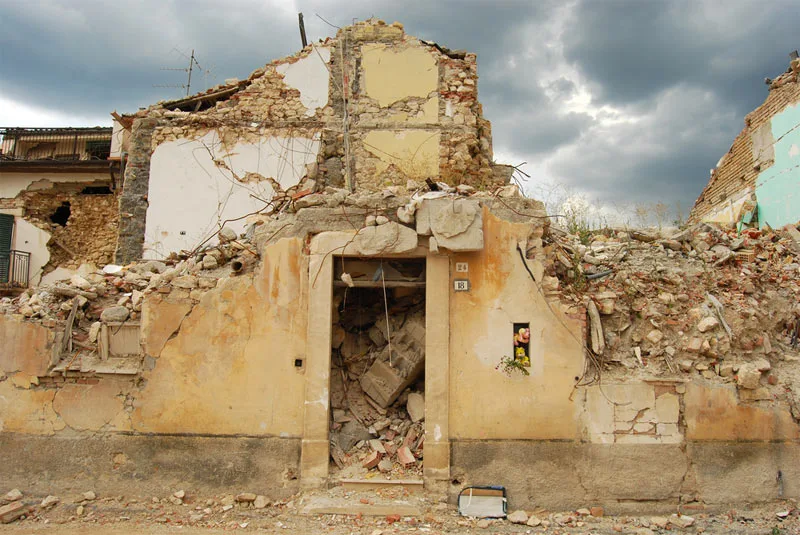
The historic city of L'Aquila, Italy, suffered catastrophic damage from a magnitude 6.3 earthquake in 2009, killing 309 people. This tragedy led to a controversial trial where scientists were initially convicted for downplaying seismic risks, highlighting the 'prediction dilemma'. (Source: livescience.com)
We must continue research into fault mechanics. Real-time seismic monitoring also gives us valuable data. But the dream of a precise, reliable earthquake prediction system remains distant. It’s a scientific frontier, not a pseudoscientific shortcut. Our efforts are best spent on resilience, not on a foresight we can’t grasp.
FAQ
Can animals predict earthquakes? No scientific evidence shows animals reliably predict earthquakes. Animals may react to subtle environmental changes. But their behavior is often coincidental. Many other factors influence animal actions.
What’s the difference between a forecast and a prediction? A forecast estimates an event’s probability over a long period (e.g., decades) within a broad area. A prediction would specify an earthquake’s precise time, location, and magnitude. Scientists can forecast, but not predict.
Are there any reliable short-term precursors? Decades of research have found no reliable, reproducible short-term precursor. Claims about radon gas, electromagnetic anomalies, or water changes remain inconsistent. Other factors often cause them.
Why don’t scientists just tell us when an earthquake will happen? Scientists don’t know when an earthquake will happen. The Earth’s crust is incredibly complex. The exact physical conditions that cause a rupture are too chaotic and variable to model precisely. The tools for precise, short-term prediction simply don’t exist.

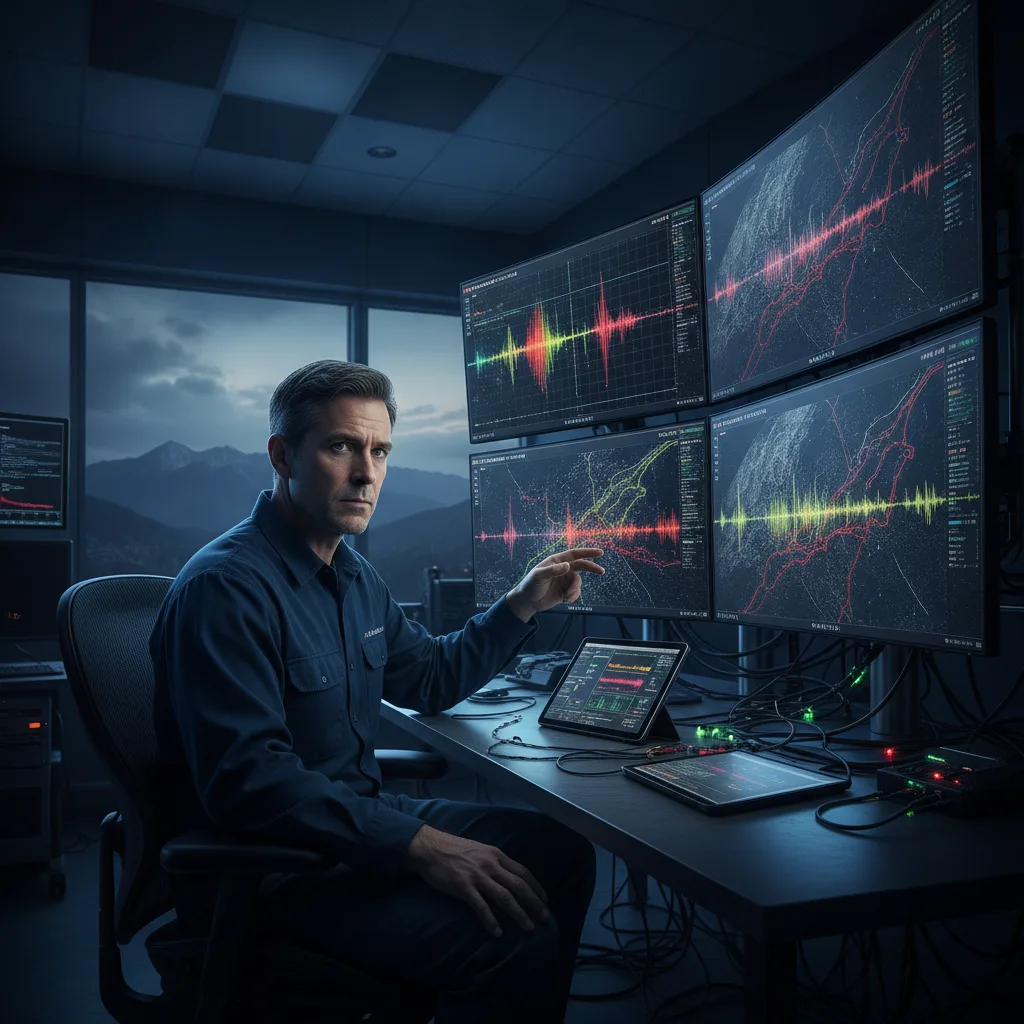
A modern seismic monitoring station, equipped with sensitive seismographs, continuously records ground motion. While these systems provide crucial data for understanding fault mechanics and forecasting earthquake probabilities, they cannot yet offer precise, short-term predictions. (Source: mb.com.ph)
You might also like:
👉 Super El Niño 2026 Predictions: Global Impact & What to Expect
👉 Unexplained Mysteries of Science: Cosmos, Quantum & Beyond