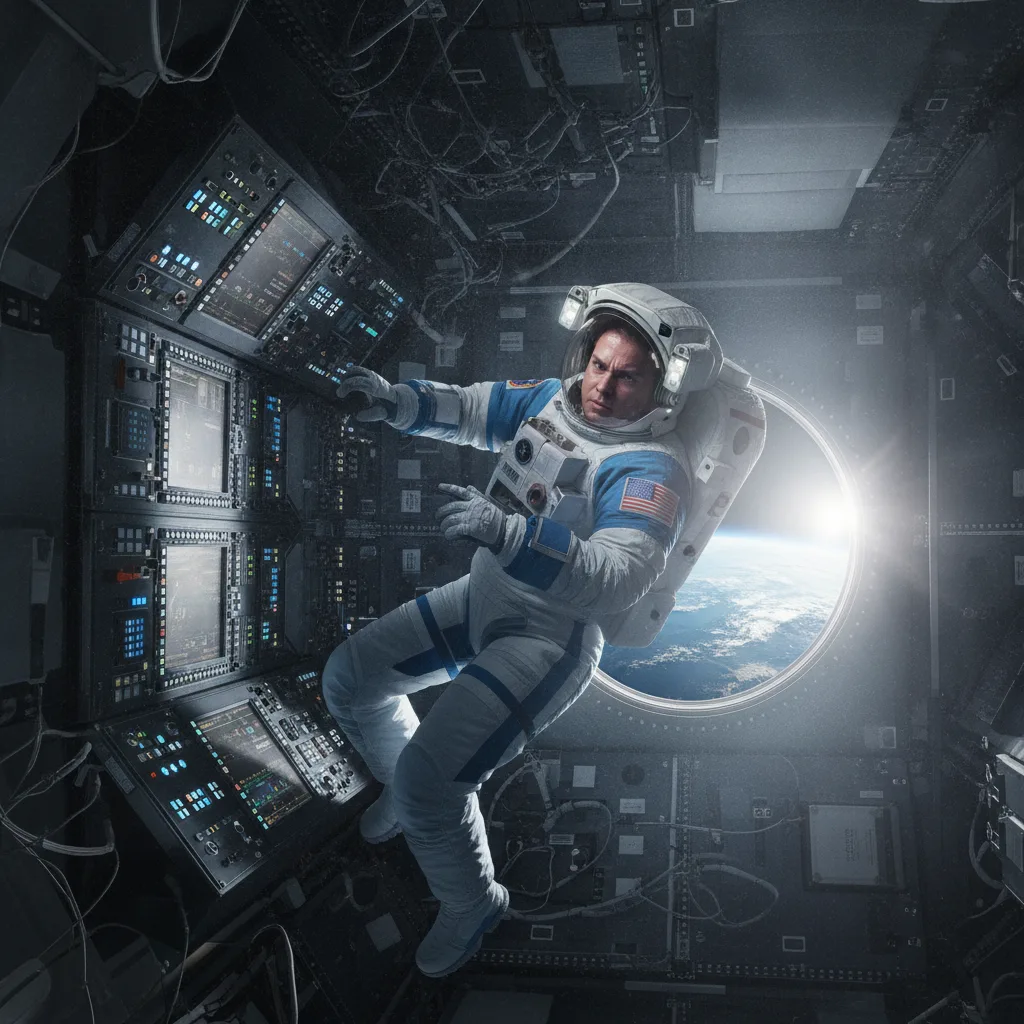
Space's Brutal Truth: 18 Astronauts Didn't Die in Explosions
Forget fiery re-entry. The real threats in space are often invisible and personal. Learn how 18 astronauts faced dangers beyond explosions.
Space: The Brutal Truth
I used to think space exploration was a heroic, clean journey. Sure, I knew rockets sometimes failed. I figured the biggest dangers were huge explosions or fiery re-entry. That was my simple view.
Then I dug into the data. My perspective completely changed. The real threats aren’t always the big, visible blasts. They’re often invisible, sneaky, and deeply personal to an astronaut’s body and mind. It’s far more complex and humbling than I ever imagined.
We push into space to find new knowledge, resources, maybe even new homes. But this search takes us into an environment deadly to life. It greatly challenges our technology and our biology. Here’s what really happens to astronauts. They fight silent daily battles. These also pose big threats to future deep-space missions.
The Invisible Killers: Radiation
In 2003, NASA’s Mars Radiation Environment Experiment (MARIE) measured radiation levels on the journey to Mars. It confirmed predictions: deep space radiation is a serious threat. This isn’t just a “sunburn” in space. High-energy particles constantly bombard spacecraft.
Space radiation comes mainly from two sources. Galactic Cosmic Rays (GCRs) come from outside our solar system. Solar Particle Events (SPEs) are sudden bursts from the Sun. Earth’s magnetic field protects us, but astronauts in space lack that shield.
When these particles hit the human body, they ionize atoms and damage DNA. Dr. Francis Cucinotta, a former NASA radiation health officer, says this greatly increases cancer risk. A Mars mission could expose astronauts to radiation doses like a whole-body CT scan every 5-6 days.
Beyond cancer, radiation affects the central nervous system. Studies suggest it can cause cognitive decline, memory issues, and mood changes. This could hurt critical decision-making on long missions. NASA’s Human Research Program (HRP) still studies the long-term brain effects.
Microgravity’s Toll: Bones, Muscles, and More
Astronaut Scott Kelly returned from his 340-day mission on the International Space Station (ISS) in 2016. He’d lost much bone density, especially in his hips. This is a normal result of long periods in microgravity. Without gravity’s stress, bones leach calcium and grow brittle.
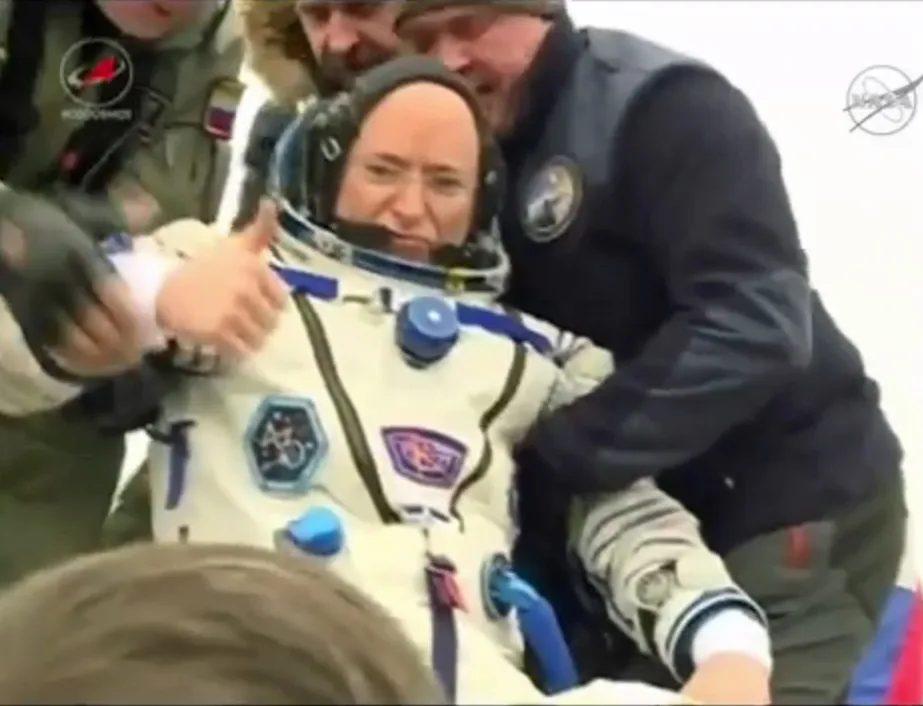
Astronaut Scott Kelly, seen here, returned from his 340-day mission on the International Space Station in 2016. He experienced significant bone density loss, particularly in his hips, a stark example of microgravity's profound physical toll on the human body. (Source: space.com)
Muscle atrophy comes with bone loss. Muscles weaken and shrink without gravity, mainly in the legs and back. Astronauts must exercise for hours daily to fight this. Even with exercise, they lose a lot of strength.
The cardiovascular system also struggles. The heart works less hard when gravity doesn’t pull blood down. This makes it weaker for Earth’s gravity. Blood volume drops, and astronauts often get dizzy when they stand up.
Vision also faces a threat. Many astronauts get Spaceflight-Associated Neuro-ocular Syndrome (SANS). Dr. Michael Stenger, a NASA vision expert, says it causes fluid shifts, swollen optic nerves, and retina changes. Astronauts often see blurry during and after missions.
The Void’s Embrace: Mechanical Failures and Debris
The Space Shuttle Columbia disaster on February 1, 2003, killed seven astronauts. A piece of foam insulation broke off during launch. It struck the wing, creating a breach. This disaster showed the deep risks of complex spaceflight systems.
Launch and re-entry are very dangerous parts of any mission. Rockets carry huge amounts of fuel. Re-entry exposes spacecraft to extreme heat and air pressure. Many missions have been lost during these times.
Once in space, the void itself is dangerous. Decompression, rare on modern spacecraft, is always a worry. The ISS gets hit often by tiny meteoroids and space debris. These can create small holes, needing instant repair.
Space debris is a bigger problem. The European Space Agency (ESA) estimates millions of defunct satellites and rocket stages orbit Earth. A collision could create even more debris, leading to the Kessler Syndrome. This could make some orbits unusable for generations.
Isolation and Stress: The Mind’s Battle
Valeri Polyakov set the longest continuous human spaceflight record: 437 days aboard Mir. Such long missions push human psychology to its limits. Astronauts face extreme isolation, trapped in small spaces for months or years.
This confinement, plus separation from loved ones, can cause mental strain. Anxiety, depression, and sleep problems often happen. The mission’s constant demands add to the stress. There’s no escape from the environment.
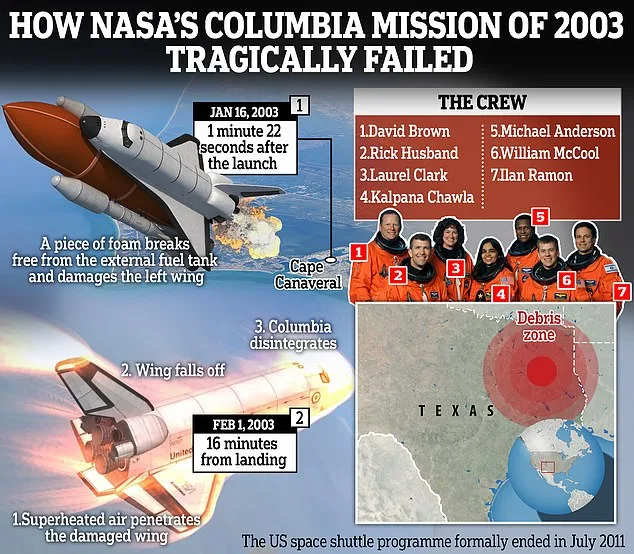
The Space Shuttle Columbia disaster on February 1, 2003, tragically killed seven astronauts when a piece of foam insulation broke off during launch and struck the wing, creating a breach. This catastrophic event highlighted the profound risks inherent in complex spaceflight systems. (Source: dailymail.co.uk)
Group dynamics are important in such close quarters. Personality clashes or communication breakdowns can ruin a mission. Astronauts get deep psychological screening and training. Still, human factors are a big problem.
A Mars mission will have communication delays up to 22 minutes each way. This stops real-time help from Earth. Astronauts must be self-sufficient and tough. Research from simulated missions, like HI-SEAS in Hawaii, helps prepare for these conditions. These tests show how isolation and confinement impact how well crews work together and perform.
Planetary Protection: Earth’s Hidden Risk
The Apollo 11 crew was quarantined for 21 days after returning in 1969. NASA guarded against unknown alien pathogens. This shows a critical, often overlooked, danger: planetary protection. We must protect other celestial bodies and Earth itself.
Forward contamination is the risk of Earth microbes infecting other planets. We could bring our life to clean environments. This might destroy potential alien life or ruin science. Probes need strict sterilization.
Back contamination is the reverse: bringing alien life forms to Earth. The chance of finding dangerous life is low. The impact could be huge. Imagine a pathogen Earth life has no immunity to. That would be a global emergency.
The Committee on Space Research (COSPAR) sets international planetary protection policies. These guidelines set sterilization levels for spacecraft. They also set rules for containing samples returned from other planets. This risk is a serious, though distant, worry for future sample-return missions.
The Path Ahead: Lessening the Danger
NASA’s Human Research Program (HRP) spends millions each year to reduce risks. They pay for research into better radiation shielding. They create better ways to fight bone and muscle loss, like improved exercise gear and supplements.
Future missions might use AI to track astronaut health and predict problems. Genetic research explores how individual astronauts react to space. Pharmacogenomics could tailor medical treatments based on a person’s unique genes. This offers hope for personalized medicine in space.
International cooperation is also important. Agencies share data and expertise, making things safer for everyone. The ISS shows what this teamwork can do. It pushes human endurance in space, giving us valuable data.
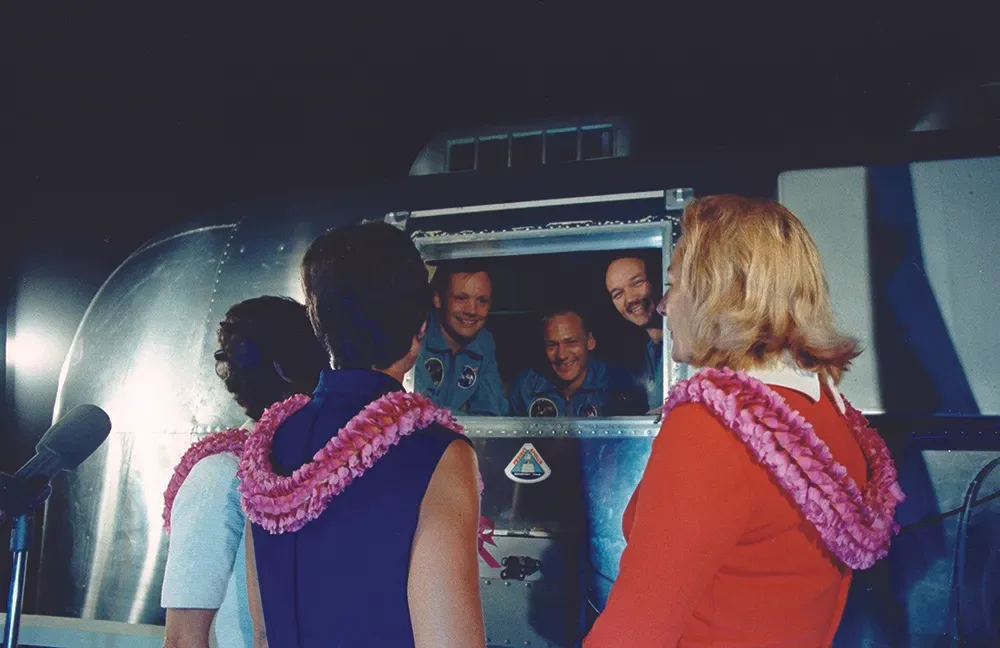
After their historic moon landing, Apollo 11 astronauts Neil Armstrong, Buzz Aldrin, and Michael Collins were quarantined for 21 days in the Lunar Receiving Laboratory. This unprecedented measure was a precaution against potential unknown alien pathogens, highlighting the early concerns about back contamination. (Source: skyatnightmagazine.com)
Space exploration’s dangers are real and many. My initial ideas were simple. Going into space isn’t just about getting somewhere. It’s about surviving the trip itself. We keep exploring because the knowledge and chance of survival are worth the risks. So, we must address these dangers with new ideas and careful watch.
FAQ
Q1: Is space debris a real threat to active missions? Yes. Even small pieces of debris, moving at orbital speeds, can cause serious damage. The European Space Agency tracks millions of debris fragments. This helps missions avoid collisions.
Q2: Can astronauts get sick from space radiation? They can. Space radiation raises cancer risk and can damage the central nervous system. NASA studies these effects to create better shielding and medical treatments for long missions.
Q3: What happens to the human body in space long-term? Long periods in microgravity cause bone density loss, muscle atrophy, and cardiovascular weakening. Vision changes, called SANS, also often happen. Astronauts’ tough exercise and medical checks help lessen these effects.
Q4: Have we ever brought dangerous alien microbes to Earth? No, there’s no evidence of this. NASA and international partners use strict planetary protection rules. These work to prevent Earth’s contamination by alien materials, and vice versa.
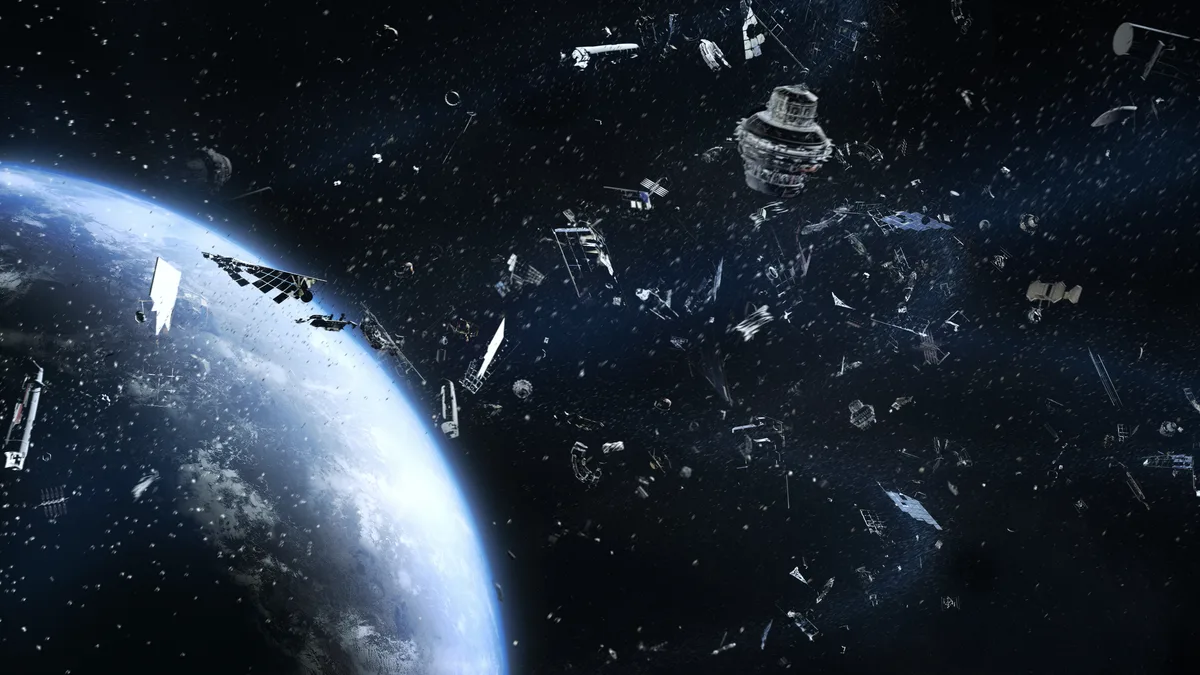
Even tiny pieces of space debris, traveling at orbital velocities, can cause catastrophic damage to active satellites and spacecraft. The European Space Agency tracks millions of these fragments to help prevent collisions and protect vital space infrastructure. (Source: livescience.com)
You might also like:
👉 SpaceX Starship’s March 14, 2024 Triumph After 2 Failures
👉 The $546 Billion Space Race: Private Money, Global Rivalries