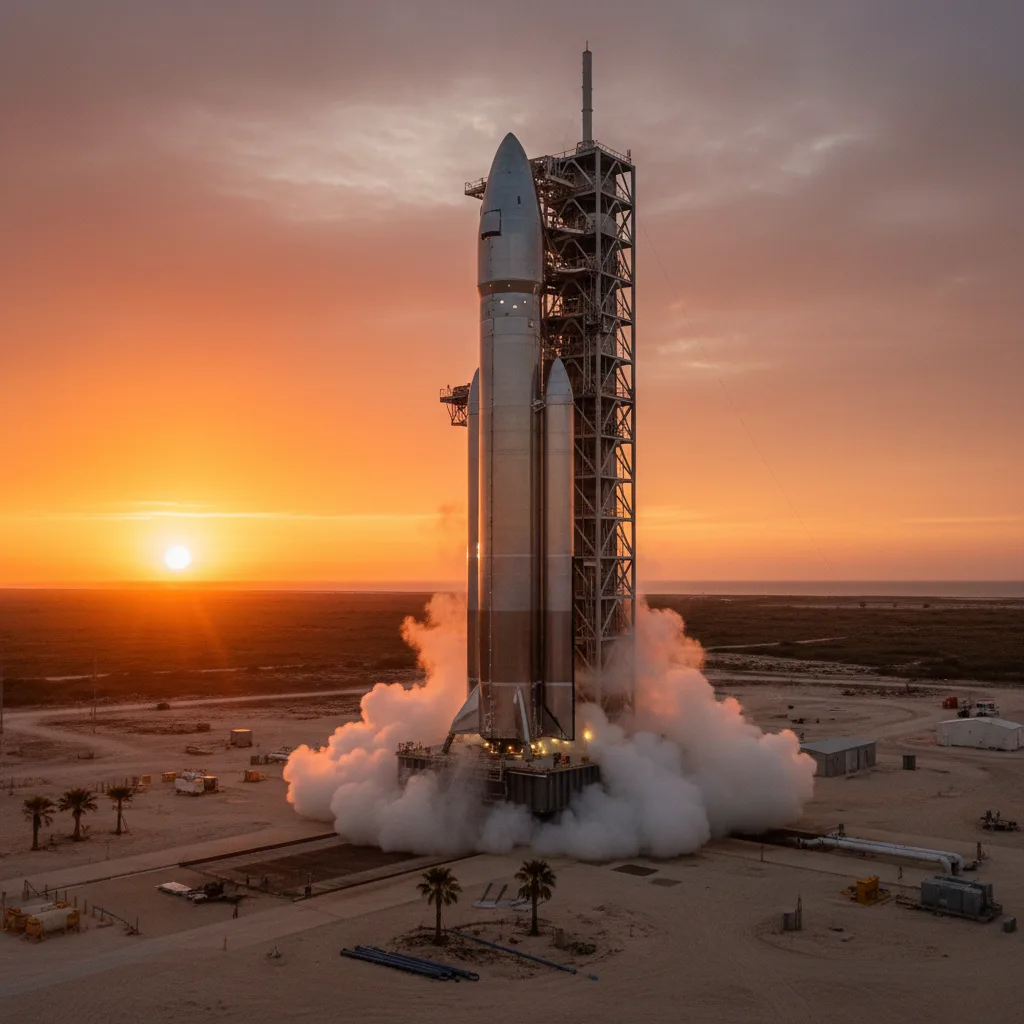
SpaceX Starship's March 14, 2024 Triumph After 2 Failures
Witness SpaceX's Starship rocket system complete its full test flight from Boca Chica, Texas, on March 14, 2024, after two past failures.
Starship finally flies.
SpaceX’s Starship rocket system completed its full test flight on March 14, 2024. It launched from Starbase in Boca Chica, Texas. This was a huge step for SpaceX. It came after major changes to the rocket following two past failures.
The Starship system has two main stages. The Super Heavy booster provides initial thrust. Then the Starship spacecraft continues to orbit. Its goal: carry cargo and humans to Earth orbit, the Moon, and Mars. Elon Musk, SpaceX founder, shared this long-term vision.
Starbase, the launch site, sits on the Gulf Coast. This remote spot allows for lots of testing. SpaceX has done many ground tests and short hops there. The Federal Aviation Administration (FAA) watches over these operations.
Learning from past test flights
Past Starship integrated flight tests ended early. The first one (IFT-1) was on April 20, 2023. The rocket had multiple engine failures after liftoff. SpaceX then intentionally blew it up over the Gulf of Mexico.
IFT-1 also damaged the launch pad badly. Debris scattered across the protected habitat around the site. The FAA grounded Starship for a close look. This review looked at environmental impacts and safety.
The second test (IFT-2) launched on November 18, 2023. The Super Heavy booster performed a hot-staging maneuver. It separated from the Starship spacecraft. Then the booster exploded shortly after separation. The Starship vehicle also blew up later in its flight.
What SpaceX changed
SpaceX made big design changes after the first two tests. Engineers focused on the Super Heavy booster’s hot-staging. This means igniting the second stage engines before it separates from the first. This makes the rocket more efficient.
The company also fixed up the launch pad. They installed a massive water deluge system. This system sprays millions of gallons of water during liftoff. It protects the pad from the booster’s intense exhaust. Gwynne Shotwell, SpaceX President, confirmed these upgrades.
These changes aimed to make the rocket more reliable. They also wanted to protect the ground equipment. The FAA reviewed all proposed changes. It approved a launch license for IFT-3 on March 13, 2024. This came after safety and environmental checks.
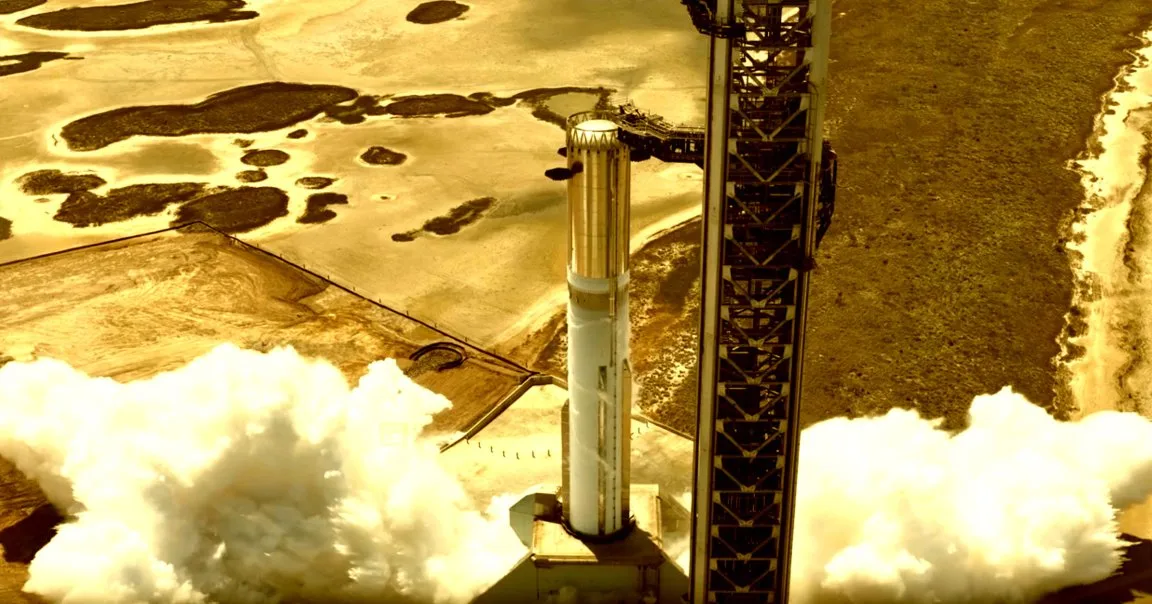
The massive water deluge system at Starbase, seen here in action, sprays millions of gallons of water during liftoff to protect the launch pad from the Starship booster's intense exhaust, a critical upgrade after past test failures. (Source: futurism.com)
The flight: What happened
The Starship Super Heavy booster ignited all 33 Raptor engines at T-0. The rocket lifted off at 8:25 AM CT on March 14, 2024. It climbed powerfully. Hot-staging happened about 2 minutes and 47 seconds into the flight.
The Super Heavy booster then started its boostback burn. It tried a controlled splashdown in the Gulf of Mexico. But the booster didn’t make it. SpaceX reported its loss before splashdown.
The Starship spacecraft kept going. It reached 162 kilometers high. It hit orbital speed. The spacecraft flew for about 49 minutes. Its path took it across the Atlantic and Indian Oceans.
Starship then began re-entering Earth’s atmosphere. Live data showed the vehicle getting extremely hot. It lost communication during its descent. SpaceX confirmed the vehicle was lost. Despite this, it hit its planned re-entry path.
What this means for the future
This flight proved Starship’s key systems worked. It showed off the hot-staging maneuver. It also proved the spacecraft could hit orbital velocity. This success brings Starship closer to full operation.
NASA picked Starship as the Human Landing System (HLS) for Artemis III. This mission will return astronauts to the Moon. Bill Nelson, NASA Administrator, stressed Starship’s importance. It will be the first human lunar lander in over 50 years.
Starship’s full reusability could cut space costs. This might change how we launch satellites. It may also open up new space tourism. Its large capacity can handle big deep-space missions.
What’s next for Starship
SpaceX plans several more Starship test flights. These will slowly push the system’s limits. Future tests will focus on full booster recovery. They’ll also try a controlled Starship splashdown.
The company also needs to show in-orbit refueling works. This is vital for lunar and Mars missions. It lets Starship carry more payload further. Without refueling, trips to Mars are impractical.
The FAA will keep watching Starship launches. Each test needs new licenses and safety reviews. SpaceX wants to launch often. This will speed up the rocket’s development and use. Starship’s journey to full operation continues, and the stakes are high. If SpaceX pulls it off, space travel will never be the same.
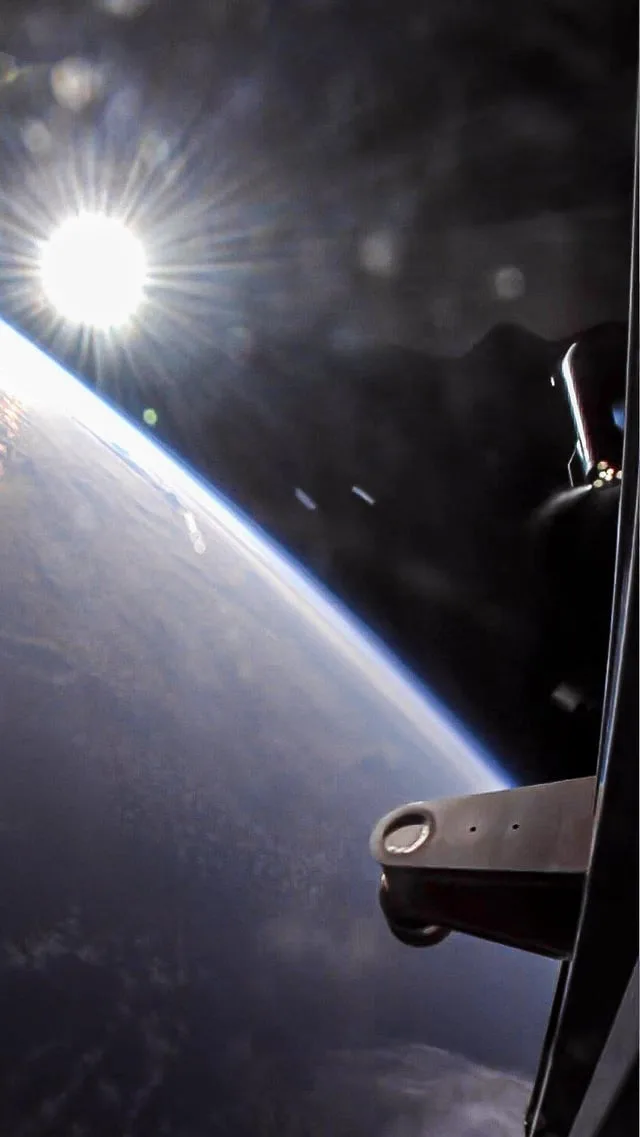
Hot-staging is a critical maneuver where the Starship upper stage ignites its engines before fully separating from the Super Heavy booster, providing a more efficient transition to orbit. This flight successfully demonstrated the complex procedure, a key milestone for Starship's development. (Source: reddit.com)
FAQ
What is the SpaceX Starship system? The Starship system is a fully reusable, super heavy-lift rocket. It has two parts: the Super Heavy booster and the Starship spacecraft. SpaceX built it for missions to the Moon, Mars, and Earth orbit.
What was the main goal of this Starship flight test? The main goal was a full flight, including hot-staging and orbital velocity. It also aimed to show Starship could re-enter Earth’s atmosphere. This flight proved key engineering changes worked.
How many Starship integrated flight tests have there been? The March 14, 2024 launch was the third integrated flight test (IFT-3). The two previous tests in April and November 2023 ended early. Each test gives valuable data for development.
What role does Starship play in NASA’s plans? NASA picked Starship as the Human Landing System (HLS) for its Artemis III mission. This mission will return astronauts to the lunar surface. Starship’s large capacity is key to these big goals.

The SpaceX Starship system, a fully reusable, super heavy-lift rocket, comprises the Super Heavy booster and the Starship spacecraft, designed for ambitious missions to the Moon, Mars, and Earth orbit, including NASA's Artemis III lunar landing. (Source: borntoengineer.com)
You might also like:
👉 May 9, 2024: SpaceX Launches Next-Gen US Spy Satellites
👉 Space Travel: Earth’s Best Investment, Not Mars
👉 The $546 Billion Space Race: Private Money, Global Rivalries