
Why Deep Tech Innovation Demands Decades, Not Quick Wins
Forget quick tech wins. True deep tech innovation, the kind that changes everything, moves at a glacial pace, demanding patience over speed.
Deep Tech’s Slow Burn: Patience Defines True Innovation
Forget the hype about quick tech wins. We’re told innovation means agile startups, “unicorn” valuations, and lightning-fast product launches. This idea says success comes from moving fast and breaking things. But that’s not how deep tech works. True innovation, the kind that changes everything, moves at a glacial pace. It demands patience, not speed.
Deep tech starts with scientific discoveries and engineering breakthroughs. It solves big problems in health, energy, and computing. Unlike a new app, deep tech is built on years of research. It needs serious money and carries high technical risk.
Take mRNA technology, for example. The science began with early research in the 1960s. Katalin Karikó and Drew Weissman did key work on mRNA modification. This happened at the University of Pennsylvania in the late 1990s and early 2000s. Their discoveries became essential decades later for COVID-19 vaccines.
The Long Game of Scientific Breakthroughs
Deep tech projects need a long time to grow and reach the market. For example, a new drug takes 10 to 15 years from discovery to market. This contrasts with the common belief that innovation happens instantly, driven by fast software development. The process costs around $2.6 billion, according to a 2014 study by the Tufts Center for the Study of Drug Development. Much of that money pays for tough testing and regulatory approval. These aren’t hurdles you can just “break” quickly.
The search for commercial nuclear fusion power shows this perfectly. Fusion research started in the 1930s. Huge international projects, like ITER (International Thermonuclear Experimental Reactor) in France, began construction in 2013. ITER aims for its first plasma by 2025, then full-power operation by 2035. This long commitment shows the huge scientific challenges involved.
Even “new” tech has deep roots. Artificial intelligence, for all its recent buzz, started with the 1950s Dartmouth Workshop. Geoffrey Hinton’s work on neural networks began in the 1980s. This work forms the basis of much of today’s AI. Decades of basic research were vital before AI started changing industries.
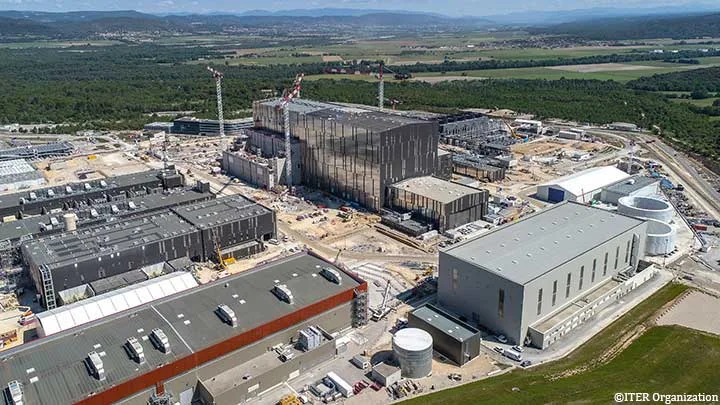
ITER, the world's largest experimental tokamak nuclear fusion reactor, is a monumental example of deep tech's long game, with construction in France aiming for first plasma by 2025 and full operation by 2035. This international collaboration seeks to harness the same energy process that powers the sun, a scientific endeavor spanning decades. (Source: man-es.com)
Beyond Silicon Valley’s Venture Capital
Deep tech often originates outside of Silicon Valley’s venture capital model. Many important projects begin in universities and government labs worldwide. These are not venture-backed startups.
Europe’s CERN, for instance, has driven basic physics research since 1954. It created the World Wide Web as a tool for scientists, not a commercial product. Germany’s Fraunhofer Society, founded in 1949, runs 76 institutes doing applied research.
In the US, federal agencies like DARPA (Defense Advanced Research Projects Agency) have been key drivers. DARPA funded ARPANET, the internet’s predecessor, in the 1960s. It also backed early GPS and stealth technology. These weren’t venture-backed projects.
China has also greatly increased its deep tech research investment. Its “Made in China 2025” initiative targets key industries like advanced robotics, AI, and new energy vehicles. This top-down national strategy is very different from a purely market-driven model. These examples show a global deep tech network.
Patient Capital’s Unseen Hand
Government grants and corporate R&D budgets are often the first funding sources for deep tech. While venture capital is important for later-stage growth, deep tech projects often require a different kind of initial investment.
The U.S. National Science Foundation (NSF) gave $9.6 billion for basic research in 2023. The European Research Council (ERC) awarded over €2.2 billion in 2022 to top scientists across Europe. This funding backs high-risk, long-term science.
Look at Moderna’s early mRNA technology. The company got big funding from the U.S. Biomedical Advanced Research and Development Authority (BARDA). This government agency invested hundreds of millions into vaccine development and manufacturing. This money was used years before the COVID-19 pandemic.
Large corporations also invest a lot in their own deep tech R&D. IBM, for example, spent $6.6 billion on research and development in 2022. Much of that goes into quantum computing, advanced materials, and AI. These are long-term bets that don’t bring quick returns. This patient capital is key for bridging the “valley of death” between discovery and market success.
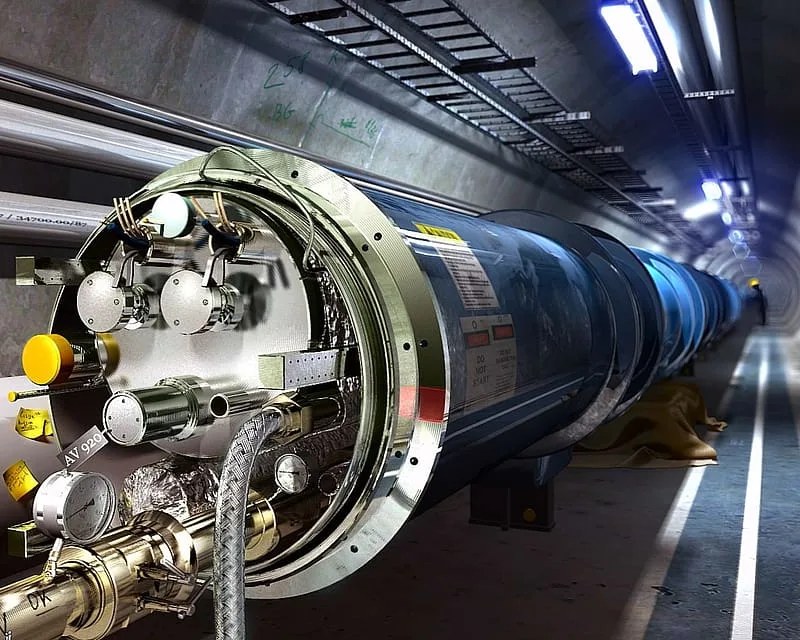
CERN, the European Organization for Nuclear Research, has been a global leader in basic physics research since 1954, famously giving birth to the World Wide Web. Its Large Hadron Collider (LHC), the world's most powerful particle accelerator, exemplifies deep tech innovation driven by patient capital outside traditional venture models. (Source: peakpx.com)
Impact Beyond the Immediate Buzz
Deep tech’s biggest effects develop over decades, making future industries and societal changes possible. This contrasts with the common view that tech impact means quick consumer adoption and fast market value.
The laser, invented in 1960 by Theodore Maiman at Hughes Research Labs, is a clear example. For years, people called it “a solution looking for a problem.” Its first uses were limited. Today, lasers are essential in fiber optics, medical surgery, barcode scanners, and manufacturing. This broad use took half a century to develop.
GPS started as a U.S. military project in the 1970s. It was for navigation and precision targeting. Civilian access was limited and costly at first. It took decades for GPS to get into every smartphone, changing logistics, transport, and how we get around. Its impact was slow, but it’s everywhere now.
Deep tech in advanced materials, like graphene, takes a similar path. Andre Geim and Konstantin Novoselov discovered it in 2004 at the University of Manchester. Graphene won a Nobel Prize in 2010. Its potential for super-strong, lightweight, conductive materials is huge. But broad commercial uses are still appearing. The path from lab to market is often quiet, step-by-step.
Deep tech’s real value is solving humanity’s biggest challenges. Think climate change, disease, and managing resources sustainably. Its impact isn’t about quarterly earnings or viral trends. It’s about better health, cleaner energy, and new basic capabilities. This slower, deeper change needs long-term commitment and different ways to measure success.
FAQ
What makes deep tech different from other technology? Deep tech comes from scientific discovery and engineering breakthroughs. It solves big problems. “Shallow tech,” by contrast, often makes small improvements or new business models. Deep tech usually involves longer development and higher technical risk.
Why does deep tech take so long to commercialize? It needs years of basic research, tough testing, and solving tough scientific problems. Deep tech also faces big regulatory hurdles. It needs a lot of money before it can reach market success.
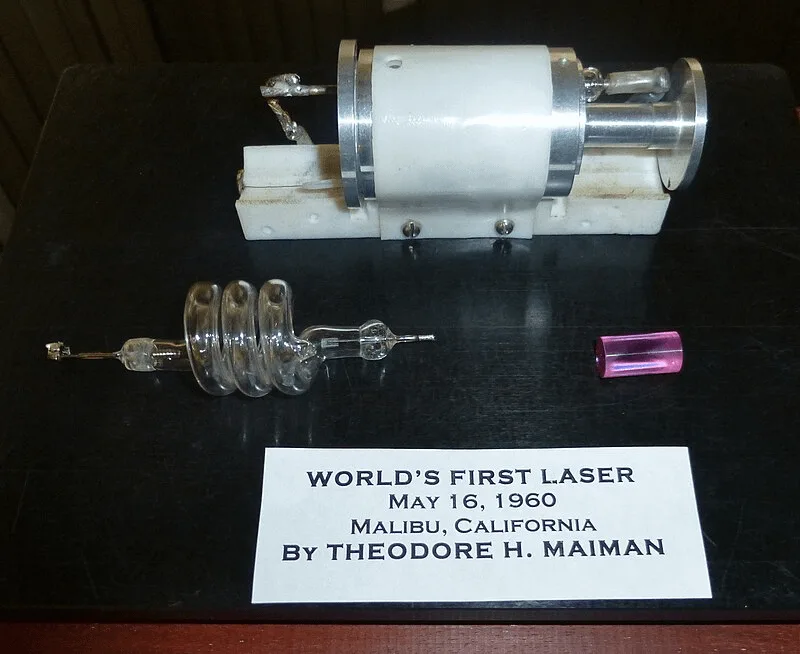
Theodore Maiman's ruby laser, invented in 1960 at Hughes Research Labs, was initially dubbed 'a solution looking for a problem.' This pioneering deep tech invention took decades to find its widespread applications in fields from medicine to manufacturing. (Source: reddit.com)
Who mainly funds deep tech innovation? Venture capital helps in later stages. But government grants, national research agencies, and corporate R&D departments mostly fund early-stage deep tech. These sources provide the patient capital needed for long-term, high-risk research.
What are some current examples of deep tech? Quantum computing is one. So are new biotechnologies like CRISPR gene editing. Fusion energy research, new advanced materials such as graphene, and very advanced AI models are others. These areas promise huge changes across many areas.
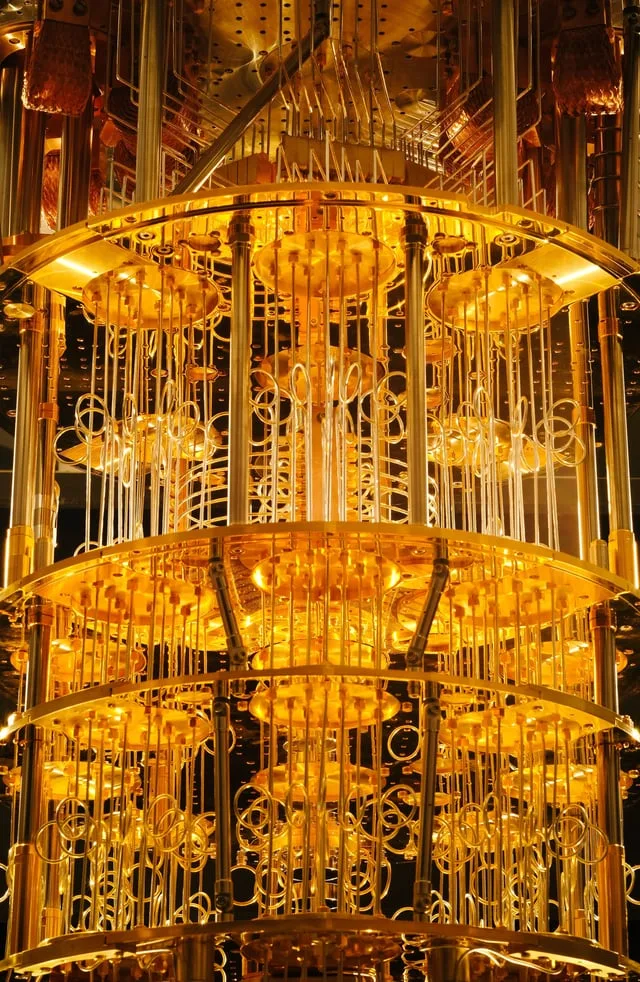
Quantum computers, like this one featuring a distinctive dilution refrigerator, harness quantum-mechanical phenomena such as superposition and entanglement to perform calculations far beyond the capabilities of classical computers, often requiring temperatures colder than deep space. (Source: reddit.com)
You might also like:
👉 UC Berkeley’s 2023 Metamaterial: Sound Vanishes
👉 The $546 Billion Space Race: Private Money, Global Rivalries