J. Craig Venter's 2010 Creation: Ethical Fears of Synthetic Life
The 2010 creation of *Mycoplasma laboratorium JCVI-syn1.0* by J. Craig Venter Institute ignited ethical concerns about building life from scratch.
The Ethics of Synthetic Biology
What if we could build life from scratch? In 2010, scientists at the J. Craig Venter Institute created Mycoplasma laboratorium JCVI-syn1.0. This bacterial cell was controlled by a completely synthetic genome. This “synthetic life” sparked widespread interest and worry.
Synthetic biology is a field that combines different areas of study. It uses engineering principles in biology. Scientists design and build new biological parts, devices, and systems. They also change existing natural biological systems for useful goals. This includes everything from engineering microbes for biofuels to developing new gene therapies.
The field promises great advances. These include new drugs, sustainable chemicals, and crops that can resist drought. Most ethical talks focus on biosecurity risks. They also address accidental environmental release and “designer babies.” These worries are real and need serious thought. However, this narrow focus often misses deeper, broader ethical issues. It ignores questions of fairness, ownership, and what life itself means.
The Idea of Control
Many people believe that strong rules and lab safety measures can manage synthetic biology’s risks. This view suggests we can engineer organisms and then control their effects. It assumes predictable interactions with complex biological systems. But this idea underestimates life’s natural unpredictability.
Consider gene drives. This synthetic biology tool quickly spreads specific genetic traits through a population. Scientists developed gene drives to fight malaria by changing mosquito populations. The Bill & Melinda Gates Foundation funded research through projects like Target Malaria. This technology shows promise, but it also carries a big risk of unwanted ecological effects. Dr. Todd Kuiken, a senior scholar at the Woodrow Wilson Center, notes how hard it is to predict the long-term environmental impact of gene-edited organisms. Once released, a gene drive organism cannot be easily removed. Its engineered traits could spread to other species or ecosystems.
The belief that engineered organisms will stay in their intended roles is a dangerous oversimplification. Microbes, for example, are known for horizontal gene transfer. They share genetic material with other organisms. Even carefully designed “kill switches” in synthetic bacteria might fail. A 2017 study in Nature Communications showed that engineered bacteria could lose safety features in certain environmental conditions. This transfer could spread new traits to wild populations. It creates unpredictable ecological changes. Predicting these interactions across entire ecosystems remains very difficult. Dr. Megan Palmer, a biosecurity expert at Stanford University, advises caution when we work with complex biological systems. Our understanding of ecological networks is incomplete. This limits our ability to foresee all possible outcomes when we release a synthetic organism.
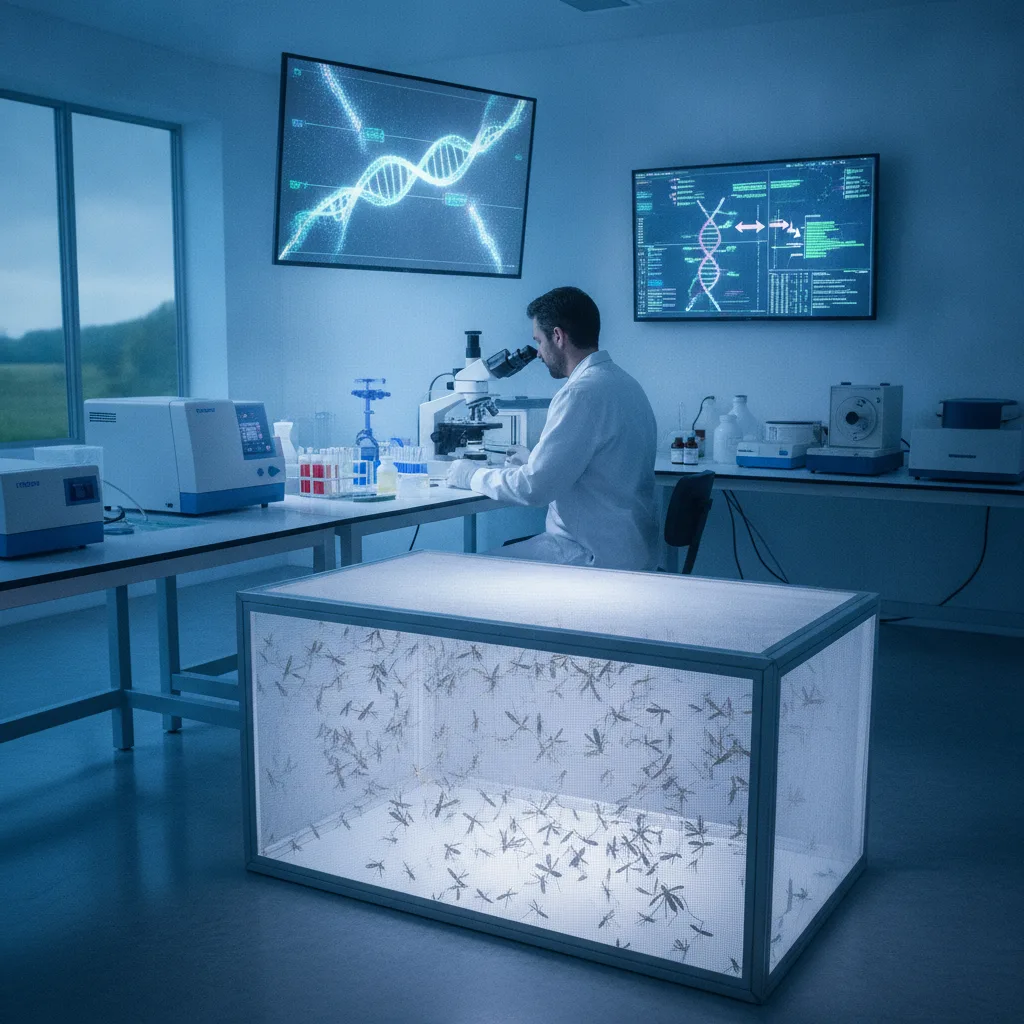
Scientists are developing gene drives to genetically modify mosquito populations, such as *Anopheles gambiae*, in an effort to combat malaria, raising significant ethical questions about ecological impact and unintended consequences. (AI-generated illustration)
Money and Power: Synthetic Biology’s Uneven Playing Field
Most ethical discussions about synthetic biology focus on “dual-use” worries. This means the technology could be used for good or bad, such as bioterrorism. This focus is important. However, it takes attention away from deeper questions of economic fairness and social equality. Synthetic biology’s benefits are not guaranteed to be shared equally.
New treatments from synthetic biology often come with high costs. Some CAR-T cell therapies use genetically engineered T-cells to fight cancer. These treatments cost hundreds of thousands of dollars per patient. Novartis’s Kymriah, an early example, launched in 2017 costing over $475,000. These costs make life-saving innovations unavailable to many people. This creates a two-tiered healthcare system. Access depends on wealth, not medical need. It raises serious ethical questions about who truly gains from scientific progress.
Also, synthetic biology innovation is concentrated in wealthy nations and large corporations. This raises concerns about biocolonialism. Many genetic resources come from developing countries rich in biodiversity. Yet, the economic gains often go mostly to the companies that patent and sell them. The Nagoya Protocol on Access and Benefit-sharing aims to ensure fair benefit sharing. However, enforcing these agreements and achieving true fairness remains hard. Critics like the ETC Group have long warned about corporate control. They argue this could let companies control essential resources, like seeds and medicines, through patented synthetic biology. This could worsen global inequalities.
Industrial synthetic biology also creates labor issues. Bio-manufacturing processes are often more efficient than traditional methods. They could displace workers in agriculture or chemical industries. Imagine engineered yeast producing flavors or fuels. This shift could harm traditional farming communities. This economic change is often called progress. But it needs serious ethical thought about job security and community strength.
What is Life? Who Owns It?
Building new biological entities from scratch forces us to rethink basic ideas. What defines “life”? Who owns it? Current law often treats biological sequences and organisms as patentable inventions. This approach avoids deep philosophical and ethical problems.

CAR-T cell therapies, such as Novartis's Kymriah, are a revolutionary application of synthetic biology that genetically engineers a patient's own T-cells to fight cancer. However, their high costs, often exceeding $475,000 per patient, highlight significant ethical concerns about equitable access to life-saving medical innovations. (Source: thermofisher.com)
The U.S. Patent and Trademark Office grants many patents on synthetic genes, pathways, and organisms. These patents treat biological code much like software code. This creates patent thickets. These dense webs of intellectual property rights slow down innovation. They make it hard for smaller research groups or developing countries to use and build upon basic discoveries. Dr. Arti Rai, a law professor at Duke University, writes a lot about gene patenting. She shows how broad patents hinder future research and product development. The ease of creating new biological entities synthetically makes this issue worse. It expands what can be owned.
Synthetic biology blurs the definition of “natural.” Is a plant engineered with a synthetic gene sequence still “natural”? This affects organic food labeling and how consumers see products. It challenges existing regulatory categories. In 2010, the J. Craig Venter Institute created a bacterial cell with an entirely synthetic genome. This showed that we can now design life, not just modify it. It raises questions about human dignity and the value of biological systems.
Also, synthetic biology tools like CRISPR gene editing connect to ethical discussions about human enhancement. In 2018, Chinese scientist He Jiankui surprised the scientific community. He created the world’s first gene-edited babies. This event showed the risk of “designer babies.” These changes raise concerns about genetic determinism. They also prompt questions about worsening social inequalities based on genetic traits. While not purely synthetic biology, changing human heredity fits into the broader synthetic biology discussion.
Frequently Asked Questions
What is synthetic biology? Synthetic biology engineers biological systems. It designs and builds new biological parts using engineering principles. This field also redesigns existing organisms for new functions.
What are the main ethical concerns in synthetic biology? Key concerns include biosecurity risks from engineered pathogens and environmental release of modified organisms. We also worry about fair access to therapies, ownership of synthetic life, and potential social differences.
Is synthetic biology regulated? Yes, regulation exists. It often adapts rules from genetic engineering or pharmaceuticals. However, innovation moves faster than current regulations. No single, global framework specifically for synthetic biology exists.
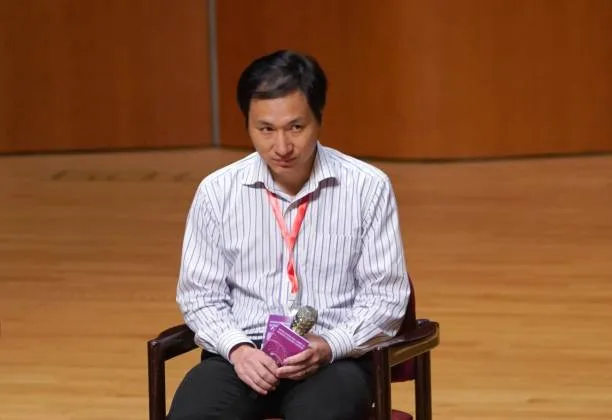
Chinese scientist He Jiankui shocked the world in 2018 by announcing he had created the first gene-edited babies, sparking global ethical condemnation and raising profound questions about human enhancement and genetic determinism. (Source: gettyimages.com)
Who primarily benefits from synthetic biology? Currently, large pharmaceutical, agricultural, and industrial biotechnology companies often benefit most. This is due to high research costs and complex intellectual property. Broader societal benefit is possible, but sharing it fairly is hard.
Planning a Responsible Path
The ethics of synthetic biology are more complex than often thought. Focusing only on biosecurity, while necessary, gives an incomplete picture. We must broaden our ethical framework. We need to consider economic fairness, global equality, and basic questions about life’s ownership.
Moving forward requires active, inclusive discussions. These talks cannot stay only within scientific or governmental groups. Public discussion, involving many different voices from affected communities, is vital. International governance must adapt faster. They need to address the rapid pace of technology. Also, policies that promote fair access to synthetic biology’s benefits are key. This means rethinking intellectual property rules and investing in building capabilities in underserved regions.
Synthetic biology holds great promise. Realizing this promise responsibly means facing its full range of ethical challenges directly. It needs a commitment to justice and shared well-being. This calls for more than just good science. It needs wisdom and foresight.

The UNESCO International Bioethics Committee (IBC) is a body of 36 independent experts that monitors progress in life sciences and their applications, providing advice on ethical issues. It plays a crucial role in fostering international debate on the ethics of synthetic biology and other emerging technologies, addressing the need for global governance. (AI-generated illustration)
You might also like:
👉 The Human Brain: Unraveling Its Mysteries & How It Works
👉 Unexplained Mysteries of Science: Cosmos, Quantum & Beyond