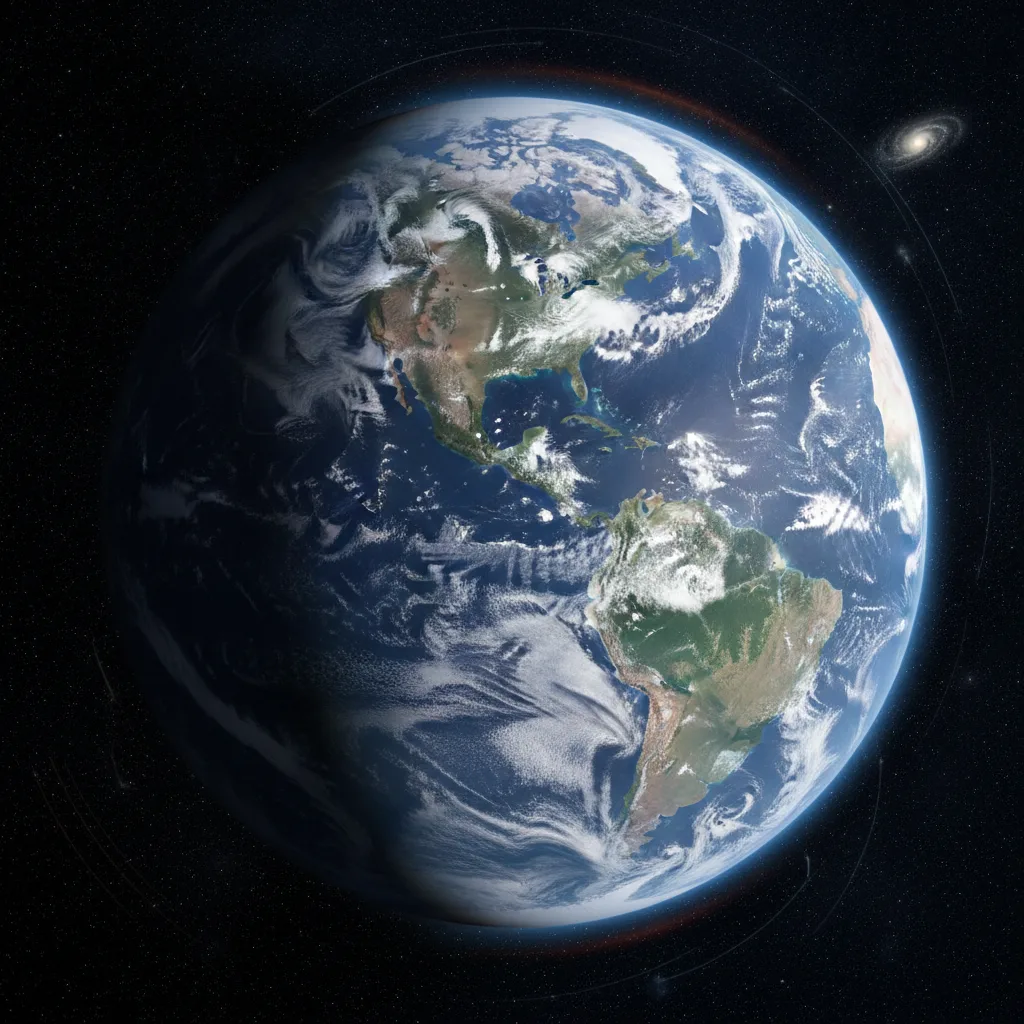
Extreme Weather: The CO2 Link to Record Heatwaves
Is carbon dioxide fueling record heatwaves and devastating floods? Unpack the science distinguishing daily weather from long-term climate patterns.
Extreme Weather: Our Warming World
A record-breaking heatwave hits. A devastating flood sweeps through a town. We naturally ask: Did climate change cause this? That’s a fair question, but it misses a fundamental scientific point.
Weather is what happens day-to-day. Climate is the long-term pattern. Earth’s climate system constantly processes energy from the sun. The atmosphere, oceans, land, and ice all interact. Certain gases, like carbon dioxide, trap some outgoing heat. This natural greenhouse effect keeps our planet warm enough for life. But we’ve released large amounts of these gases. They form an extra blanket, trapping more heat and causing the globe to steadily warm.
Beyond simple cause and effect
In July 2022, a scorching heatwave gripped Western Europe. Temperatures pushed above 40°C in the UK for the first time. Many people asked directly: “Did climate change cause this heatwave?” The answer isn’t a simple yes or no. Scientists rarely say climate change “causes” a single weather event.
Think of it like loading dice. A fair die has an equal chance of landing on any number. Climate change doesn’t magically make the die land on six every time. Instead, it subtly changes the odds. It makes rolling a six – representing an extreme event – much more likely. The die itself still exists. You could still roll a one. But the chances are now skewed.
This is attribution science. It investigates how human-caused climate change influences the probability and intensity of specific extreme weather. It moves beyond “Did climate change cause this?” It asks: Did climate change make this event more likely or more intense? Dr. Friederike Otto, a co-leader of the World Weather Attribution (WWA) initiative, highlights this difference. She explains human influence acts as a “threat multiplier.”
How scientists connect the dots
The Intergovernmental Panel on Climate Change (IPCC) reported this in its 2021 Sixth Assessment Report. Human influence has made extreme weather more frequent and intense in many regions. Scientists achieve this using sophisticated methods. They don’t just look at temperature records. They create climate models.

Dr. Friederike Otto is a pioneering climate scientist and co-leader of the World Weather Attribution (WWA) initiative, which rapidly assesses the human influence on extreme weather events. Her work is crucial in understanding how climate change acts as a "threat multiplier" for phenomena like heatwaves and floods. (Source: aaespeakers.com)
These models are like complex digital versions of Earth’s climate system. They simulate how the atmosphere, oceans, and land interact. Researchers run them twice. First, they simulate the world as it is today, with all human-emitted greenhouse gases. Second, they simulate a “counterfactual world.” This world exists without human-caused emissions. It represents a pre-industrial climate.
By comparing thousands of simulations from both scenarios, scientists determine an extreme event’s probability in each world. For instance, a 2022 WWA study found the European heatwave was “virtually impossible” without human-caused climate change. The study concluded human activity made the event at least 10 times more likely. This comparison reveals how human emissions have altered the climate system.
Heavy rainfall offers another example. Warmer air holds more moisture. For every 1°C of warming, the atmosphere can hold about 7% more water vapor, according to the Clausius-Clapeyron equation. This extra moisture directly fuels heavier downpours during storms. Dr. Noah Diffenbaugh, a climate scientist at Stanford University, has shown this mechanism. It directly links global warming to increased heavy precipitation events across many regions.
How extreme weather gets worse
Global average temperatures have risen about 1.2°C above pre-industrial levels, reports the World Meteorological Organization (WMO). This warming drives several distinct changes in extreme weather. Each event type responds to different physical mechanisms.
Heatwaves are getting hotter and longer. This happens because the baseline temperature has risen. Imagine a heatwave that would have peaked at 35°C in the past. Now, with 1.2°C of warming, that same heatwave might reach 36.2°C. Also, atmospheric blocking patterns can become more persistent. They create “heat domes.” These domes trap hot air over a region for extended periods, intensifying the heat.
Heavy Rainfall and Flooding are also increasing. As we’ve seen, warmer air holds more moisture. When this moist air cools, it releases that extra water as rain. So, storms can drop much larger volumes of water. This leads to more intense flash floods and river flooding. A 2022 Nature Communications study linked observed increases in extreme rainfall over China to human-caused warming.
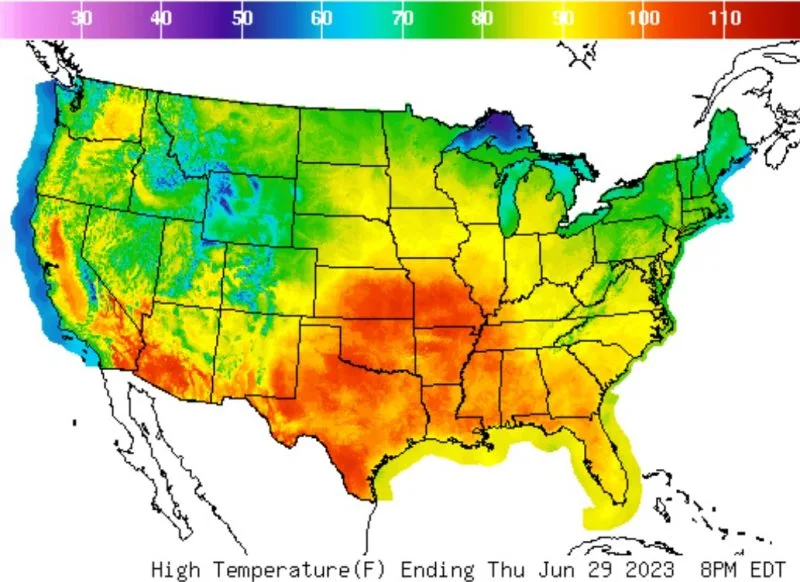
A heat dome is a persistent high-pressure system that traps hot air over a region, intensifying heatwaves for extended periods. These atmospheric blocking patterns are becoming more frequent and persistent due to climate change, leading to record-breaking temperatures. (Source: earthsky.org)
Tropical Cyclones (hurricanes and typhoons) aren’t necessarily increasing in number. But their intensity is rising. Warmer ocean waters provide more energy for these storms. This allows them to strengthen faster, a phenomenon called rapid intensification. They also tend to carry more rainfall. Research published in Science in 2020 indicated an increase. It showed more very intense tropical cyclones globally over the past four decades.
Droughts are getting more severe in many regions. Higher temperatures increase evaporation from soil and plants. This dries out landscapes faster. So, even if rainfall amounts don’t change drastically, increased evaporative demand worsens drought conditions. The U.S. National Oceanic and Atmospheric Administration (NOAA) attributes the severity of recent Western U.S. droughts partly to this temperature-driven desiccation.
Tools and limits of prediction
Scientists use specialized tools to understand and forecast extreme weather. Supercomputers, like those at the European Centre for Medium-Range Weather Forecasts (ECMWF), run detailed global models. These models incorporate large amounts of data. This data comes from satellites, weather balloons, radar, and ground-based stations.
This extensive observation network provides the raw material for simulations. It helps initialize weather forecasts and validate climate models. Scientists use these tools to improve short-term weather predictions. They also refine long-term climate projections.
But precise prediction of individual extreme events remains challenging. The atmosphere is a chaotic system. Tiny initial uncertainties can grow dramatically over time. This makes long-range forecasting of a specific hurricane’s path or a heatwave’s exact start date difficult. Regional climate dynamics also add complexity. Local topography and land-use changes can significantly influence how global warming appears locally.
Despite these limits, attribution science has greatly advanced. It now provides clear statements about the human fingerprint on many types of extreme weather. Dr. Sonia Seneviratne, a lead author for the IPCC, notes that the science has moved from general predictions to specific event analysis. We can now quantify the human influence on individual extreme events with high confidence.
Why this science matters
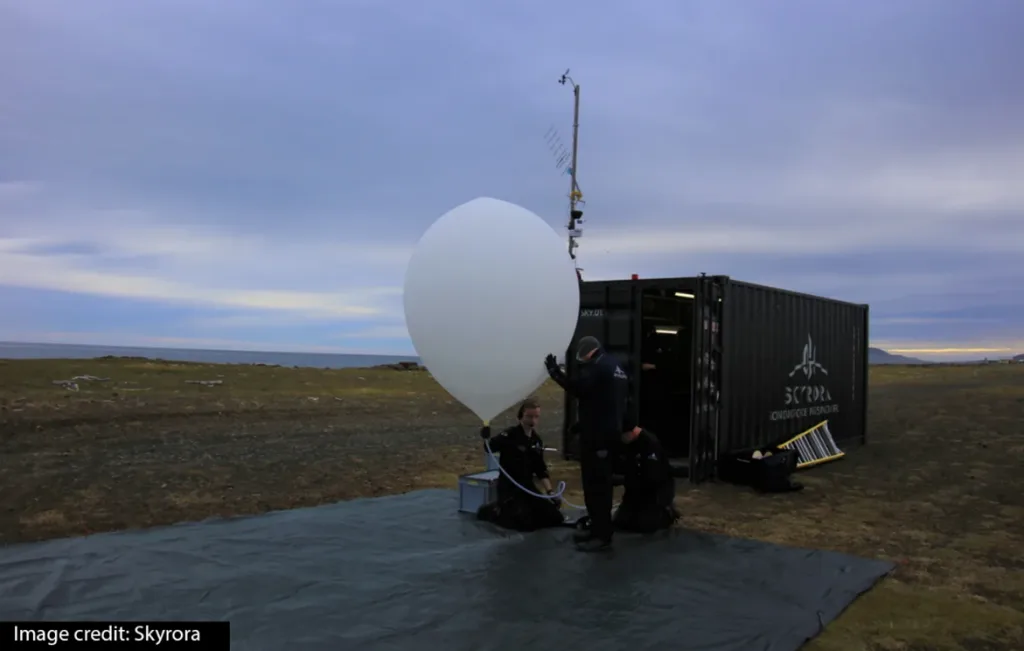
A weather balloon ascends into the atmosphere, carrying a radiosonde to collect vital data on temperature, humidity, and pressure. This crucial information feeds into supercomputer models, enhancing our ability to predict and understand extreme weather events. (Source: skyrora.com)
Extreme weather events have significant implications for our societies. In 2023, for example, the United States experienced 28 separate weather and climate disasters. Each cost over $1 billion. NOAA estimated the total cost reached $92.9 billion. This data shows the real economic impact.
This scientific understanding directly informs adaptation strategies. Knowing heatwaves are more intense helps cities develop cooling centers and early warning systems. Recognizing increased heavy rainfall encourages improved urban drainage planning and flood defenses. It helps communities better prepare for future impacts.
The science also reinforces the urgency of mitigation efforts. Reducing greenhouse gas emissions is vital. It slows the rate of global warming. This lessens the “loading of the dice” for future extreme events. The IPCC has consistently highlighted the need for rapid, deep, and sustained emissions reductions.
Continued investment in climate science and monitoring is vital. It allows us to better anticipate and prepare for a changing climate. It provides the knowledge needed for informed decisions. These decisions will shape our future safety and prosperity as we face more frequent and intense extreme weather. This ongoing research is our best tool for handling the challenges ahead.
Frequently asked questions
Q1: Does climate change cause extreme weather? No, climate change doesn’t directly “cause” any single extreme weather event. Instead, it significantly increases the probability and intensity of many such events. It makes extreme weather much more likely than in a pre-industrial climate.
Q2: Are all extreme events linked to climate change? Not every extreme event is strongly influenced by climate change; some still fall within the range of natural variability. However, scientists are increasingly finding a human fingerprint on heatwaves, heavy rainfall events, and droughts.
Q3: Can we predict the next big storm precisely? Predicting the exact timing and path of individual extreme weather events remains difficult. This is due to the chaotic nature of the atmosphere. Climate models provide projections about future trends and probabilities, not specific, precise forecasts of single events months in advance.
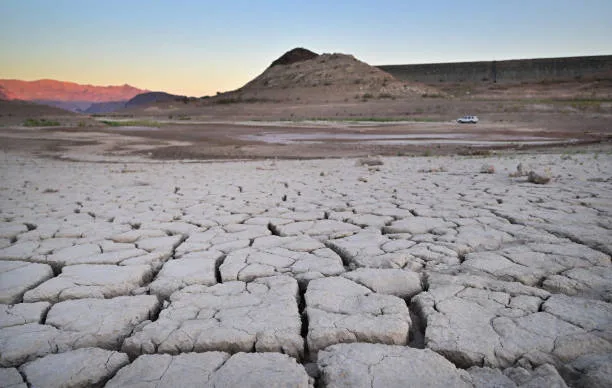
Droughts, characterized by prolonged periods of abnormally low rainfall, are among the extreme weather events increasingly influenced by climate change, leading to parched landscapes, water scarcity, and significant economic and ecological devastation. (Source: gettyimages.com)
Q4: What’s the biggest scientific challenge in this field? One significant challenge is understanding regional climate impacts. Global models provide broad trends, but local factors greatly influence specific extreme weather. Improving regional projections and understanding complex interactions across different climate systems remains a key focus for researchers.
You might also like:
👉 1960’s TIROS-1: The Satellite That Showed Earth’s Climate