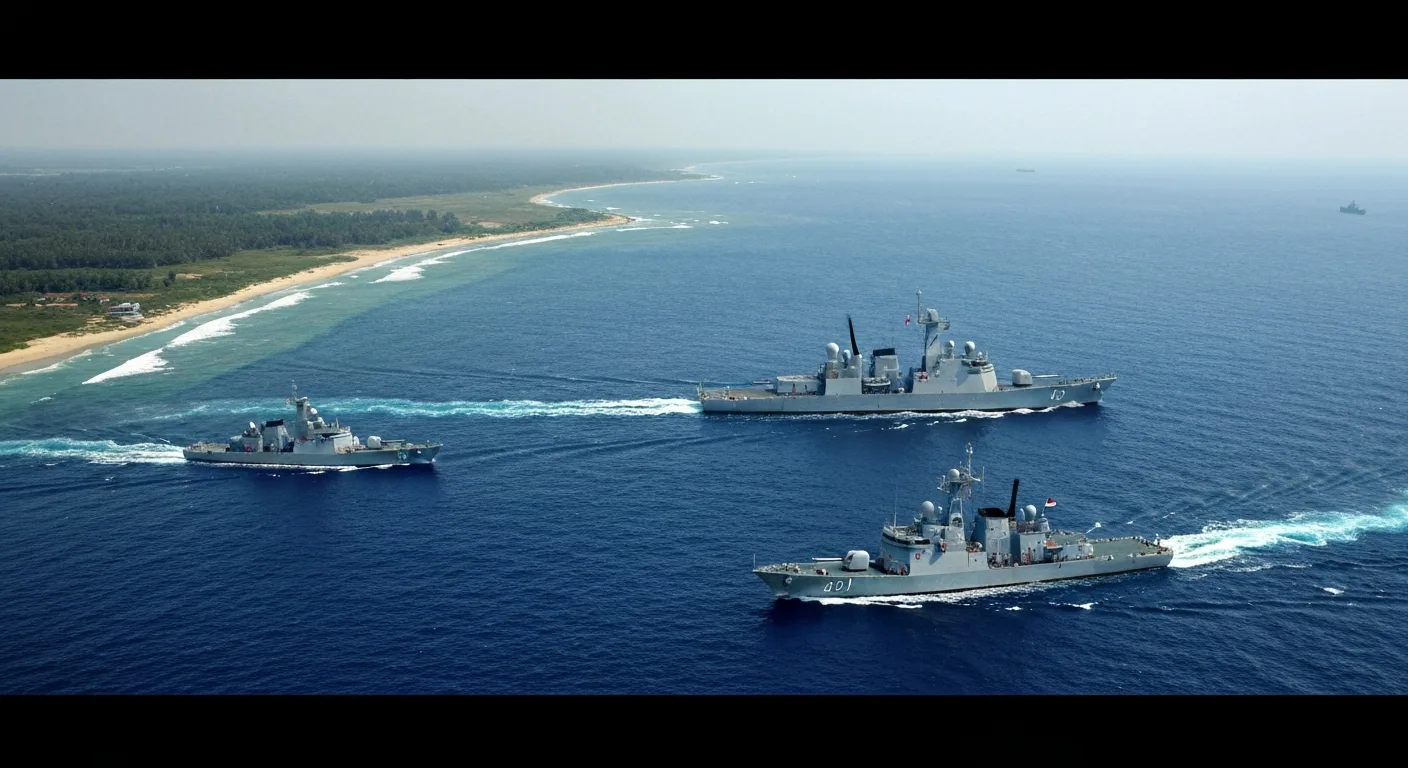
India's Maritime Dilemma: 95% Trade, Indo-Pacific Power
India's future hinges on the Indo-Pacific. 95% of its trade moves by sea, making maritime security crucial for its economy and daily life.
India’s ocean future
India. Most people see a land of mountains and ancient rivalries. They miss the truth. India’s future, wealth, and safety all depend on the ocean. It is not just a nation with a coast. It is a giant peninsula, tied to the Indo-Pacific. This misunderstanding is dangerous. India moves 95% of its trade by sea, says the Ministry of Shipping. Blockages here hit its economy hard. They threaten daily life.
The ocean India depends on
The Indo-Pacific is more than a place. It is a strategic idea. It covers the ocean from East Africa to the western Pacific. This huge region includes both the Indian and Pacific Oceans. It holds 60% of the world’s people. It handles 65% of global trade. This makes it the heart of global business and power shifts.
India sits right in the middle. Its spot offers huge potential, but also big risks. China, the US, Japan, Australia, and many Southeast Asian nations are all key players here. They fight for influence, resources, and control over important trade routes.
The core issue is a struggle for regional power and stability. Major nations want open sea lanes. They also want to boost their economic and military presence. This creates a tangled mess of alliances, rivalries, and security problems for countries like India.
India’s exposed lifelines
India’s coastline stretches over 7,500 kilometers, covering its mainland and islands. This huge maritime edge makes India very dependent on the sea. For example, the International Energy Agency says over 80% of India’s crude oil imports come by sea.
Picture a giant pipeline running through international waters. Any block or threat to this pipeline directly hits India’s energy and economic stability. These important shipping lanes pass through narrow spots called chokepoints. These include the Strait of Malacca, the Strait of Hormuz, and Bab-el-Mandeb. Controlling or threatening these chokepoints gives a nation huge strategic power.
China’s growing navy and port investments across the Indian Ocean worry New Delhi. Analysts sometimes call this strategy the “String of Pearls.” It involves Chinese-funded port projects and naval facilities. Hambantota in Sri Lanka, Gwadar in Pakistan, and Kyaukpyu in Myanmar are examples. These are not always military bases. However, they give China logistical access and influence. A 2020 US Department of Defense report noted China’s increasing push to build more overseas logistics and basing spots.
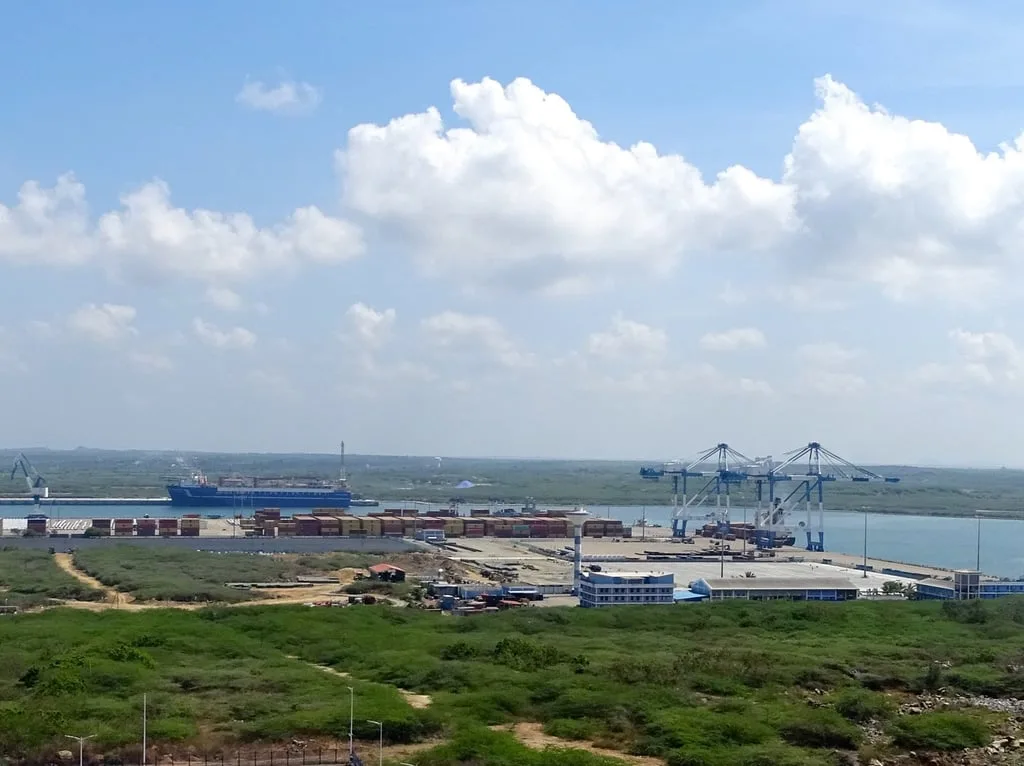
Hambantota Port in Sri Lanka, a key project in China's "String of Pearls" strategy, has become a symbol of Beijing's growing influence and debt-trap diplomacy in the Indian Ocean, raising significant concerns for India's maritime security. (Source: scmp.com)
India sees these moves as potential encirclement. Or at least a big increase in China’s reach near its shores. This creates a security problem. India needs a strong navy to protect its interests. However, its actions might look like escalation to China. Beyond this state competition, India also faces piracy, maritime terrorism, and illegal fishing. These add more layers to its security thinking.
China’s ocean ambitions
China’s ocean ambitions are India’s biggest challenge in the Indo-Pacific. The People’s Liberation Army Navy (PLAN) has modernized massively. In 2022, China launched its third aircraft carrier, the Fujian. This shows Beijing’s will to project power far from its coast.
A 2020 US Department of Defense report on China’s military power said the PLAN is already the world’s largest navy by ship count. This growth includes modern destroyers, submarines, and amphibious assault ships. China’s Belt and Road Initiative (BRI), a huge infrastructure project, has a big ocean part. It pours money into ports and logistics hubs across Asia, Africa, and Europe. This gives China commercial influence. It also offers potential dual-use facilities for its navy.
China’s strong claims and artificial islands in the South China Sea show it aims to control important sea lanes. These actions often clash with other nations’ claims. India worries about China’s growing presence in the Indian Ocean. This includes more PLAN submarine trips and naval exercises. For India, this creates a potential “two-front” security challenge. It must manage its land borders with China. It also needs to manage its ocean domain.
Imagine a homeowner building a new wing on their house. Then they extend their fence onto a shared neighborhood path. This changes things for everyone. China’s actions challenge the region’s power balance. They force other nations to rethink their security positions.
India’s response: balancing and friends
India has a many-sided strategy to meet these ocean challenges. One key plan is the “Security and Growth for All in the Region” (SAGAR) doctrine. Prime Minister Narendra Modi launched it in 2015. SAGAR stresses ocean cooperation, helping regional partners grow, and securing India’s own sea zones. It focuses on peacefully settling disputes and working together economically.
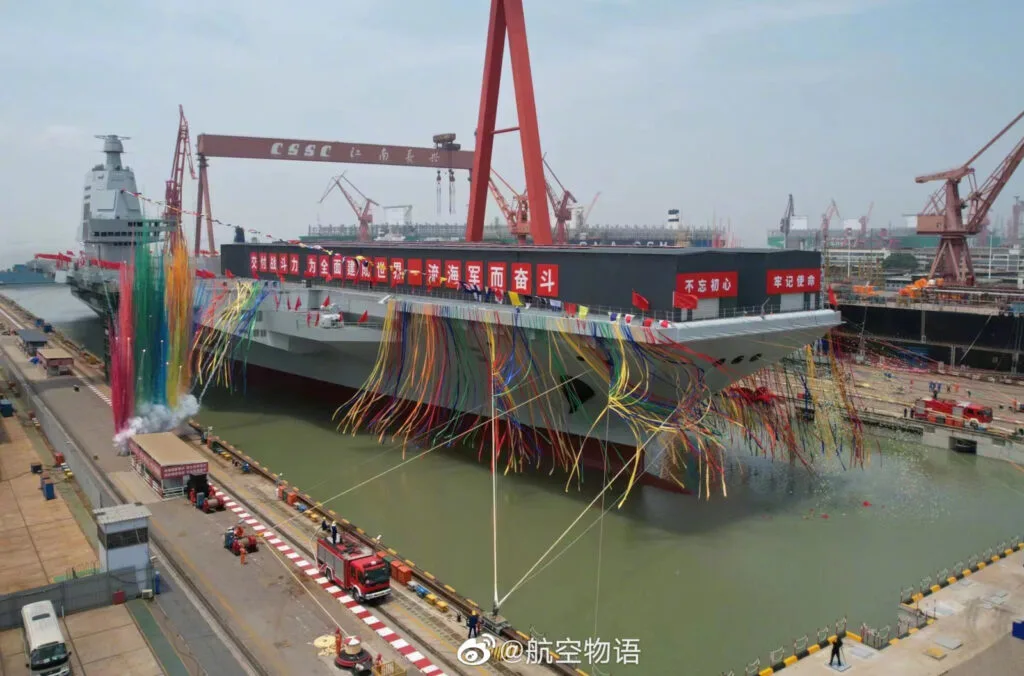
The Fujian, China's third and most advanced aircraft carrier, was launched in 2022, marking a significant step in the People's Liberation Army Navy's (PLAN) modernization and its ambition to project power far from its coast. (Source: navalnews.com)
The Indian Navy is also undergoing big modernization. Its goal is to develop real deep-sea abilities. This means operating effectively far from home. A major moment came in 2022 with the INS Vikrant. This was India’s first aircraft carrier designed and built at home. It marked a big step toward self-reliance in naval shipbuilding. India wants to be a “net security provider” in the Indian Ocean Region. This involves humanitarian aid, disaster relief, and anti-piracy work.
India also actively builds multilateral partnerships. The Quadrilateral Security Dialogue (QUAD) brings together India, the US, Japan, and Australia. This informal strategic group aims to promote a “free and open Indo-Pacific.” US State Department statements often highlight the QUAD’s focus on sea security, infrastructure, and regional responses. The QUAD holds joint naval exercises, like the Malabar series. These improve how member navies work together.
Beyond the QUAD, India strengthens ties with other ocean powers. This includes France, the UK, and various ASEAN nations. These partnerships involve joint naval drills, intelligence sharing, and defense tech cooperation. Despite these friends, India stays committed to an independent foreign policy. It avoids formal military alliances that might limit its choices. This balancing act lets India use partnerships without fully aligning with any single power. Admiral Arun Prakash, former Chief of Naval Staff, has often said India needs a strong, independent navy. It must protect its wide-ranging interests.
The Indo-Pacific’s next chapter
Global ocean trade will likely double by 2050, says the United Nations Conference on Trade and Development (UNCTAD). This means ongoing geopolitical rivalry in the Indo-Pacific. China will probably keep expanding its navy and economy, aiming to firm up its influence. At the same time, the US and its allies want a “free and open Indo-Pacific.” They will push back against any single power’s dominance.
India’s role in this future becomes more important. It is often seen as a key swing state. It can shift regional power. India’s choices will shape the future of ocean security, trade routes, and international rules. The stakes are huge: regional peace, global money flows, and respect for international rules.
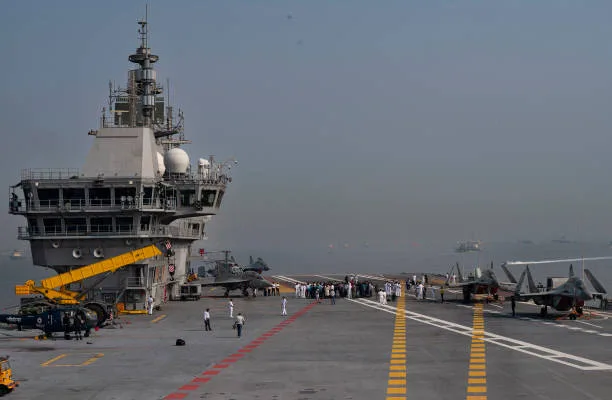
The INS Vikrant, commissioned in 2022, is India's first indigenously designed and built aircraft carrier, marking a significant milestone in the nation's naval self-reliance and its ambition to project power in the Indo-Pacific. Its construction involved over 50 Indian firms and generated thousands of jobs, showcasing India's growing shipbuilding capabilities. (Source: gettyimages.in)
New challenges will come from climate change. Rising sea levels, extreme weather, and fights over fewer resources will add new security problems. These factors will demand even more cooperation and diplomacy. The road ahead is not easy. However, India’s skill at balancing its own security problems with bigger geopolitical currents will be a key part of the 21st century.
Frequently Asked Questions
What is the “Indo-Pacific” and why does it matter? The Indo-Pacific is a strategic idea covering the Indian and Pacific Oceans. It matters because it has key sea lanes, holds 60% of the world’s people, and handles 65% of global trade.
Why is India’s geography a challenge? India’s long coastline and peninsula shape mean it relies heavily on ocean trade for its economy and energy. This reliance also leaves it open to threats like piracy. Other powers can project influence nearby, creating security risks.
What is the QUAD? The QUAD (Quadrilateral Security Dialogue) is an informal group with India, the United States, Japan, and Australia. Its main goal is to promote a “free and open Indo-Pacific.” It does this by working together on ocean security, infrastructure, and regional issues.
How does China’s BRI affect India? China’s Belt and Road Initiative (BRI) includes many port investments across the Indian Ocean. Examples are Gwadar in Pakistan and Hambantota in Sri Lanka. India sees these as possibly boosting China’s military and economic influence nearby, which raises security worries.
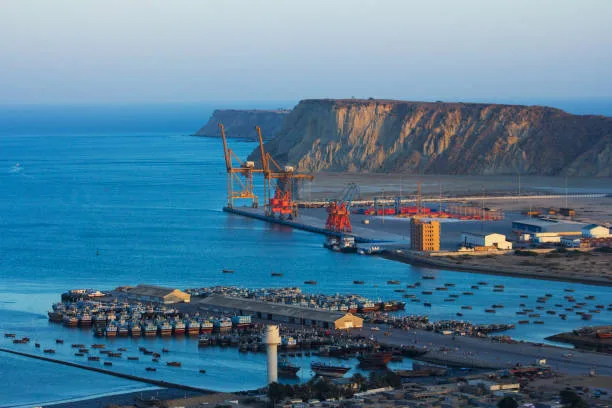
Gwadar Port in Pakistan, a key project of China's Belt and Road Initiative, is strategically located near the Strait of Hormuz. India views its development with concern, seeing it as a potential dual-use facility that could expand China's military and economic influence in the Indian Ocean. (Source: gettyimages.com)
You might also like:
👉 US-China: $664B Trade Masks Zero-Sum Global Power Struggle
👉 Understanding Energy Independence: Security, Economy, Future