Mars Life: Why We Haven't Found It (Yet) in Jezero Crater
Despite popular belief, NASA's Perseverance rover hasn't confirmed life on Mars. The search continues for signs from 4 billion years ago.
Mars: We haven’t found life yet
Four billion years ago, Mars was an active world. It had liquid water and a thick atmosphere. This environment could have hosted microbial life. Scientists agree Mars was once habitable. NASA’s Perseverance rover landed in Jezero Crater in February 2021. This crater once held a lake. It’s a great spot for preserving ancient signs of life. Many people now believe we’ve found ancient life on Mars, or will soon. This exciting idea often overlooks important scientific details.
People are excited about Mars’ past habitability. They point to hints of life. However, moving from habitable conditions to confirmed life is a huge leap. When we look closely, the evidence shows many unclear points. It often suggests non-biological reasons. This is not doubt. It is a call for rigorous science.
ALH84001: The meteorite that started a debate
In 1984, a potato-sized rock hit an Antarctic ice field. This meteorite, ALH84001, came from Mars. An impact ejected it from the planet 16 million years ago. In 1996, a NASA team led by Dr. David S. McKay announced a discovery. They claimed the rock held evidence of fossilized Martian microbes.
This news made global headlines. It suggested the first direct evidence of alien life. The team presented several pieces of evidence. These included tiny structures resembling fossilized bacteria. They also found carbonate globules and magnetite crystals. People thought these were biological byproducts. The public widely saw this as “life found on Mars.”
Initial excitement was huge. However, scientists quickly questioned the findings. Many features thought to be from life have other non-biological explanations. Geologist Dr. John Bradley showed similar structures can form in Earth rocks. They come from non-biological mineral growth. Magnetite crystals can come from life, but they also form from volcanoes. Dr. Andrew Steele, a Carnegie Institution geochemist, said the magnetite argument was weak. The supposed “fossils” were also 100 times smaller than Earth’s tiniest known bacteria. This size made it hard to say they were biological. Most scientists now agree ALH84001’s features match non-biological processes. This early “discovery” shows how hard it is to understand unclear evidence.
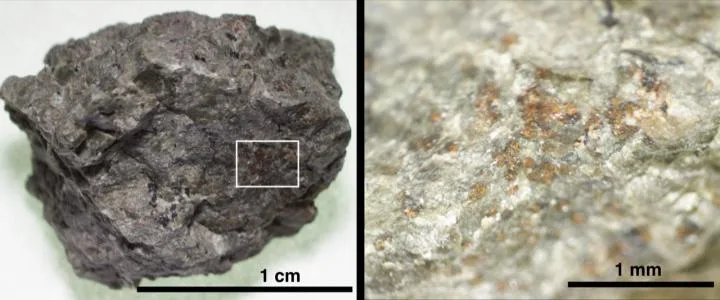
In 1996, NASA announced that this potato-sized meteorite, ALH84001, found in Antarctica, contained evidence of fossilized Martian microbes, sparking a global debate about alien life. Though largely debunked, it remains a pivotal artifact in the search for extraterrestrial life. (Source: space.com)
Organic molecules and methane: hints, not proof
NASA’s Curiosity rover landed in Gale Crater in August 2012. Curiosity found organic molecules in Martian rocks. These included thiophenes, benzene, toluene, and small carbon chains. The rover drilled into mudstones to find them. These mudstones formed in ancient lakes. Dr. Jennifer Eigenbrode, a Goddard Space Flight Center astrobiologist, published these findings in 2018. They showed that organic building blocks for life were present.
Organic molecules are basic to life on Earth. Their presence on Mars is often called strong evidence. It suggests life could have existed there. For many, this leads to the belief that “ancient life was found.” It certainly shows Mars had the right ingredients for life.
Organic molecules alone do not prove life. They can form without biology. Volcanoes, meteorite impacts, and hot vents all create organics. For example, the Murchison meteorite from Australia has many amino acids. No one thinks it proves space life. Martian radiation also makes things harder to understand. It constantly breaks down organic matter. This makes preservation difficult, as Dr. Carol Stoker of NASA Ames Research Center noted.
Curiosity also found methane in Mars’ atmosphere. Methane levels change with the seasons. While this gas strongly signals life on Earth, geology also produces methane. Water and rock reacting with heat can create it. Serpentinization is one example. Scientists have not found a clear biological source for Martian methane yet. Its presence is still a mystery, not proof.
The high bar for proving life
A biosignature is any substance or structure. It shows scientific evidence of past or present life. On Earth, this means fossils, specific organic molecules, or unique isotope ratios. NASA’s astrobiology strategy focuses on many types of evidence. One finding is rarely enough.
The public often sees “potential biosignature” as “life found.” This makes people think life was found. Pictures looking like microfossils or unique mineral shapes fuel this idea. But these visual similarities can mislead us. Geological processes often create structures that look like biological forms.
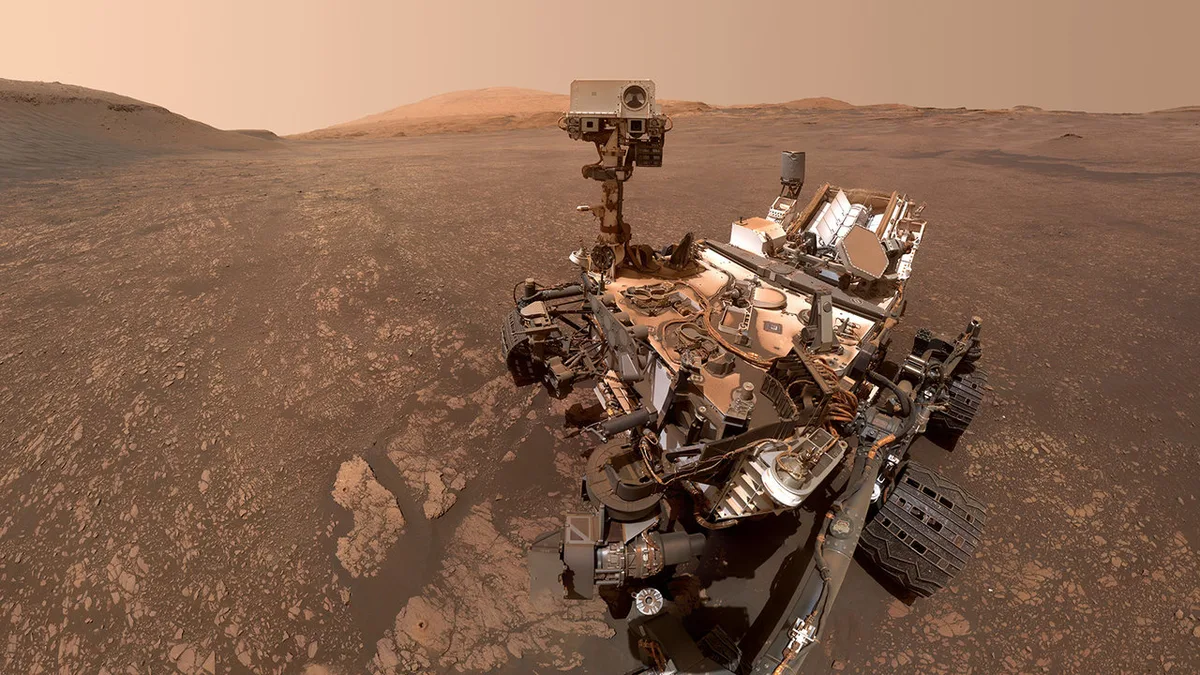
NASA's Curiosity rover, seen here exploring the Martian surface, landed in Gale Crater in August 2012 and discovered organic molecules in ancient mudstones, providing crucial insights into Mars' potential for past life. Its findings of thiophenes, benzene, and toluene were published in 2018, hinting at the building blocks for life. (Source: space.com)
Scientists want strong proof. The “false positive” problem is a big worry. Many geological or chemical processes look like biosignatures. Dr. Kenneth Williford, a Perseverance project scientist, emphasized this point. He says any potential biosignature needs many independent tests. Earth contamination is another challenge. Rovers carry tiny Earth microbes. These can accidentally contaminate samples. This makes telling Martian life from Earth life very hard. The Mars Sample Return mission aims to solve this problem. It will bring Martian rocks to Earth labs. There, advanced instruments can do final tests.
The real path to answers
NASA’s Perseverance rover collects samples in Jezero Crater now. These samples are sealed in tubes. They will return to Earth. This mission is a joint effort by NASA and ESA. It is our best shot at confirming Martian life. Scientists on Earth will look for specific carbon isotope ratios. These ratios can show biological activity. They will also search for biopolymers.
The “ancient life discovered” story is exciting, but it is not confirmed. Evidence points to a past where life could have lived. It also shows life’s building blocks were there. But we still lack clear proof of life itself. Scientists need stricter proof. They need clear, many types of evidence. We must tell the difference between conditions for life and life itself. We also need to tell the difference between potential signs of life and confirmed ones.
Until those samples return, the search goes on. Current findings are fascinating. They expand what we know about astrobiology. But they do not confirm ancient life yet. Instead, they give us a clear plan for finding it. The true breakthrough will happen when we can analyze those Martian rocks right here on Earth. That is when we will finally know.
FAQ
What is ALH84001? ALH84001 is a Martian meteorite found in Antarctica in 1984. In 1996, some scientists said it held signs of ancient Martian life. Most scientists now believe its features come from non-biological processes.
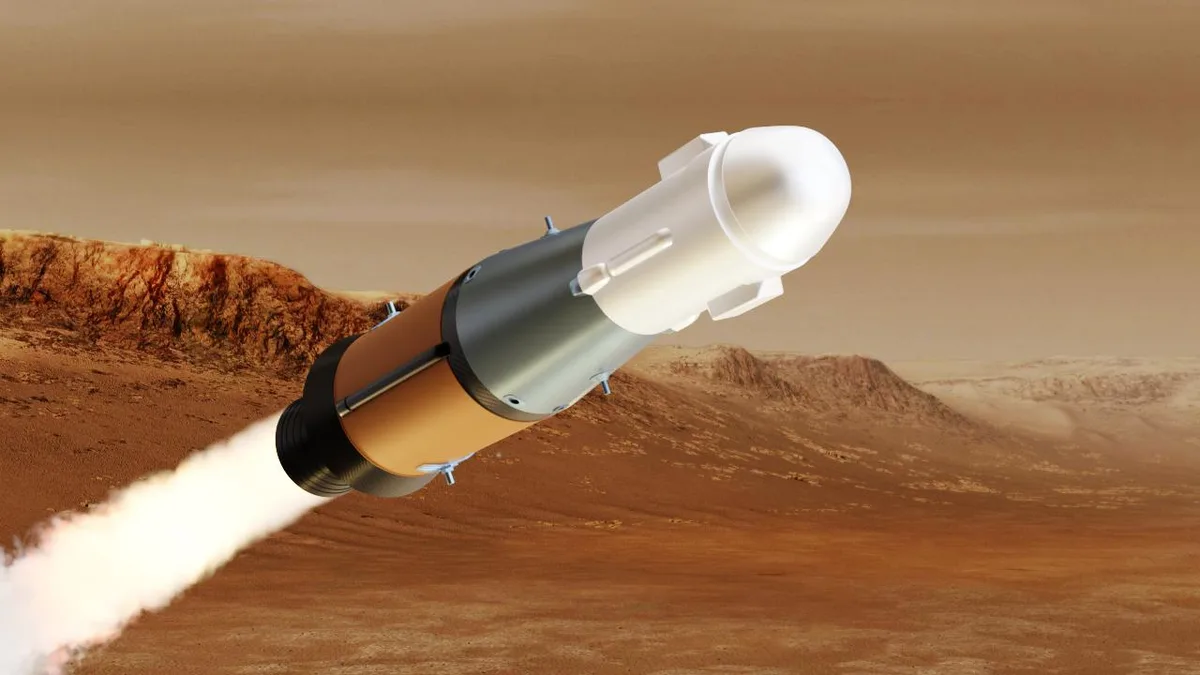
The Mars Ascent Vehicle (MAV) is a critical component of the Mars Sample Return mission, designed to launch sealed Martian rock samples from the surface of Mars into orbit. This groundbreaking rocket will be the first ever to launch from another planet, representing a historic step towards bringing definitive answers about ancient Martian life to Earth. (Source: space.com)
Have rovers found proof of life on Mars? No. Rovers found organic molecules and signs of past water. These are conditions life needs. They’re not direct proof of life itself.
Why is it so hard to find life on Mars? Mars’ harsh environment makes preserving things difficult. Radiation destroys organic compounds. It’s also hard to tell real biosignatures from non-biological look-alikes. Earth contamination is another worry.
What’s next in the search for Martian life? The Mars Sample Return mission. It will bring rock and soil samples from Jezero Crater to Earth. Scientists can then study them with advanced lab tools.
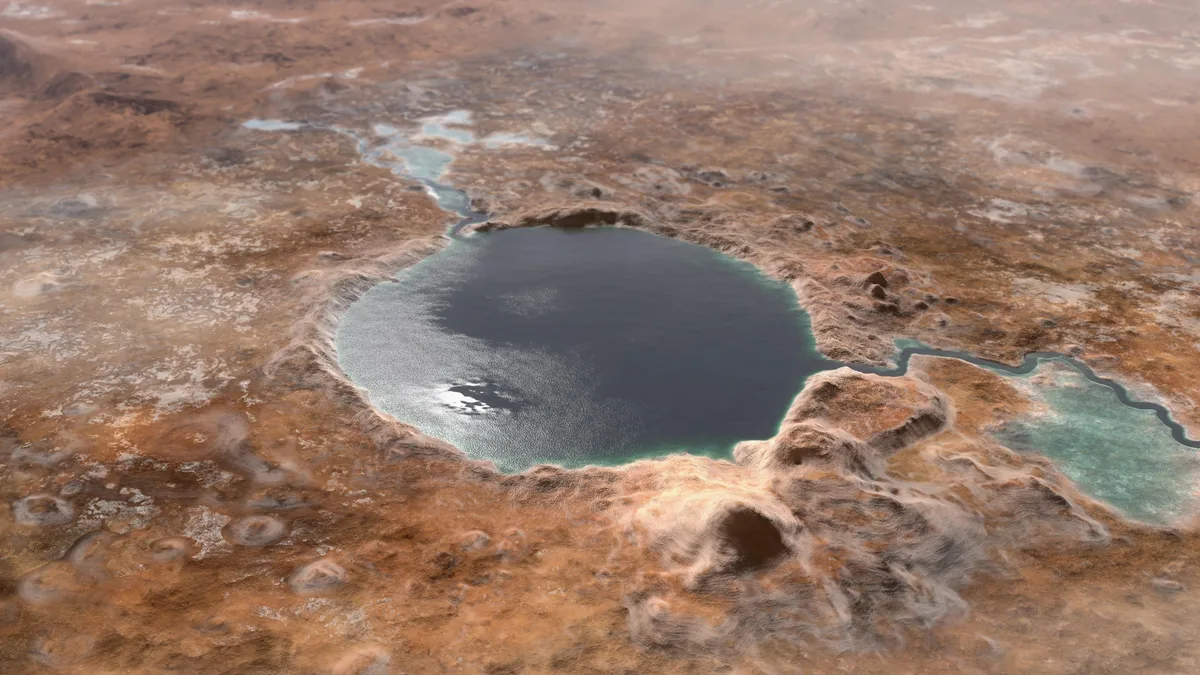
Jezero Crater on Mars is the landing site for NASA's Perseverance rover and the target for the Mars Sample Return mission, chosen for its ancient river delta that may preserve signs of past microbial life. (Source: space.com)
You might also like:
👉 Tucker Carlson on Aliens: UFOs, UAP & Media Discourse
👉 Unexplained Mysteries of Science: Cosmos, Quantum & Beyond