
Stop the $4.45M Breach: Global Enterprise Security in 2023
Global enterprises face escalating cyber threats. The average data breach cost $4.45 million in 2023, demanding robust risk management strategies.
Global Cyber Threats Cost Enterprises Billions Annually
$4.45 million. That’s the average cost of a data breach in 2023, according to IBM. Businesses worldwide operate across many borders. They depend on interconnected digital systems every day. These systems hold vast amounts of sensitive data, like customer records and intellectual property.
Managing security risks isn’t simple. It spans diverse legal and threat environments. Security teams must protect data, intellectual property, and keep operations running. This complex job falls to corporate security teams everywhere. They deal with different regulations and sophisticated attackers.
Threats keep rising
In 2023, cyberattacks hit 93% of organizations worldwide. That’s from the World Economic Forum’s 2024 Global Risks Report. Nation-state groups, like China’s APT41, attack critical infrastructure. Russia’s Sandworm group has attacked energy grids. Organized cybercriminals, like the now-gone Conti ransomware group, want money.
Phishing is still a top way for breaches to start. Verizon’s 2023 report found 49% of breaches used social engineering. Ransomware attacks shot up 71% in 2022, Mandiant says. These attacks badly disrupt businesses. Attackers often demand huge cryptocurrency payments.
It took 277 days on average to find and stop a breach in 2023. This long delay significantly raises costs for companies. IBM’s report points to healthcare as the most expensive industry for breaches. It cost $10.93 million per incident in 2023. Financial services came next, with an average breach cost of $5.90 million.
Insider threats are also a big risk. Employees, contractors, or former staff can compromise systems, on purpose or by accident. The IBM report found insider threats caused 14% of breaches. These incidents often involve abusing special access.
Managing the risk
The NIST Cybersecurity Framework is a popular model. It lists five main jobs for managing cyber risk: Identify, Protect, Detect, Respond, and Recover. Organizations use this framework to build effective security programs.
Companies must map their digital assets. This includes servers, cloud environments, and employee devices. They find potential weak spots in these systems. Knowing your assets is the base for finding risks.

Sandworm, a Russian state-sponsored hacking group, is notorious for its sophisticated attacks on critical infrastructure, including energy grids in Ukraine. It is widely linked to Russia's GRU military intelligence agency. (Source: american.edu)
Security teams figure out how likely and how bad threats are. They use numbers and descriptions for this. ISO/IEC 27001 standards guide this check. Senior leaders decide how much risk the company will take.
Companies put controls in place to cut risks. These controls include encryption, multi-factor authentication, and employee training. They also make incident response plans. These plans spell out how to contain and fix breaches.
Systems are monitored constantly to find new threats. Regular security audits check if controls work. This keeps things compliant and protected. Threat intelligence feeds give real-time updates on new attack methods.
Global challenges
Different regulations worldwide make things tough for global companies. The EU’s General Data Protection Regulation (GDPR) demands strict data handling rules. California’s Consumer Privacy Act (CCPA) also has tough requirements. Break these rules, and you could face huge fines.
Global politics directly affect cyber risk. Sanctions against countries can limit access to technology. Government-backed cyber spies target key industries in rival nations. This includes defense, energy, and tech. Companies must understand the cyber warfare picture.
Outside vendors bring new risks to company supply chains. Attacks on supply chains rose 71% in 2023, says the IBM Security X-Force Threat Intelligence Index 2024. Companies must carefully check their suppliers’ security. Vendor risk programs are vital.
Using the cloud makes old security strategies harder. Wrong settings in cloud systems are common. These mistakes expose sensitive data. Over 80% of organizations had a public cloud security incident, Sophos reported in 2023. Securing cloud systems needs special skills.
More remote and hybrid work means more places for attackers to hit. Employees using company resources from home networks create weak spots. Securing these spread-out teams needs good endpoint protection. It also needs secure remote access tools.
What’s next for security
AI and machine learning are changing how we find threats. They analyze huge amounts of data for odd behavior. This greatly speeds up responses to new threats. AI helps spot complex malware.
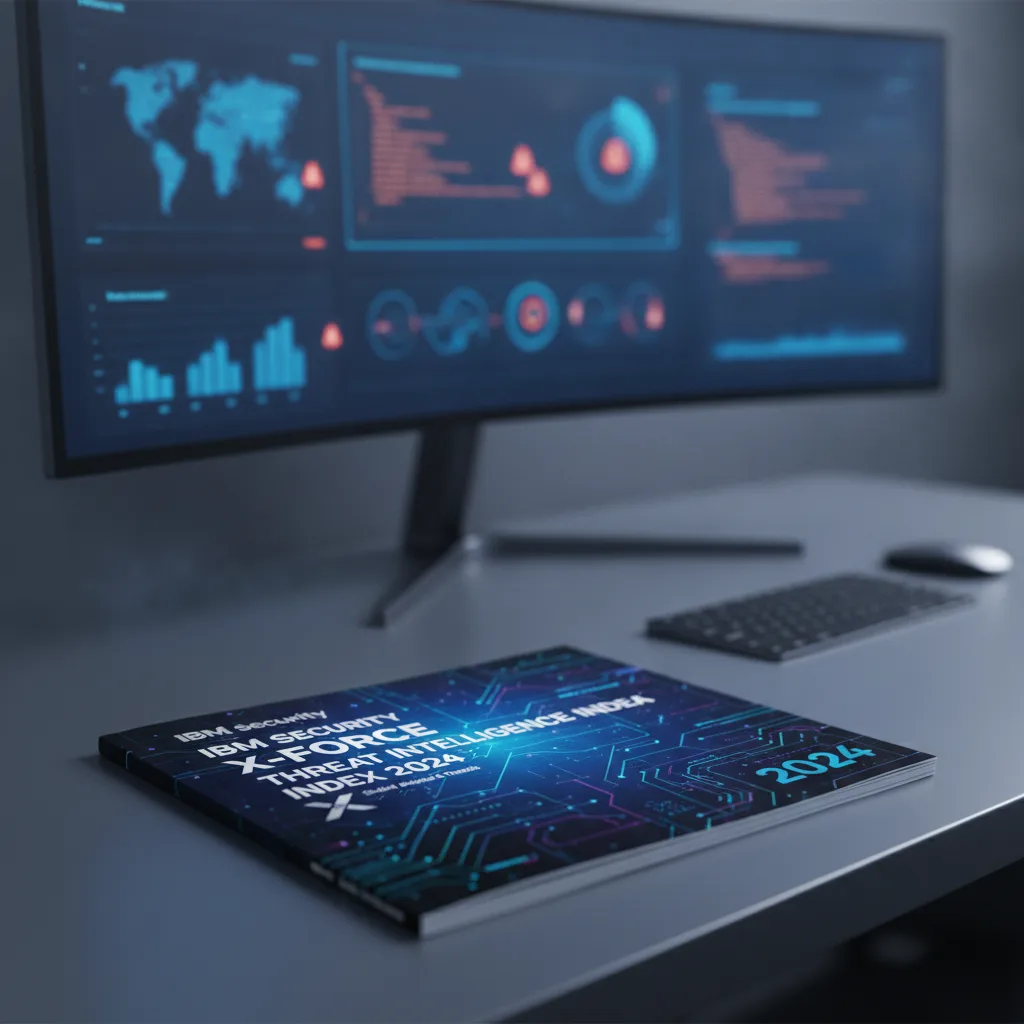
The IBM Security X-Force Threat Intelligence Index 2024 is a crucial annual report that provides insights into global cyber threats. This edition highlighted a significant 71% rise in supply chain attacks in 2023, underscoring a major challenge for global enterprise security. (AI-generated illustration)
Many companies are using a “zero trust” model. This means no user or device is trusted automatically. Every access request is checked strictly. Zero trust lessens the damage from stolen login details. It applies “least privilege” rules across the network.
The focus is moving from just prevention to cyber resilience. Companies are building ways to survive and recover fast from attacks. Business continuity planning is now key. Disaster recovery plans ensure minimal downtime.
Sharing threat intelligence across industries makes everyone safer. Groups like the Cyber Threat Alliance help with this. They give useful info on new threats. Staying ahead of attackers means constant watchfulness and teamwork. Future plans will focus on active threat hunting. Security teams will actively look for threats automated systems haven’t found yet.
FAQ
-
What is global security risk management? It’s how multinational companies find, check, and reduce cyber threats worldwide. It considers different laws and dangers.
-
Who are the biggest attackers? Nation-state groups, organized cybercriminals, and insiders. They all have different reasons, from spying to making money. These threats come from all over the world.
-
Why is supply chain security so important? Supply chains use many outside vendors and partners. A weak spot in one vendor can expose the whole company. Businesses must ensure partners keep strong security.
-
How do regulations affect security? Rules like GDPR and CCPA force strict data protection worldwide. Breaking them can mean huge fines. Companies must change their security to meet these different legal demands.
The Cyber Threat Alliance (CTA) is a non-profit organization dedicated to improving cybersecurity by enabling real-time, high-quality threat intelligence sharing among its members. Founded in 2017, it plays a crucial role in helping companies stay ahead of attackers and enhance global cyber resilience. (Source: paloaltonetworks.com)
You might also like:
👉 WannaCry 2017: The Cyberattack That Crippled UK Hospitals