Why 1960s Rocket Tech Won't Get Us to Mars Fast Enough
Despite Saturn V lifting 140,000 kg to LEO in 1967, our space travel methods are stuck in the past. Discover what's next.
What I learned about humanity’s next space engines
We often discuss settling Mars, mining asteroids, or reaching other star systems. However, researching how to get there quickly and affordably revealed a disconnect. Our space travel methods are similar to those from the 1960s.
I first thought we just needed bigger rockets. NASA launched the Saturn V in 1967. It lifted 140,000 kg to Low Earth Orbit and generated over 3.4 million kg of thrust. That was impressive. However, its basic physics remain the same.
Chemical rockets work by expelling hot gas at high speeds. This creates thrust. The main problem for deep space travel is not escaping Earth’s gravity. It is carrying enough fuel to speed up, slow down, and steer across vast distances. The Tsiolkovsky rocket equation, from 1903, shows most of a rocket’s mass must be fuel. This limits payload and speed.
Chemical propulsion is great for getting off Earth. However, it is inefficient for long, fast trips through space’s vacuum. We need different approaches to explore the solar system. The future of space travel relies on technologies that seem like science fiction.
The chemical ceiling and electric horizons
Chemical rockets, while powerful, have fundamental limits for deep space. Future engine development focuses on efficiency, not just raw power. Chemical rockets are controlled explosions. They are excellent for escaping Earth’s gravity.
Some “future” technologies have existed for a long time. Ion propulsion, for example, is not new. NASA’s Deep Space 1 probe used it successfully in 1998. NASA’s Jet Propulsion Laboratory (JPL) launched the Dawn spacecraft in 2007. It used ion thrusters to visit two protoplanets, Vesta and Ceres.
Ion thrusters operate differently. They do not burn fuel. Instead, they use electricity to ionize a propellant, usually xenon gas. Electric fields then accelerate these charged ions to very high speeds. These ions are expelled out the back of the engine. This creates a small but continuous thrust.
An ion engine’s thrust is small. People often compare it to the weight of a sheet of paper. Their special quality is their specific impulse. This measures an engine’s propellant efficiency. Ion engines are much more efficient than chemical rockets. They can accelerate a spacecraft for months or even years. This allows them to reach high speeds over time with minimal fuel.
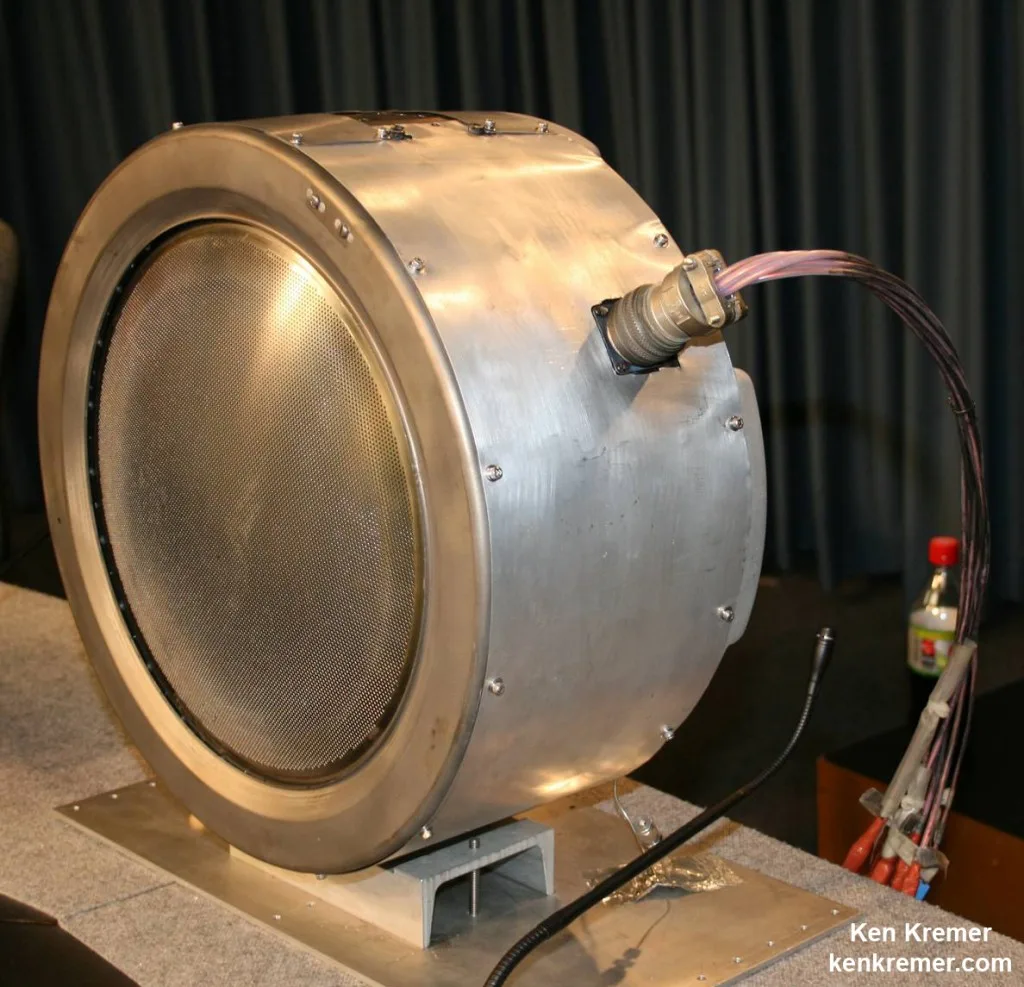
NASA's Dawn spacecraft, launched in 2007, was the first mission to orbit two extraterrestrial bodies, Vesta and Ceres, using its highly efficient ion propulsion system for its long journey through the asteroid belt. (Source: etheric.com)
Ion propulsion transforms robotic missions. It allows for complex orbital maneuvers and distant planetary exploration. This extends mission duration and payload capacity in deep space. It changes how we approach interplanetary travel.
Nuclear power: a re-emerging dream
Nuclear power offers a direct use for propulsion, beyond just electricity. Nuclear thermal propulsion (NTP) has existed for decades. Scientists like Freeman Dyson first studied Project Orion, a nuclear pulse propulsion concept, in 1958.
NTP engines use a nuclear reactor to superheat a liquid propellant, typically hydrogen. The reactor core heats the hydrogen to extreme temperatures, sometimes over 2,500 degrees Celsius. This superheated gas then expands. It is expelled through a nozzle, generating thrust. The main benefit is a much higher exhaust velocity. This means higher specific impulse and greater efficiency.
The renewed urgency and funding for NTP surprised me. NASA and DARPA (Defense Advanced Research Agency) are collaborating on the Demonstration Rocket for Agile Cislunar Operations (DRACO) program. Announced in 2023, this program aims for a flight test of an NTP engine by 2027. This ambitious timeline shows serious commitment.
An NTP engine could reduce transit times to Mars by 40% or more. This reduces radiation exposure for astronauts. It also reduces supply chain needs. For instance, a Mars trip that now takes seven to nine months could be just four or five months. This makes human missions safer and more feasible.
Beyond NTP, nuclear electric propulsion (NEP) combines a nuclear reactor with electric thrusters, like ion engines. The reactor generates electricity, which then powers the ion engines. This provides even higher fuel efficiency than NTP. It provides lower thrust. However, it is perfect for heavy cargo transport or long scientific missions. NTP and NEP face challenges: reactor safety, radiation shielding, and public perception. However, the potential gains are significant.
The truly exotic: pushing physics to the limit
Beyond chemical and nuclear rockets, scientists are exploring concepts that seem like science fiction. These ideas promise to significantly reduce space’s vast distances.
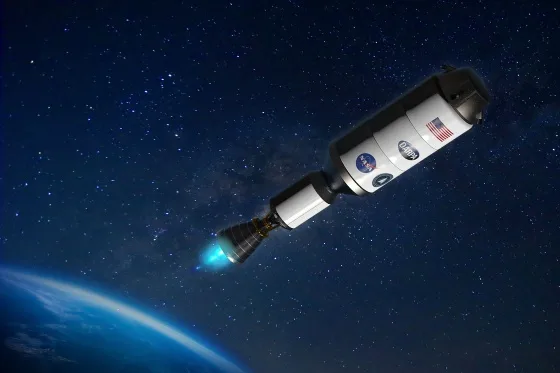
The Demonstration Rocket for Agile Cislunar Operations (DRACO) program, a collaboration between NASA and DARPA, aims to flight-test a nuclear thermal propulsion engine by 2027. This technology could reduce transit times to Mars by 40% or more, making human missions safer and more feasible. (Source: nbcnews.com)
Consider light sails, also called solar sails. Japan’s IKAROS spacecraft successfully demonstrated this technology in 2010. It deployed a large, thin membrane. This membrane used the pressure from sunlight photons for propulsion. Propellant is not involved. It offers slow acceleration, but it is constant and potentially limitless. This changes the concept of a “fuel tank.”
A more advanced idea is the laser sail. The Breakthrough Starshot initiative, launched in 2016, aims to use powerful ground-based lasers. These lasers would push small, gram-scale probes. The probes would use ultra-thin sails, aiming for 20% of the speed of light. At this speed, a probe could reach Alpha Centauri, our nearest star system, in just 20-30 years. This journey would take tens of thousands of years with today’s technology.
Next is fusion propulsion. This uses the same process that powers the sun. It involves fusing light atomic nuclei to release enormous energy. A fusion rocket would use this energy. It would heat propellant to extreme temperatures or create direct thrust. Researchers at the Princeton Plasma Physics Laboratory are making progress in controlled fusion. However, building a compact, powerful fusion reactor for space propulsion remains a significant engineering task. It is still mostly theoretical for practical use.
The most extreme idea is antimatter propulsion. When matter and antimatter collide, they annihilate. This converts 100% of their mass into pure energy. It is the most efficient energy release known. An antimatter rocket would offer very high specific impulse. It would have exhaust velocities close to the speed of light. The hurdles are immense. Only small amounts of antimatter are made at facilities like CERN. Safely storing it for long periods is another unsolved problem. This technology tests the limits of physics and engineering.
The path forward: from blueprints to breakthroughs
The future of space travel will use a mix of technologies, not just one “magic engine.” Each will be best suited for different stages and distances.
Reusable chemical rockets, like SpaceX’s Starship in development, will remain important. They aim to significantly reduce the cost of putting payloads into orbit. This makes everything else cheaper. Starship’s goal is to make space access routine and affordable. That is a crucial first step.
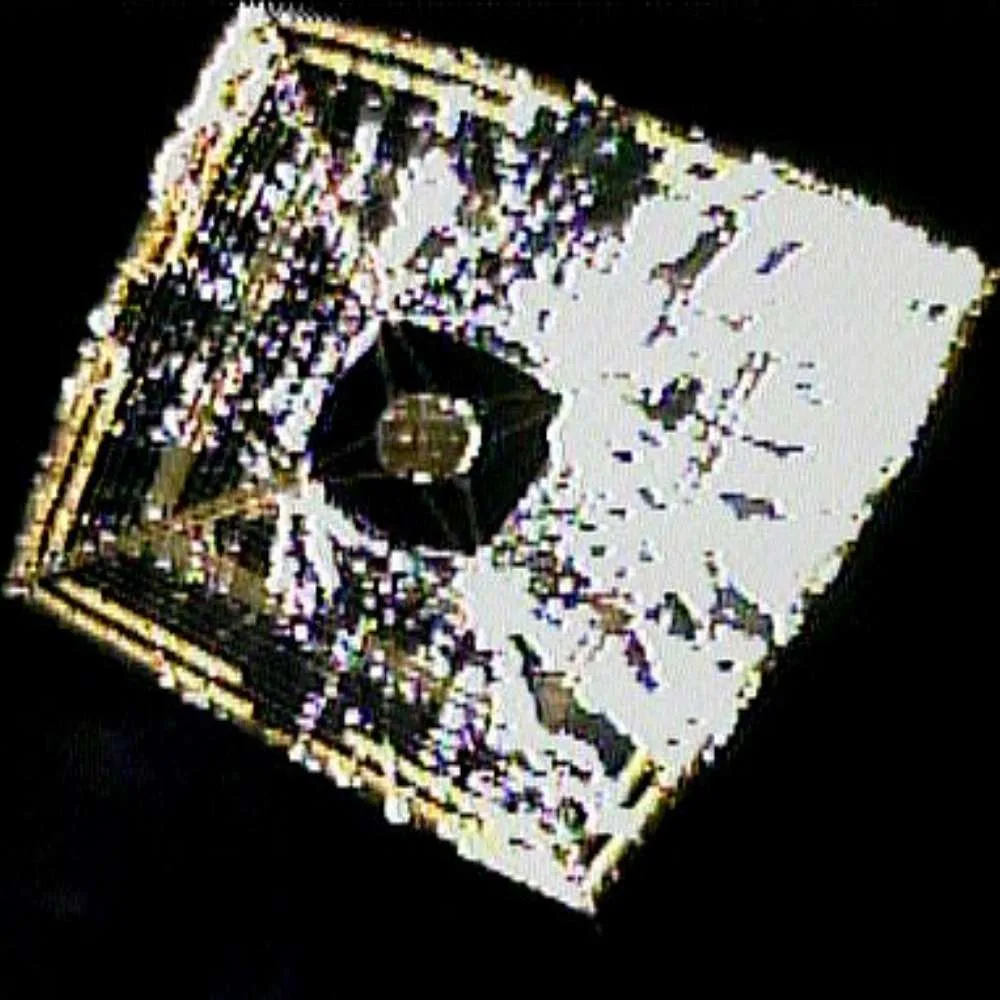
Japan's IKAROS (Interplanetary Kite-craft Accelerated by Radiation Of the Sun) spacecraft successfully deployed its 14-meter solar sail in 2010, becoming the first spacecraft to demonstrate solar sail propulsion in interplanetary space. It used the pressure from sunlight photons for thrust, proving a propellant-less propulsion concept. (Source: universemap.net)
For fast trips between planets, especially for humans, nuclear thermal propulsion appears to be the most promising near-term solution. It offers a significant jump in speed and efficiency for Mars trips and beyond. That is why DARPA and NASA are investing significantly in DRACO. It could be operational by the early 2030s.
For long cargo missions or robotic probes exploring the outer solar system, nuclear electric propulsion will likely be used. It provides sustained, highly efficient thrust for years. Solar sails could provide a propellant-free option for deep space. This is especially true for missions not needing quick acceleration.
Exotic engines like laser sails, fusion, and antimatter propulsion demonstrate humanity’s long-term vision. They are our way to interstellar travel. They need breakthroughs in basic physics and materials science. Some are decades, or even centuries, away. However, current research builds the foundation.
What does this mean? Faster, more efficient engines reduce travel times. This means less radiation exposure for crews, more scientific data, and more affordable access to solar system resources. These advanced engines are not just about speed. They are about expanding humanity’s reach. They move us closer to becoming a multi-planetary species. This makes a dream a concrete, long-term goal.
FAQ
What’s the biggest problem with today’s rockets? The biggest problem is needing to carry huge amounts of propellant. This is necessary to reach high velocities for deep space missions. It limits payload mass and overall efficiency.
How does nuclear thermal propulsion work? Nuclear thermal propulsion uses a nuclear reactor to superheat a propellant, usually hydrogen, to extreme temperatures. This hot gas then shoots out a nozzle, creating thrust. It’s much more fuel-efficient than chemical rockets.
Are light sails real? Yes, light sails are a proven technology. Japan’s IKAROS spacecraft successfully demonstrated solar sailing in 2010. They’re slow, but they offer propellant-free propulsion for long missions.
What’s the ultimate theoretical engine for space travel? Antimatter propulsion is often called the ultimate theoretical engine. It promises nearly 100% mass-to-energy conversion. This offers incredibly high efficiency and exhaust velocities. But making and storing antimatter remains a huge challenge.
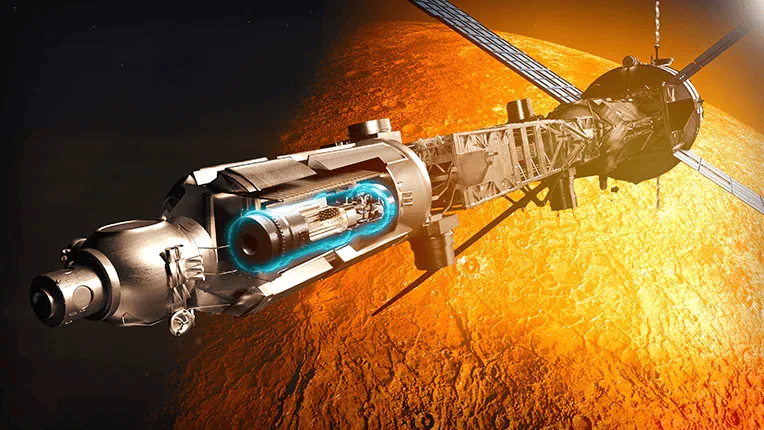
Nuclear electric propulsion systems combine a nuclear power source with electric thrusters to provide sustained, highly efficient thrust for long-duration deep space missions. This technology is crucial for future robotic probes and cargo missions exploring the outer solar system, offering a significant advantage over traditional chemical rockets. (Source: mmta.co.uk)
You might also like:
👉 1960’s TIROS-1: The Satellite That Showed Earth’s Climate
👉 The $546 Billion Space Race: Private Money, Global Rivalries