
2014 Ukraine: How Russia's Hybrid War Changed Everything
Forget clear battle lines. Modern warfare is a hacked scoreboard. In 2014, Ukraine revealed how hybrid threats redefine conflict.
The invisible war: My experience with hybrid threats
Warfare has changed. I used to picture tanks and missiles with clear battle lines. History books taught me that. Reality is messier. It’s like a boxing match. Imagine the scoreboard is hacked. The referee is bribed. Rumors spread about the other boxer’s trainer. This describes a hybrid threat. It’s not a new war. It’s a new way to fight.
What’s really happening
In 2014, Ukraine changed how we saw modern conflict. Russia didn’t just send soldiers into Crimea. It mixed conventional military force with tactics once thought separate. I first thought “hybrid” meant only cyberattacks. That’s part of it, yes. But the full picture was far more complex.
Hybrid threats mix many methods to reach political goals. These include cyberattacks, fake news, economic pressure, and irregular forces. They often want to destabilize an enemy without starting a traditional war. It’s about working in legal grey areas. You can’t always tell who’s behind it. It could be state groups, proxies, or even independent actors. They break trust, cause division, and weaken countries from the inside.
How I saw the pieces connect
In 2007, cyberattacks on Estonia revealed a new weapon. Government websites, banks, and media suffered huge denial-of-service attacks. This wasn’t a normal invasion. But it crippled a country. This event was an alert for many, including me. It showed how digital tools could become state weapons.
I started seeing these elements not as separate threats, but as linked tools. Cyber warfare became a key part. It hits infrastructure, breaks communications, and steals sensitive data. Take the 2017 NotPetya attack. This cyberattack wrecked businesses worldwide. Intelligence agencies said Russia was behind it. It caused billions in damages.
Then there’s fake news and information war. This means spreading lies to sway public opinion. Social media platforms are battlegrounds. Think of foreign meddling in elections or efforts to undermine democracy. The NATO Strategic Communications Centre of Excellence often points out these tactics. They show how enemies make convincing fake stories.
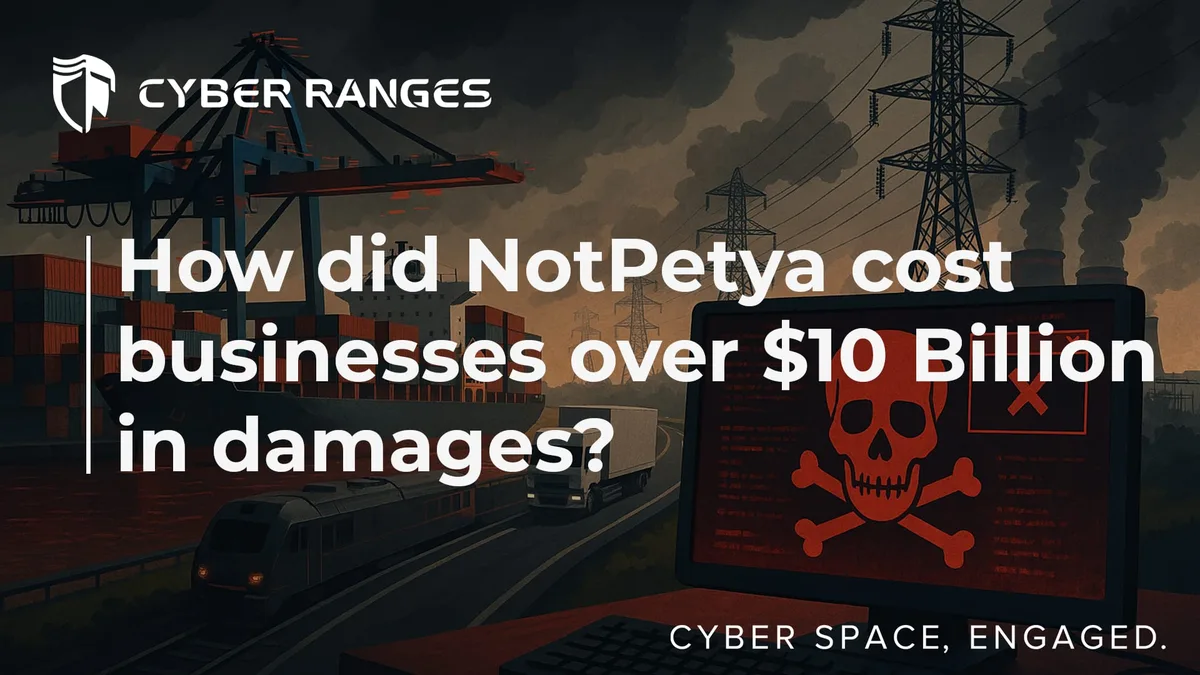
The 2017 NotPetya cyberattack, widely attributed to Russia, crippled businesses and critical infrastructure worldwide, causing billions in damages and demonstrating the devastating real-world impact of digital warfare as a hybrid threat. (Source: cyberranges.com)
I also saw economic pressure. This strategy uses trade limits, tariffs, or control over key resources like energy. China used economic pressure on countries like Australia. It restricted imports after Australia asked for a COVID-19 origin inquiry. Russia, too, used natural gas supplies in the past to influence European nations. This isn’t a direct attack. But it causes real harm.
Finally, proxy forces or irregular units give plausible deniability. Russia’s “little green men” in Crimea in 2014 are a clear example. These soldiers had no insignia. Their presence confused everyone and stopped a clear global response. This wasn’t accidental. It was a planned part of a bigger strategy. I first thought these were just “cheap” ways to fight. I realized it was much smarter.
Deniability: the secret weapon
General Valery Gerasimov’s 2013 article in Russia’s Military-Industrial Courier described a strategy of indirect action. This “Gerasimov Doctrine” mixed military and non-military methods for strategic goals. It stressed information war and internal destabilization. This was a key insight for me. It showed the strategy behind these threats.
Deniability is the main advantage of hybrid threats. It lets states act aggressively without starting a full war. They avoid direct military fights. This makes it tough for groups like the UN or NATO to respond clearly. Who do you sanction? Who do you declare war against? The confusion is on purpose.
This confusion breaks public trust in official information and institutions. It also slows down decisions in targeted countries. Governments find it hard to blame attacks reliably. This delay gives the aggressor time to get what they want. The EU Centre of Excellence for Countering Hybrid Threats (Hybrid CoE) often says this. They point out the challenge of responding to attacks that aren’t clearly acts of war.
Hybrid threats also work through slow breakdown. It’s not a sudden invasion. Instead, it’s a slow chipping away at an enemy’s economic, social, and political strength. Fake news can divide societies. Cyberattacks can break key services. Economic pressure can weaken industries. These actions together weaken a nation without a single bullet fired. Dr. Frank G. Hoffman of the RAND Corporation has written a lot about this. He calls it a “blended, ambiguous, and adaptive enemy.”
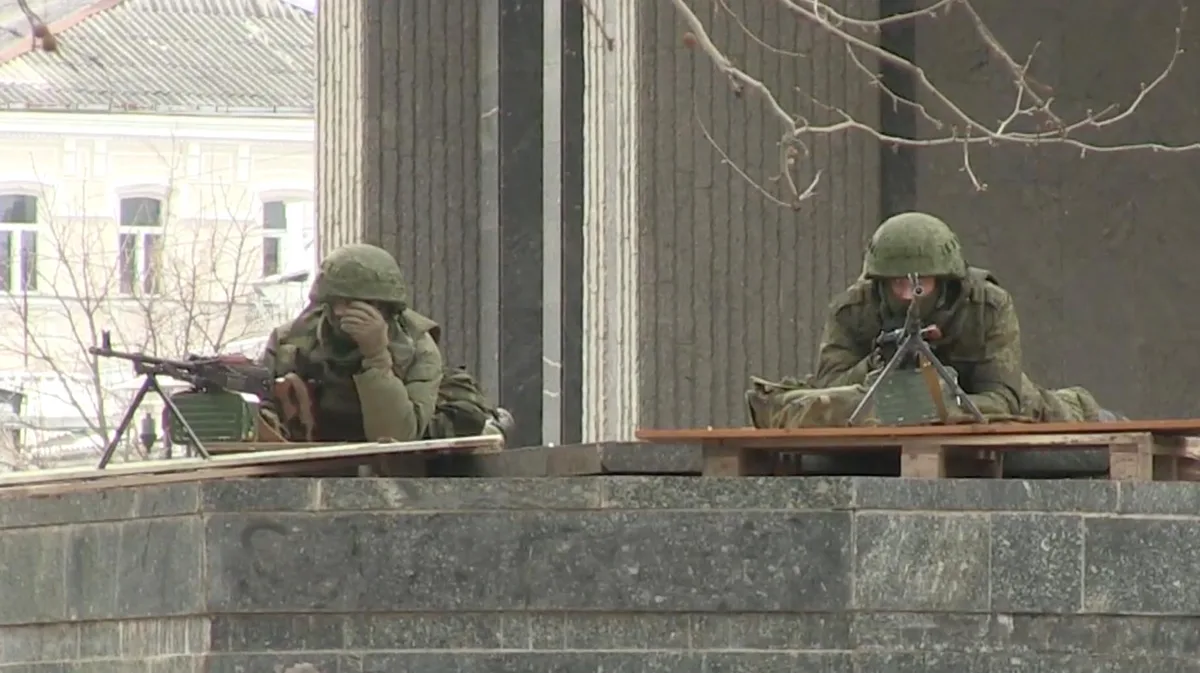
In 2014, unmarked soldiers, dubbed 'little green men,' appeared in Crimea, playing a crucial role in its annexation by Russia. Their lack of insignia provided plausible deniability, a hallmark tactic of modern hybrid warfare. (Source: military-history.fandom.com)
The data proves it
Between 2010 and 2020, 40% of major cyberattacks hitting key infrastructure had state ties. This comes from a report by the Center for Strategic and International Studies (CSIS). That number surprised me. It showed how widespread these state-backed, non-military attacks had become. This wasn’t just theory. It was constant.
Ukraine gives us the clearest example. Since 2014, Russia has used almost every part of hybrid warfare against it. This included “little green men” in Crimea and Donbas. It involved constant cyberattacks on power grids and government systems. Ukraine’s energy infrastructure suffered many attacks. This led to huge blackouts.
At the same time, huge fake news campaigns flooded social media and traditional news. These stories aimed to make the Ukrainian government seem fake. They tried to divide people. They also worked to weaken global support for Ukraine. The scale was never seen before. It was a full attack below the normal war line.
The Baltic States — Estonia, Latvia, and Lithuania — face constant hybrid pressure. They deal with regular cyber threats and air violations. Russian information campaigns target their Russian-speaking minorities. This tries to create internal splits. NATO has greatly increased its presence there. This directly responds to these ongoing threats.
In the South China Sea, China uses what some call “grey-zone tactics.” This means sending coast guard ships and fishing fleets to claim territory. These aren’t military fights. Yet they slowly change things. China also applies economic pressure and runs influence operations. These target countries across the Indo-Pacific. This includes attempts to steal intellectual property. It also uses debt through infrastructure projects.
What traditional thinking misses
In 2022, NATO officially said hybrid threats could trigger Article 5. This was a big change. It meant an attack mixing cyber, fake news, and other tactics could be seen as an armed attack. This showed how seriously defense groups now see these threats. My research showed why this change was needed. Our old ways were failing.

Chinese coast guard vessels and fishing fleets are frequently deployed in the South China Sea, asserting territorial claims through "grey-zone tactics" that avoid direct military confrontation but slowly alter the status quo. These actions are a key example of geopolitical hybrid threats. (AI-generated illustration)
The biggest challenge remains the attribution problem. It’s very hard to prove who is behind a hybrid attack. Cyber operations often use proxy servers and false flags. Fake news campaigns use anonymous accounts and fake media. This makes a united, quick response very hard. Without clear proof, global law struggles to apply.
This leads to a response dilemma. How should a nation react to a major cyberattack that breaks its infrastructure? Is it an act of war? Does it deserve a military response? Escalation is a real risk. This uncertainty is exactly what hybrid aggressors use. They want to create a situation where any response feels too much or causes problems.
Societal resilience has become a key defense. Governments must teach people about fake news. They must harden key infrastructure against cyberattacks. This isn’t just a military issue. It’s about protecting society itself. The European Union has started programs like the European Centre of Excellence for Countering Hybrid Threats. These efforts want to build shared resilience.
The future isn’t just tanks and troops
In 2023, global defense spending kept rising. But much of it now hits non-traditional threats. This includes money for cyber defense and strategic communication. It shows a growing awareness that future fights won’t always use tanks and troops. This isn’t just a military challenge. It’s a societal one.
States and alliances are changing. NATO’s stronger presence in the Baltic states stops normal and hybrid aggression. The EU is creating stronger cybersecurity rules. These efforts see the multi-domain nature of modern threats. They want to build deterrence everywhere.
New areas are appearing for hybrid threats. Artificial intelligence (AI) could automate fake news campaigns. It could create deepfakes almost impossible to tell from real life. Biotechnology could be used for targeted attacks or huge disruption. Space infrastructure, too, is open to hybrid interference. These are the next frontier.
An informed public has a key role. A society resistant to propaganda and good at digital hygiene is a strong defense. We all have a part to play. Understanding these threats is the first step. It’s not enough to just watch borders. We must also guard our screens, our information, and our shared reality.

Artificial intelligence is rapidly advancing the capability to create 'deepfakes' – hyper-realistic manipulated videos and audio that are nearly indistinguishable from genuine content. This emerging technology is a significant concern in the realm of hybrid threats, as it can be used to automate fake news campaigns and sow widespread disinformation. (Source: tepperspectives.cmu.edu)
FAQ: hybrid threats
What is a hybrid threat? It’s a mix of traditional and non-traditional tactics to reach political goals. These can include cyberattacks, fake news, economic pressure, and proxy forces. They aim to destabilize an enemy without starting open war.
How do hybrid threats differ from traditional warfare? Traditional warfare means open military conflict between states. Hybrid threats work below this level, using confusion and deniability. They avoid direct blame. They often hit a society’s weak points, not its military.
Who uses hybrid threats? States are the main users, often through proxies or state-sponsored groups. Russia and China are common examples. Non-state actors can also use some hybrid tactics. But they usually have less global reach.
Why are hybrid threats so effective? They work well because of deniability and confusion. It makes it hard to find the aggressor. It’s also hard to make a clear, fair response. This lets the aggressor get what they want without risking full war.

The Nord Stream pipelines, connecting Russia and Germany under the Baltic Sea, became a critical symbol of geopolitical hybrid threats, particularly Russia's use of energy as economic leverage before the 2022 sabotage incidents. (Source: nbcnews.com)
You might also like:
👉 WannaCry 2017: The Cyberattack That Crippled UK Hospitals
👉 Unmasking Online Bots: The X & Facebook Mimicry Challenge
👉 US-China: $664B Trade Masks Zero-Sum Global Power Struggle