IOM: Climate Migration Isn't Mass Exodus to Rich Nations
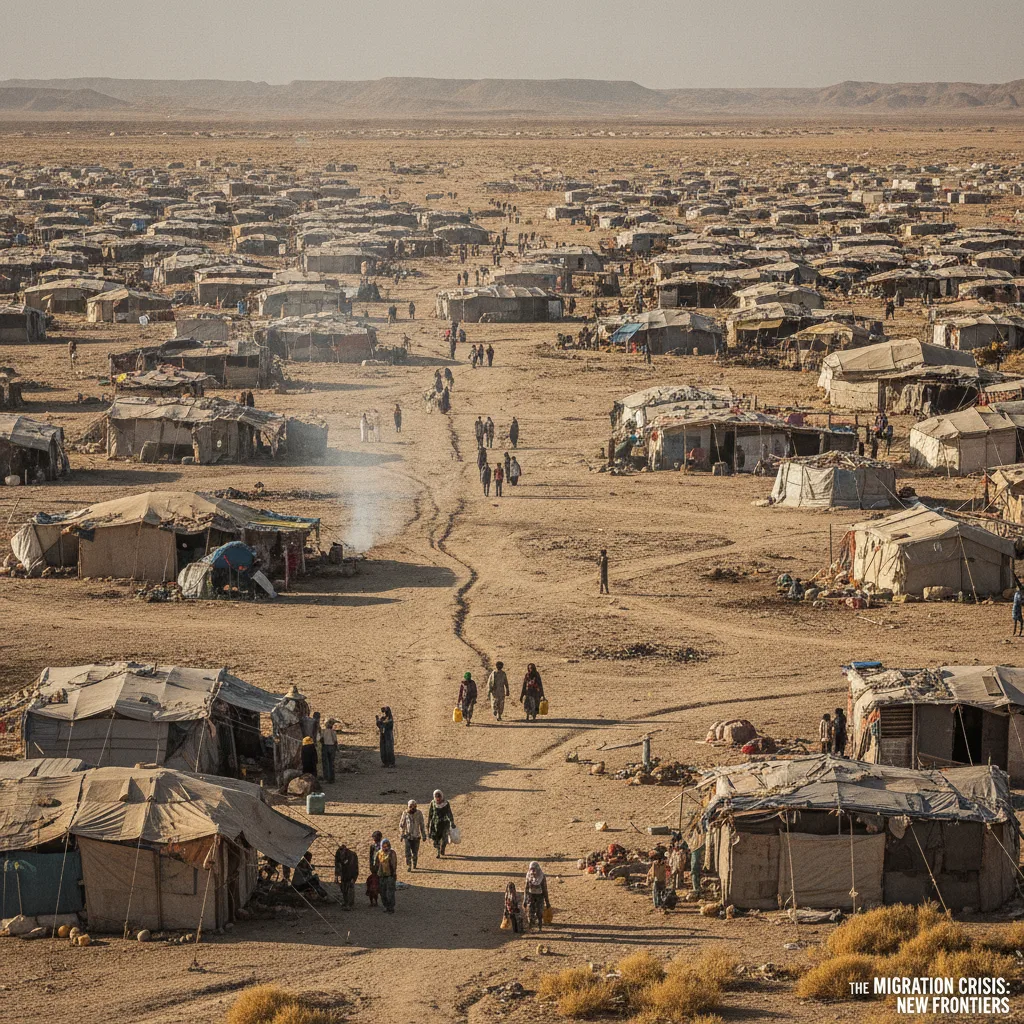
Environmental migrants, as defined by IOM, are individuals forced from home by environmental changes that harm their lives or living conditions.
Climate Migration Isn’t What You Think
Common ideas about climate migration are often incorrect. Many people imagine a large movement of people towards wealthy nations. This view does not reflect how climate change actually affects human movement. It is important to understand the true patterns.
The International Organization for Migration (IOM) says environmental migrants are people forced from home by environmental changes. These changes harm their lives or living conditions. Their moves can be temporary or permanent, voluntary or forced.
Most people stay home
In 2022, weather disasters made 32.6 million people move inside their own countries. This big number comes from the Internal Displacement Monitoring Centre (IDMC). Floods, storms, droughts, and wildfires caused these events. For example, Pakistan’s massive 2022 floods displaced 8.2 million people. Most moved to higher ground or temporary shelters inside Pakistan. These events show that most people displaced by climate impacts stay within their own countries. They rarely cross borders, which differs greatly from common stories of international exodus.
Climate isn’t the only reason people move
Over 80% of countries vulnerable to climate change also deal with major political instability or conflict. A 2021 UN study found this. Climate impacts often worsen existing problems. They rarely act alone. Economic hardship, bad governance, and conflict are often linked.
The Syrian civil war began in 2011 after a severe, multi-year drought. Researchers like Dr. Colin Kelley at Columbia University connected drought-caused farm collapse to social unrest. Climate stress was a factor, but it wasn’t the only cause of conflict or later migration. It increased existing tensions.
Communities in the Sahel region face desertification and ongoing armed conflict. People often move to escape violence and insecurity. Environmental damage adds to their problems, but it’s rarely the only reason they leave. Migration decisions have many reasons.
Short moves, big local problems
Most climate-related moves are short. They often involve temporary relocation to nearby towns or cities. A 2018 World Bank report, “Groundswell: Preparing for Internal Climate Migration,” showed this pattern. The idea of long international journeys is mostly wrong for climate-displaced people.
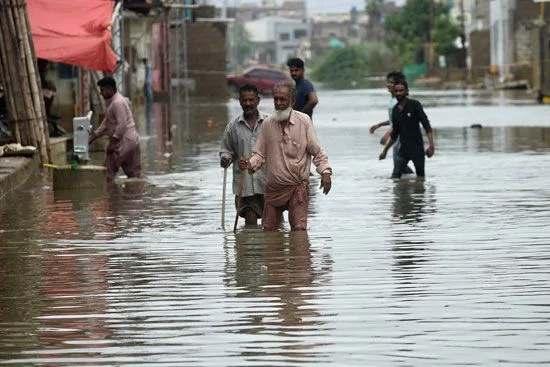
The 2022 monsoon floods in Pakistan were a catastrophic event, displacing 8.2 million people internally. Many sought temporary shelter on higher ground, illustrating how climate-induced migration often occurs within national borders. (Source: britannica.com)
In Bangladesh, riverbank erosion displaces people. They often move to Dhaka’s slums, staying within their country. This creates new urban pressures. It stretches resources in already crowded areas. The Groundswell report predicts up to 216 million internal climate migrants by 2050 across six regions. Sub-Saharan Africa and East Asia and the Pacific will see the biggest numbers.
These internal moves can still be deeply disruptive. They often cause people to lose jobs and social networks. But they are very different from cross-border migration. They need different policy responses. Knowing this difference is vital for planning well.
Many people adapt, don’t move
Millions of people actively adapt to changing climates without moving. Research from the Wilson Center’s Environmental Change and Security Program shows this ability to recover. Migration is often a last resort, not a first choice. Many communities invest in local strategies to handle environmental changes.
In Vietnam’s Mekong Delta, farmers now grow salt-tolerant crops. They build elevated homes to resist floods. These changes let them stay put despite rising sea levels. They show they really want to keep their homes and traditions. Such efforts reduce the need to move.
Pastoralist communities in East Africa develop new grazing strategies. They use mobile phones to find water and pasture. This avoids large, permanent moves. Investing in these local adaptation measures can greatly reduce future displacement. It helps communities build their own strength.
New policies for a complex future
The 2015 Paris Agreement recognized climate change as a reason for migration. It called for a task force on displacement. This was an important step. But good policy must understand that climate movement happens inside countries and has many reasons. It should support adaptation in situ first.
Governments must focus on developing vulnerable regions. They need to strengthen social safety nets. Planning for managed internal relocation is also needed when adaptation isn’t enough. The International Organization for Migration (IOM) supports “migration with dignity.” This means planned, voluntary movement, not just reactive displacement.
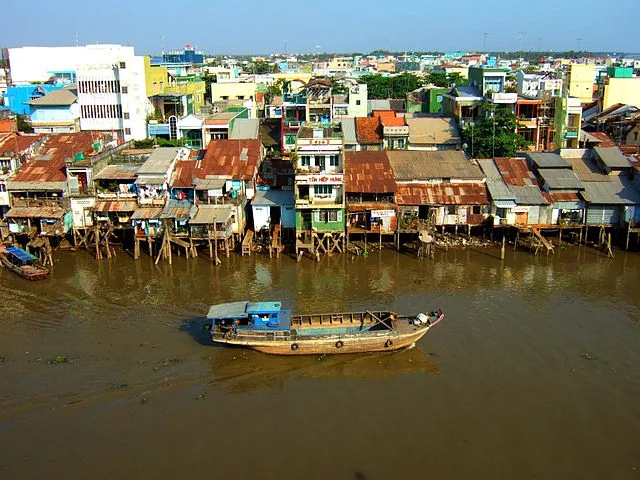
In Vietnam's Mekong Delta, communities build elevated homes as a crucial adaptation strategy against rising sea levels and increased flooding. This allows residents to maintain their livelihoods and traditions without being forced to migrate. (Source: e-education.psu.edu)
Knowing these exact patterns helps governments prepare. It moves focus from reactive border control to human security from the start. Future policies should invest in infrastructure that resists climate impacts. They should also support local adaptation initiatives. This approach puts human well-being first as the environment changes.
FAQ
What is a “climate migrant”? A climate migrant is someone forced from home by sudden or slow environmental changes. These changes must harm their lives or living conditions. The term is broad and covers many kinds of movement.
Is climate migration new? No, people have always moved because of environmental changes. What’s new is how fast and big today’s climate change impacts are. This worsens existing problems and can speed up displacement.
Are climate migrants protected by international law? No specific international law protects “climate migrants” right now. Refugee law mainly covers people fleeing persecution. Many people argue for new legal protections or expanding the current ones.
What do rich countries do? Rich countries contribute more to climate change. They also have more resources to adapt and manage displacement. Their role involves cutting emissions, supporting adaptation in vulnerable nations, and possibly helping with managed migration.

Coastal defense infrastructure, such as massive sea walls or flood barriers, are increasingly vital investments for nations facing rising sea levels and extreme weather events due to climate change, protecting communities and economies from inundation. (Source: climatechange.environment.nsw.gov.au)
You might also like:
👉 1 Billion Urban Poor: How Cities Fight Climate Shocks
👉 Venus: Why 475°C Hell Holds Earth’s Climate Future
👉 Why 1/3 of Food Waste Won’t Feed 735 Million Hungry People